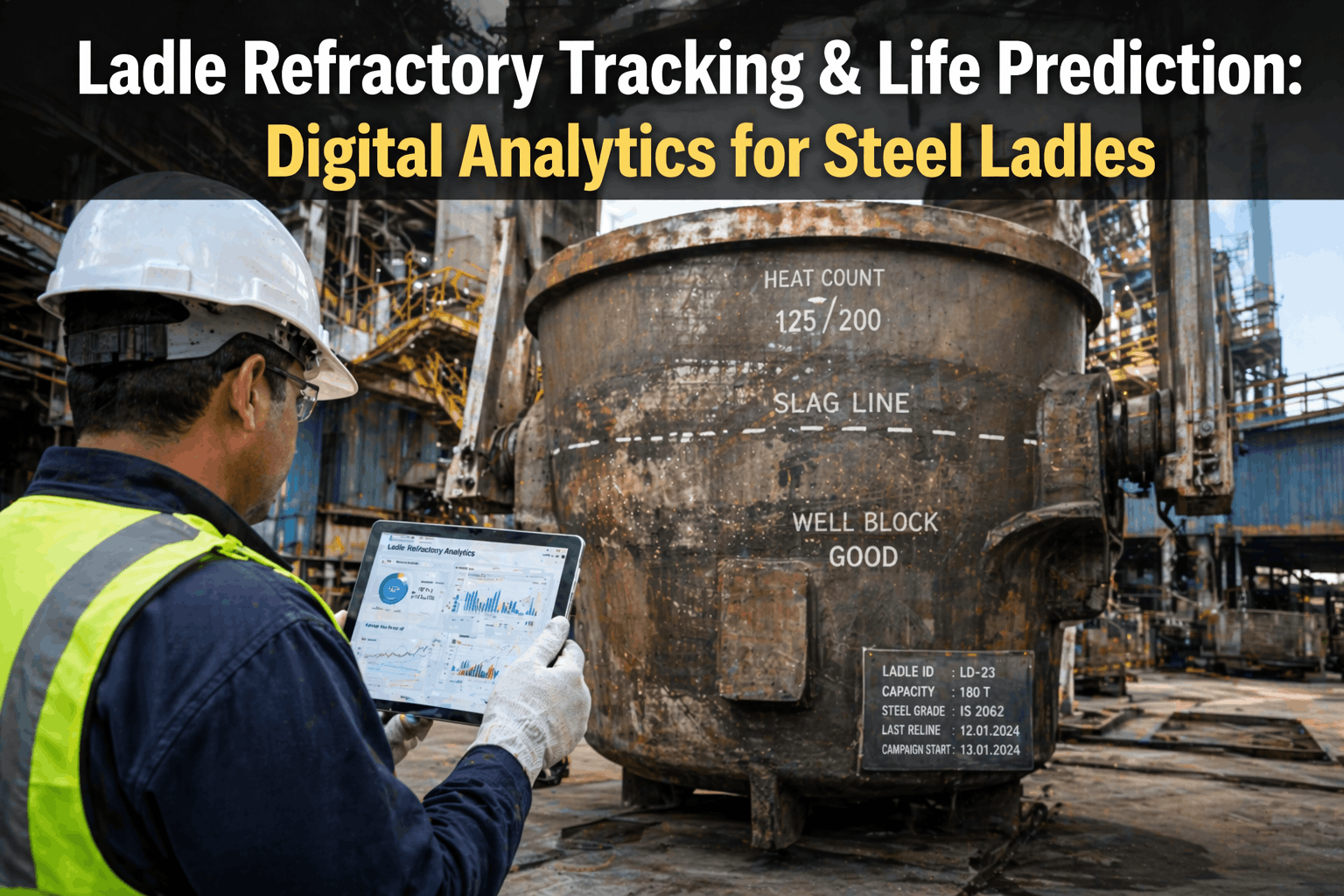
A refractory life prediction built on physics alone tells you how wear should progress under ideal assumptions, and a prediction built on sensor data alone tells you what is happening right now without explaining why. A digital twin that fuses a physics-based erosion model with actual thermal scans and heat-history data gets the benefit of both, grounding the model in real mechanics while correcting it against what your furnace is actually doing. That fusion is what pushes prediction accuracy meaningfully higher than either approach alone, and our team can walk you through how this twin is built around your own furnace data.
Steel furnace refractory, digital twin
Fuse Physics-Based Erosion Models With Real Thermal Data for Trustworthy Refractory Life
iFactory AI builds a refractory digital twin that combines physics-based erosion modeling with thermal scans and heat-history data for prediction accuracy neither approach reaches alone.
Why neither approach alone is enough
Physics Models and Raw Sensor Data Each Have a Blind Spot
A pure physics model assumes ideal operating conditions that rarely match reality exactly, while raw sensor data alone cannot explain why wear is happening or predict how it will progress under changing conditions.
Physics model alone
Assumes ideal, consistent operating conditions
Does not correct for your actual furnace behavior
Drifts from reality over a long campaign
Fused digital twin
Physics grounded in real mechanics
Continuously corrected against thermal scan data
Stays accurate as the campaign progresses
Three data inputs
What Feeds the Digital Twin
Physics-based erosion model
Models how refractory wears based on known mechanical and chemical wear mechanisms.
Thermal scan data
Periodic or continuous thermal imaging showing the actual current refractory thickness profile.
Heat-history data
Record of actual temperatures, chemistries and operating conditions the refractory has experienced.
See What a Twin Would Show for Your Furnace
Share your available thermal scan and heat-history data and see what a fused life prediction would reveal.
Accuracy comparison
How Each Approach Compares on Prediction Accuracy
| Approach | Strength | Weakness |
|---|
| Physics model only | Grounded in known wear mechanics | Does not adapt to actual furnace behavior |
| Sensor data only | Reflects real current conditions | Cannot explain or project future wear reliably |
| Fused digital twin | Grounded model continuously corrected by real data | Needs consistent data flow to stay accurate |
Build process
Four Steps to a Working Digital Twin
1
Establish the physics model
Build the baseline erosion model for your furnace's refractory design.
2
Integrate thermal scans
Feed actual thickness measurements into the model regularly.
3
Layer in heat history
Incorporate actual operating conditions the refractory has experienced.
4
Validate and refine
Check twin predictions against physical findings at each reline and adjust.
Common pitfalls
Three Mistakes That Undermine a Refractory Twin
1
Building the physics model without validation data
A model never checked against real thermal scans drifts further from reality over time.
2
Inconsistent thermal scan frequency
Gaps in scan data leave the twin uncorrected during critical wear periods.
3
Ignoring heat-history outliers
Unusual heats that stressed the refractory differently get averaged away instead of accounted for.
Expert review
The value of a digital twin comes from the fusion, not from either data source alone. A twin that leans entirely on physics without regular thermal validation is really just a physics model with extra steps, and loses the accuracy gain that makes a twin worth building.
Watch for
A twin proposal with no clear plan for how often thermal scan data will actually correct the model.
Do next
Confirm your current thermal scan frequency is enough to keep the twin meaningfully corrected before building it out.
— iFactory steel specialists
Frequently asked questions
What Steel Plants Ask About Refractory Digital Twins
How much thermal scan data do we need to start?
A history of past scans helps establish the baseline, but the twin becomes more accurate over time as ongoing scans continue to correct it, so starting with current scan practice and building from there is a reasonable approach.
Ask about your current scan data.
Does this work for both ladles and furnaces?
Yes, the same fusion approach of physics modeling corrected by real data applies across different refractory applications, though the specific wear mechanics modeled differ between a ladle and a furnace.
Discuss your specific application.
How is the twin validated against reality?
Comparing twin predictions against actual measured wear at each scheduled reline is the clearest validation point, and any gap between prediction and measurement feeds back into refining the model.
Talk through validation timing.
Can the twin account for unusual heats or chemistry changes?
Heat-history data that captures unusual operating conditions lets the twin account for their impact on wear rather than treating every heat as identical, which is part of why heat history matters alongside thermal scans.
Ask about heat-history tracking.
What accuracy improvement should we realistically expect?
The improvement depends heavily on how far your current prediction method is from the fused approach, so an honest comparison against your existing method is the best way to set expectations for your specific furnace.
Discuss your current prediction accuracy.
From separate data sources to one trustworthy model
Build a Refractory Life Prediction You Can Actually Plan Around
Book a session with iFactory AI to review your thermal scan and heat-history data and see how a digital twin fits your furnace.