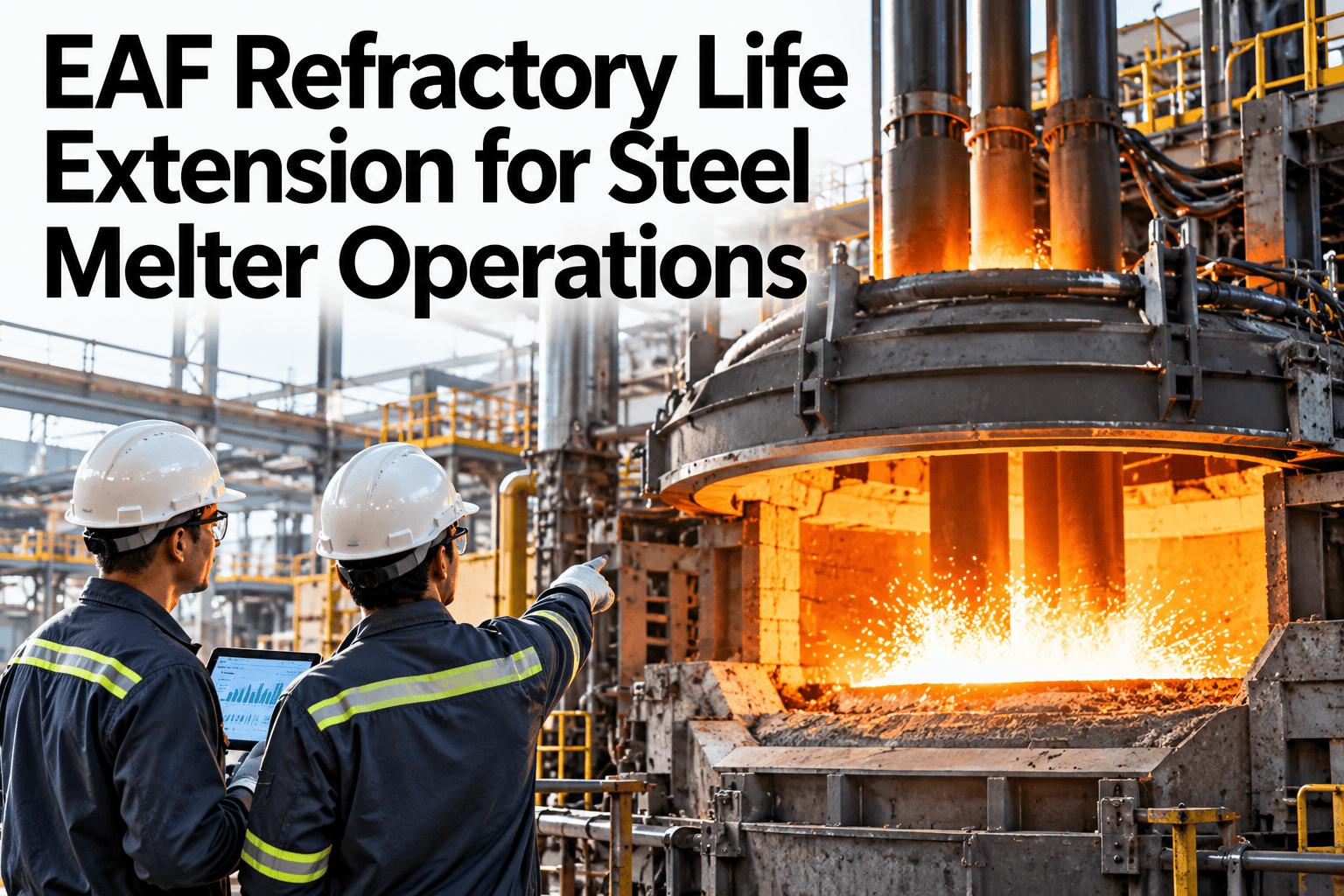
An electric arc furnace lining takes a fundamentally different kind of punishment than a BOF vessel, concentrated arc heat at the side walls, mechanical and thermal stress at the hearth, and slag-line erosion that eats away at exactly the zone where the molten bath meets the atmosphere, and a melter operation treating all three zones with one generic maintenance approach is leaving campaign life on the table in at least two of them. Pushing an EAF refractory campaign toward 500 heats means protecting each zone according to what is actually wearing it down, not applying the same routine to side wall, hearth, and slag line alike. Extend your own EAF campaign with zone-specific tactics.
Three Zones, Three Different Wear Stories
iFactory AI coordinates side-wall gunning, hearth maintenance, and slag-line protection to push EAF refractory campaigns toward 500 heats.
One Generic Routine Protects None of the Zones Well
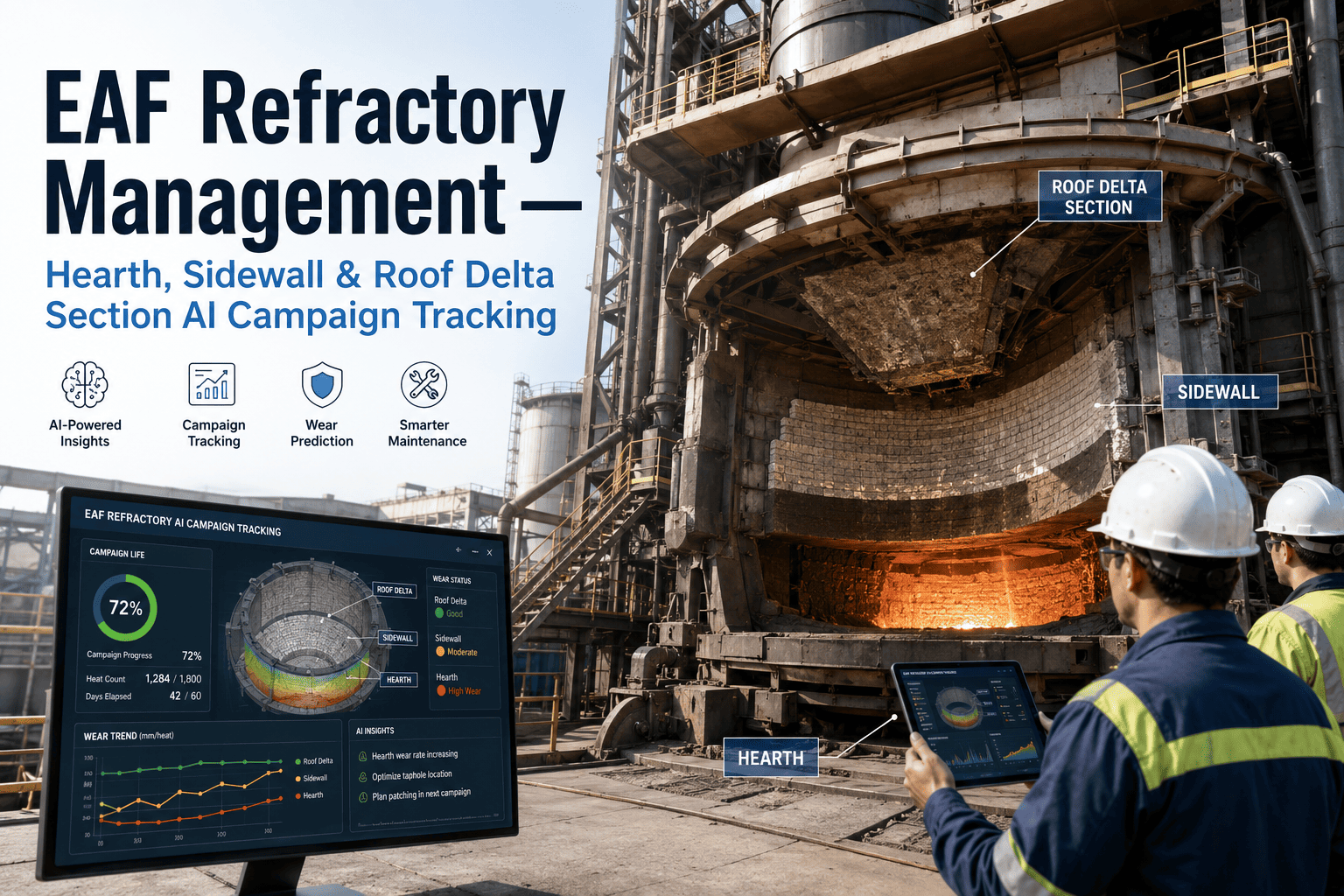
The side wall absorbs concentrated arc heat that no other zone experiences in the same way, the hearth takes on cumulative mechanical and thermal stress from scrap loading and bath movement, and the slag line erodes continuously at the interface between molten steel and slag, which means a single standard maintenance routine applied uniformly across all three zones is, by definition, mismatched to at least two of them at any given time.
Side-Wall Gunning
Targeted repair material applied to zones absorbing the heaviest arc heat exposure.
Hearth Maintenance
Condition-based attention to cumulative mechanical and thermal stress at the hearth.
Slag-Line Protection
Tactics specifically addressing erosion at the molten steel and slag interface.
Coordinate Zone-Specific Tactics on Your Own EAF
Book a 30-minute session and see zone-specific side wall, hearth, and slag-line strategy applied to your own furnace's wear data.
What Drives Wear in Each Zone
Each zone's dominant wear mechanism calls for a different kind of attention and a different monitoring approach.
| Zone | Dominant Wear Mechanism | Primary Tactic |
|---|---|---|
| Side wall | Concentrated arc heat exposure | Targeted gunning at hot-spot zones |
| Hearth | Mechanical and thermal cumulative stress | Condition-based maintenance scheduling |
| Slag line | Continuous erosion at the slag-steel interface | Slag chemistry and freeboard management |
Wear Trend Across a Campaign
Tracking each zone separately shows which one is actually setting the pace for the next reline, rather than assuming it by default.
From Zone Data to Coordinated Maintenance
Each zone's condition data feeds into a coordinated maintenance plan rather than three disconnected routines.
Rolling Out on the EAF
iFactory AI connects to existing furnace monitoring data to track each zone independently rather than treating the lining as one uniform surface.
Expert Review
Melter operations that start tracking zones separately are often surprised by which zone turns out to be the actual pacing factor, since the side wall tends to get the most attention by default simply because arc heat exposure is the most visible wear mechanism, while the slag line is quietly setting the real campaign limit in many operations.
Frequently Asked Questions
How is wear tracked separately for each zone?
Zone-specific wear tracking draws from existing furnace monitoring data combined with maintenance inspection records, building an independent wear trend for each zone. Support can confirm what monitoring data your furnace already has.
What if two zones are both approaching their limit at the same time?
Both zones are flagged, and maintenance planning weighs which combination of tactics most effectively extends the campaign given both constraints together.
Can slag chemistry management be coordinated with this system?
Yes, slag-line protection recommendations factor in slag chemistry and freeboard practices, working alongside your existing slag management process rather than replacing it. See slag-line coordination on a call.
How realistic is 500 heats for our specific furnace?
The realistic target depends on your furnace's specific operating conditions, steel grades, and starting refractory design, and is estimated from your own historical campaign data.
Does this integrate with our existing maintenance scheduling?
Yes, zone-specific maintenance recommendations can feed into your existing maintenance scheduling system rather than requiring a separate standalone tool. Ask support about scheduling integration.
Protect Each Zone the Way It Actually Wears
iFactory AI coordinates side-wall, hearth, and slag-line tactics to push your EAF campaign toward 500 heats. Book a demo on your own furnace.