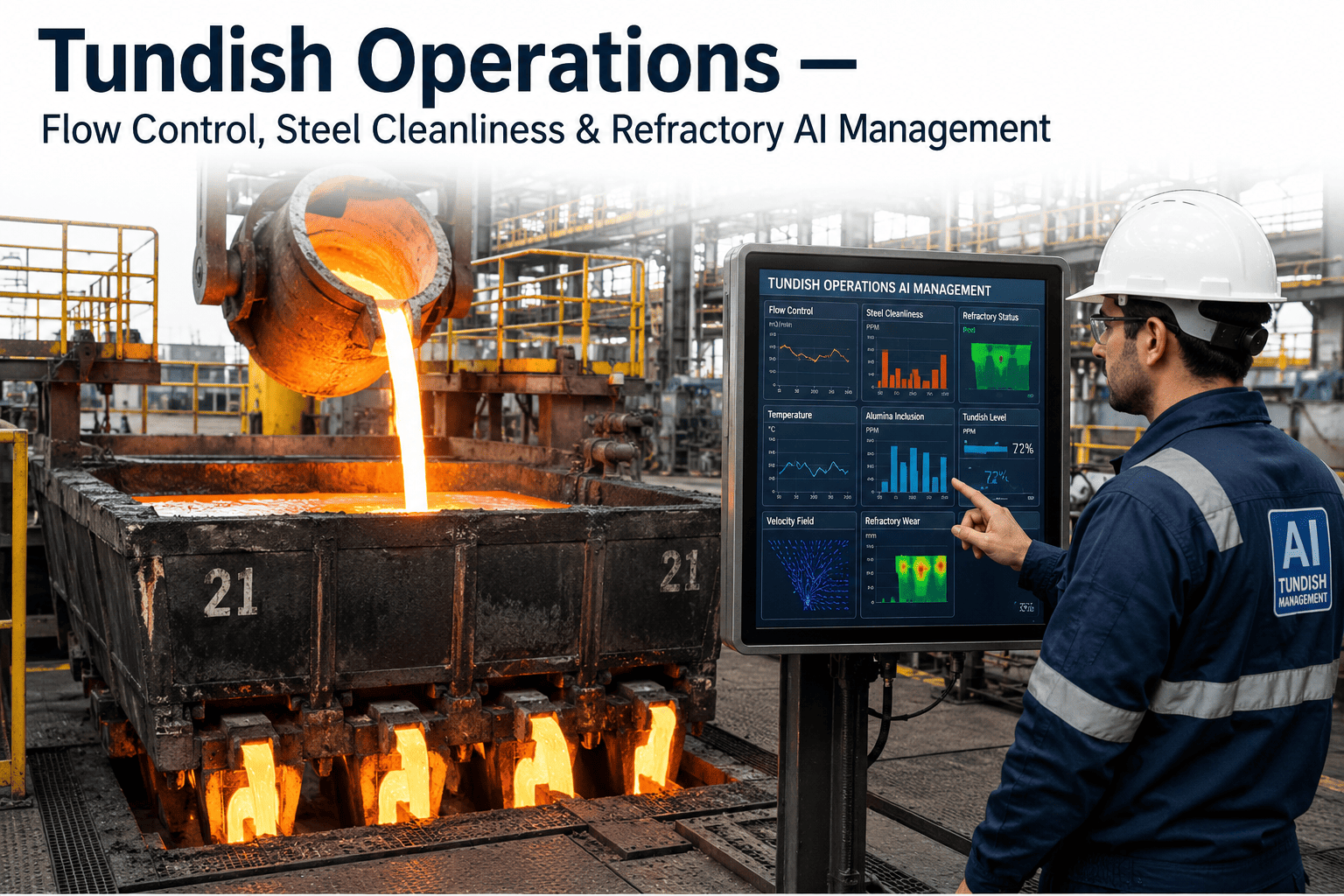
Tundish Operations — Flow Control, Steel Cleanliness & Refractory AI Management

By James Smith on July 29, 2026

tundish-flow-control-steel-cleanliness-refractory-ai

The tundish is often described as the least glamorous vessel in continuous casting, yet the flow pattern, inclusion removal efficiency, and refractory condition inside it directly determine the cleanliness and strand-to-strand consistency of every product coming off the caster. Process engineers managing tundish operations must balance stopper rod control, tundish furniture configuration, and refractory wear across a campaign that can span dozens of sequences, and small inconsistencies between strands or sequences often trace back to subtle flow pattern differences that are difficult to see without dedicated modeling. AI-driven tundish analytics from iFactory continuously models flow behavior, inclusion removal performance, and refractory wear to keep every strand consistent across a sequence.

Flow Pattern Modeling Inclusion Removal Refractory Wear

Tundish Operations: AI Flow Control, Steel Cleanliness, and Refractory Management

iFactory continuously models tundish flow patterns, inclusion removal efficiency, and refractory wear across every strand and sequence, helping process engineers optimize stopper rod control and tundish furniture for consistent strand-to-strand cleanliness.

2-6 Strands Typical strand count where flow consistency between strands is critical for quality
10-15% Typical improvement in inclusion removal efficiency from optimized flow control furniture
Sequence-Long Duration over which refractory wear must be tracked to avoid a mid-sequence surprise

Tundish Zones That Determine Steel Cleanliness

Cleanliness outcomes are decided by what happens across several distinct functional zones inside the tundish, each contributing to whether inclusions are removed or carried through into the strand. A model that treats the tundish as a single uniform vessel misses the specific zone-level interactions that actually drive cleanliness performance from one sequence to the next.

Pour Box and Impact Pad
Initial flow impact and turbulence modeled to assess how effectively the incoming stream is dissipated before reaching the main tundish bath.
Flow Control Furniture
Dams, weirs, and baffles modeled against actual flow behavior to identify configuration adjustments that improve residence time for inclusion flotation.
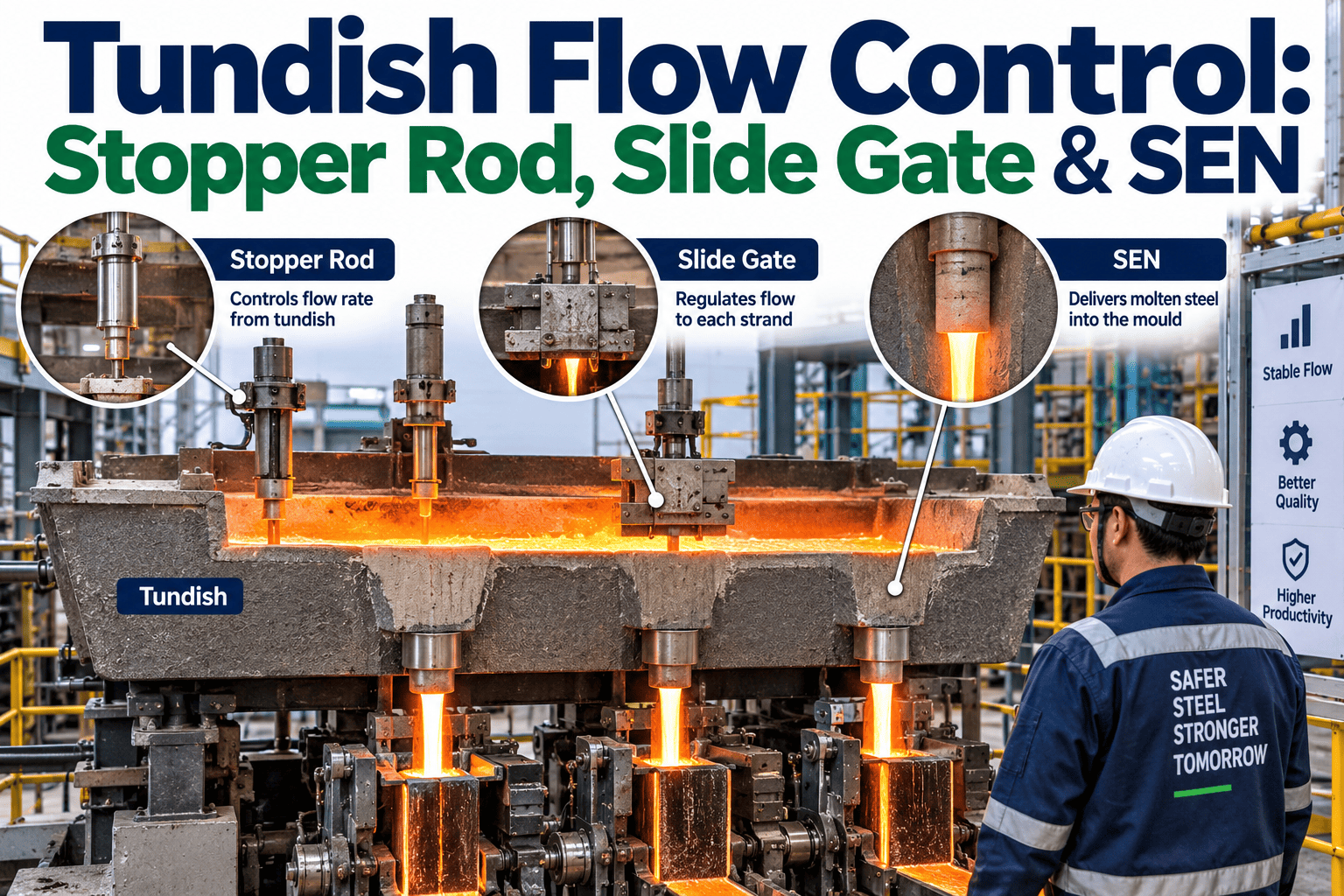
Stopper Rod and Nozzle Zone
Stopper rod position and nozzle condition tracked continuously to maintain consistent flow rate to the mold across every strand in the sequence.
Refractory Lining and Wear Zones
Lining wear tracked against sequence length and steel grade history to flag zones approaching the point where flow behavior may be affected.

From Flow Deviation to Strand-to-Strand Quality Gap

1
Flow Pattern Deviation Begins — Refractory wear, furniture condition, or level fluctuation starts shifting the flow pattern away from the design intent for a specific strand.
2
Residence Time Shortens — Inclusions have less effective residence time to float out before reaching the outlet, reducing removal efficiency for that specific strand.
3
Cleanliness Diverges Between Strands — One or more strands begin showing measurably different inclusion content compared to others in the same sequence.
4
Quality Inconsistency Reaches the Customer — Strand-to-strand cleanliness variation surfaces as inconsistent quality across a shipment, complicating customer qualification for premium applications.
Model Your Tundish Flow Pattern Before Your Next Sequence

iFactory connects to existing tundish level, stopper rod, and thermal instrumentation to continuously model flow pattern and cleanliness performance, helping process engineers keep every strand in a sequence consistent.

Standard Practice vs AI Continuous Flow Modeling

Scroll to compare approaches
Tundish Management Task Standard Practice Review iFactory AI Continuous Flow Modeling
Flow Pattern Assessment Furniture design validated primarily through physical or offline modeling during initial design, not adjusted live Flow pattern modeled continuously against live level and thermal data throughout the actual sequence
Strand-to-Strand Consistency Consistency assessed after casting through sample analysis, often after the sequence is complete Strand-level flow differences flagged during the sequence, allowing timely process adjustment
Refractory Wear Awareness Wear assessed primarily through visual inspection between sequences Wear trend tracked continuously against sequence length and grade history for proactive planning
Stopper Rod Control Optimization Control adjustments based on operator experience and general practice guidelines Control recommendations informed by live flow modeling specific to the current tundish condition

Before and After AI Tundish Flow Modeling

Before AI Flow Modeling
Strand-to-strand cleanliness differences discovered through sample analysis after the sequence is complete
Refractory wear assessed mainly through visual inspection between sequences rather than continuously
Furniture configuration validated at design time without live adjustment during actual operation
After iFactory AI Flow Modeling
Strand-level flow differences flagged during the sequence, supporting timely process correction
Refractory wear tracked continuously against sequence length, supporting proactive campaign planning
Stopper rod and furniture recommendations informed by live flow data specific to current tundish condition

Expert Perspective

Tundish operations get less attention than the mold or the ladle furnace, but strand-to-strand cleanliness variation almost always traces back to something happening inside the tundish that we could not see clearly with our old approach of reviewing sample results after the sequence was already finished. The flow modeling gave us a live view of how the pattern was actually behaving as refractory wear progressed through a sequence, and we caught a developing asymmetry between two strands early enough to adjust stopper rod control before it affected a customer-critical order. Our strand-to-strand consistency on premium grades has improved meaningfully since we started acting on this data during the sequence itself rather than reviewing it afterward.
— Process Engineer, Continuous Casting Operations · Specialty Steel Producer

Frequently Asked Questions

Q: How does AI model tundish flow patterns without direct visual access to the vessel interior?
The model combines tundish level data, temperature measurements at multiple points, stopper rod position, and known furniture geometry to infer flow behavior using validated flow modeling techniques, rather than requiring direct visual observation of the molten steel inside the vessel. This approach is calibrated against historical cleanliness outcomes to improve accuracy over time. Book a Demo to see how the flow model correlates with your cleanliness data.
Q: Can this help optimize tundish furniture design for a specific grade mix?
Yes, by correlating furniture configuration and flow pattern data with actual cleanliness outcomes across many sequences, the model can highlight which configurations perform best for specific grade groups, supporting furniture design decisions with real operational data rather than relying solely on offline physical modeling. Contact our team to discuss furniture optimization for your grade portfolio.
Q: How does refractory wear tracking help with sequence length planning?
Continuous wear tracking against sequence length and grade history gives process engineers a data-backed view of how much sequence length remains before wear begins measurably affecting flow pattern and cleanliness, supporting more confident sequence planning decisions rather than relying on generalized wear assumptions.
Q: What data does iFactory need to build a tundish flow and cleanliness model?
The platform typically uses tundish level sensors, temperature measurements, stopper rod position logs, and historical cleanliness sample results, most of which are already captured by standard tundish process control and quality systems at most continuous casting operations.
Q: How long before a tundish flow model becomes reliable for a specific caster?
Most operations see an initial working model within four to six weeks, with accuracy continuing to build over subsequent sequences as the system observes a wider range of grades, furniture configurations, and refractory wear stages specific to that tundish.
Keep Every Strand Consistent with Continuous AI Tundish Flow Modeling

iFactory helps process engineers manage tundish flow control, inclusion removal, and refractory wear continuously, reducing strand-to-strand quality variation across every sequence.


Share This Story, Choose Your Platform!