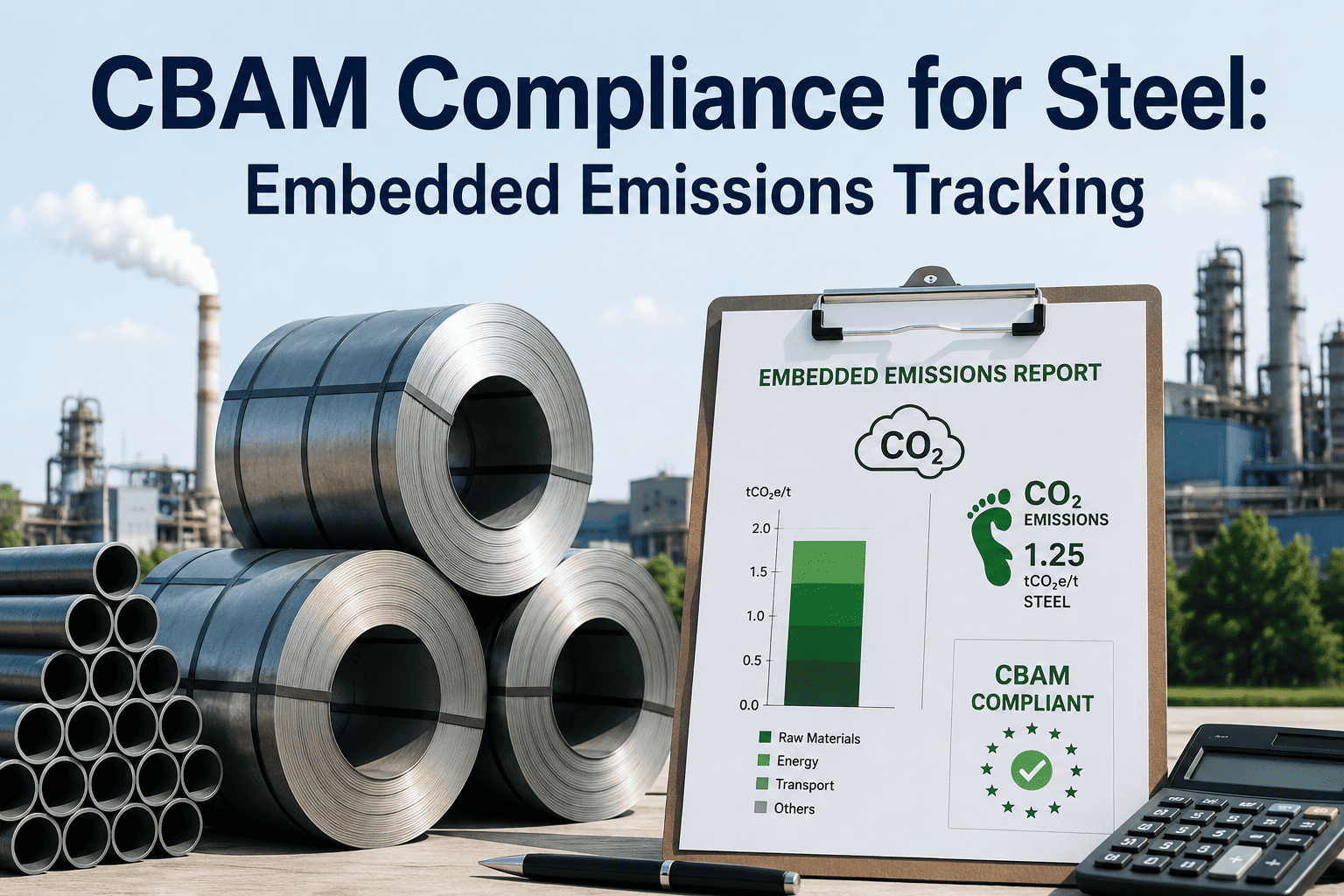
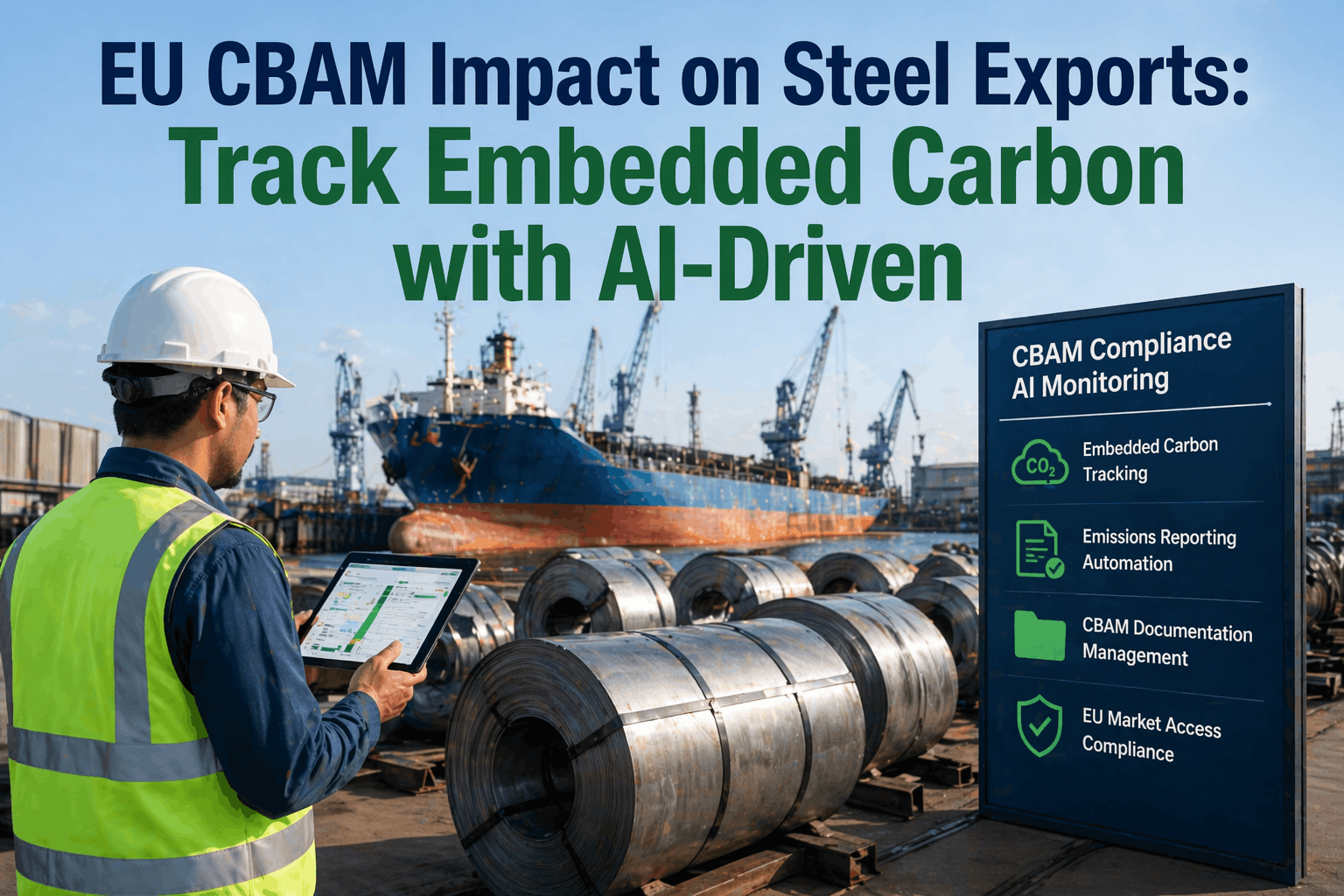
CBAM stopped being a paperwork exercise in January 2026. Since then, EU importers of steel products have had to purchase CBAM certificates matching the actual embedded emissions of what they bring in, which means the difference between a rough default emissions value and a precise, verified calculation now shows up directly on a balance sheet. Exporters who can't produce audit-ready embedded emissions data are increasingly finding their EU customers pricing that uncertainty into the deal, or looking elsewhere. Our compliance and sustainability team can review what your current emissions data infrastructure would need to support CBAM-grade reporting.
Energy & Decarbonization — CBAM
CBAM Is Financial Now, Not Just Administrative
Since January 2026, EU importers pay for the actual embedded emissions in the steel they bring in. AI-automated tracking turns your operational data into the verified, audit-ready numbers CBAM certificates require.
CBAM Timeline
2023–2025: Transitional reporting, no certificate cost
Jan 2026: Certificate purchase requirement begins
Ongoing: Default values phased down, verified data required
Why Default Values Are Becoming an Expensive Fallback
Early in the transitional period, exporters without verified emissions data could rely on regulatory default values as a fallback for CBAM reporting. Those defaults were deliberately set conservative, meaning they tend to overstate actual embedded emissions for producers running efficient processes, and as certificate purchase requirements phase in, that overstatement now translates directly into a higher certificate cost than the exporter's actual emissions performance would justify.
The practical effect is that steel producers who can demonstrate genuinely lower embedded emissions than the default value have a real financial incentive to invest in verified reporting, since the gap between default and actual can represent a meaningful per-ton cost difference on every shipment into the EU market.
Jan 2026
certificate purchase requirement became active for CBAM goods
Conservative
default values generally overstate actual embedded emissions
Multiple
data sources typically needed for a verified embedded emissions calculation
What Actually Goes Into an Embedded Emissions Calculation
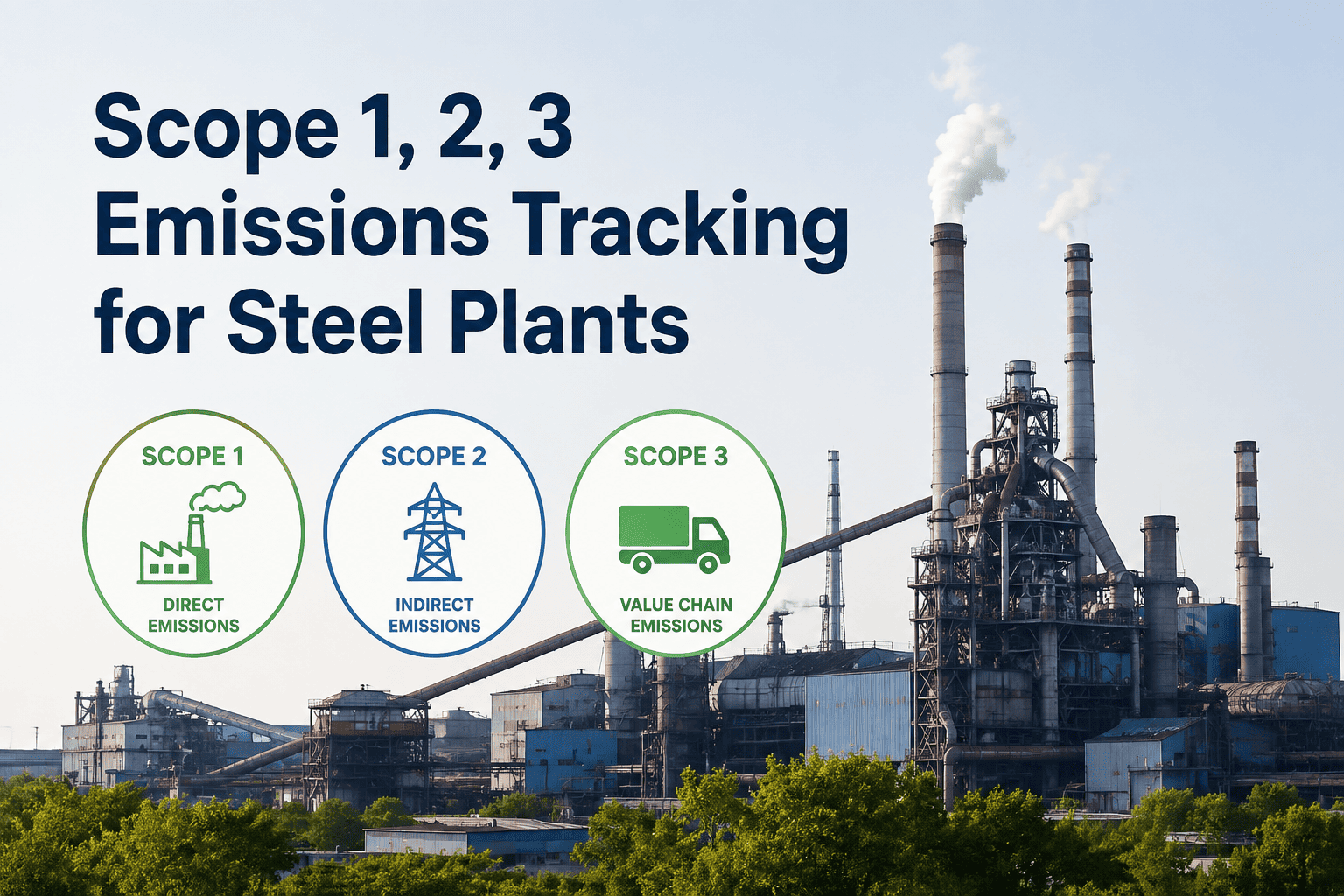
CBAM embedded emissions calculations for steel products combine direct emissions from the production process itself with indirect emissions from purchased electricity, tracked at the level of specific production routes and, in many cases, specific installations rather than an industry-wide average. Assembling this accurately means pulling together data that often lives in separate systems across a plant.
Fuel Consumption
Direct process fuel use by production route, tracked per unit of output.
Electricity Sourcing
Grid mix or purchased power agreements determining indirect emissions factor.
Process Route Data
BF-BOF versus EAF versus DRI routes carry meaningfully different emissions profiles.
Production Volume
Output data needed to express emissions on the required per-ton basis.
Not sure whether your current data infrastructure can support verified CBAM reporting?
Book a walkthrough and we'll review what's needed against what you already track.
Where AI Actually Fits in the CBAM Workflow
The compliance challenge with CBAM isn't usually a lack of underlying data, it's that the data needed for a verified calculation is scattered across energy metering systems, production logs, and procurement records that weren't originally built to talk to each other or to output numbers in the specific format CBAM reporting requires. AI-assisted automation focuses on that integration and calculation layer.
1
Pull fuel, electricity, and production data from existing plant systems automatically
2
Calculate embedded emissions per shipment using the correct CBAM methodology
3
Flag data gaps or inconsistencies before they become a verification issue
4
Generate audit-ready reporting packages formatted for CBAM declarant submission
| Reporting Approach | Data Source | Certificate Cost Implication |
|---|
| Default values | Regulatory fallback, not producer-specific | Generally higher, conservative overstatement |
| Manual verified calculation | Producer data, compiled manually | Accurate but slow and error-prone at scale |
| Automated verified calculation | Producer data, integrated automatically | Accurate, audit-ready, and scalable across shipments |
Why This Matters Beyond the Certificate Line Item
Producers who can consistently deliver verified, audit-ready embedded emissions figures put their EU customers in a stronger compliance position too, since the importer of record carries ultimate responsibility for accurate CBAM declarations. That reliability becomes a competitive factor in its own right as EU buyers increasingly weigh a supplier's emissions reporting maturity alongside price and quality when making sourcing decisions in a market where certificate costs are now a real line item.
Lower Certificate Cost
Verified data replaces conservative default value overstatement.
Audit-Ready Reporting
Data compiled and formatted to CBAM methodology automatically.
Stronger Customer Position
Reliable emissions data becomes a differentiator with EU buyers.
Frequently Asked Questions
What exactly changed for steel importers in January 2026?
The transitional reporting-only period ended and the definitive CBAM regime began requiring importers to purchase CBAM certificates corresponding to the embedded emissions of the goods they bring into the EU, meaning the certificate cost became an actual financial obligation tied to reported emissions figures rather than a data collection exercise. This shift is what turned the accuracy of embedded emissions reporting from a compliance detail into a direct cost driver for both EU importers and the exporters supplying them.
Reach out to our team for a walkthrough of what this means for your specific export volume.
Can we still use default values if our verified data isn't ready yet?
Default values generally remain available as a fallback option during the current phase, but they're being progressively restricted and tend to produce a higher certificate obligation than verified producer-specific data would, since they're deliberately calibrated conservative. Producers planning to rely on default values as a long-term strategy should expect that option to narrow over time, which makes building toward verified reporting capability a matter of when rather than if for exporters serious about the EU market.
Book a demo to see a comparison between your likely default value exposure and a verified calculation.
How is embedded emissions data actually verified for CBAM purposes?
Verification generally involves an accredited third-party verifier reviewing the producer's methodology and underlying data against CBAM's required calculation approach, which is why having data already organized, traceable, and consistent across reporting periods significantly smooths the verification process compared to compiling it manually under time pressure. An automated data pipeline that maintains this traceability as a byproduct of normal operation tends to make each verification cycle faster and less disruptive than starting from scratch each time.
Talk to our team about how this fits alongside your existing verification provider relationship.
Does this only apply to direct EU exports, or also to steel used in exported downstream products?
CBAM's current scope centers on direct imports of covered goods including specific steel product categories, though the regulation's coverage has been expanding since introduction and downstream product scope is an area worth monitoring if your steel feeds into further-processed goods destined for the EU. Producers exporting both direct steel products and components that get incorporated into other manufactured goods bound for the EU should track both channels, since scope changes can affect reporting obligations with limited lead time.
Book a walkthrough to discuss how current scope applies to your specific product mix.
How long does it take to move from default values to a fully verified reporting process?
Timeline depends heavily on how scattered or centralized your existing fuel, electricity, and production data already is, since plants with data already flowing into a unified historian or ERP system can typically stand up automated calculation faster than those relying on manual logs across multiple disconnected systems. Most producers find the data integration work is the longer pole in the process, while the calculation methodology itself, once data is flowing reliably, can be configured relatively quickly against CBAM's published requirements.
Reach out to get a realistic timeline estimate based on your current systems.
Turn Compliance Data Into a Cost Advantage
Move From Default Values to Verified, Audit-Ready Reporting
Share what your current emissions data infrastructure looks like and we'll show you what a verified CBAM calculation would mean for your certificate exposure.