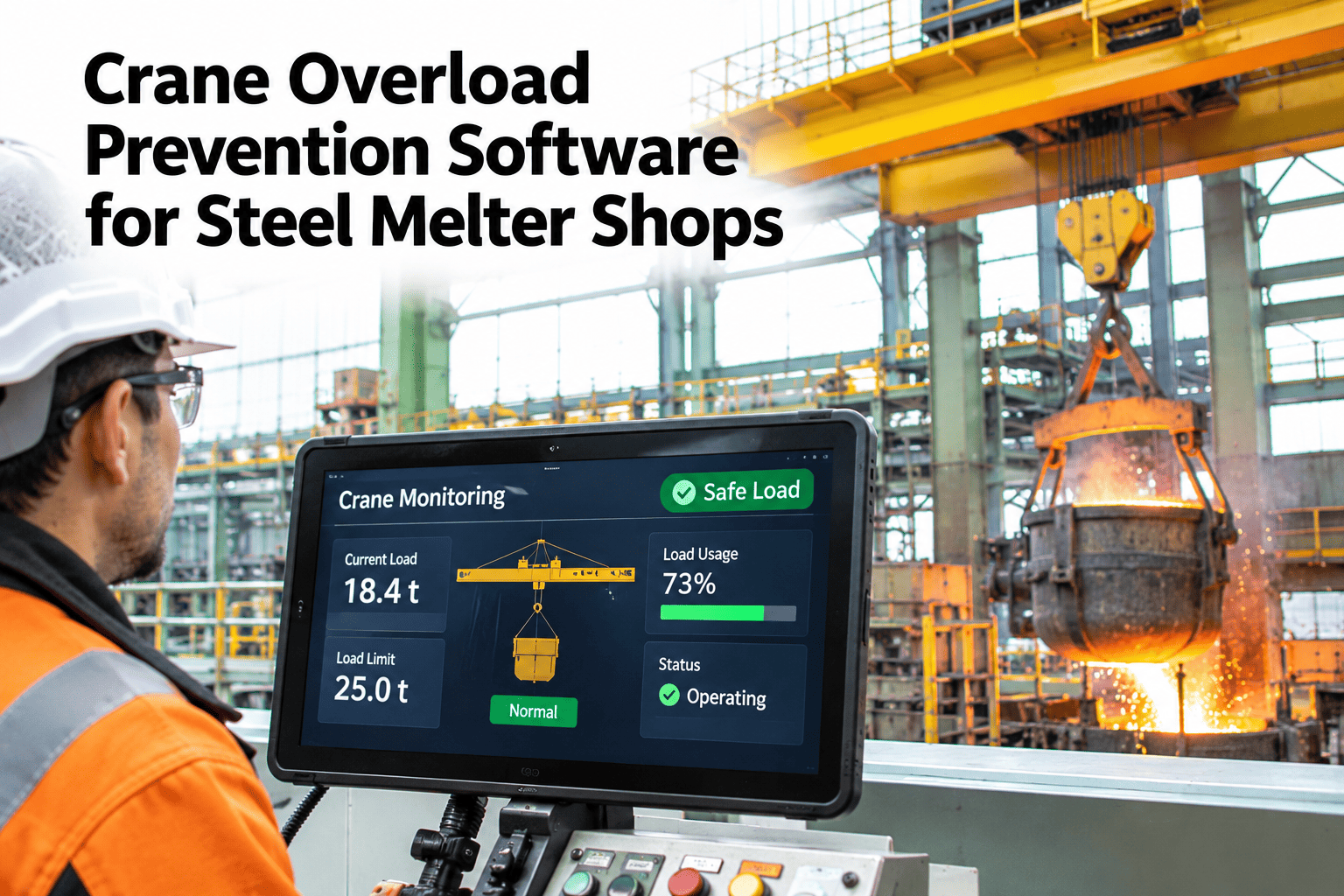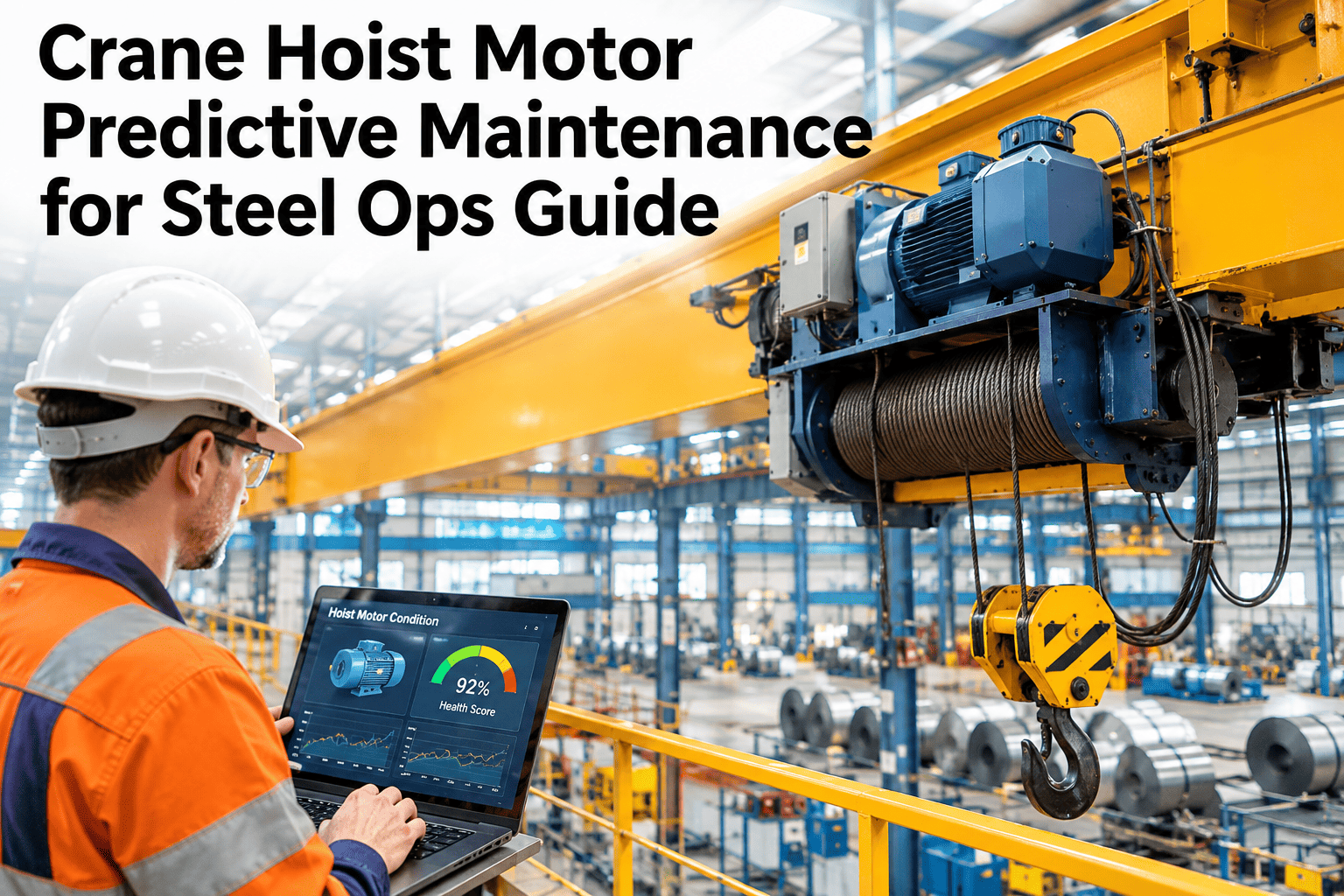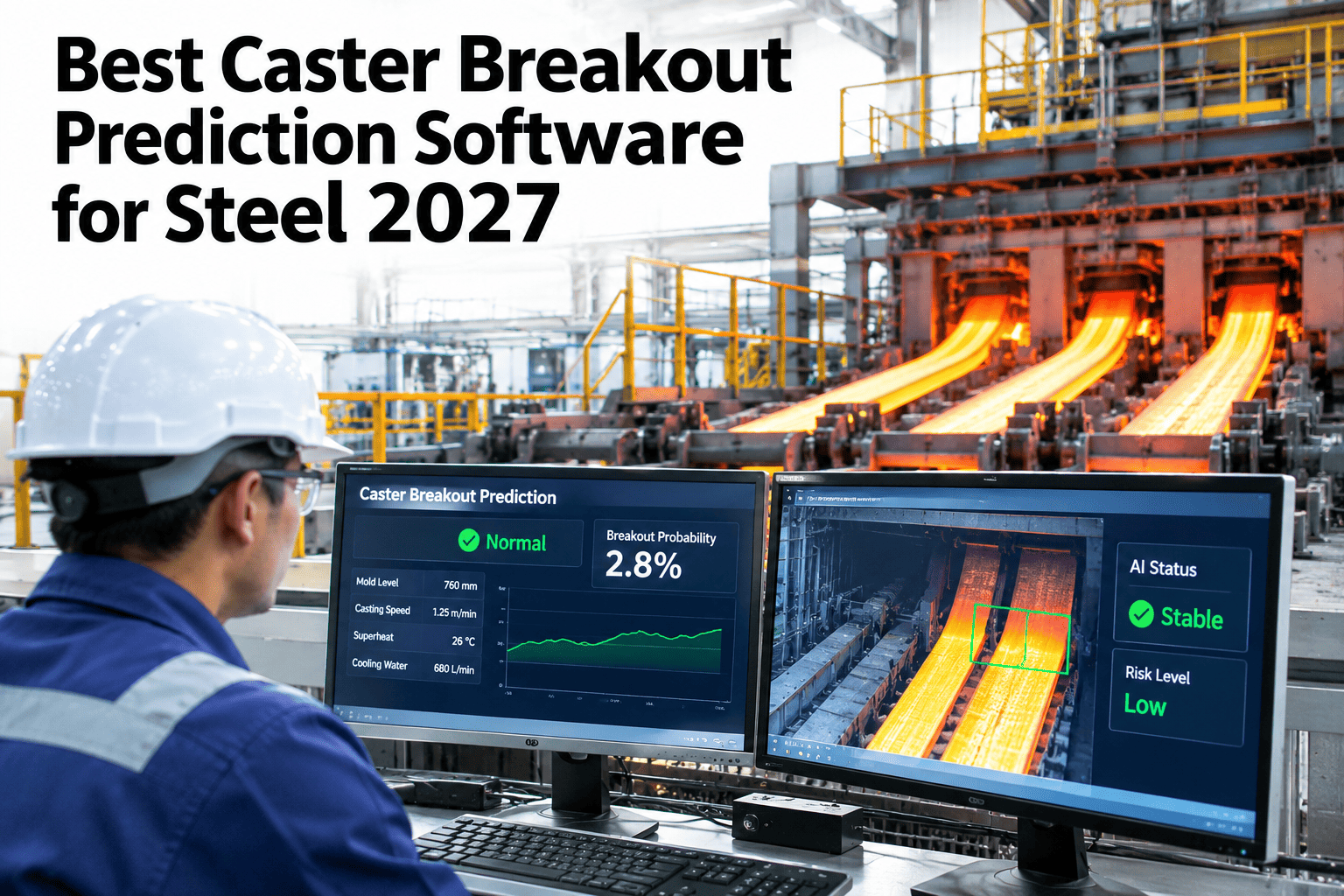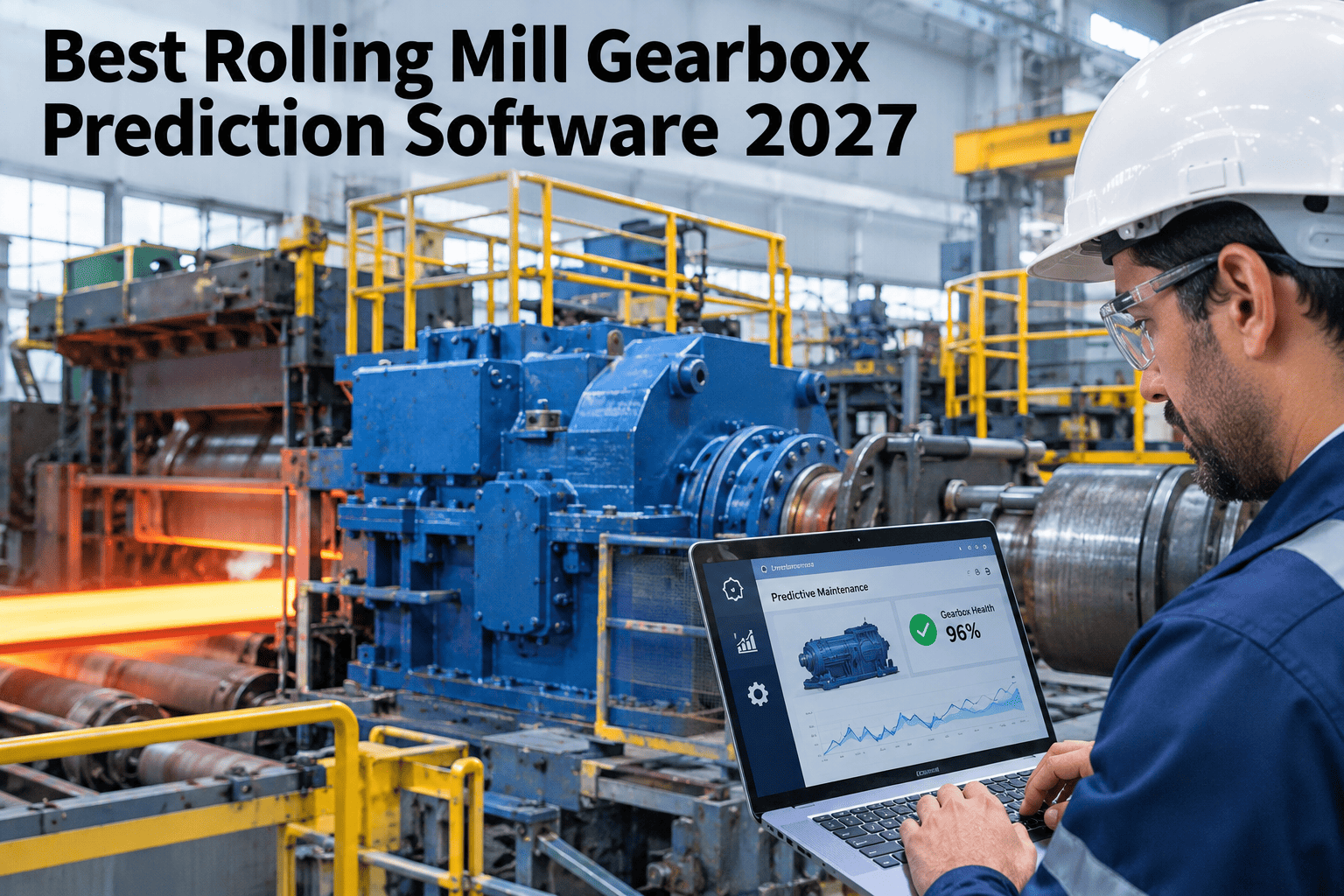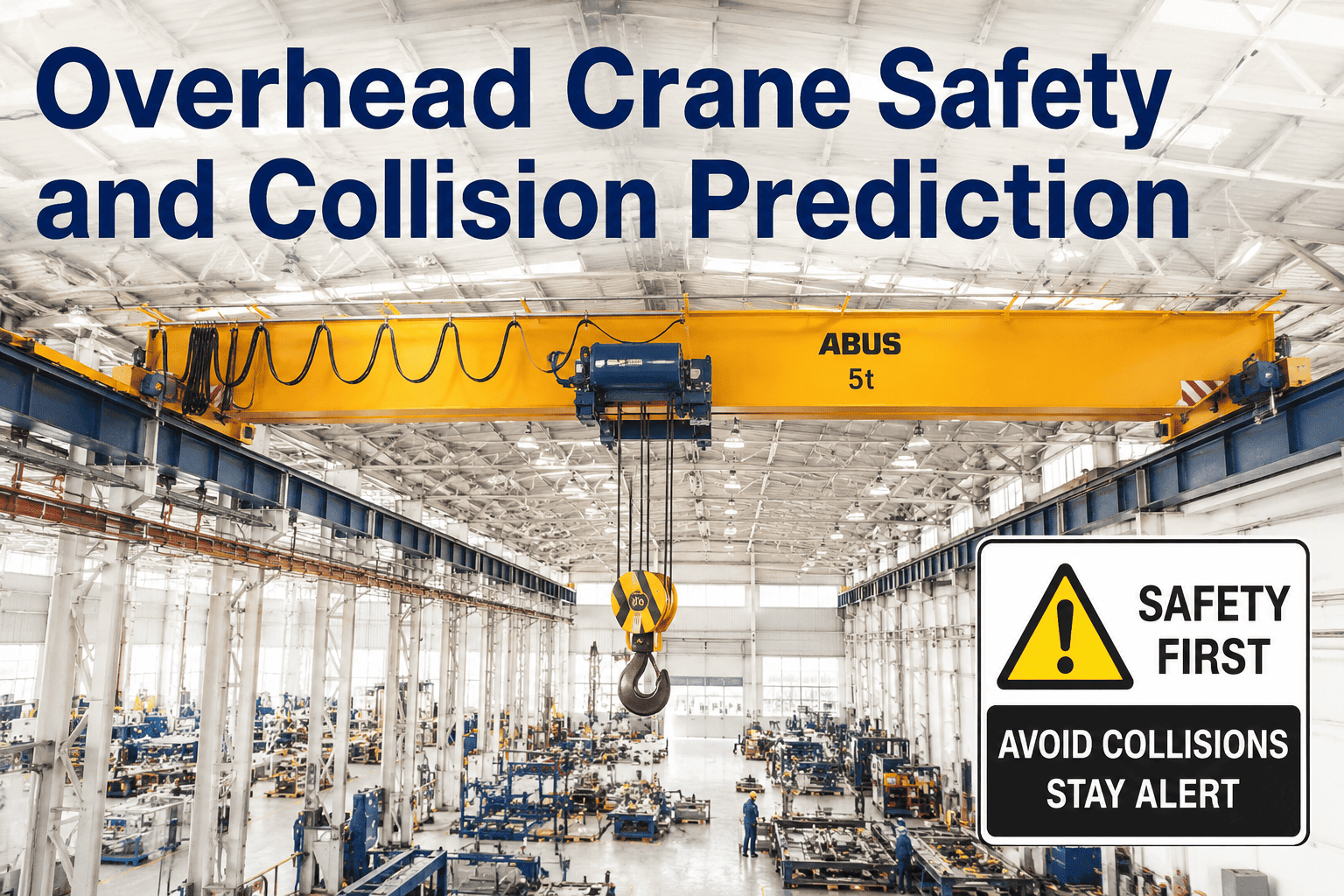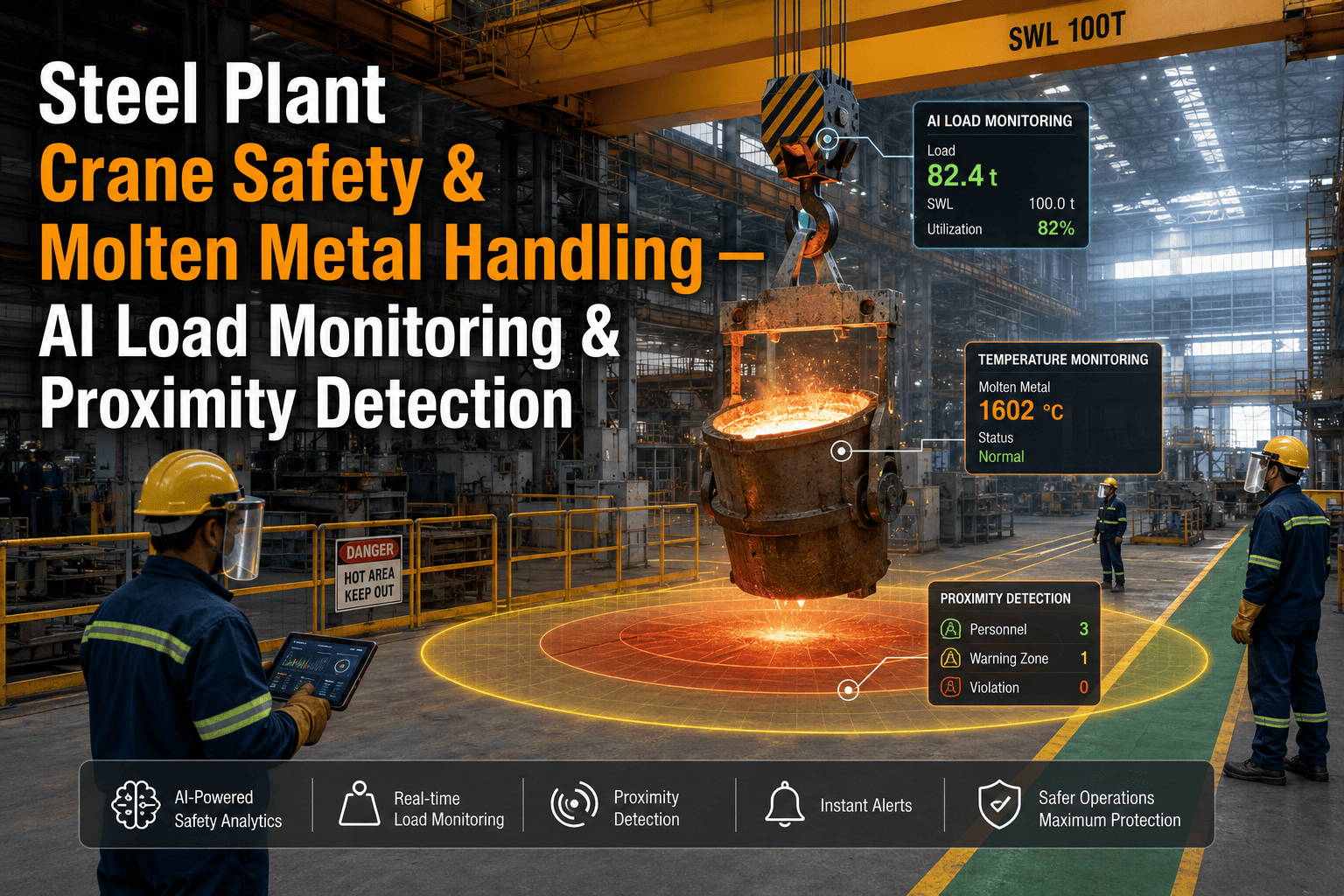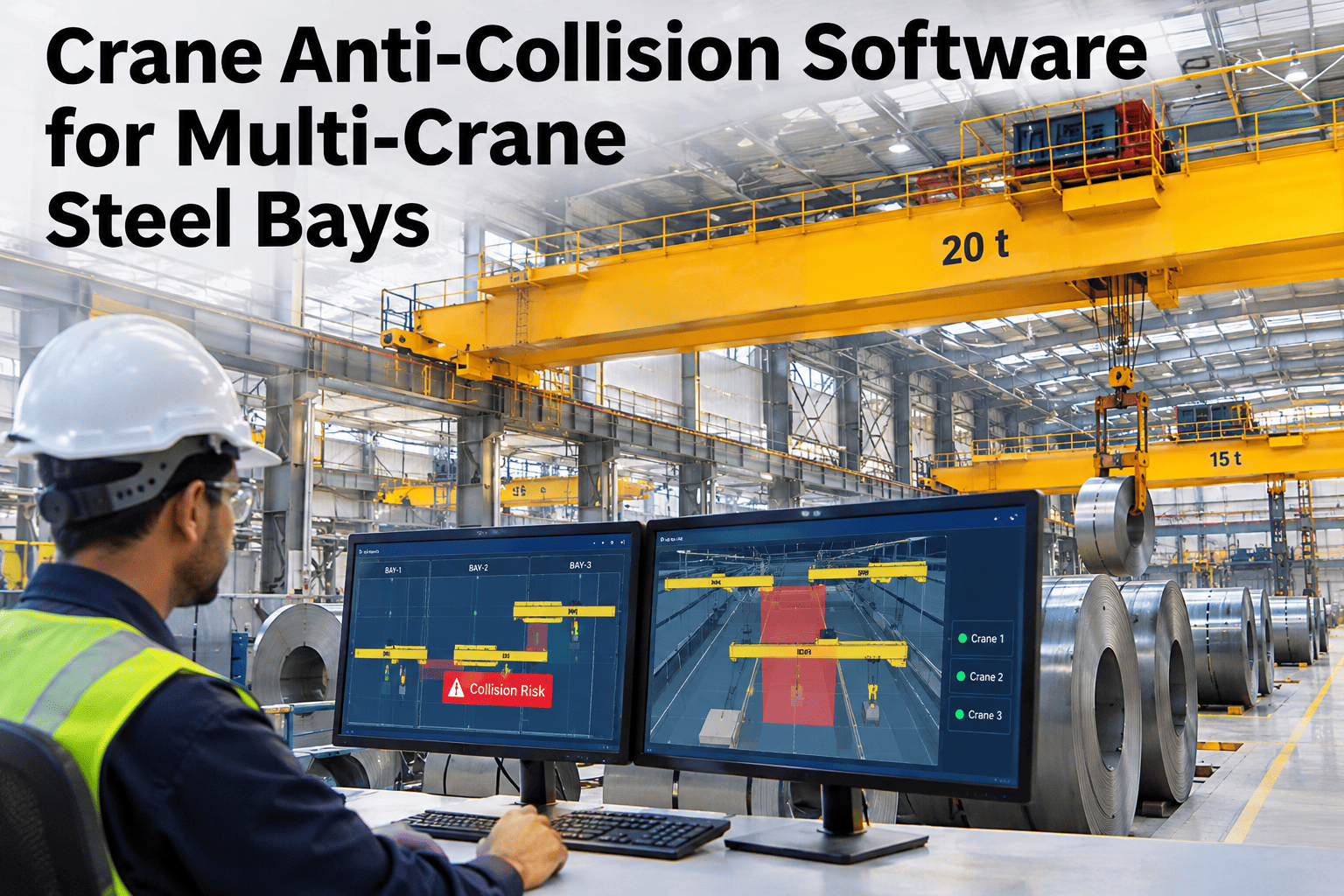
Multiple cranes operating on the same runway is standard practice in steel mill melt shops and casting bays, and it's also where crane-to-crane and crane-to-fixed-object collision risk concentrates, because two independently operated machines sharing one physical path have no inherent way to know where the other actually is. Position tracking, path prediction and automatic slow-down control close that gap without relying on an operator in one cab seeing a crane they may not have line of sight to at all. iFactory AI's steel operations team can review your current multi-crane bay layout against these three protection layers before your next safety audit.
Two Cranes Sharing a Runway Have No Natural Way to Know Where the Other Is
Position tracking, path prediction and automatic slow-down control eliminate crane-to-crane and crane-to-fixed-object collisions that depend on operator line of sight alone.
Why Operator Line of Sight Isn't Enough
Weekly travel-limit and anti-collision checks are a baseline requirement, confirming a crane slows down and stops before end stops or another crane, but the underlying risk in a busy multi-crane bay is bigger than the mechanical limit switch at the end of the runway. Workers and equipment moving between two cranes operating on the same path, or two cranes approaching each other around a visual obstruction, create collision risk that an individual operator simply cannot always see coming in time to react manually.
Two cranes on the same rail have no inherent awareness of each other's position.
Equipment, structure and steam in a melt shop regularly block direct line of sight.
A crane approaching a structural obstruction needs the same slow-down logic.
A manual reaction to a sudden visual sighting may come too late at operating speed.
Three Layers of Collision Protection
Each layer builds on the one before it to give progressively more reaction time. Our team can review which of these layers your current bay already has.
Every crane's real-time location on the runway, independent of operator line of sight.
Current speed and direction projected forward to flag a closing distance before it's close.
A warning in the cab as the predicted paths approach each other.
If the warning isn't acted on, the system slows or stops the crane automatically.
Collision Types and How Each Layer Addresses Them
| Collision Type | Primary Risk Factor | Key Protection Layer |
|---|---|---|
| Crane-to-crane, same runway | No awareness of the other crane's position | Position tracking + path prediction |
| Crane-to-fixed-object | End-of-travel or structural obstruction | Travel limit + automatic slow-down |
| Crane-to-worker | Visual obstruction, worker in the path | Position tracking + proximity alerting |
Map Your Bay's Actual Collision Exposure
Share your bay layout and current crane count, and see where position tracking and path prediction would add protection beyond existing travel limits.
A Composite Scenario: The Near-Miss Nobody Saw Coming
Picture a melt shop bay running three cranes on overlapping runways, where steam and structural equipment regularly obstructed direct line of sight between operators in different cabs.
A near-miss between two cranes approaching each other around a steam-obscured section of the runway highlighted that operator visual awareness alone could not be relied on in that part of the bay. Adding position tracking and path prediction meant the system flagged the closing distance and triggered an automatic slow-down well before either operator could have seen the other crane visually. The scenario illustrates the stakes; actual collision risk depends on each bay's specific layout and crane count.
Where iFactory AI Fits
iFactory AI tracks every crane's position continuously, predicts closing paths before cranes or fixed objects come into visual range, and triggers operator alerts followed by automatic slow-down if a warning isn't acted on in time.
Position tracking works regardless of steam, structure or obstruction.
Closing paths flagged before cranes are visually close to each other.
Slow-down engages even if the operator alert isn't acted on in time.
Frequently Asked Questions
Position tracking relies on sensors mounted on the cranes and runway rather than visual observation, so it continues functioning accurately regardless of steam, structural obstruction or distance between operators. Review tracking methods for your bay's conditions.
A travel limit switch stops a crane at a fixed physical end point, while anti-collision with path prediction continuously calculates closing distance between moving cranes anywhere along the runway, covering a much broader set of collision scenarios. Ask how this extends beyond basic travel limits.
Automatic intervention is typically a fallback that engages only if an operator alert isn't acted on as the predicted paths close, giving the operator the first opportunity to respond before the system takes over. Review the alert-to-intervention sequence.
Position tracking combined with proximity alerting can extend to flag a crane approaching a known worker location or restricted zone, though worker-specific protection typically requires its own tracking method layered onto the crane position system. Discuss worker proximity protection options.
Even two cranes on an overlapping runway carry meaningful collision risk, and that risk compounds quickly as more cranes share the same physical path, which is why most multi-crane melt shop and casting bays are strong candidates regardless of exact crane count. Assess your bay's specific risk level.
Stop Relying on Line of Sight to Prevent a Collision
iFactory AI tracks crane position, predicts closing paths and triggers automatic slow-down, so collision protection doesn't depend on what an operator can see.