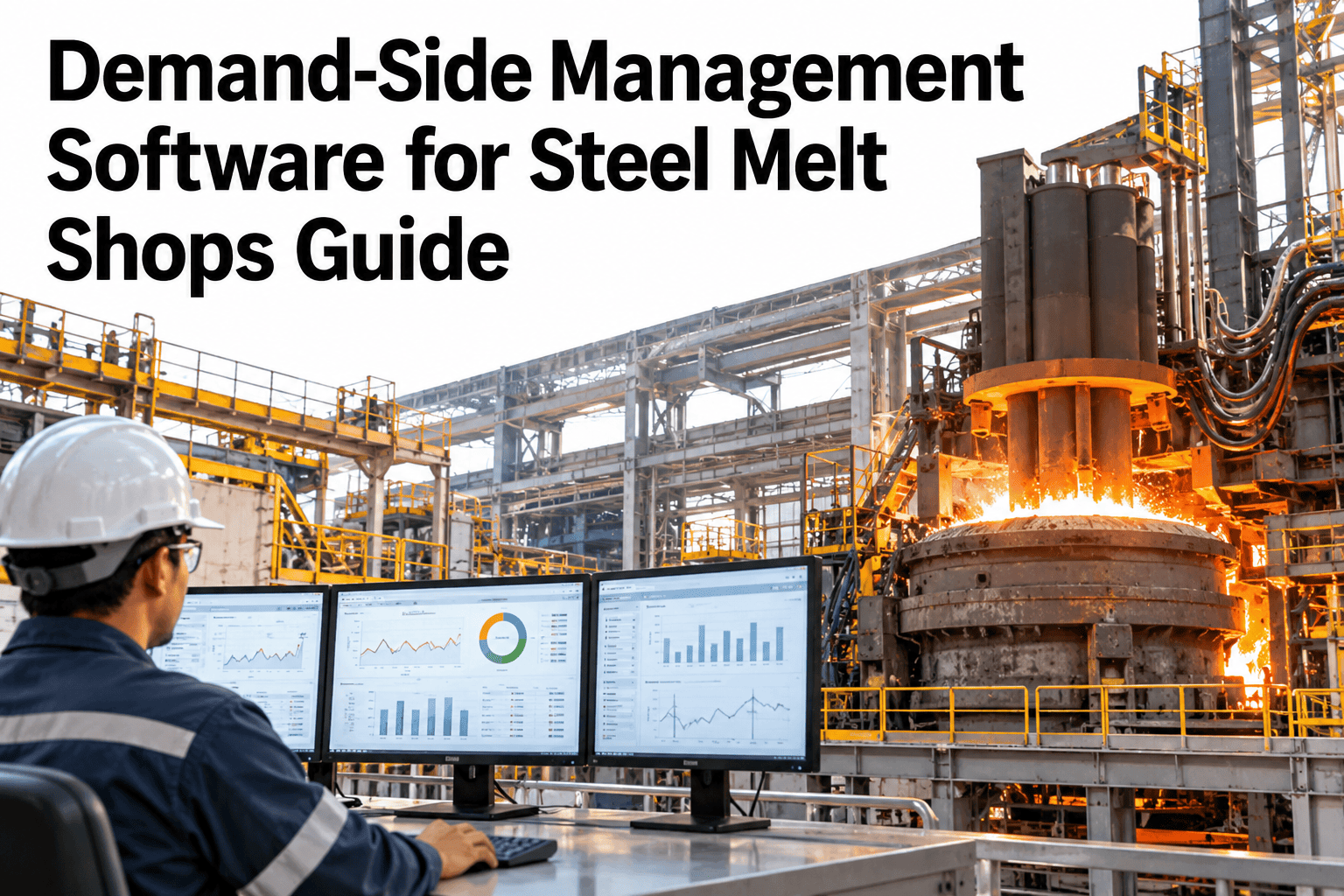
A steel melt shop has several loads that behave very differently. The electric arc furnace swings hard and fast, the ladle furnace holds temperature for the caster, the vacuum degasser runs on its own cycle and the continuous caster cannot stop at all. Demand-side management means watching all of them together, forecasting where demand is heading and deciding which loads can give way when a peak looms. Doing this manually works until the day two furnaces peak together. Plant teams can see a melt shop load view with forecasts and interruptible loads for their own layout before they commit to any tool.
Orchestrate Every Melt Shop Load Against the Peak
iFactory steel software monitors load in real time, forecasts demand and orchestrates interruptible loads across EAF, LRF, VD and casting.
The DSM Loop in Four Steps
Each step feeds the next, and the loop repeats every interval.
Melt Shop Loads and Their Interruptibility
Orchestration starts with an honest list of what can and cannot be interrupted.
| Load | Interruptibility | Notes |
|---|---|---|
| EAF | Shiftable between heats, rarely mid-heat | Tap-to-tap time and steel quality limit changes |
| LRF | Delayable within a window | Must still reach temperature for the caster |
| VD | Limited | Process cycle and vacuum conditions |
| Continuous caster | Not interruptible | Stopping creates serious production and safety issues |
| Auxiliaries | Good for short interruptions | Fans, pumps and compressors with process limits |
Forecast Against a Demand Limit
The forecast shows whether the interval will cross the limit while there is still time to act.
Conceptual forecast. Real forecasts use furnace stage, schedule and recent behavior.
What Goes Into a Good Forecast
A forecast improves when it knows what the furnaces are about to do, not only what they did.
Furnace stage
Where each heat is in its cycle and how long until the next high-draw phase
Schedule
Planned tap times and overlaps between furnaces
Recent load
Behavior within the current interval and the last several
Auxiliary status
Which compressors, pumps and fans are running or about to start
See Which of Your Melt Shop Loads Could Give Way
Share your furnace list, schedule and demand limits. We will map interruptible loads and show a forecast against your contract limit.
Order of Interruption: Least Painful First
Define the order in advance so nobody has to improvise under pressure.
Manual Peak Watching vs Orchestrated DSM
The difference shows up in the quiet minutes before a peak.
Alert Levels for Demand Control
A three-level alert system keeps attention where it is needed.
Where DSM Typically Helps
Gains come from several places. Rank them for your plant.
Illustrative benefit order. Your own load and tariff decide the real one.
What Experienced Melt Shop Managers Look For in DSM
Frequently Asked Questions
Can software really interrupt melt shop loads safely?
It can propose and execute changes inside limits that metallurgy and safety teams define. Critical loads such as the caster are excluded. Operators can approve, delay or cancel any action. Every automated action should be logged with a reason, so engineers can review it the next day and refine the limits. Review the interruption limits for your melt shop with our team before enabling control.
How accurate are interval demand forecasts?
Accuracy depends on how well the model knows each furnace stage and schedule. Forecasts improve as the interval progresses. They are meant to give time to act, not to be exact. Check forecast quality against past intervals before relying on it. Short intervals, such as the first minutes of a billing block, usually give the least accurate forecasts, so alerts there are cautious.
Do we need to control loads automatically from day one?
No. Many plants start in advisory mode, where the system shows forecasts and suggested actions and operators decide. Automatic control can be added later for selected loads. Advisory mode also produces a record of recommendations versus actions taken, which is useful evidence when the case for control is made. Plan a staged path from advice to control with our team.
How does DSM relate to contract demand charges?
Demand charges depend on the highest interval, so avoiding a single high interval can matter a lot. DSM watches those intervals and acts before they close. The saving depends on your tariff and how often you approach the limit. Reviewing past intervals that came close to the limit shows how often the plant was at risk and what a better response would have saved.
What data is needed to begin?
Load readings by feeder or furnace, schedules, furnace stage signals and your contract limits. Even partial data is enough for a first view, and missing signals can be added gradually as their value becomes clear. Check which of these your plant already records in a short walkthrough with our engineers.
Orchestrate the Whole Melt Shop Instead of Watching One Meter
Bring your layout, schedule and demand limits. We will show forecasts, interruptible loads and the order of action.