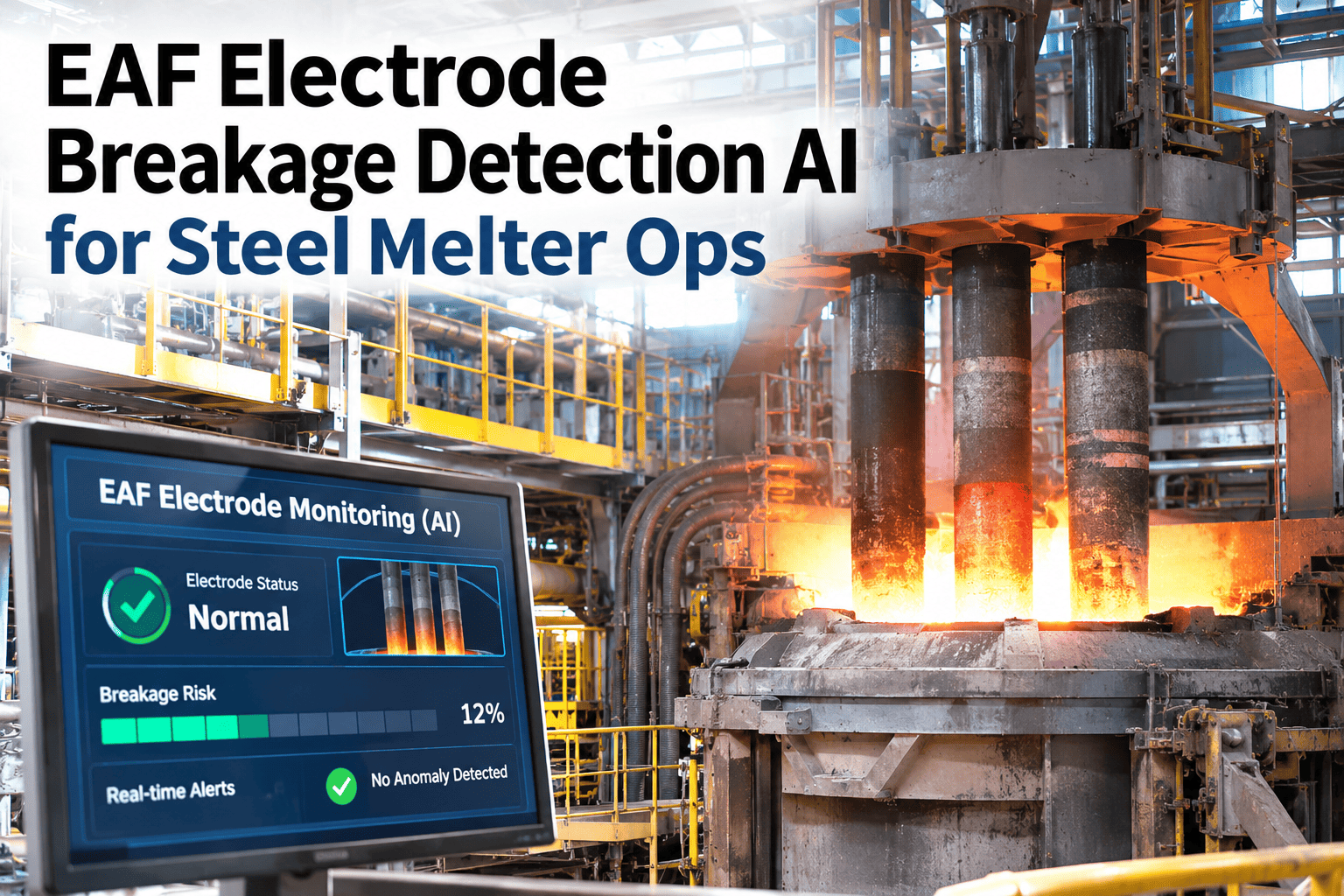
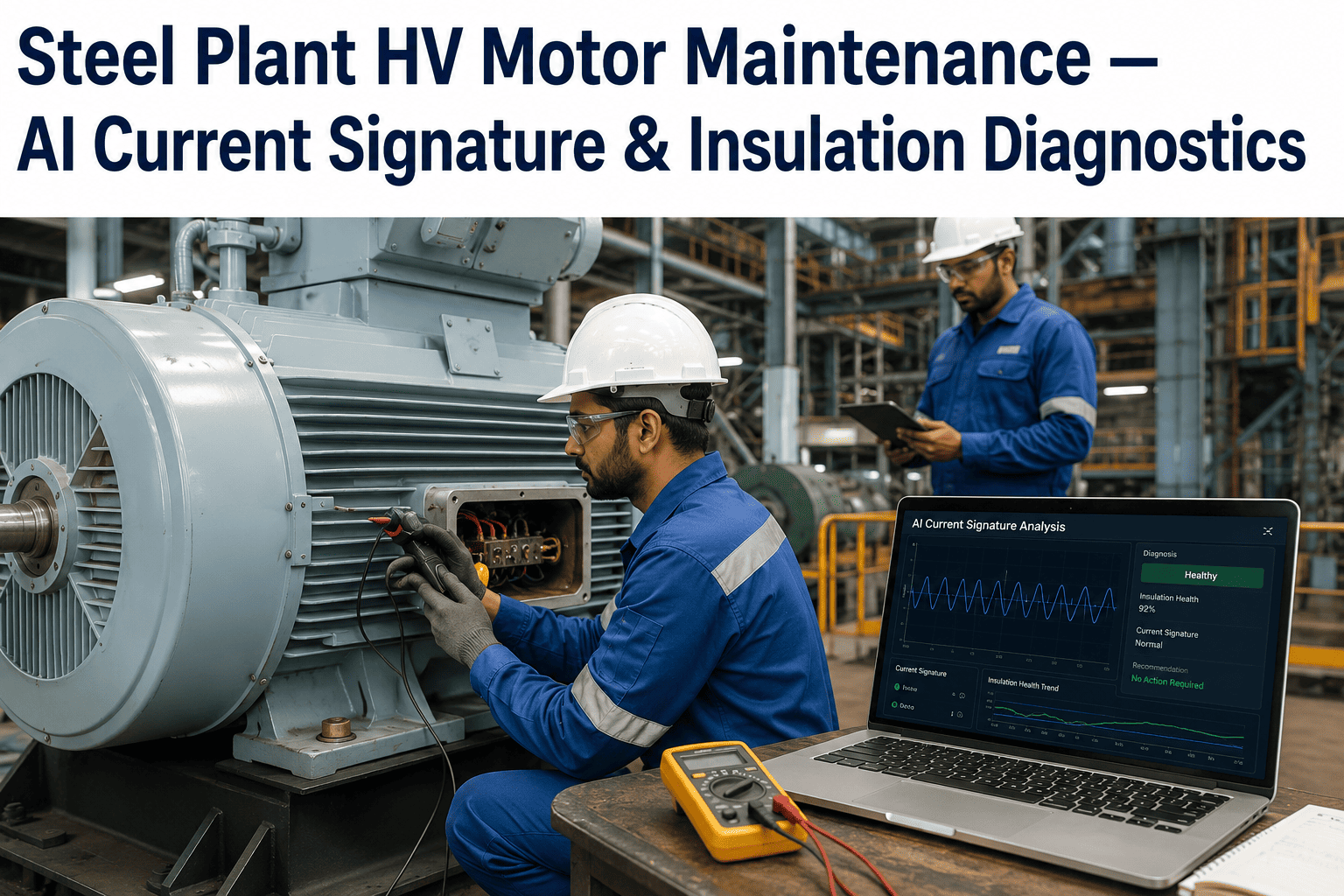
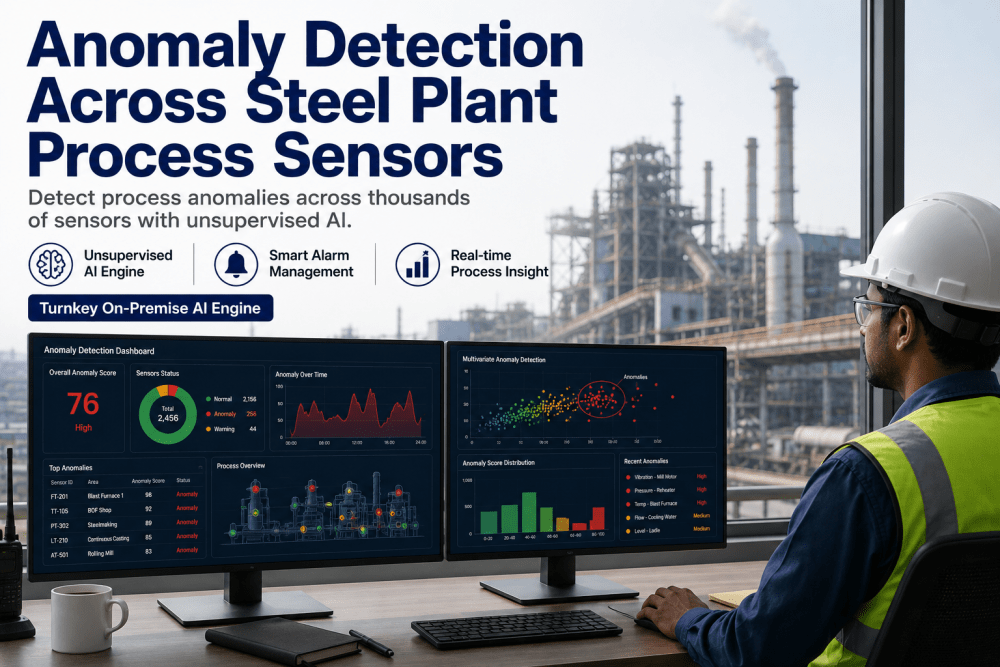
An electrode breakage in an electric arc furnace is one of the most disruptive events a melt shop can face, stopping production, risking equipment and sometimes putting people near a hazard, all in the span of a few seconds. By the time a breakage is visually obvious, the disruption has usually already started, which is why detection needs to run on current signature, position anomaly and acoustic signal rather than waiting for a human to notice. iFactory AI watches these signals continuously during every heat, and our team can walk you through how detection ties into your furnace control system.
Electric arc furnace, melter operations
Catch Electrode Breakage in Seconds, Not After the Fact
iFactory AI monitors current signature, electrode position and acoustic signal in real time to flag a breakage event as it happens, not after production has already stopped.
Why speed matters
Every Second of Delay After a Breakage Adds Cost and Risk
A broken electrode that continues to arc or drop into the bath unexpectedly can damage refractory, disrupt the melt and create a safety hazard for the floor crew.
Breakage occurs
Electrode fractures during the heat
Signal shifts
Current and position change abruptly
Delay without detection
Furnace keeps operating under abnormal conditions
Cost compounds
Refractory damage, lost heat, safety exposure
Detection signals
Three Signal Types That Reveal a Breakage
Current signature
A breakage produces a distinct, abrupt shift in electrode current draw.
Position anomaly
Electrode regulator position moves outside its expected control pattern.
Acoustic signature
A fracture event carries a distinct sound profile detectable near the furnace.
No single signal is perfectly reliable on its own, which is why combining all three sharply reduces both missed events and false alarms.
Review Your Current Breakage Response Time
Share a recent breakage event log and see how a combined signal model would have flagged it, and how much earlier.
Detection comparison
How Each Signal Contributes to Response Time
| Signal | What it catches | Typical response window |
|---|
| Current signature | Abrupt arcing or load change | Within seconds |
| Position anomaly | Regulator movement outside pattern | Within seconds |
| Acoustic signature | Fracture sound profile | Near-instant |
| Visual confirmation | Operator sees the break | Often delayed |
Response pipeline
Four Steps From Detection to Root Cause
1
Detect
Combined signal model flags the abnormal pattern.
2
Alert
Operator and control room receive an immediate alert.
3
Stabilize
Furnace operation is adjusted or paused to limit further damage.
4
Root cause review
Event data is reviewed to understand why the breakage happened.
Where breakages cluster
Breakage Risk Across the Heat Cycle
Breakage risk is not evenly spread across a heat. Certain phases carry more mechanical stress on the electrode.
Bore-in phaseHigh
Flat bath meltingLow
Refining phaseModerate
Electrode changeoutElevated
Tracking breakage events by heat phase helps focus operator attention where mechanical stress is highest. To build this view into your own reporting, ask our team about phase-level event tracking.
Cost of delayed detection
What a Slow Response Adds to a Breakage Event
This illustrative scale shows relative downtime and damage risk, not a fixed cost figure for any plant.
Expert review
A breakage event is also a data point about electrode quality, regulator tuning or bore-in practice. Treat each flagged event as a chance to trace a pattern back to its mechanical cause, not only as an alarm to clear.
Watch for
Breakage events that repeat at the same heat phase or electrode position.
Do next
Pilot combined-signal detection on one furnace and compare response time against current practice.
— iFactory steel specialists
Frequently asked questions
What Melt Shops Ask About Electrode Breakage Detection AI
How fast is a breakage actually detected?
Current signature and position anomaly signals typically surface within seconds of the event, and acoustic confirmation can arrive even faster, well ahead of a purely visual discovery.
See typical response times.
Why use three signals instead of just one?
Each signal has its own blind spots, so a current spike alone or a position shift alone can sometimes be a normal operating event rather than a breakage, and combining signals sharply cuts false alarms.
Ask about signal combination.
Does this integrate with our existing furnace control system?
In most cases the needed current and position data is already available from the furnace control system, and acoustic sensing is added as a supplementary signal, so integration focuses on data access rather than new hardware for every signal.
Discuss your control system.
Can this help reduce breakage events, not just detect them faster?
Reviewing event data by heat phase and electrode position often reveals a pattern tied to bore-in practice or regulator tuning, which operations teams can use to reduce how often breakages happen in the first place.
Ask about pattern review.
What happens right after a breakage is flagged?
The operator and control room get an immediate alert so furnace operation can be stabilized quickly, and the event data is retained for a root cause review afterward.
Talk through your response workflow.
From signal to safe response
Give Your Melt Shop a Faster Read on Electrode Breakage
Book a session with iFactory AI to review your current furnace signals and see how combined breakage detection fits your melt shop.