Steel Plant HV Motor Maintenance — AI Current Signature & Insulation Diagnostics
By James Smith on July 28, 2026
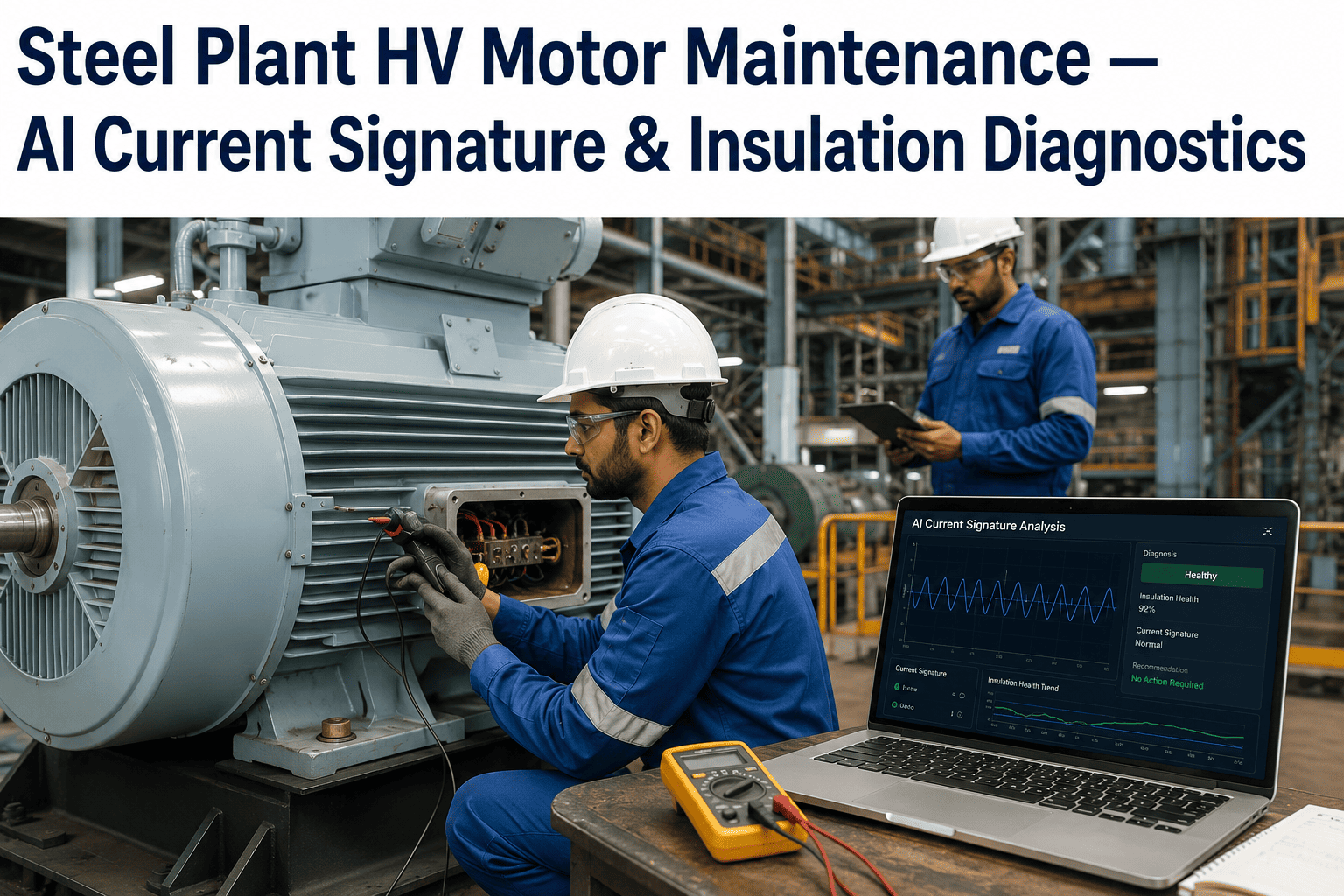
A 500kW mill drive motor and a 15MW blower motor fail for completely different reasons, but they share one thing: by the time a large HV motor trips on protection, the damage that caused the trip has usually been building for weeks. Stator winding insulation degrades slowly under thermal and electrical stress, rotor bars develop cracks that show up as a subtle current signature long before a bar breaks, and bearing wear on a motor this size can take down a mill, a fan, or a pump that the whole line depends on. Vibration alone, the traditional go-to for rotating equipment, misses a large share of these electrical failure modes entirely. Current signature analysis and insulation trending read the motor's electrical behavior directly, catching faults that pure mechanical monitoring was never built to see. iFactory's HV motor monitoring is built around exactly this combination.
iFactory HV Motor Diagnostics AI
Catch Stator, Rotor & Bearing Faults Before the Trip
Monitor 500kW-15MW motors driving mills, fans, and pumps with AI-based current signature analysis and insulation trending, reading the electrical signals that vibration monitoring alone misses.
Vibration analysis is well understood and effective for mechanical faults like bearing wear and misalignment, but a large share of HV motor failures originate electrically — in the stator winding insulation or in broken rotor bars — and those faults produce current signatures long before they produce a vibration signal strong enough to flag. A monitoring program built only around vibration is, in effect, blind to an entire category of failure that current signature analysis reads directly.
Vibration-Only Monitoring
Catches bearing wear and mechanical misalignment well
Rotor bar cracks often go undetected until they break fully
Electrical faults are only found once they cause mechanical symptoms
Current Signature + Insulation Trending
Reads electrical faults directly from stator current, not their side effects
Insulation resistance trended over time flags gradual degradation
Broken rotor bar signatures caught weeks before full failure
Combined with vibration, covers both electrical and mechanical fault paths
Reading the Motor's Electrical Signature
Every fault a motor develops leaves a mark on its current waveform, whether it is a cracked rotor bar producing sideband frequencies around the line frequency, or degrading insulation showing up as a gradual leakage current trend. The diagram below illustrates how current signature analysis extracts these fault-specific frequency components from what looks, on the surface, like a normal current waveform.
Current Signature — Fault Frequencies Hidden in the Waveform
What the AI Layer Tracks Across the Motor Fleet
Coverage spans the fault paths that matter most for large HV motors driving critical steel plant equipment, combining electrical and mechanical signals into one condition picture per motor.
Stator Winding Insulation
Insulation resistance and leakage current trended over time to catch thermal and electrical aging before a ground fault.
Rotor Bar Condition
Current sideband analysis detects cracked or broken rotor bars weeks before a full bar failure disables the motor.
Bearing Condition
Vibration signatures combined with current analysis catch bearing wear from both the mechanical and electrical fault paths.
Load & Thermal Stress
Tracks operating load against motor rating to flag chronic overload conditions accelerating insulation aging.
Want to see this run against your own motor current data? Book a 30-minute walkthrough with our reliability team.
Why This Matters More on Large Motors
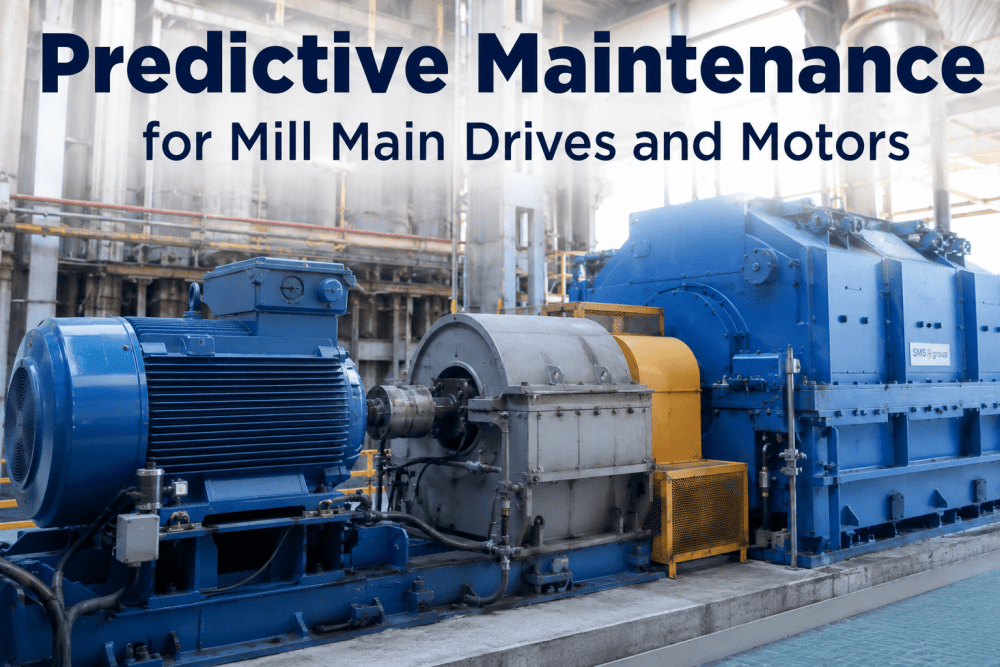
A 500kW pump motor failing is a maintenance event; a 15MW mill drive motor failing can take down an entire production line for days while a replacement or rewind is arranged, since motors of that size are rarely stocked as spares. The economic weight of these failures scales directly with motor size, which is why early detection on the largest motors in the plant delivers the highest return of any single monitoring investment in the electrical fleet.
Weeks
Advance warning
on rotor bar and insulation faults before failure
Fewer
Unplanned trips
on critical mill, fan, and pump drive motors
Longer
Insulation life
overload and thermal stress flagged before it accelerates aging
Full
Fault path coverage
electrical and mechanical signals combined per motor
Curious what your critical motor fleet's condition picture would show? Talk to our diagnostics team about connecting your drives.
Frequently Asked Questions
How is current signature analysis different from the vibration monitoring we already run?
Vibration monitoring reads mechanical behavior, so it is effective for bearing wear and misalignment but generally insensitive to early-stage electrical faults like winding insulation degradation or a developing rotor bar crack, since those faults often do not produce a strong vibration signal until they are advanced. Current signature analysis reads the motor's electrical waveform directly, extracting fault-specific frequency components that show up well before the fault would register mechanically, which is why the two approaches are typically run together rather than as substitutes for each other.
Do we need to install new sensors on every motor, or can this use existing instrumentation?
In many cases, current signature analysis can be performed using current transformers that are already installed for protection or metering purposes, meaning no new sensor hardware is required for that part of the monitoring. Insulation resistance trending typically requires periodic testing data or a dedicated online insulation monitor, and the specific approach depends on what instrumentation is already present on each motor and how continuously you want that data collected.
Can this tell us how much life is left in a motor's insulation, or just that it's degrading?
The system trends insulation resistance and leakage current over time against the motor's operating history, which gives a much clearer picture of the rate of degradation than a single periodic test ever could. While it cannot predict an exact remaining-life figure with certainty, the trend line typically gives maintenance planners enough lead time to schedule a rewind or replacement during a planned outage rather than reacting to a ground fault trip.
How quickly can a rotor bar fault be detected after it starts developing?
A cracked rotor bar produces sideband frequencies around the line frequency in the stator current almost as soon as the crack begins to affect current flow, and continuous monitoring means that signature can be picked up and trended from an early stage rather than waiting for a periodic test. In practice this typically gives weeks of advance notice before a bar would progress to a full break, which is enough time to plan a motor swap or repair during scheduled downtime.
Does chronic overload on a motor actually show up in this kind of monitoring?
Yes — operating load is tracked continuously against the motor's rated capacity, and a pattern of sustained overload is flagged because it is one of the most common accelerants of insulation aging on large HV motors. Surfacing that pattern gives plants the option to address the root operational cause, whether that's a process change or a motor resizing, rather than only treating the resulting insulation degradation after it has already progressed.
Read the Signal Before the Motor Trips.
See Current Signature & Insulation Trending on Your Own Motors
Bring current or insulation test data from a critical mill, fan, or pump motor. We'll show how AI reads the electrical signature and flags stator, rotor, and insulation faults weeks before a trip.