Stainless Steel Plant Maintenance — AOD, VOD, Pickling & Cold Rolling AI Monitoring
By James Smith on July 27, 2026
Stainless steel punishes equipment in ways carbon steel plants never have to think about. Chromium and nickel alloys run hotter and more corrosively through the AOD converter, VOD units hold vacuum seals that carbon steel processes don't need at all, and pickling lines bathe vessels and piping in acid that eats away at metal on a schedule no carbon-steel maintenance plan anticipates. A maintenance program borrowed from a carbon steel plant will consistently under-protect the equipment that is unique to stainless — and those failures are expensive, because AOD and VOD downtime stalls an entire specialty heat that can be worth far more than an equivalent carbon steel batch. AI monitoring built specifically around AOD, VOD, pickling, and cold rolling equipment closes that gap by watching for the failure modes that are specific to chromium-nickel-molybdenum processing. See how iFactory's stainless-specific monitoring is built around these exact process units.
iFactory Stainless Steel Maintenance AI
Maintenance Built for AOD, VOD, Pickling & Cold Rolling
Monitor the equipment unique to stainless production — refractory wear in AOD converters, vacuum seal integrity in VOD, acid degradation in pickling lines — before it turns into a stalled specialty heat.
Four Process Stages, Four Different Failure Languages
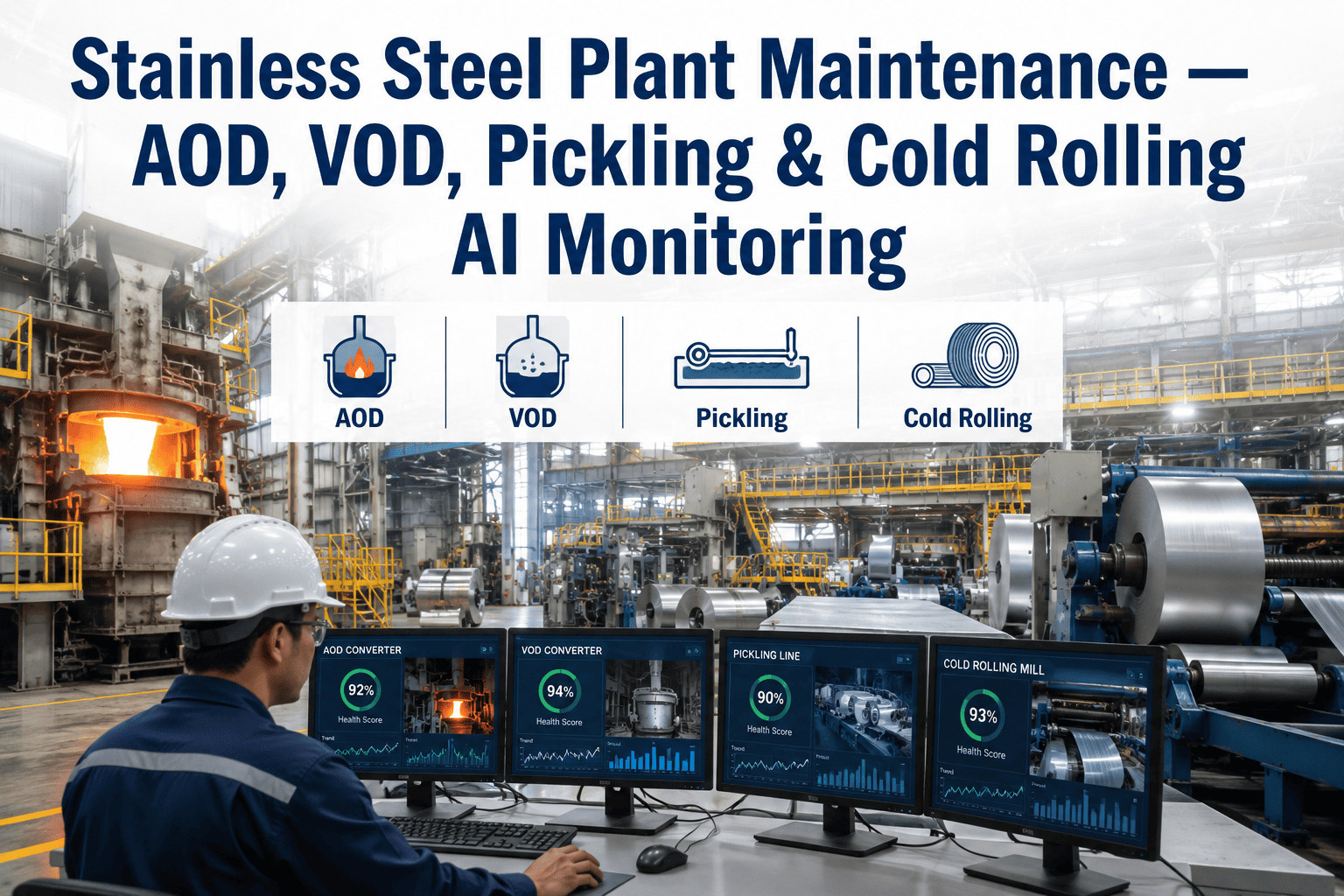
Stainless production is a chain of specialized units, and each one fails in a language of its own: the AOD speaks in refractory wear and lance degradation, the VOD in vacuum leaks and ejector performance, pickling in acid concentration and tank corrosion, cold rolling in roll wear against a harder, more work-hardening strip. A generic condition-monitoring layer applied uniformly across all four misses most of this, because it was designed around bearings and motors, not around the chemistry and vacuum physics that actually govern stainless failure. The diagram below walks the alloy from converter to coil, showing where AI attention needs to sit at each stage.
Stainless Process Chain — Where AI Watches
What Makes Stainless Different from Carbon Steel
The alloy content that gives stainless its corrosion resistance is the same property that makes the equipment processing it harder to keep alive. Chromium raises melting temperature and slag aggressiveness, nickel changes how the melt interacts with refractory, and molybdenum grades push AOD conditions even further from what refractory linings were designed around in a carbon-steel-first world. These are the specific pressure points AI monitoring is tuned to watch.
Chromium Slag Aggressiveness
High-chromium slags attack AOD and VOD refractory faster than carbon steel slag chemistry, shortening lining campaigns unless wear is tracked heat by heat.
Nickel Melt Behavior
Nickel changes viscosity and thermal transfer in the melt, altering how lance and tuyere wear progresses compared with plain carbon grades.
Molybdenum Grade Severity
Higher-alloy Mo grades demand tighter VOD vacuum control, where even small seal degradation shows up as decarburization variance in the finished heat.
Acid-Resistant Equipment Load
Pickling lines processing stainless run stronger acid mixes than carbon steel descaling, accelerating tank, pump, and piping corrosion that needs its own monitoring baseline.
Want to see how this maps onto your own AOD and VOD data? Book a 30-minute walkthrough with our stainless process team.
AOD Converter — What AI Tracks
The AOD converter is where the highest-value failures live, because a lost lining campaign or a lance failure mid-heat can scrap an entire specialty batch. AI models trained on AOD-specific data watch refractory wear trends by zone, lance and tuyere degradation curves, and blow pattern deviations that signal a developing problem before it becomes a breach.
Refractory Wear Trending
Zone-by-zone lining thickness estimates from thermal and acoustic signals, tracked heat over heat against the alloy mix being processed.
Lance & Tuyere Degradation
Blow pattern and pressure deviation analysis that flags a lance nearing end of life before it fails mid-blow.
Slag Chemistry Drift
Correlating slag basicity trends with refractory consumption rate to catch chemistry drifting toward more aggressive wear conditions.
VOD — Vacuum Integrity Is Everything
A VOD unit lives or dies on vacuum seal integrity. Even a small leak changes decarburization behavior and pushes a heat out of specification on nitrogen or carbon content — a defect that often is not caught until the finished product is tested. AI-based vacuum trend monitoring catches the seal degradation long before it shows up as a quality failure downstream.
Vacuum Pump-Down Trending
Tracks pump-down rate and steady-state vacuum level heat over heat to flag gradual seal or gasket degradation.
Ejector & Booster Performance
Monitors steam ejector and booster stage efficiency, an early indicator of nozzle wear that erodes vacuum capability.
Decarburization Correlation
Links vacuum trend anomalies to the decarburization curve so operators see the quality risk, not just the mechanical signal.
Pickling Line — Acid, Tanks, and Pumps
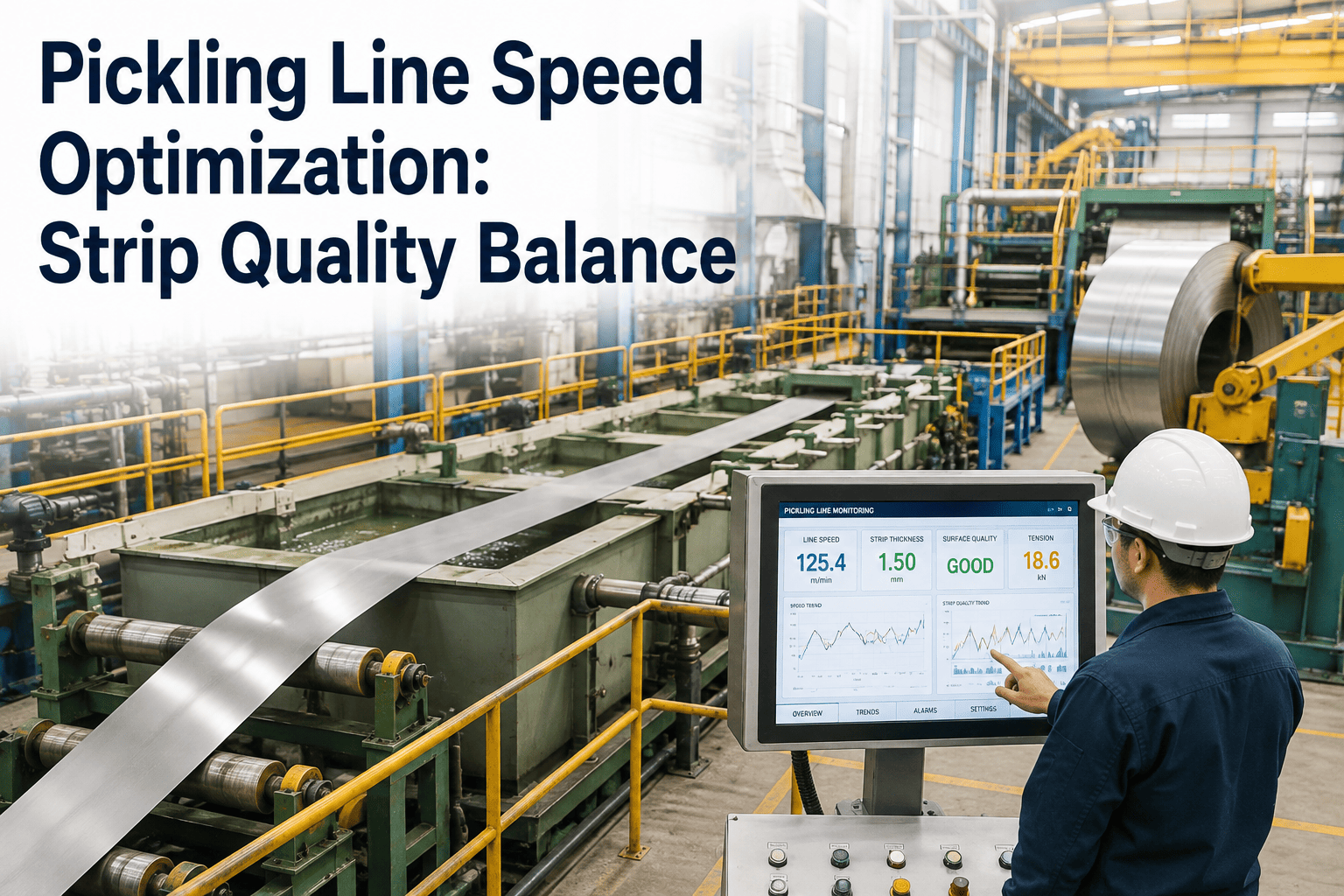
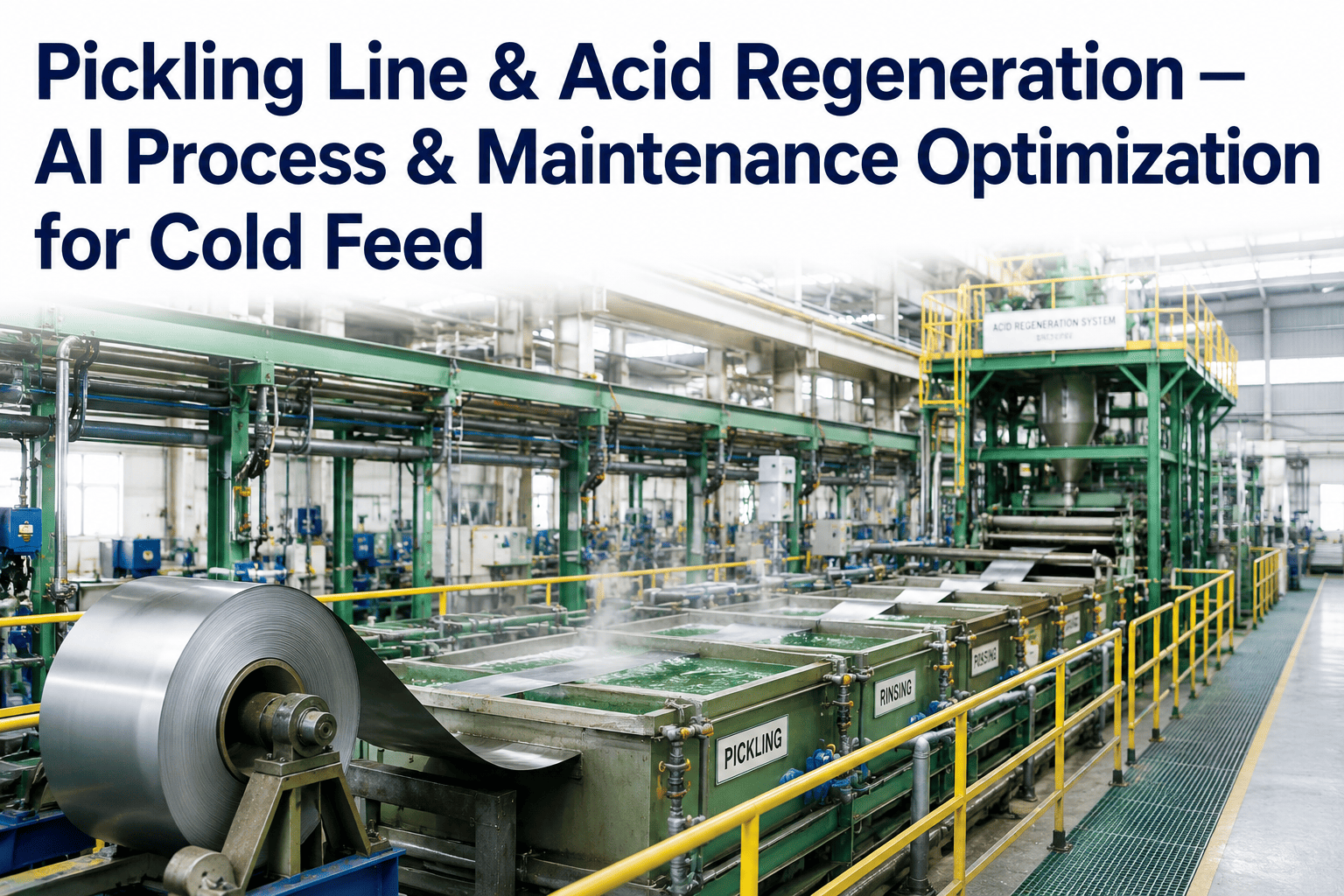
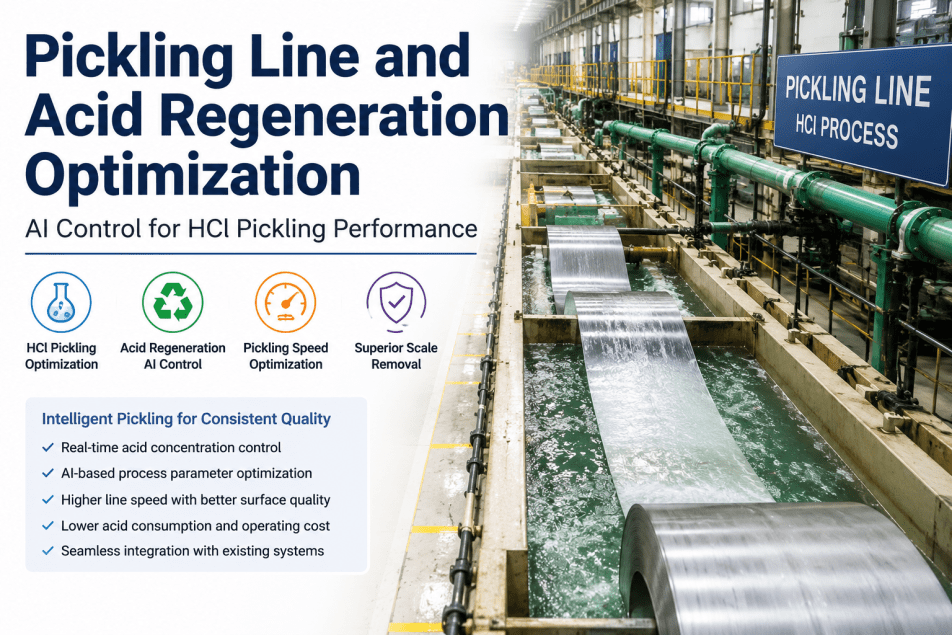
Stainless pickling runs a stronger, more aggressive acid mix than carbon steel descaling, and the tanks, pumps, and piping that carry it wear on a corrosion timeline that generic maintenance schedules routinely misjudge. AI monitoring tracks acid concentration against known corrosion curves and watches pump and pipe condition signals for the early stages of acid-driven degradation.
Outcomes Across the Stainless Line
Bringing AI monitoring to the equipment that is unique to stainless production shows up first in fewer scrapped heats, then in longer refractory and equipment campaigns as wear becomes predictable rather than a surprise.
Fewer
Scrapped heats
vacuum and refractory issues caught before spec failure
Longer
Refractory campaigns
wear tracked by zone instead of a fixed relining schedule
Extended
Acid-line equipment life
corrosion tracked against real concentration, not a calendar
Alloy-Specific
Wear models
tuned to your actual Cr-Ni-Mo grade mix, not generic steel
See your AOD, VOD, and pickling data run through alloy-aware models. Talk to our specialists about connecting your stainless line.
Frequently Asked Questions
Do we need separate models for each stainless grade we run?
The underlying models are built to account for alloy composition as an input rather than requiring a fully separate model per grade, so as your mix shifts between 300-series and higher-molybdenum grades, the wear and vacuum baselines adjust with it. This means the system stays accurate across a mixed product schedule without needing constant reconfiguration every time the heat plan changes.
How does this catch a VOD vacuum leak before it affects quality?
The system tracks pump-down rate and steady-state vacuum level heat over heat, building a baseline for what normal looks like on your specific unit. A gradual seal or gasket degradation shows up as a slow drift in that baseline well before it is severe enough to visibly affect the decarburization curve, giving maintenance a window to address it during a planned stop rather than losing a heat to an out-of-spec result.
Can it help us plan AOD relining instead of using a fixed calendar schedule?
Yes, that is one of the most direct benefits plants see. Refractory wear is tracked zone by zone using thermal and acoustic signals correlated against the actual alloy and slag chemistry being processed, which typically wears unevenly across a fixed relining interval. That lets maintenance plan relining around actual remaining life instead of a conservative calendar date, extending campaigns where wear has been lighter than average.
Is the pickling line monitoring different from standard corrosion sensors?
Standard corrosion sensors typically give a single point reading, whereas the AI layer correlates acid concentration, temperature, and flow trends against pump and pipe condition signals over time, building a fuller picture of where degradation is accelerating across the line. That correlation is what allows the system to flag a developing problem in a specific tank or pump section rather than only reporting an aggregate corrosion rate.
What data do you need from our plant to get started?
Typically this starts with historian data from the AOD, VOD, and pickling line control systems, along with whatever thermal, acoustic, or vacuum sensor data is already being collected, plus heat records showing the alloy grades processed. From there the models are tuned to your specific equipment and grade mix, and coverage is usually expanded to cold rolling once the melt-shop and pickling monitoring is running.
Protect the Heats That Matter Most.
See Alloy-Aware Monitoring on Your AOD and VOD Data
Bring refractory, vacuum, or pickling data from a recent campaign. We'll show how AI tracks wear and vacuum integrity against your actual chromium-nickel-molybdenum mix, heat by heat.