EAF Scrap & Charge Mix Optimization — AI Yield Improvement & Metallic Cost Reduction

By James Smith on July 29, 2026

eaf-scrap-charge-mix-optimization-yield-cost-ai

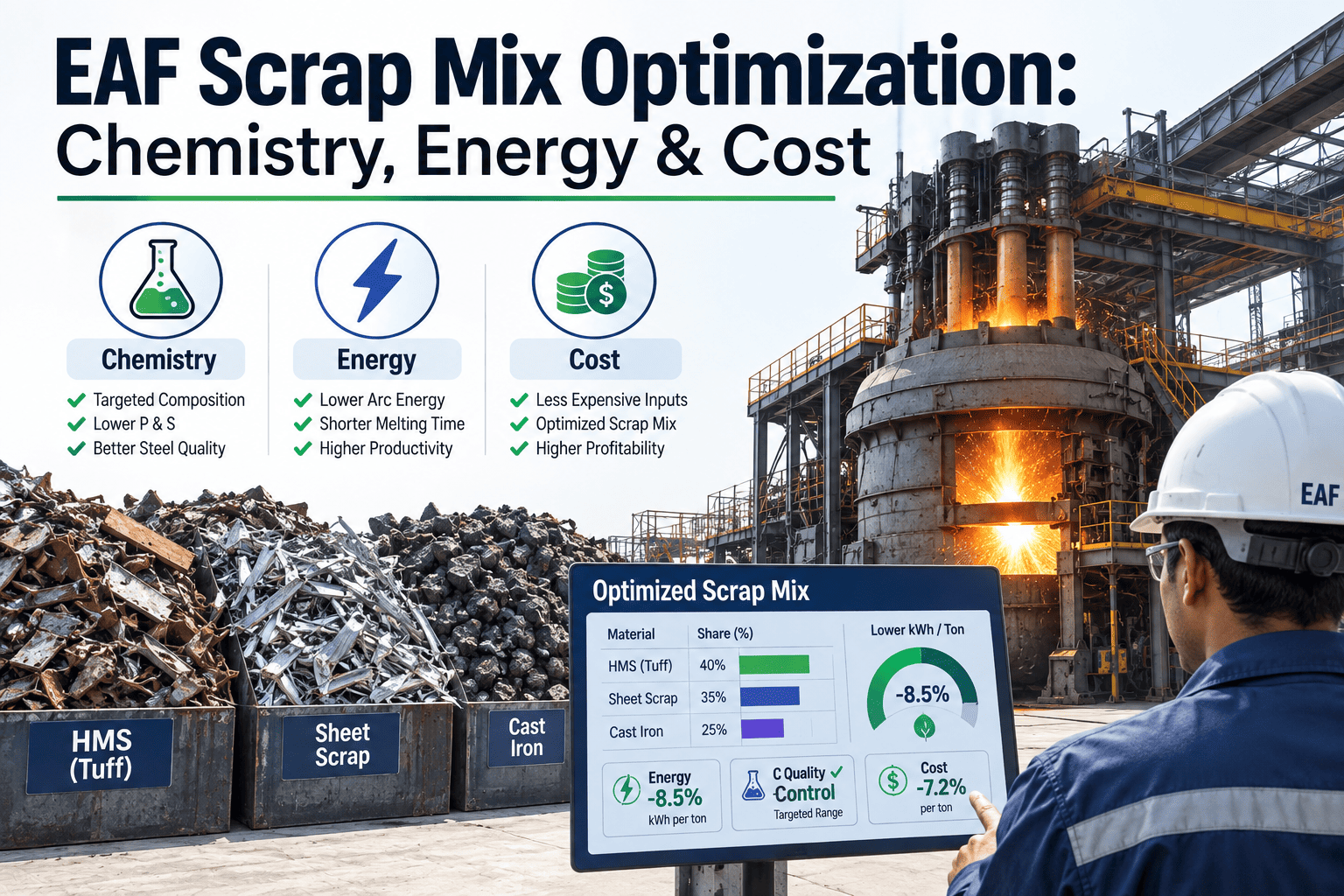
Charge mix decisions on an electric arc furnace happen fast, often within minutes of scrap yard inventory data and current market pricing, yet those decisions determine metallic cost per liquid ton, tap chemistry compliance, and energy consumption for the entire heat. Process engineers balancing scrap grade availability, DRI and HBI blending ratios, and pig iron additions are effectively solving a constrained optimization problem under time pressure using spreadsheets and experience, which leaves real savings on the table when market conditions shift faster than manual recalculation can follow. AI-driven charge mix optimization from iFactory continuously recalculates the lowest-cost charge combination that still meets chemistry and yield requirements for every heat.

Scrap Quality DRI / HBI Blend Metallic Cost

EAF Charge Mix Optimization: AI-Driven Scrap, DRI, and Pig Iron Blending

iFactory analyzes real-time scrap yard inventory, grade quality data, and market pricing to recommend the lowest-cost charge combination for every heat, maintaining chemistry compliance and tap temperature targets while reducing metallic input cost per liquid ton.

$15-$40 Potential metallic cost savings per liquid ton from optimized charge mix
100+ Grades Scrap and metallic input grades a typical EAF charge planner must evaluate
Minutes Time window in which charge decisions must be made as market prices shift

The Cost Impact of Charge Mix Decisions Across a Melting Campaign

Metallic input typically represents the single largest cost category in EAF steelmaking, which means even small percentage improvements in charge mix efficiency translate into significant savings when applied consistently across thousands of heats per year. The challenge for process engineers is that the optimal mix changes constantly as scrap grade availability, market pricing, and target grade chemistry shift, making static charge recipes a source of ongoing cost leakage rather than a one-time planning exercise.

65-75%
Share of total EAF production cost typically represented by metallic input
5-8%
Typical metallic cost reduction achievable through continuous mix optimization
Daily
Frequency at which scrap market pricing can shift enough to change the optimal mix

Charge Mix Components: What the Model Balances Every Heat

Scrap Grade Selection
Grade selection weighed against tramp element limits, density for melt efficiency, and current market cost per grade available in yard inventory.
DRI and HBI Blending Ratio
Direct reduced iron and hot briquetted iron blended to dilute residual elements and stabilize chemistry, balanced against their higher unit cost relative to scrap.
Pig Iron Addition Level
Pig iron addition calculated to hit carbon targets efficiently while managing its impact on energy input and melt time for the heat.
Yield and Melt Loss Estimate
Expected yield loss for each candidate mix estimated from historical performance of similar scrap combinations, factored directly into true cost per liquid ton.
Model Your Next Charge Mix Before You Commit to the Buy

iFactory connects to your scrap yard inventory system, market pricing feeds, and historical heat chemistry data to recommend the lowest-cost charge combination that meets your grade requirements, updated continuously as conditions change.

Manual Charge Planning vs AI Continuous Optimization

Scroll to compare approaches
Charge Planning Task Manual Spreadsheet Planning iFactory AI Optimization
Price Response Speed Charge recipes updated periodically, often lagging behind daily or hourly market price shifts Recommended mix recalculated continuously as pricing and inventory data update
Grade Combination Coverage Engineers typically evaluate a limited set of familiar combinations due to time constraints Model evaluates the full range of available grade combinations against cost and chemistry constraints
Yield Loss Estimation Yield assumptions often based on general rules of thumb rather than specific mix history Yield estimated from historical performance data specific to the actual mix being considered
Chemistry Risk Management Tramp element risk assessed manually, with safety margins sometimes added conservatively Tramp element dilution calculated precisely against target chemistry, reducing unnecessary safety margin cost

Before and After AI Charge Mix Optimization

Before AI Optimization
Charge recipes updated periodically, leaving savings on the table when market prices shift daily
Limited grade combinations evaluated due to the time required for manual cost comparison
Safety margins added to tramp element dilution, increasing metallic cost beyond what chemistry strictly requires
After iFactory AI Optimization
Recommended mix recalculated continuously, capturing savings as market pricing shifts throughout the day
Full range of available grade combinations evaluated against cost and chemistry targets simultaneously
Tramp element dilution calculated precisely, reducing unnecessary metallic cost from oversized safety margins

Expert Perspective

Charge mix planning used to be something one of our senior engineers did in a spreadsheet every morning based on the previous day's scrap prices, which meant we were always working with slightly stale numbers by the time the actual heats were charged that afternoon. The AI model recalculates the optimal mix continuously, and what surprised me most was how much of our savings came not from finding some exotic new combination but simply from responding faster to price movements we already knew about. Our metallic cost per liquid ton has come down meaningfully since deployment, and our chemistry compliance rate has actually improved because the model is more precise about tramp element dilution than our old safety-margin approach ever was.
— Process Engineer, EAF Mini-Mill Operation · 11 Years in Melt Shop Metallurgy

Frequently Asked Questions

Q: How does iFactory access current scrap pricing and inventory data?
The platform connects to your existing scrap yard inventory management system and any market pricing feeds your procurement team already subscribes to, combining this with your furnace's historical heat chemistry and yield data to build the optimization model. No separate pricing subscription is required beyond what your facility already uses for scrap procurement. Book a Demo to review your specific data sources.
Q: Can the model account for scrap quality variability within the same grade classification?
Yes, the model incorporates historical outcome data tied to specific supplier lots where available, recognizing that nominal grade classifications can carry meaningful quality variation between suppliers or shipments. This allows the recommendation to reflect actual historical performance rather than treating all scrap within a grade category as identical.
Q: Does using AI charge mix recommendations require changing our scrap purchasing process?
No, the platform is designed to work within your existing purchasing relationships and yard inventory, providing recommendations on how to combine what is currently available or planned for purchase rather than dictating new supplier relationships. Procurement teams can use the model's cost sensitivity analysis to inform future purchasing decisions as an additional benefit. Contact our team to discuss integration with your procurement workflow.
Q: How quickly does the charge mix recommendation update as conditions change?
Recommendations update continuously as new inventory, pricing, or chemistry data becomes available, typically within minutes of a relevant change, which is designed to match the pace at which charge planning decisions actually need to be made on an active melt shop floor.
Q: What kind of cost savings are realistic to expect from charge mix optimization?
Savings vary by facility depending on current charge planning maturity and scrap market volatility, but most facilities see meaningful reductions in metallic cost per liquid ton within the first few months of deployment as the model's recommendations are validated and trusted by the charge planning team.
Reduce Metallic Cost Per Liquid Ton with Continuous AI Charge Mix Optimization

iFactory helps process engineers balance scrap quality, DRI and HBI blending, and pig iron additions against real-time cost and chemistry requirements, capturing savings that static charge recipes leave on the table.

Share This Story, Choose Your Platform!