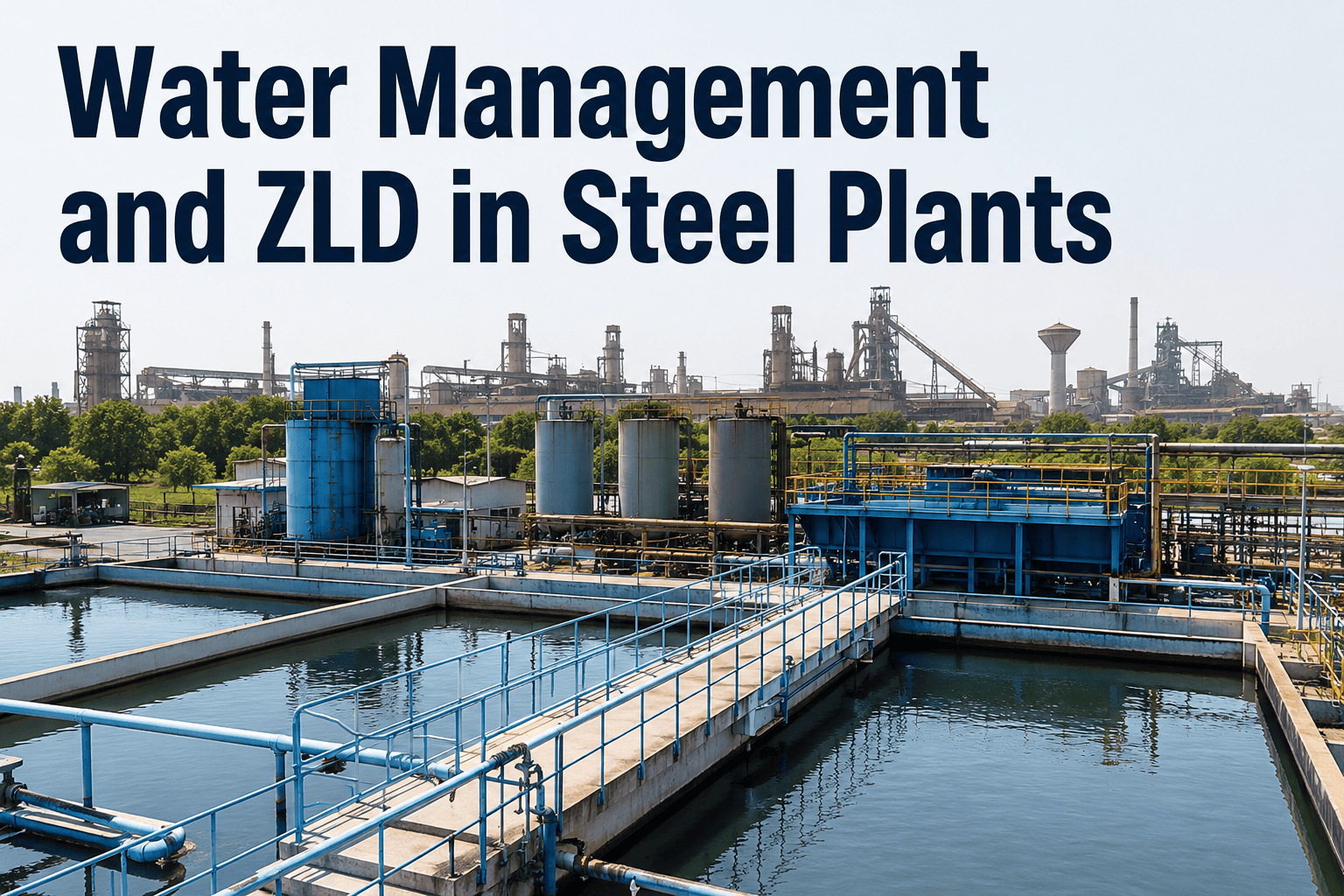
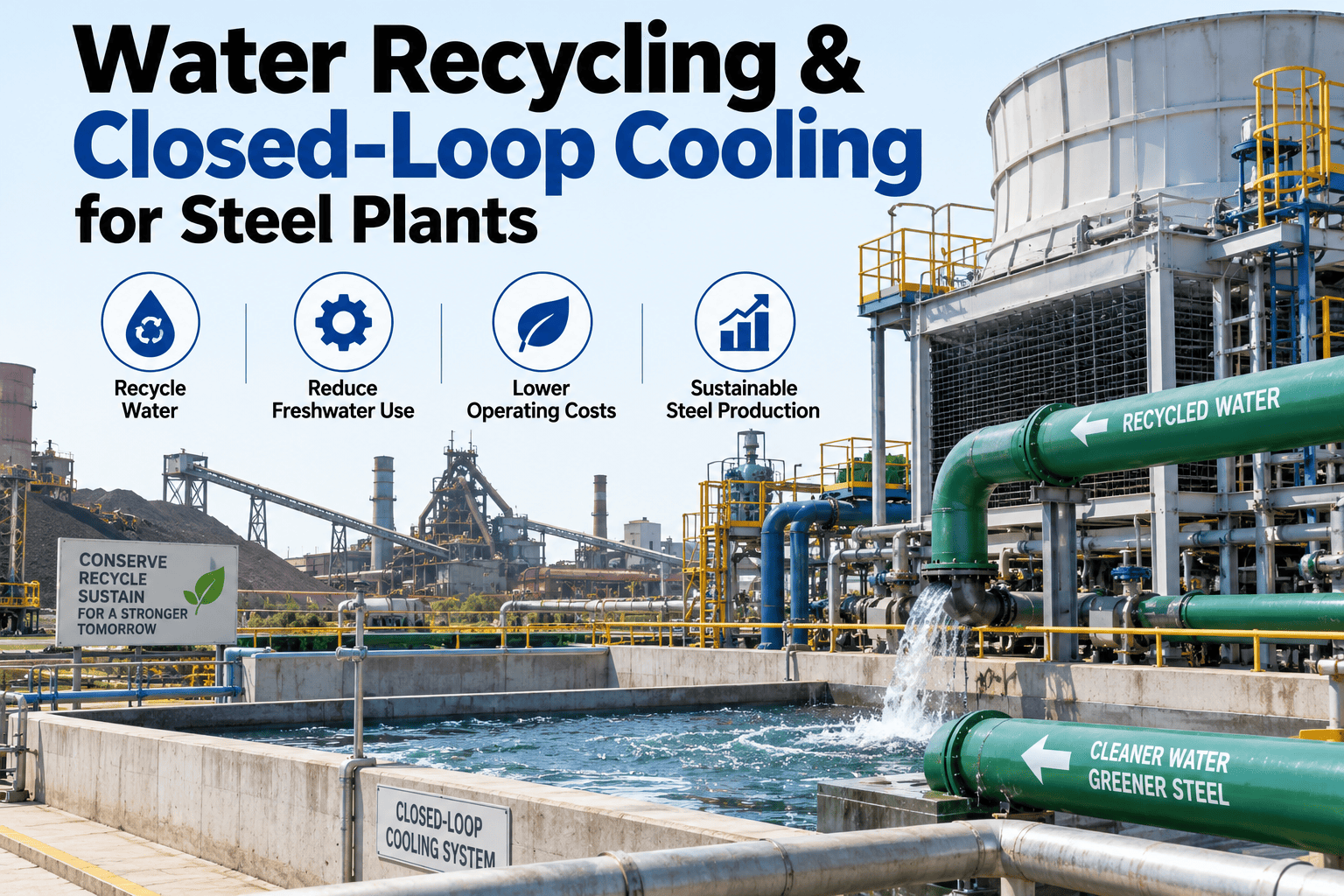
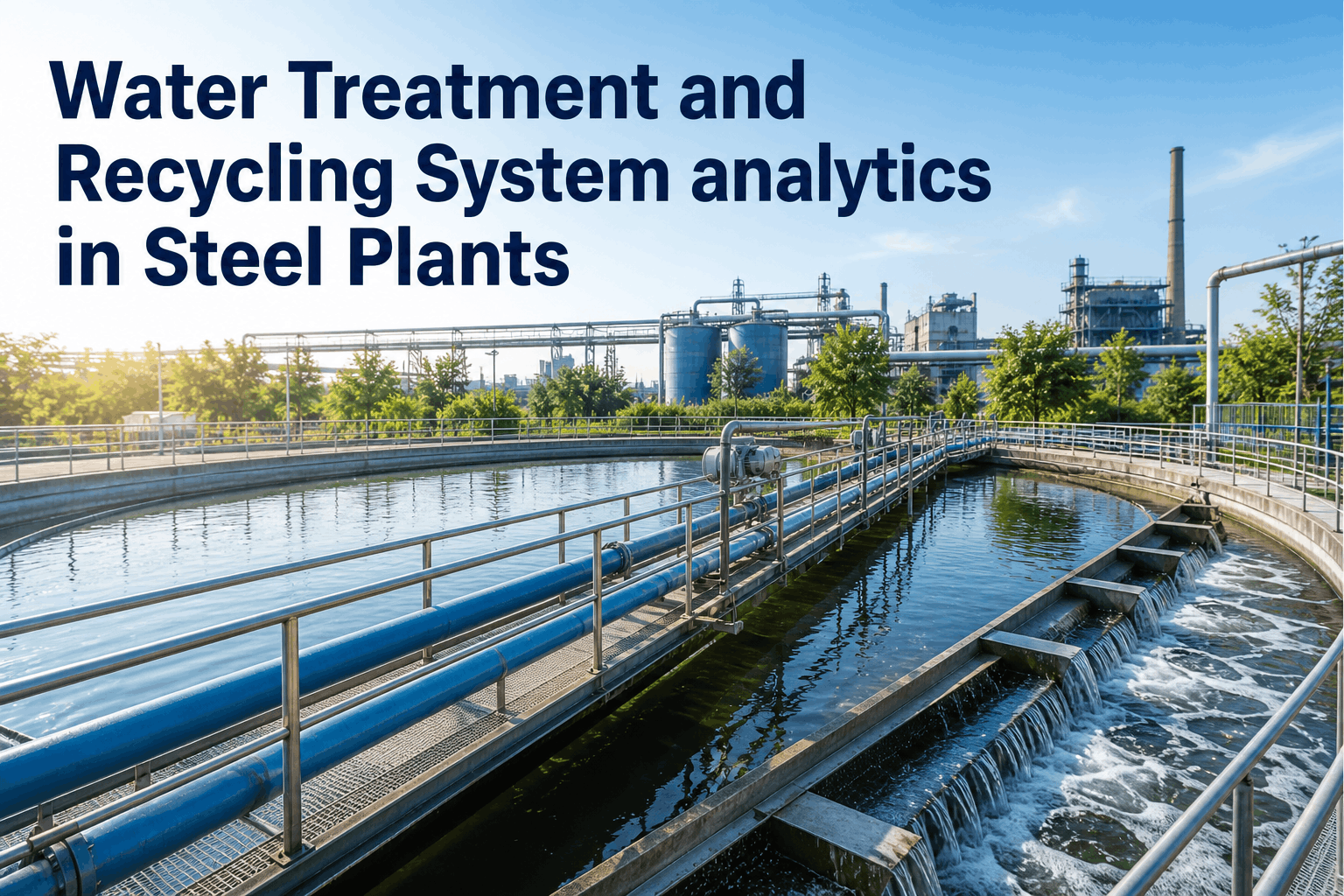
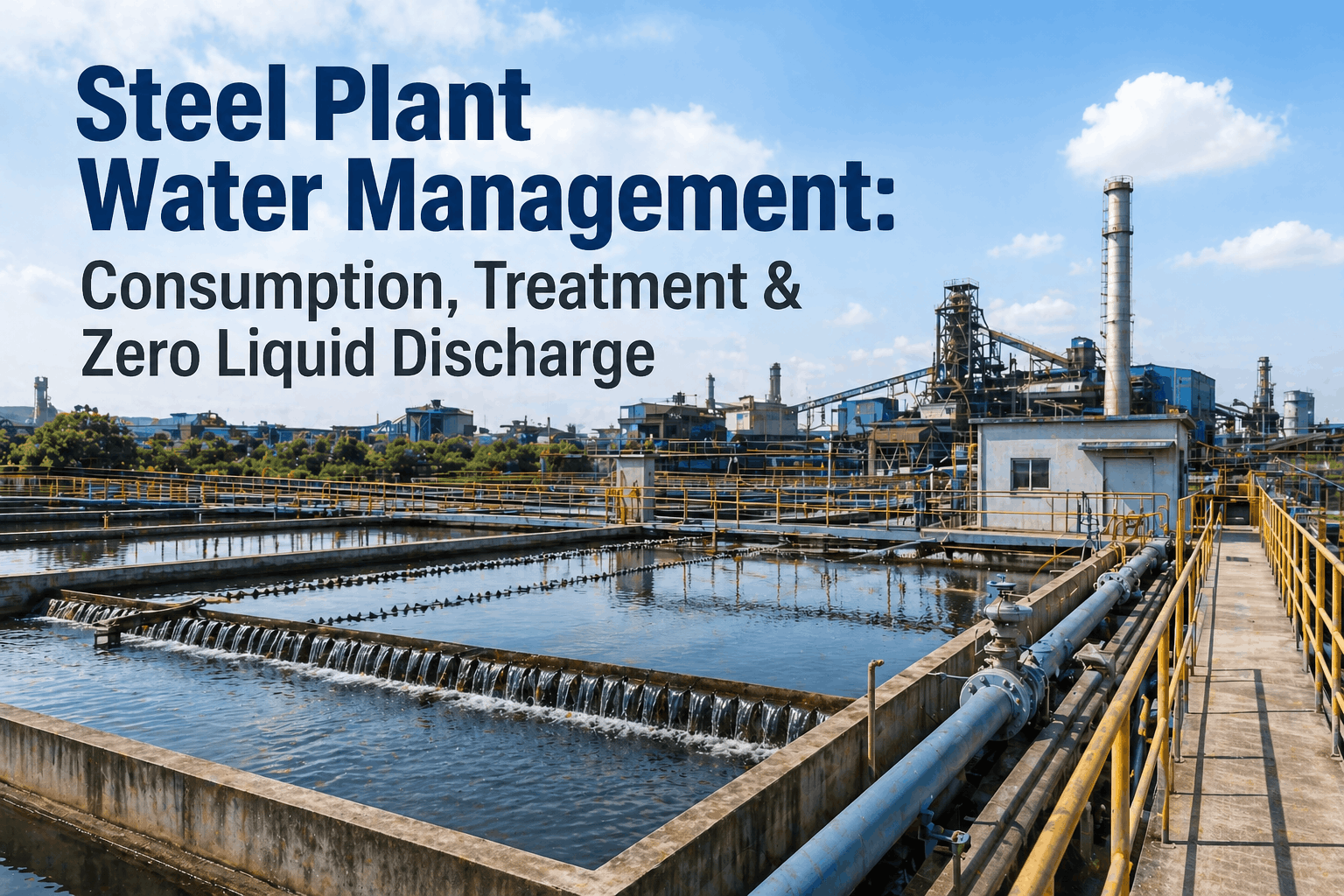
Integrated steel mills can draw up to 28,000 cubic meters of water an hour, and every liter of it is now under regulatory watch. Water permits are tightening across every major steel-producing region, and a single upset in cooling water chemistry or a fouled reverse osmosis membrane can trigger production losses that dwarf the cost of the water itself. Zero Liquid Discharge is no longer an aspirational badge — it is fast becoming the baseline for market access and permit renewal. Plants that still balance their water systems on manual lab samples and end-of-shift readings are the ones most exposed when a regulator, insurer, or customer asks for proof. AI-driven water control towers are how leading mills are closing that gap, and you can see how the monitoring layer works before deciding if it fits your plant.
Water & ZLD Intelligence
Your Water Permit Is Getting Stricter. Is Your Plant Ready?
AI-driven water balance monitoring tracks every cubic meter across cooling, quenching, and effluent treatment — predicting membrane fouling, scaling, and compliance breaches before they cost you a shutdown.
20-50 m3
Water used per tonne of finished steel
96%
Recovery achievable with AI-optimized ZLD
$4-50M
Annual water cost exposure per large mill
Where Steel Plant Water Actually Goes
| Process Zone | Typical Flow | Main Contaminants | Recovery Potential |
|---|
| Cooling water (furnace, caster) | 8,000-15,000 m3/hr | Dissolved salts, scale-forming minerals | 85-95% |
| Product quenching | 3,000-6,000 m3/hr | Iron fines, mill scale, oils | 75-90% |
| Wire drawing & coating lines | 500-1,500 m3/hr | Coolants, acids, oils | 70-85% |
| General plant & utility use | 200-800 m3/hr | Mixed low-level contamination | 60-80% |
The AI Water Control Tower: From Intake to Zero Discharge
01
Clarification
AI-vision monitors sludge blanket level and floc formation in real time, optimizing coagulant and flocculant dosing before suspended solids ever reach the membranes.
02
Reverse Osmosis
Differential pressure and flux across every RO train are tracked continuously. Fouling is predicted up to 48 hours ahead, so cleaning-in-place is scheduled instead of forced.
03
Evaporation & Crystallization
Energy consumption of multi-effect evaporators and crystallizers is optimized dynamically, converting the final brine into disposable or sellable solids.
04
Compliance Reporting
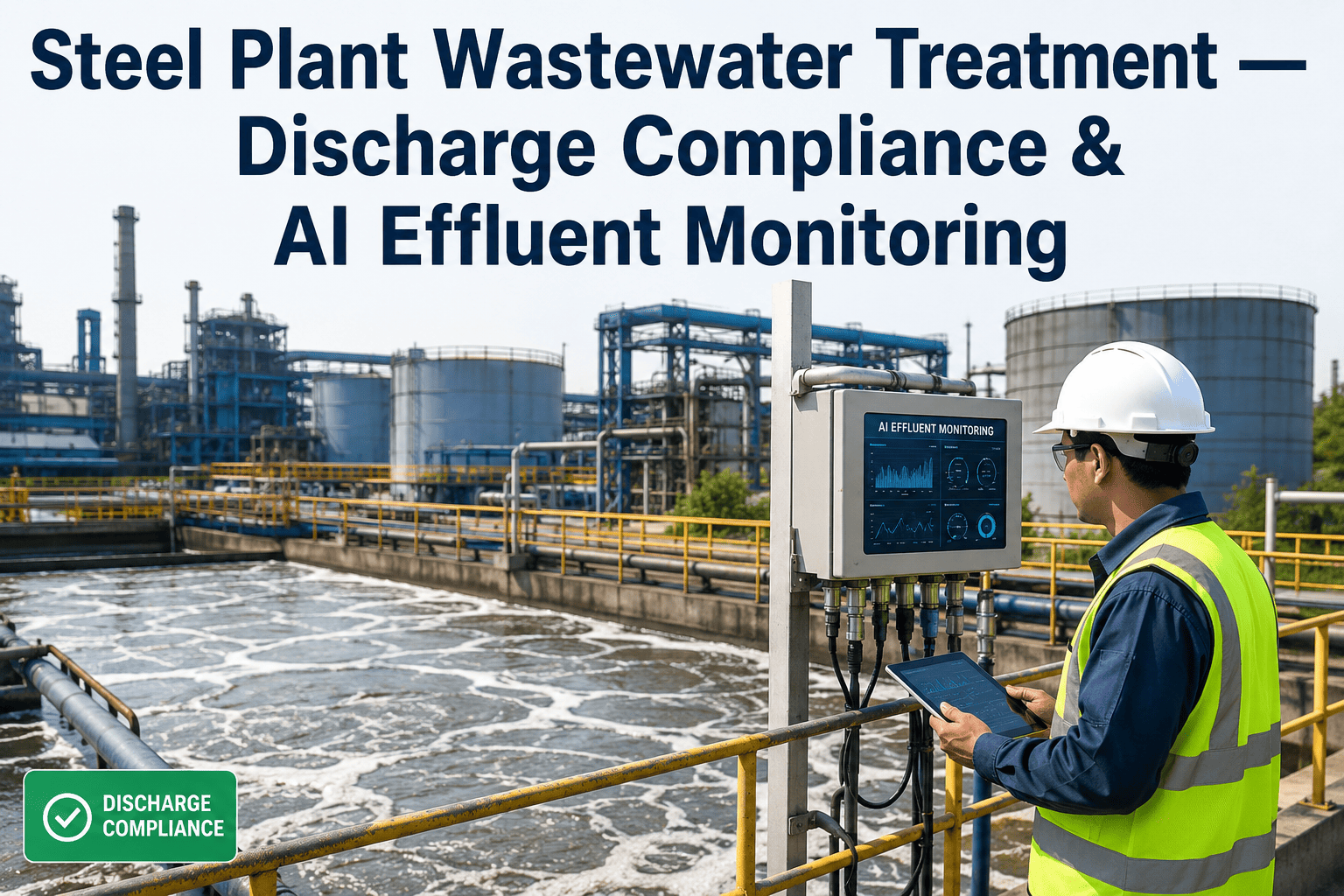
Discharge quality, recycling rate, and permit thresholds are logged automatically, generating audit-ready reports without a manual spreadsheet in sight.
Stop Finding Out About Water Problems After the Discharge Report
iFactory connects to your existing SCADA and lab instrumentation to build a live water balance across every zone of your plant — no new hardware required to get started.
What Changes When Your Water System Runs on AI
60-80%
Reduction in water treatment and disposal costs
48 hrs
Advance warning before RO membrane fouling
28%
Cut in unplanned downtime tied to water system failures
90%+
Recycling rate needed to meet EU Water Framework targets
Why This Is Urgent Now, Not Later
Regulatory pressure
Discharge permits are being renewed with tighter limits and shorter compliance windows almost everywhere steel is made.
Water stress surcharges
Several regions now double treatment costs during drought periods, punishing plants that have no buffer built into their water balance.
ESG and customer scrutiny
Buyers increasingly ask for verified water intensity data as part of supplier qualification, not just as a sustainability nice-to-have.
Frequently Asked Questions
How does AI actually reduce water consumption in a steel plant?
AI builds a continuous, zone-by-zone water balance instead of relying on periodic lab samples, so leaks, scaling, and inefficient recycling loops are caught within hours rather than weeks. It also optimizes chemical dosing at the clarification stage and predicts reverse osmosis membrane fouling before it forces an emergency shutdown. Combined, these changes typically cut treatment and disposal costs by 60-80% while pushing recycling rates toward the 90%+ levels regulators now expect. You can review the specific monitoring modules through
our support resources.
Do we need new sensors or hardware to get started?
In most cases, no. The platform is designed to connect to the flow meters, conductivity probes, and lab instrumentation a plant already has installed, pulling that data into a single water control tower. Additional sensors are only recommended where a specific blind spot is identified during the initial audit, such as an unmetered cooling loop or an older clarifier without turbidity monitoring. This keeps the first phase of deployment fast and low-cost.
What does Zero Liquid Discharge actually require from an existing mill?
Zero Liquid Discharge means recovering essentially all process water through a combination of clarification, reverse osmosis, and evaporation or crystallization of the remaining brine into solids. Most integrated mills already have a version of this treatment train in place; the gap is usually in how tightly it is monitored and tuned. AI closes that gap by keeping every stage running at its optimal setpoint continuously, rather than whenever an operator has time to check it.
How quickly can a plant expect to see results?
Baseline visibility into the water balance is typically available within the first few weeks of connecting existing instrumentation, and that alone tends to surface quick wins like unmetered losses or over-dosed chemicals. Predictive alerts for membrane fouling and scaling usually activate within the first one to two months as the models learn the plant's specific patterns. A full audit through
a scheduled water assessment is the fastest way to get a plant-specific timeline.
How does this help with ResponsibleSteel or ESG reporting?
Because the platform logs discharge quality, recycling rates, and permit thresholds automatically, it produces the kind of continuous, verifiable data trail that certification bodies and ESG auditors are increasingly asking for. This removes the scramble to reconstruct water records manually before an audit and gives sustainability teams a defensible, real-time source of truth for their reporting.
Every Compliance Cycle Without Live Water Data Is a Risk You're Carrying Blind
See how iFactory's Water Control Tower turns your existing instrumentation into a real-time, audit-ready water balance — with predictive alerts that protect your membranes, your permit, and your production schedule.