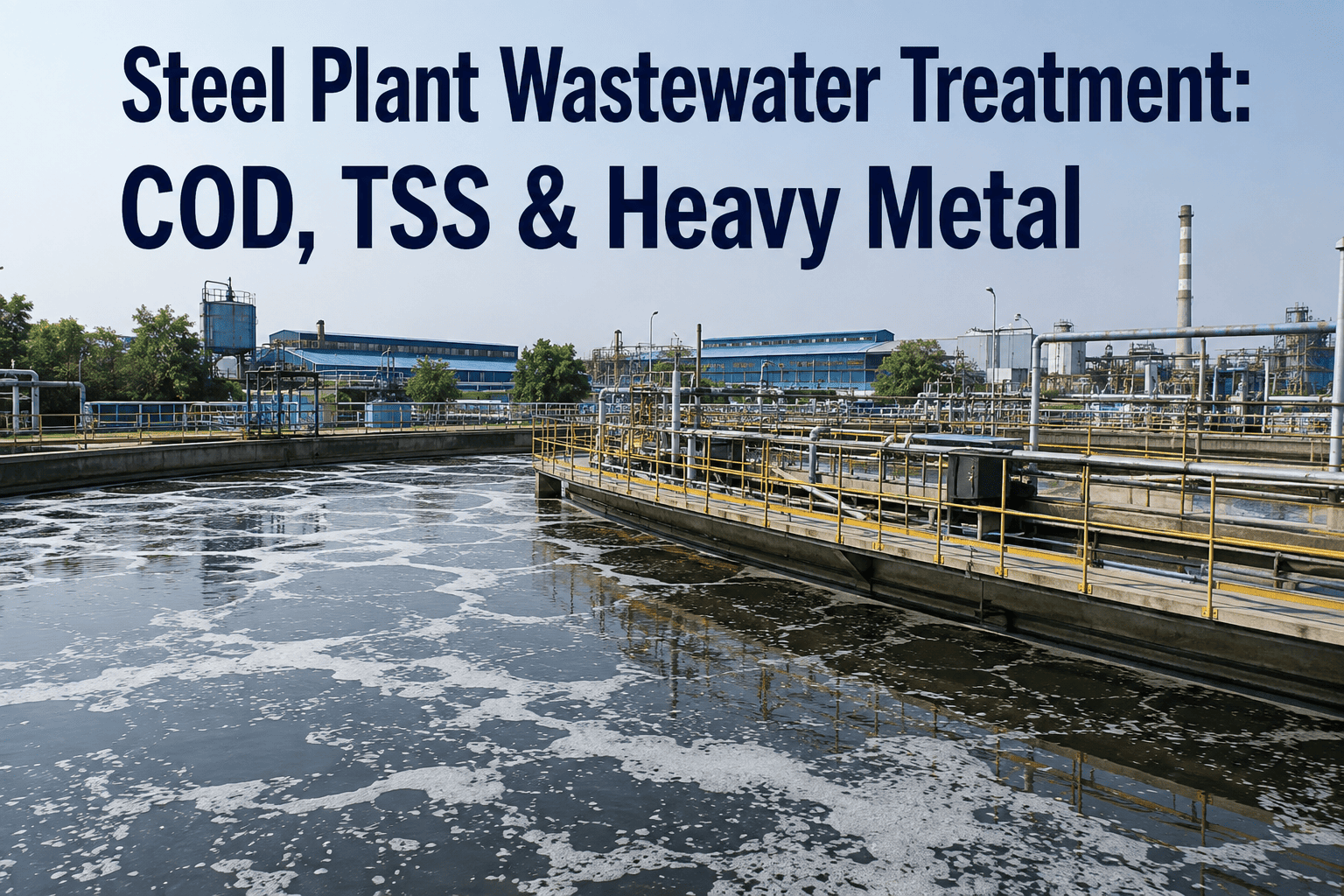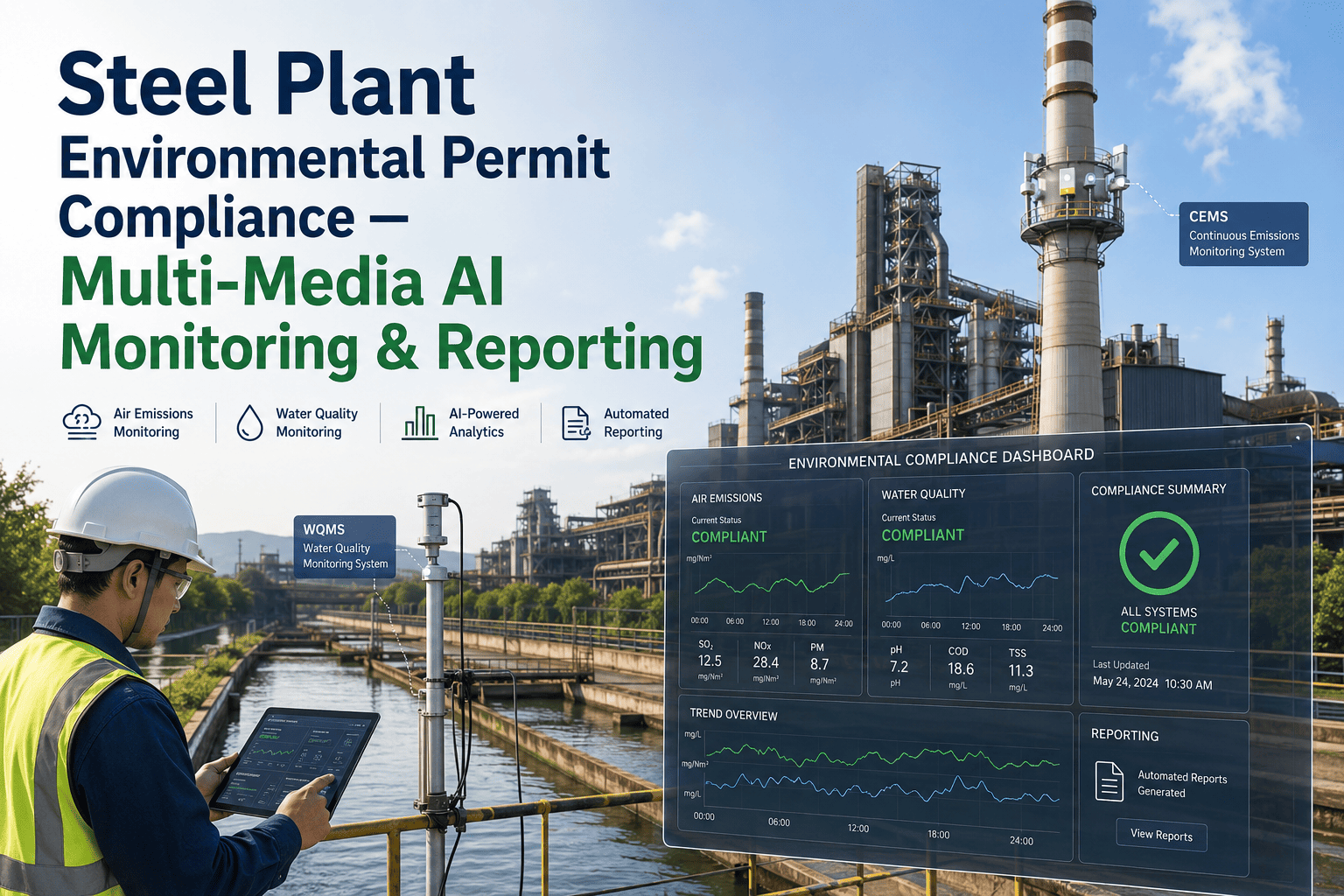
An NPDES exceedance rarely comes from one dramatic spill. It usually comes from three separate streams quietly drifting in the same direction at once, coke plant wastewater running slightly high on ammonia, rolling mill oil separator efficiency dipping after a filter change was missed, and blast furnace gas cleaning water carrying more suspended solids than usual, none of them individually alarming until a compliance sample catches the combined effect at the outfall. EHS managers responsible for discharge permits are often reconstructing what happened after the fact instead of catching it in progress. iFactory built effluent monitoring to close that gap across every discharge point in the plant, and the fastest way to see it against your own permit limits is a short call at this link.
Catch Discharge Drift Before It Becomes a Permit Violation
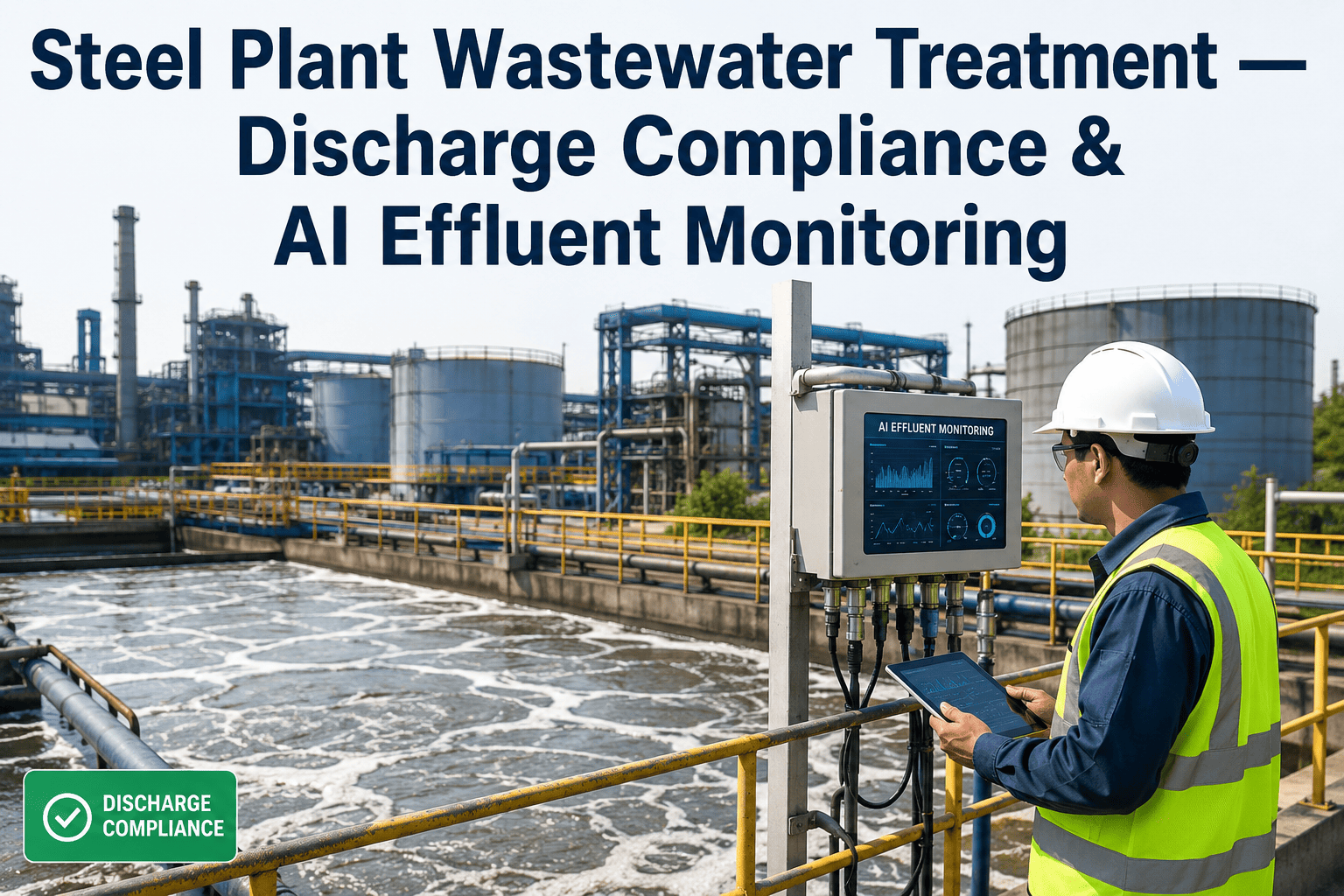
AI effluent monitoring across coke plant wastewater, rolling mill oil, and blast furnace gas cleaning water gives EHS teams a live view of every discharge point, not just the compliance sample.
Three Discharge Streams, Three Very Different Risk Profiles
Treating all plant wastewater as a single compliance problem misses the fact that each major stream fails in its own specific way, on its own timeline, for its own reasons.
Coke plant wastewater
Ammonia, phenols, and cyanide levels are sensitive to biological treatment performance, which can degrade gradually over days if the treatment biology is stressed by a temperature or loading change upstream.
Rolling mill oil-bearing water
Oil and grease concentrations spike quickly when separator skimming falls behind or emulsified oil from a coolant change bypasses the primary separator stage entirely.
Blast furnace gas cleaning water
Total suspended solids and zinc levels track closely with furnace operating conditions, so a process upset upstream shows up in discharge water chemistry within hours.
Map Your Discharge Points Against Current Permit Limits
A scoping call reviews your outfall structure and shows where continuous monitoring would have caught your last few compliance close calls earliest.
Common NPDES Parameters and Typical Drift Warning Windows
EHS Readiness Checklist for Continuous Effluent Monitoring
Every active outfall mapped to its current permit limits and sampling frequency requirements
Continuous sensors placed upstream of each outfall with enough lead time to act before discharge
Alert thresholds set below permit limits, not at them, to preserve response time
Escalation path documented for who gets notified and what action is taken when a drift alert fires
Historical exceedance data reviewed to confirm continuous monitoring would have caught prior events earlier
Reporting workflow connected so documentation for regulators is generated directly from monitored data
Why Compliance Sampling Alone Leaves EHS Teams Exposed
Compliance sampling exists to satisfy the permit, not to manage the plant. These are the structural reasons it consistently misses problems that continuous monitoring catches.
Sampling frequency is a permit minimum, not an operating standard
Weekly or monthly sampling satisfies the regulator's requirement but leaves days or weeks of blind exposure between samples where an upset can occur and resolve without anyone knowing.
A single grab sample can miss a short-duration spike entirely
Oil and grease spikes from an emulsified coolant discharge can occur and dissipate within hours, easily missed by a grab sample taken at a fixed time of day.
Upstream process changes aren't visible in the discharge lab
A furnace operating change that increases gas cleaning water solids loading is invisible to the environmental team until it shows up at the outfall days later.
An EHS Manager's Perspective
Our worst exceedance in three years came from an oil separator that was skimming fine on paper but had actually fallen behind after a coolant formulation change. A weekly sample caught it after the fact. Continuous monitoring on that outfall would have flagged the trend the same day it started.
Frequently Asked Questions
Does continuous monitoring replace our required NPDES compliance sampling?
No, regulatory compliance sampling remains required exactly as specified in your permit. Continuous monitoring operates alongside it as an operational tool that gives your team visibility between those required samples, so problems are caught and corrected before they ever show up in a compliance result, which also reduces the risk of the compliance sample itself showing an exceedance.
What parameters can actually be monitored continuously versus lab-tested only?
Parameters like pH, conductivity, turbidity, oil sheen, and temperature can be monitored continuously with inline sensors, while some parameters such as specific metals or biological oxygen demand still require periodic lab confirmation. Talk to support about which of your specific permit parameters have reliable continuous sensing options available today.
How does this help during a regulatory audit or inspection?
Continuous monitoring data creates a documented history showing proactive environmental management, which regulators generally view favorably during inspections and can support a stronger compliance record than sampling data alone. It also provides supporting evidence of good faith corrective action if an exceedance does occur despite the monitoring program.
Can alerts be routed to both EHS and operations teams?
Yes, alert routing is typically configured so operations receives the immediate notification needed to correct a process upset while EHS receives visibility into the trend and any regulatory implications. Book a demo to see how routing rules are set up for a multi-stream plant with several distinct outfalls.
What's involved in a pilot on a single discharge stream?
A single-stream pilot typically starts with the outfall carrying the highest historical exceedance risk, with sensor installation and baseline data collection running four to six weeks before live alerting begins. Most EHS teams choose their coke plant or oil-bearing water stream first, since these tend to carry the most complex and variable chemistry of the three major discharge categories.
Get Ahead of Your Next Exceedance Instead of Explaining It
Book a 30-minute call with an environmental compliance specialist and bring your current outfall map and permit limits.