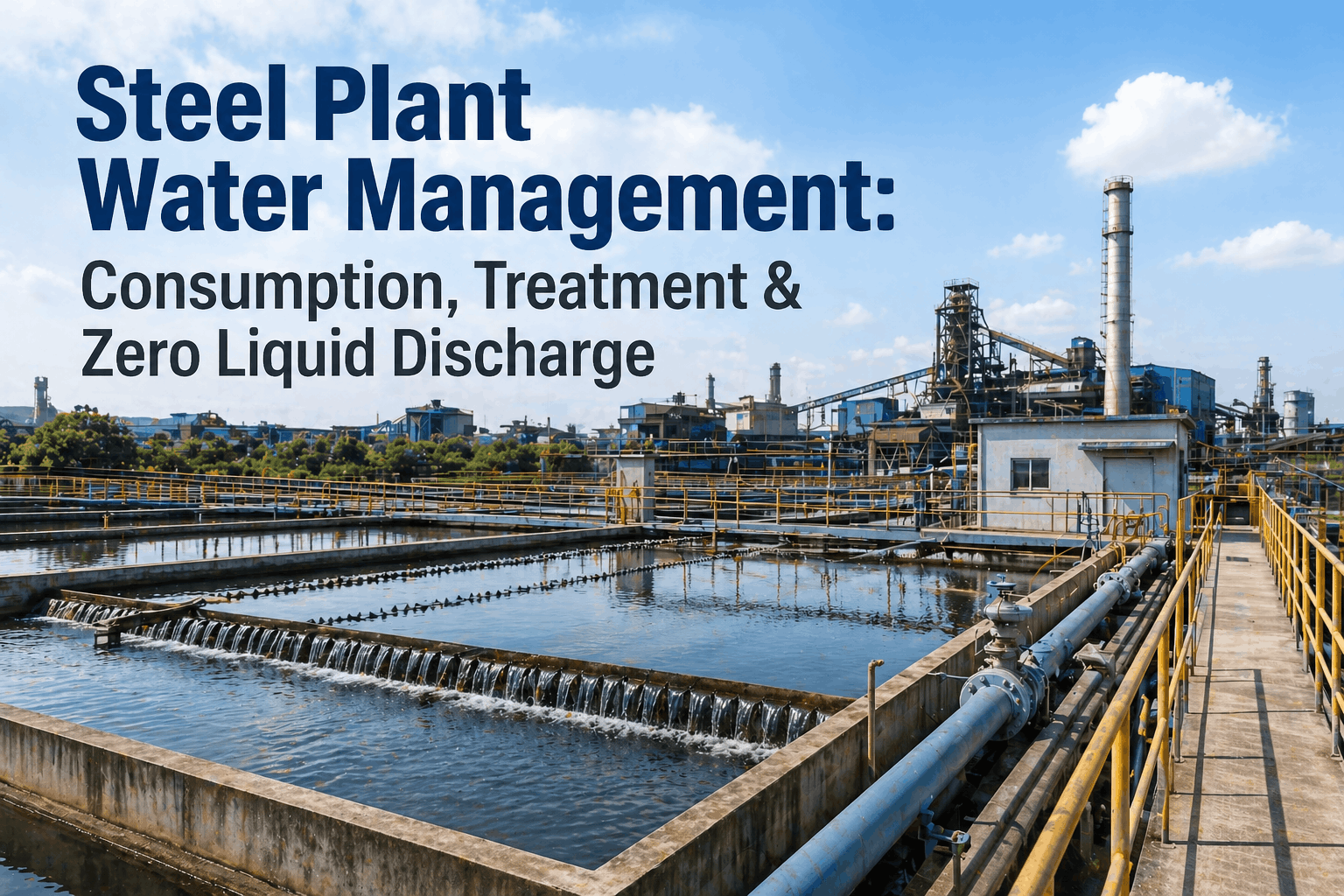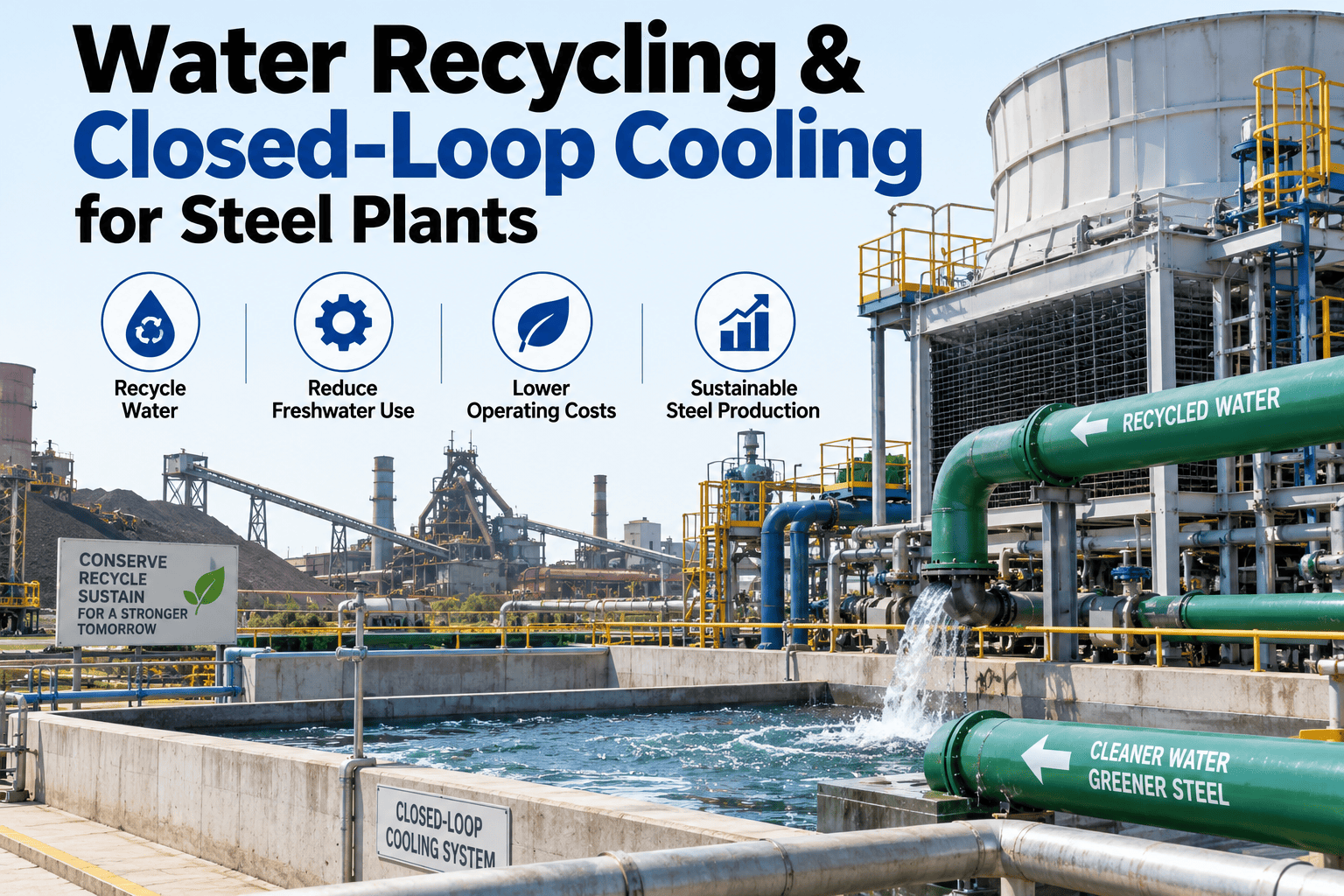
A steel plant's cooling water system can either be a linear drain on a scarce local resource or a closed loop that reuses the same water thousands of times over, and the difference between the two is almost entirely a matter of treatment train design and operating discipline rather than exotic technology. Plants operating in water-stressed regions are increasingly finding that a well-run closed-loop system is not just an environmental commitment but a genuine operational safeguard against water availability risk that can otherwise force a production curtailment during a drought year. Teams evaluating their current water balance and closed-loop potential can start with a conversation with iFactory's support team about tracking makeup water, blowdown, and recycling rate together as a single connected system.
Every Liter of Cooling Water Can Be Reused — If the Loop Actually Closes
Intake, treatment, and reuse have to work as one connected cycle, not three separate systems. iFactory tracks the full loop so a plant can see exactly where water is being lost instead of recovered.
Why Cooling Water Systems Leak Efficiency Quietly
A cooling tower loses water constantly through evaporation, drift, and the blowdown needed to manage dissolved solids concentration, and every liter lost has to be replaced with fresh makeup water. Most plants know this in principle, but far fewer actually track the ratio of makeup water added against the theoretical minimum the system should need, which means an inefficiency — a leaking gasket, an oversized blowdown rate, or fouled heat exchange surfaces forcing more water through the loop than necessary — can persist for a long time before anyone notices it as anything other than a slightly higher water bill.
The Treatment Train Behind an Effective Closed Loop
Closing the loop is not simply a matter of piping water back to the cooling tower. Each stage of the treatment train removes a different category of contaminant, and skipping or under-sizing any one stage limits how many cycles the water can safely go through before it has to be discharged.
Solids Removal
Filtration removes suspended particulate before it can foul heat exchange surfaces or accumulate in low-flow sections of the loop, protecting equipment as much as water quality.
Chemical Conditioning
Scale and corrosion inhibitors keep dissolved minerals from precipitating onto surfaces as the water concentrates through repeated cycling, extending the safe cycle count before blowdown is required.
Biological Control
Biocide dosing prevents biofilm growth in warm, recirculating water, since uncontrolled biological growth both fouls surfaces and accelerates corrosion in ways scale inhibitors alone cannot prevent.
Blowdown Management
A controlled, monitored bleed stream keeps dissolved solids within a safe operating range, and the more precisely this is managed, the fewer cycles of concentration are wasted through excess blowdown.
See Your Full Water Balance in One View
Book a 30-minute walkthrough of how iFactory tracks makeup water, blowdown, and cycle count together across a closed-loop cooling system.
Cooling System Architectures Compared
The starting architecture a plant runs sets the ceiling on how much water efficiency is achievable without a major capital project, which is why understanding where a plant currently sits is the first step before planning improvements.
| Architecture | Water Reuse Level | Typical Next Step |
|---|---|---|
| Once-Through Cooling | Minimal to none | Converting to a recirculating tower system |
| Open Recirculating Tower | Moderate, limited by cycle count | Improved chemical conditioning to raise safe cycle count |
| Closed-Loop with Treatment Train | High, blowdown minimized | Blowdown treatment and reuse to approach zero discharge |
| Zero Liquid Discharge | Maximum, no process water discharge | Ongoing optimization of energy cost for evaporative treatment |
Building the Business Case for Closed-Loop Investment
Water efficiency projects often compete for capital against production-focused investments, and the business case tends to land more convincingly when it accounts for water availability risk alongside the straightforward utility cost savings that are the easiest number to calculate.
Direct Utility Savings
Lower fresh water intake and reduced effluent discharge volume both translate directly into reduced utility and treatment cost, the easiest line item to quantify in a project proposal.
Regulatory Headroom
Plants operating closer to their permitted discharge limits gain operating flexibility from reduced blowdown volume, avoiding the risk of a production constraint tied to a permit ceiling.
Drought and Availability Risk
A plant less dependent on continuous fresh water intake is materially less exposed to a production curtailment during a regional water shortage, a risk that is harder to quantify but increasingly material in water-stressed regions.
A Composite Scenario: The Makeup Water That Kept Climbing
A steel plant running a closed-loop cooling system for its rolling mill noticed makeup water consumption had increased gradually over several months without a corresponding increase in production volume. Blowdown rates, checked against the standard operating parameter, appeared normal, and the initial assumption was that ambient temperature increases were simply driving higher evaporation losses through the summer months.
A closer audit found the real cause was a slow leak in an underground return line that had gone undetected because the loss was small enough on any single day to be masked by normal evaporation variance, but had compounded steadily over the months before the trend became visible against a seasonal baseline. Repairing the line brought makeup water consumption back in line with the historical baseline for that ambient temperature range, and the plant added continuous makeup water trending against a temperature-adjusted baseline specifically to catch this kind of slow leak earlier in the future.
Rolling Out Continuous Water Balance Monitoring
Adding continuous monitoring to an existing cooling system does not require replacing the treatment train. Most plants start with the measurement gaps that matter most and expand from there.
Once makeup water and blowdown are both metered and trended against a temperature-adjusted baseline, most of the value of continuous monitoring is already captured, since the majority of hidden losses show up as a widening gap between these two figures long before they become large enough to spot with a manual monthly review.
Mistakes That Undermine Water Recycling Programs
Tracking Blowdown Without Tracking Makeup Water Trend
A normal blowdown reading does not rule out a leak elsewhere in the loop, and makeup water consumption needs its own independent trend line adjusted for ambient temperature to catch what blowdown monitoring alone would miss.
Under-Investing in Chemical Conditioning
Skimping on scale and corrosion inhibitor dosing to save cost forces more frequent blowdown to manage dissolved solids, which wastes far more water value than the chemical cost it was meant to save.
Assuming Seasonal Variance Explains Every Water Trend
Higher ambient temperature genuinely does increase evaporation, but it can also become a convenient explanation that delays investigating an actual leak or inefficiency hiding underneath the seasonal pattern.
Treating Zero Liquid Discharge as an All-or-Nothing Goal
Plants that wait for a full ZLD capital project before making any improvement miss the substantial water savings available from simply tightening cycle count and blowdown control on the existing system.
Is Your Cooling Loop Actually Closed
Makeup water is tracked against a temperature-adjusted baseline, not a flat target
A flat consumption target cannot distinguish normal seasonal evaporation increase from an actual leak, and the two require very different responses.
Cycle count is measured and reported, not assumed
Knowing the actual number of concentration cycles the water achieves before blowdown, rather than assuming the design specification is being met, reveals whether chemical conditioning is performing as intended.
Underground and hard-to-inspect piping has a leak detection plan
The hardest leaks to catch are the ones in piping that cannot be visually inspected on a routine walkthrough, which is exactly where a slow, compounding loss is most likely to hide.
Frequently Asked Questions
How many times can cooling water be cycled before it must be discharged?
The achievable cycle count depends heavily on incoming water quality and the effectiveness of the chemical conditioning program, but well-managed systems commonly achieve several times more cycles than a poorly conditioned system running the same water source. Each additional cycle achieved reduces both makeup water demand and blowdown volume proportionally, which is why investment in conditioning chemistry often pays back faster than plants initially expect.
What is the difference between blowdown and drift loss in a cooling tower?
Blowdown is a deliberately controlled bleed stream removed to manage dissolved solids concentration, while drift loss is water carried out of the tower as fine droplets in the exhaust air stream, which is generally considered an inefficiency to be minimized through drift eliminator equipment rather than a necessary part of water chemistry management. Distinguishing the two matters because reducing blowdown requires better chemical conditioning, while reducing drift requires mechanical improvements to the tower itself.
Is zero liquid discharge achievable for a steel plant's cooling system?
Zero liquid discharge is achievable but represents a significant capital investment in blowdown treatment and evaporative concentration technology, and most plants approach it incrementally by first maximizing cycle count and minimizing blowdown volume through conditioning improvements before evaluating whether a full ZLD system is justified by their specific water cost and availability situation. The energy cost of evaporative treatment for the final concentrated blowdown stream is usually the deciding economic factor in whether full ZLD makes sense for a given plant.
How can a plant tell if it has a hidden water leak versus normal seasonal variation?
The clearest signal is comparing current makeup water consumption against a historical baseline adjusted for the same ambient temperature range, rather than comparing against a flat annual average that would mask a summer leak inside normal-looking seasonal variance. A slow leak typically shows up as a gradually widening gap between actual and expected consumption for the current conditions, rather than a sudden spike, which is why continuous trending catches it far earlier than a periodic manual review. Book a demo to see how iFactory builds this kind of temperature-adjusted baseline automatically.
What is the first step for a plant wanting to reduce cooling water consumption?
The first step is establishing an accurate water balance across the full loop, measuring makeup water, blowdown, and estimated evaporation and drift loss together, since many plants have historically tracked only one or two of these figures and cannot yet see the full picture of where water is actually going. Once that baseline exists, the highest-return improvements are usually in chemical conditioning and cycle count optimization, which require far less capital than a full architecture change. Plants wanting help establishing this baseline can reach iFactory support directly.
See Your Entire Water Loop, Not Just Pieces of It
iFactory tracks makeup water, blowdown, and cycle count together against a temperature-adjusted baseline, catching leaks and inefficiencies before they show up as a rising water bill. Book a walkthrough to see it running on a live cooling system.