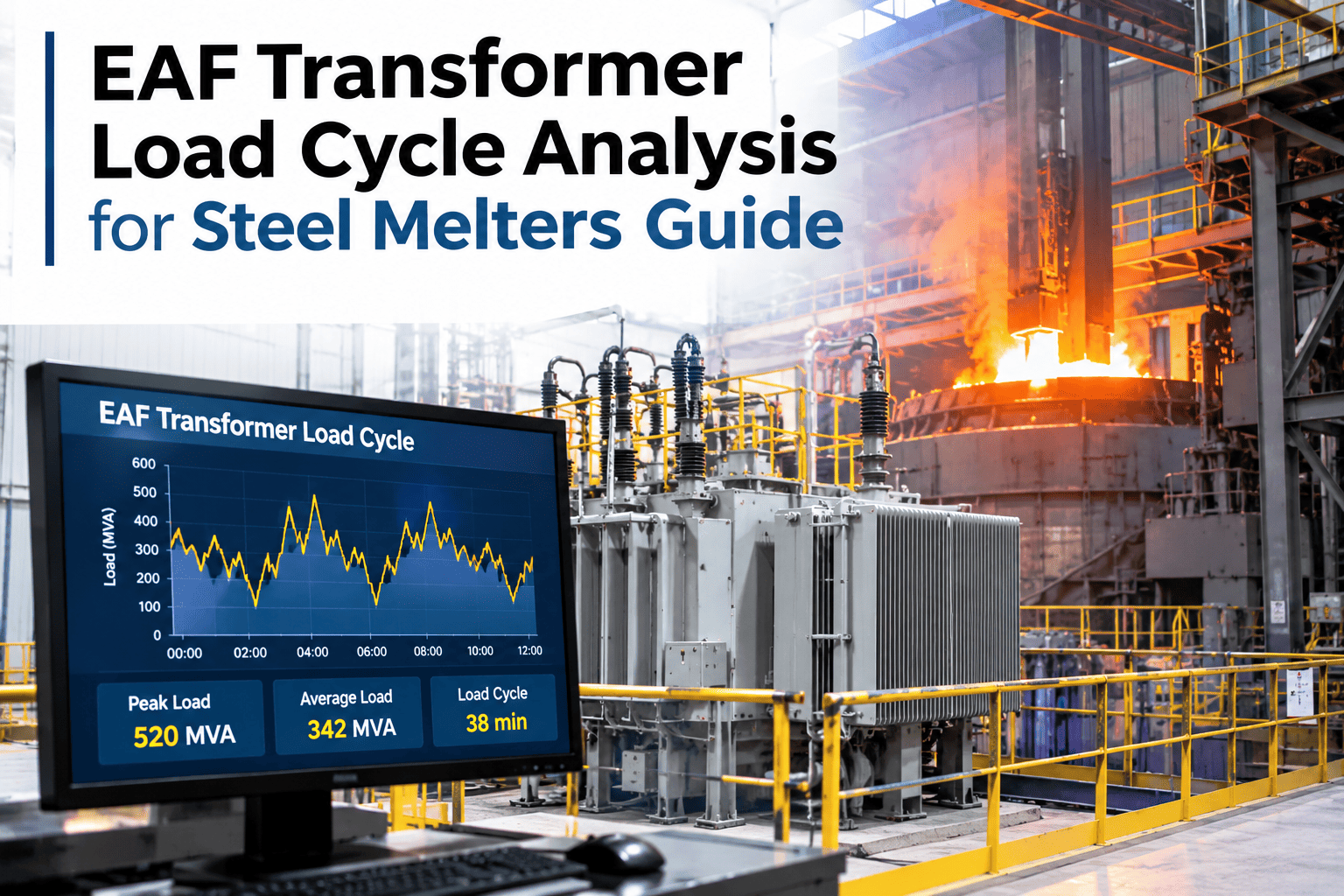
An EAF transformer doesn't run at a steady load — it cycles hard, multiple times a day, through the violent current swings of melting and refining, and each of those cycles adds a small amount of thermal and mechanical fatigue that accumulates over years of operation. Treating the transformer as if it ran under constant conditions, the way a standard power transformer might, misses the cumulative toll this daily cycling actually takes. Steel melters can review a load cycle fatigue analysis against their own transformer's operating history with iFactory AI.
An EAF Transformer Cycles Hard Every Day — That Adds Up
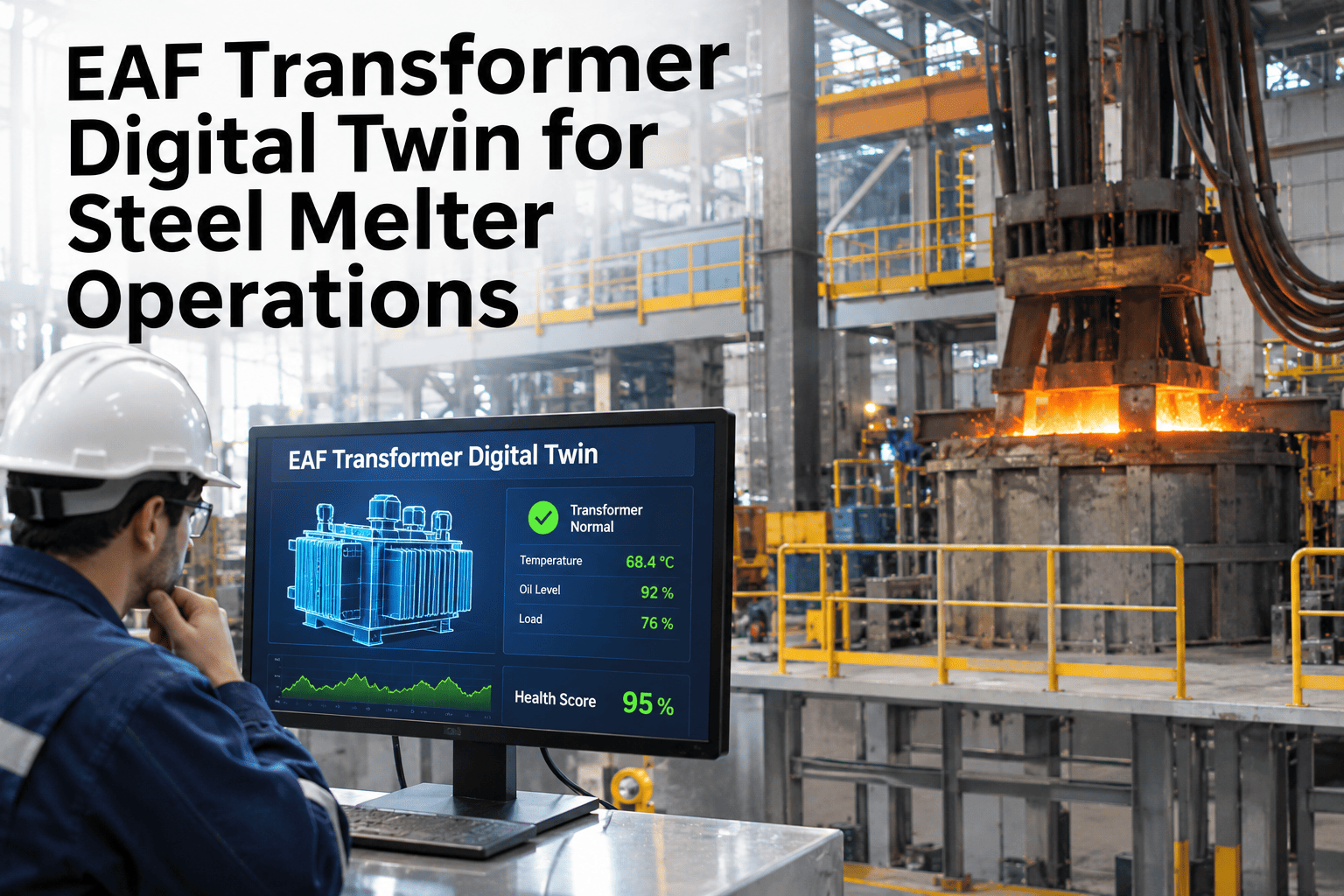
iFactory AI tracks daily thermal cycles, harmonic loading impact and cumulative fatigue, guiding maintenance decisions a constant-load assumption would miss.
Why EAF Duty Cycles Age a Transformer Differently
A standard power transformer typically sees relatively stable loading. An EAF transformer swings through dramatic current changes multiple times per heat, carries significant harmonic distortion from the arc process, and repeats this pattern many times a day — a fundamentally harsher duty cycle than most transformer life models assume.
| Stress factor | Effect on transformer life |
|---|---|
| Daily thermal cycling | Repeated expansion and contraction stresses insulation and windings |
| Harmonic loading | Additional heating beyond what fundamental current alone would cause |
| Cumulative fatigue | Mechanical stress on windings accumulates across thousands of cycles |
From Daily Cycle to Long-Term Fatigue Tracking
See Your Own Transformer's Cumulative Fatigue Picture
Share recent load and harmonic data and a short session will show where your transformer sits on its fatigue curve.
A Composite Scenario: The Re-Rating Decision Built on Real Cycle Data
A mill considering a production increase needed to know whether its existing EAF transformer could handle a higher duty cycle without materially shortening its remaining life. Rather than relying on the transformer's original nameplate rating alone, analyzing actual historical load cycle and harmonic data gave a cumulative fatigue picture specific to that unit's real operating history, showing it had more margin than a generic assumption would have suggested. That analysis supported the production increase with confidence, rather than guessing at a limit — an assessment iFactory AI's team can help build from your own transformer's operating data.
Why Harmonic Content Deserves Its Own Attention
Harmonic distortion from arc furnace operation causes additional heating beyond what the fundamental current alone would predict, meaning a transformer loaded well within its rated current on paper can still experience more thermal stress than that rating implies. Tracking harmonic content specifically, not just total current, is what makes the fatigue estimate realistic rather than optimistic.
Frequently Asked Questions
Understand the Real Fatigue Behind Your Daily Melt Cycles
iFactory AI tracks thermal cycles, harmonic loading and cumulative fatigue to guide maintenance and re-rating decisions. Book a walkthrough with your own data.