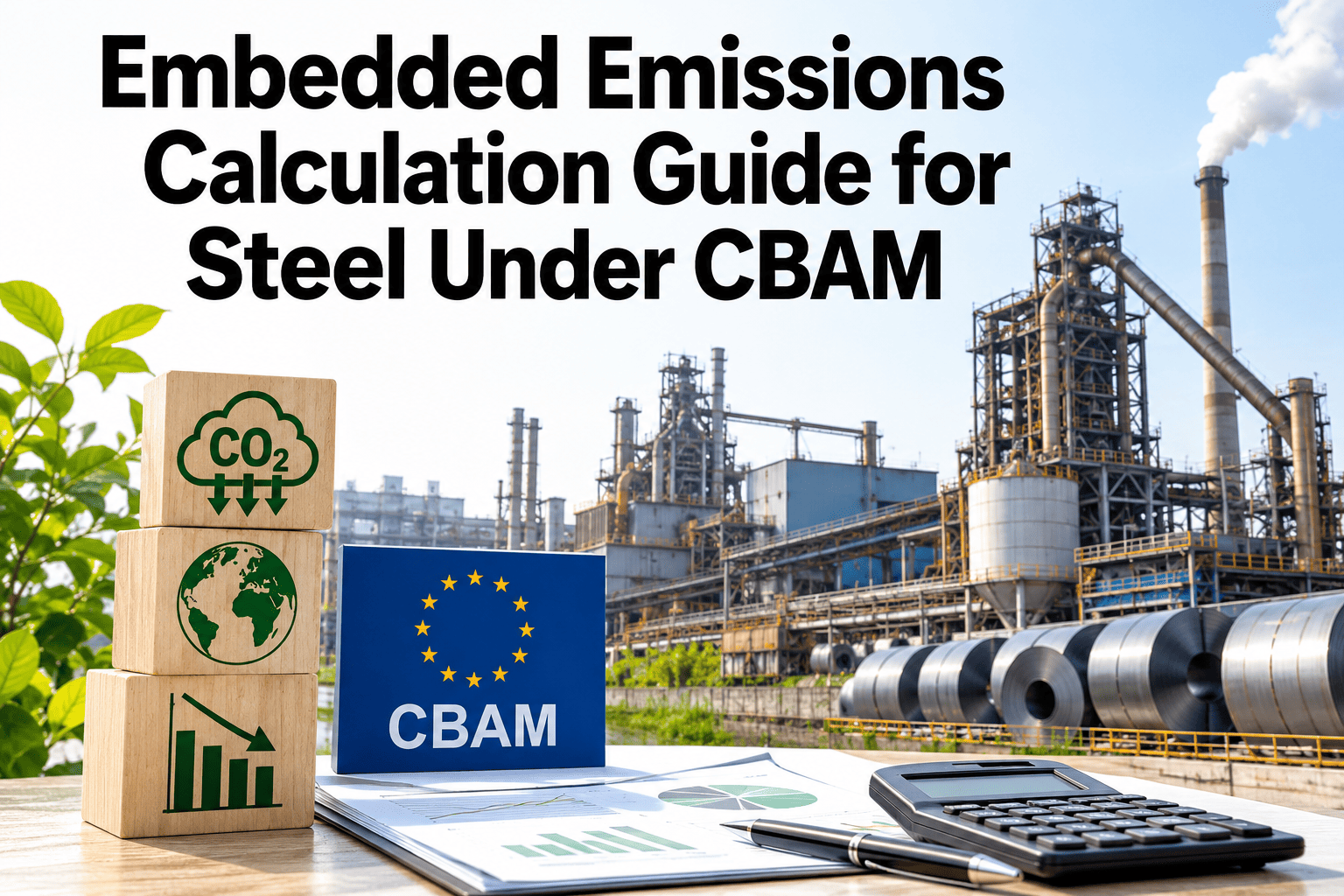
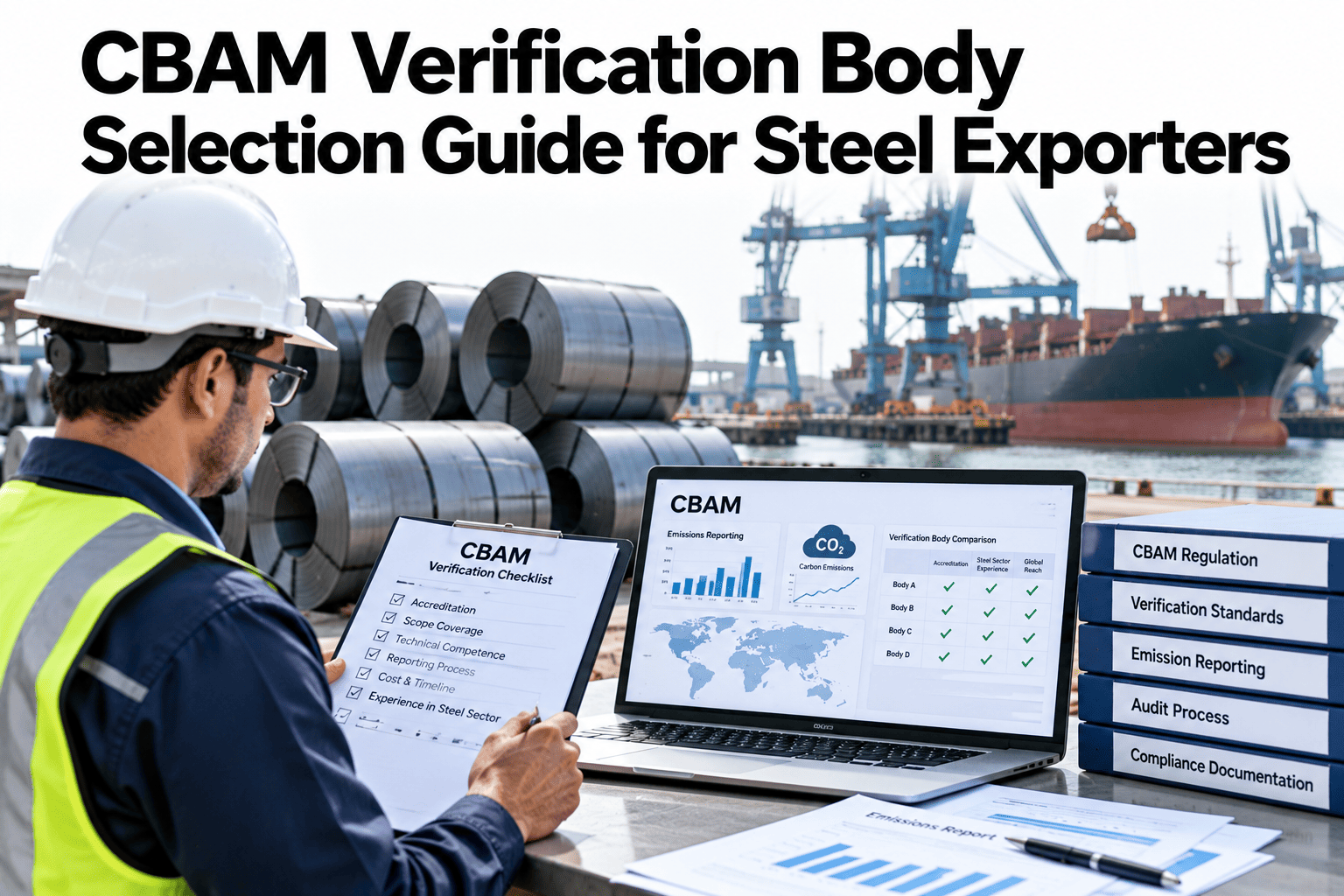
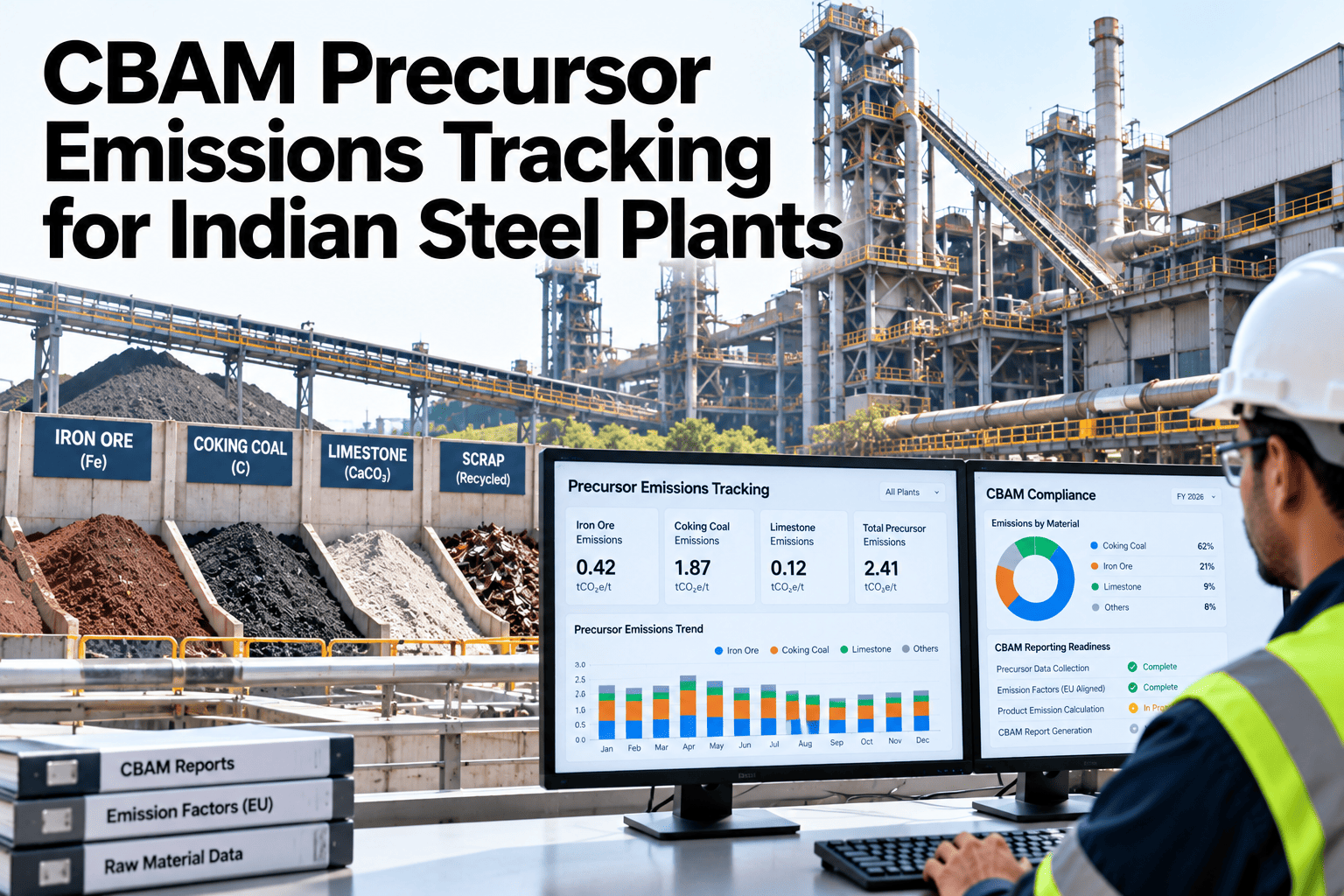
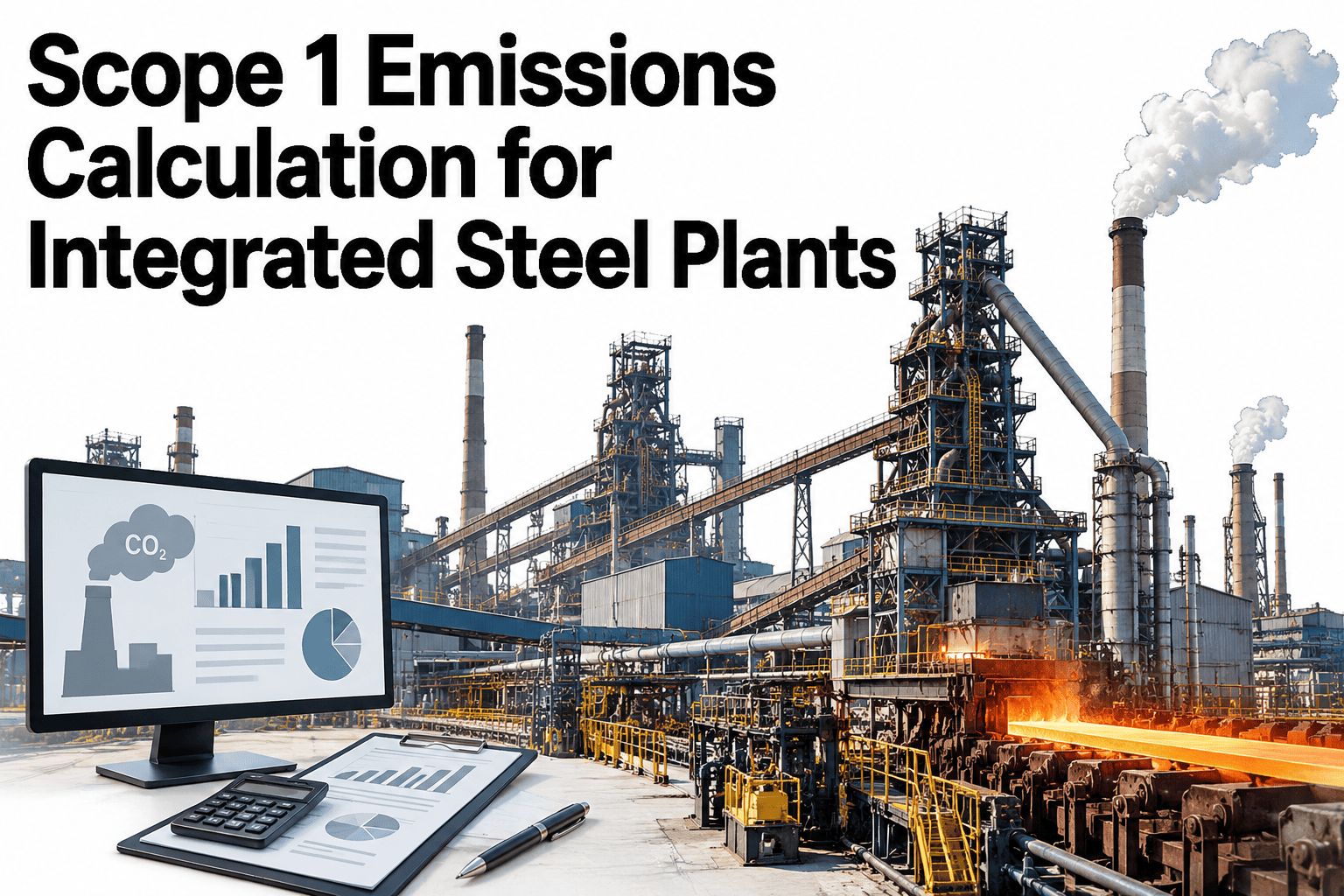
Embedded emissions are the carbon dioxide released in making a tonne of steel, including the emissions of the materials that went into it. Under the EU carbon border mechanism, exporters need a clear, documented way to calculate this figure for each product. The method adds direct emissions from each production step and carries forward the emissions of precursor materials. Rules and deadlines have changed more than once, so always confirm current guidance. To walk through the calculation for your own products, you can review a worked embedded emissions example with our team.
CBAM embedded emissions for Indian steel exporters
Calculate Embedded Emissions for Steel in Steps You Can Explain and Defend
iFactory AI links plant data to a documented calculation of direct and precursor emissions, so every export product carries a traceable figure.
Three building blocks of the calculation
Direct emissionsPrecursor emissionsAllocation
The basic ideaTotal Emissions Divided by Tonnes of Product
Specific embedded emissions = total attributed emissions / tonnes of product made
Total attributed emissions include emissions released in the production process and those carried in by precursor materials.
This guide is a general explanation. Confirm the current CBAM rules, definitions and default values with official guidance and your verifier.
Three componentsWhat Goes Into the Total
1
Direct emissions
Carbon dioxide released in the plant from fuel use and from the process itself, such as reduction and flux reactions.
2
Indirect emissions
Emissions linked to electricity used. Under current definitive rules, only direct emissions are counted for iron and steel, but rules can change.
3
Precursor emissions
Embedded emissions of intermediate products, such as pig iron or direct reduced iron, that become part of the product.
Calculation methodsFour Ways to Obtain the Direct Emissions Number
| Method | How it works | Typical use | Watch for |
|---|
| Activity data and factors | Multiply fuel or material quantities by emission factors | Fuels and many process inputs | Quality of factors and quantities |
| Mass balance | Track carbon in and carbon out | Complex integrated processes | Complete carbon accounting |
| Direct measurement | Measure gas flow and concentration at the stack | Large, single sources | Certified equipment and procedures |
| Default values | Use official reference values | Fallback when data is lacking | Conservative values may raise costs |
See a Worked Calculation Built on Your Data
Share your fuel, material and production data and see how iFactory AI would build and document your embedded emissions calculation.
A worked example, step oneFrom Pig Iron to Crude Steel
All numbers are illustrative. Assume pig iron has embedded emissions of 1.9 tonnes of CO2 per tonne, and steelmaking adds direct emissions.
| Item | Quantity | Emissions |
|---|
| Pig iron used per tonne of crude steel | 0.90 tonnes | 0.90 x 1.9 = 1.71 tCO2 |
| Direct emissions in steelmaking | 1 tonne of crude steel | 0.20 tCO2 |
| Embedded emissions of crude steel | 1 tonne | 1.91 tCO2 per tonne |
A worked example, step twoFrom Crude Steel to Hot Rolled Product
Next, carry crude steel into a rolled product. Assume a yield that needs 1.05 tonnes of crude steel per tonne of product, and direct emissions for reheating and rolling.
| Item | Quantity | Emissions |
|---|
| Crude steel used per tonne of product | 1.05 tonnes | 1.05 x 1.91 = 2.01 tCO2 |
| Direct emissions in reheating and rolling | 1 tonne of product | 0.15 tCO2 |
| Embedded emissions of hot rolled product | 1 tonne | 2.16 tCO2 per tonne |
The example is simplified. Real calculations follow the detailed methodology, including boundaries and allocation rules.
Flow of the calculationFour Steps From Data to a Product Figure
1
Define boundaries
Decide which processes and materials belong to each product.
2
Collect and calculate
Gather quantities and apply factors or measurements.
3
Allocate
Share emissions between products using agreed rules.
4
Carry forward
Add precursor emissions into each downstream product.
Where the emissions sitAn Illustrative Split in the Example
Most embedded emissions in the example sit in the precursor. This split is illustrative.
83 percent: Pig iron
Carried from the ironmaking stage.
10 percent: Steelmaking
Direct emissions in the converter shop.
7 percent: Reheating and rolling
Fuel for the reheating furnace.
Because precursors dominate, accurate ironmaking data matters most.
AllocationShare Emissions Fairly Between Products
Plants make many products from shared processes. Allocation rules divide emissions among them.
Process boundary
Which equipment belongs to which process.
Shared flows
Fuel, steam and gas used by several processes.
Allocation rule
How emissions are divided, such as by mass or energy.
Documentation
Written reasons that a verifier can check.
Choose rules that match physical reality and apply them consistently.
Data sourcesBring Plant Systems Into One Calculation
Fuel and energy metersProduction and material recordsLaboratory carbon data
Embedded emissions calculation
Product figuresVerifier evidenceCustomer reports
Keep raw data, factors and calculations in one version-controlled place. To plan yours, ask our team about calculation data flows.
Calculation qualitySpot the Weak Points Early
Input quality
Measured data
Estimated data
Documented method
Strong
Ready for verification
Document it
Good data, weak method documentation
Undocumented method
Improve the data
Method exists but input is weak
Fix first
Neither data nor method is reliable
RolloutFive Steps to a Documented Calculation
1
Map the plant
Draw processes, materials and energy flows.
2
List the inputs
Identify data for each emission source.
3
Choose methods
Select calculation, mass balance or measurement per source.
4
Run a trial
Calculate a past period and review the results.
5
Prepare for verification
Organise evidence and ask a verifier to review.
Process and material flow diagram
Emission sources listed with methods
Emission factors documented with sources
Precursor emissions traced through the plant
Allocation rules written and justified
Calculation version control
Evidence folder by process and period
Trial calculation reviewed before verification
Expert reviewWhat a Steel Emissions Specialist Would Check First
Embedded emissions calculations succeed on clear boundaries and traceable data. Complex software cannot fix unclear allocation or missing records.
Verdict
Strong when the method is documented and every number traces to evidence.
Watch for
Mixed definitions and rules copied from other plants without checking.
Do next
Map one route end to end and calculate one product with full documentation.
Frequently asked questionsWhat Indian Exporters Ask About CBAM Embedded Emissions
Do we count indirect emissions for steel?
Under the current definitive rules, only direct emissions are counted for iron and steel, though earlier reporting also covered indirect emissions. Rules can change, so confirm current guidance and keep electricity data.
Confirm reporting scope.
What are precursor emissions?
They are the embedded emissions of intermediate materials, such as pig iron or direct reduced iron, that become part of the final product. They are added to the product's own direct emissions.
Ask about precursors.
Can we use default values?
Default values are available as a fallback, but they are typically conservative and may raise costs. Actual verified data usually gives a fairer figure.
Compare actual and default data.
How do we handle shared processes?
Use clear allocation rules that follow physical reality, apply them consistently and document the reasons. Verifiers will ask for them.
Ask about allocation.
How long does a first calculation take?
A first version for one route and a few products can take weeks to a few months, depending on data quality. Plan time for fixing meters and for verifier feedback.
Plan a first calculation.
Traceable carbon, trusted figures
Put a Defensible Number on Every Tonne You Export
Book a session with iFactory AI to map your processes, document your method and build an embedded emissions calculation your verifier and customers will accept.