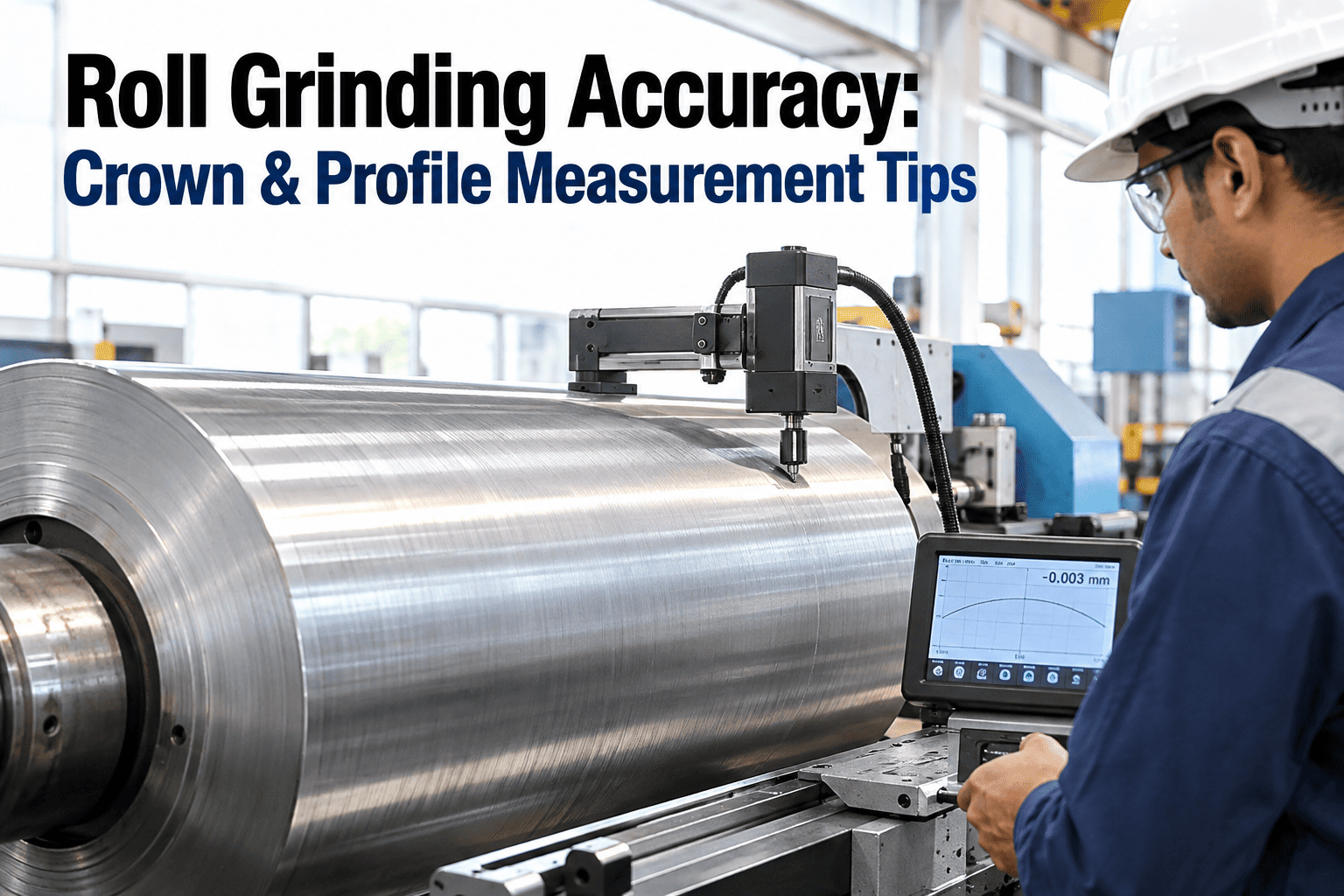
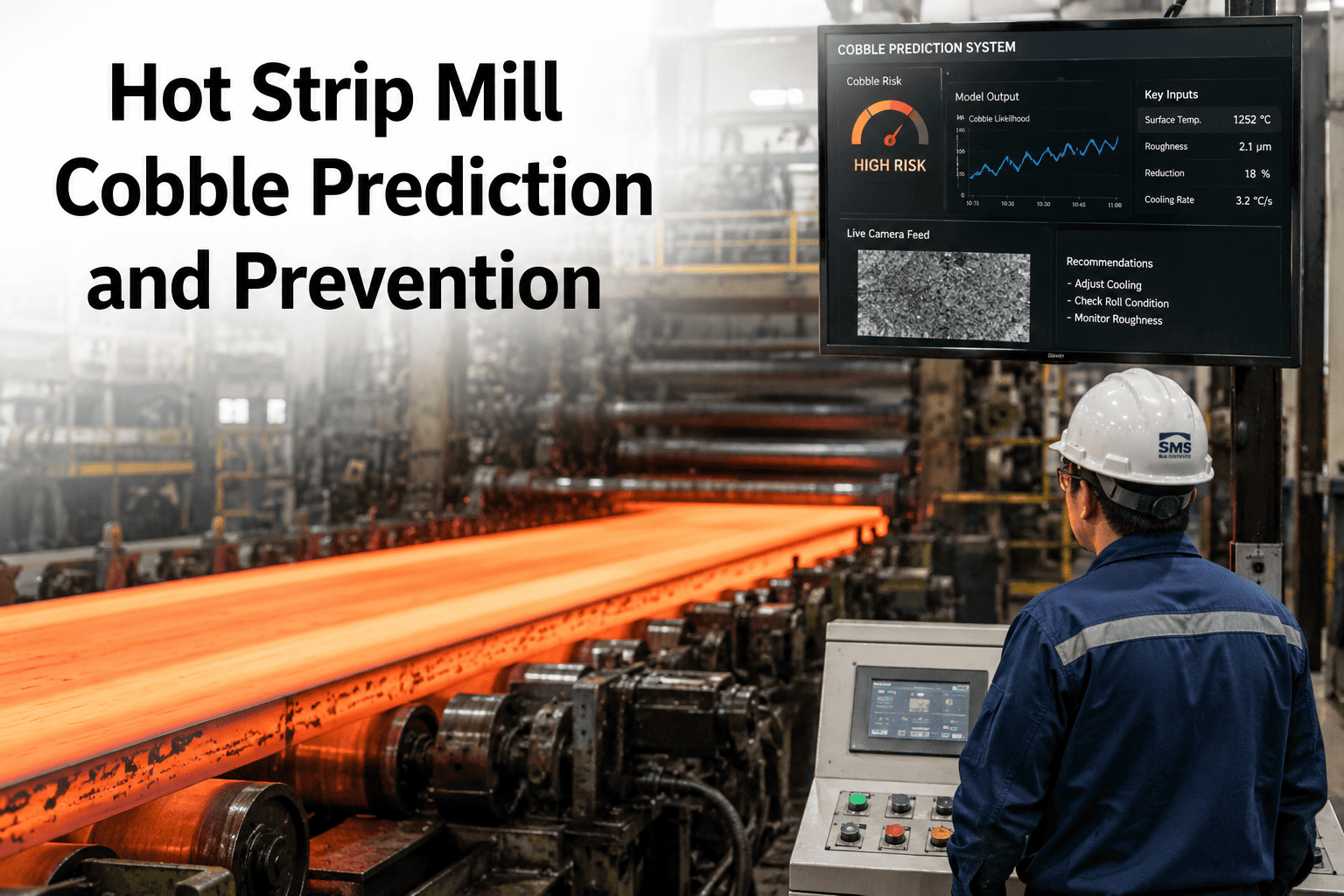
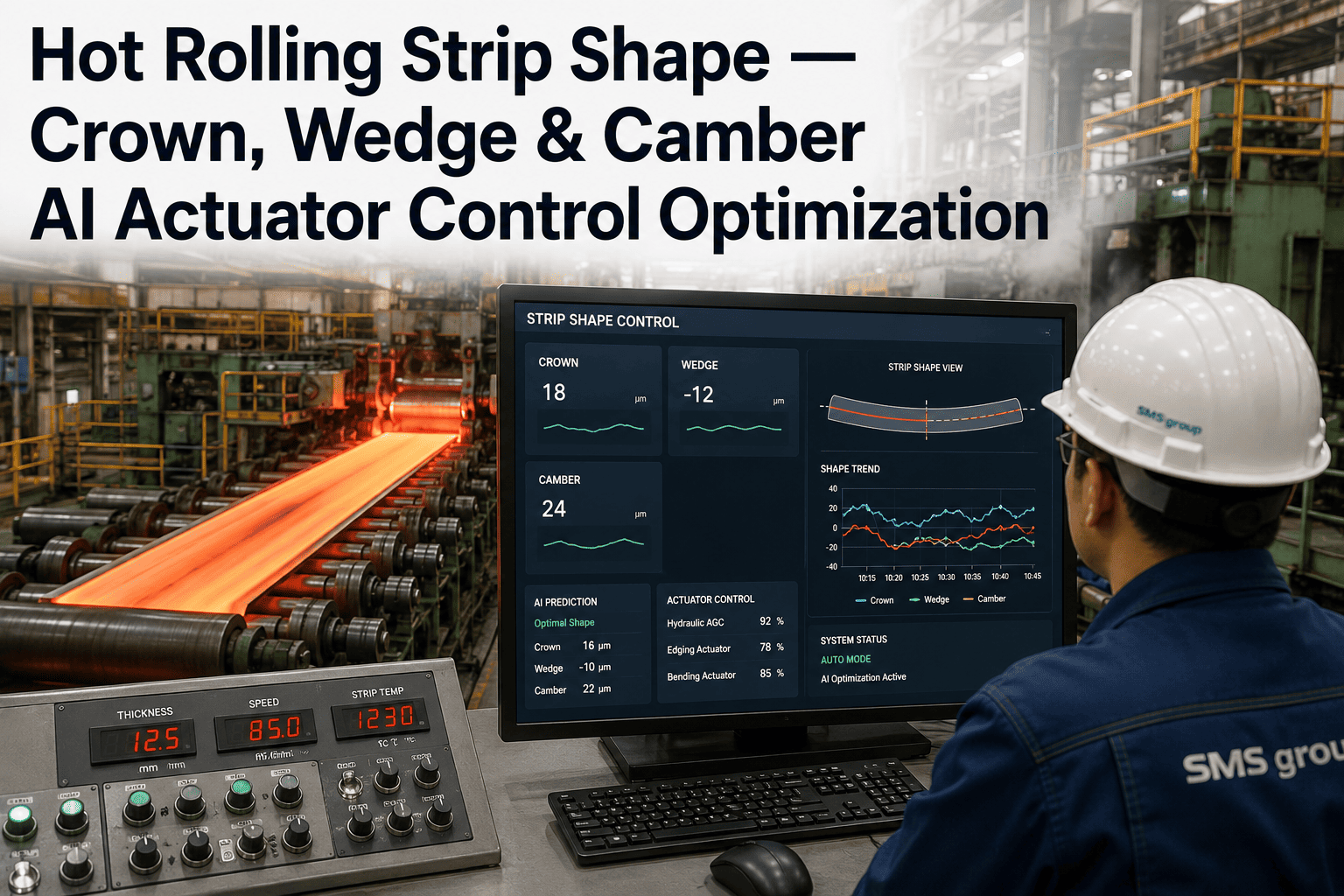
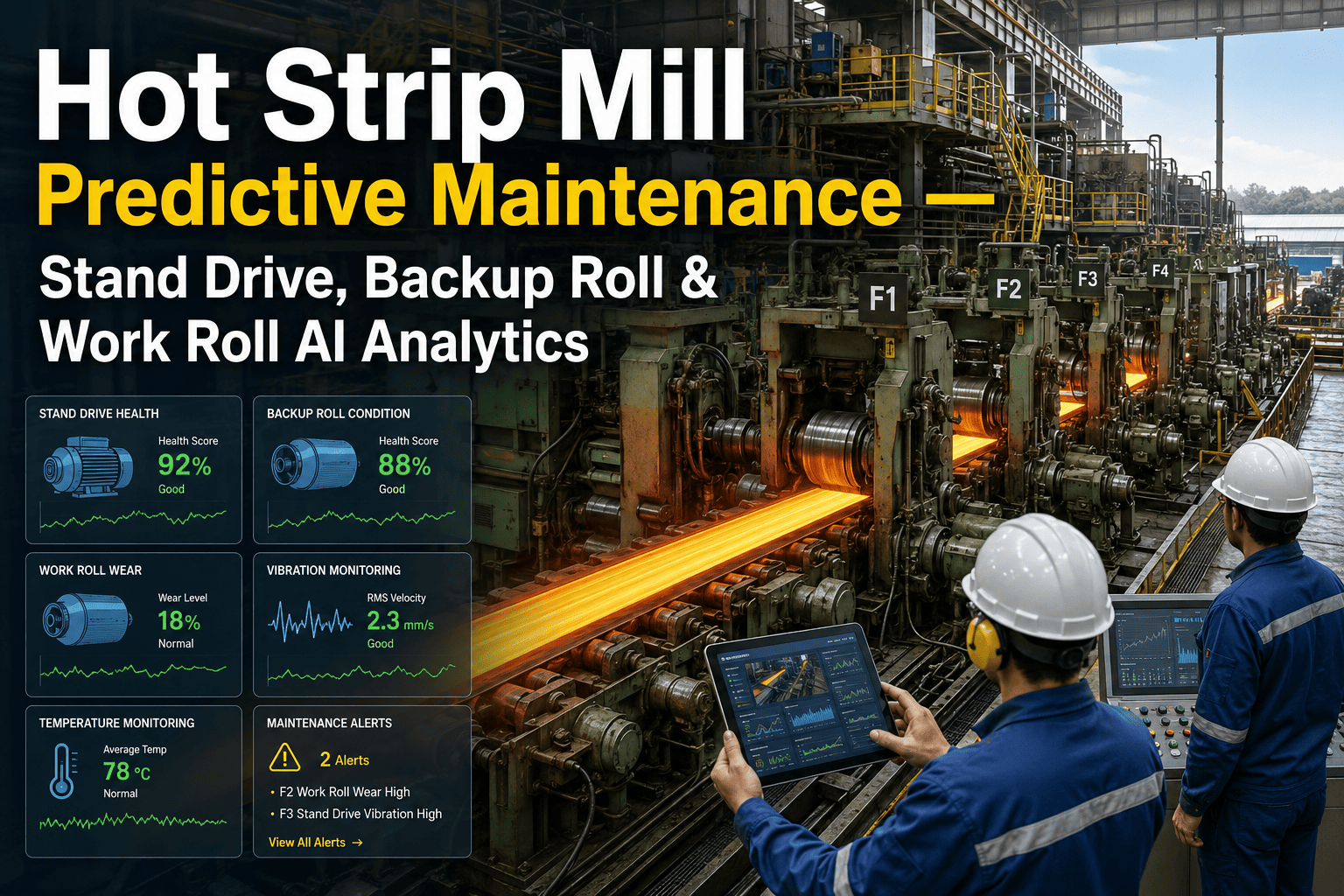
Crown and profile don't announce themselves the way a hard gauge reject does. A strip can pass thickness inspection at the centerline and still carry a crown shape that causes coiling problems, uneven tension across the width, or downstream cold rolling and finishing issues that only become someone else's problem a process step later. Getting crown right depends on coordinating work roll bending, shifting, and thermal profile together across every stand, not adjusting one variable in isolation. iFactory predicts crown behavior stand by stand and coordinates the correction, and it's easier to see how in Book a Demo.
Crown Problems Don't Show Up At Your Gauge Gauge. They Show Up At The Customer's Line.
A strip can be perfectly on-gauge at centerline and still carry a crown shape that causes coiling tension issues or downstream cold rolling defects. iFactory predicts crown behavior across the finishing train and coordinates roll bending, shifting, and thermal profile stand by stand to hold target shape across every grade you run.
Crown Depends On What Every Stand Did, Not Just The Last One
Strip crown, the thickness difference between the centerline and the edges, is shaped cumulatively across every stand in the finishing train rather than being set at any single point. Work roll thermal crown builds up as rolls heat unevenly across their length during a campaign, mechanical roll wear changes the roll profile gradually between regrinding cycles, and CVC or work roll shifting settings interact with both of these in ways that are difficult to predict by formula alone, especially as conditions change mid-campaign. A crown correction applied at one stand without accounting for what's already been introduced upstream can just as easily overcorrect as fix the problem.
Thermal Crown Build-Up
Work rolls heat unevenly along their length during continuous rolling, developing a thermal crown that changes gradually through a campaign and shifts the actual roll gap profile away from its cold-state calibration.
Mechanical Wear Between Regrinding
Roll wear accumulates differently across the roll barrel depending on product mix and width changes, meaning the mechanical crown a roll carries partway through a campaign differs from what it had at the start.
CVC Shift Interaction Effects
Continuously variable crown roll shifting changes effective crown at each stand, but its effect interacts with both thermal and mechanical crown already present, making the right shift setting a moving target rather than a fixed value.
Cumulative Stand-To-Stand Drift
A small crown deviation introduced at an early finishing stand carries forward and compounds through subsequent stands, so correcting only at the last stand often can't fully undo an issue that started several stands earlier.
Coordinate Crown Correction Across The Whole Finishing Train
iFactory predicts crown behavior stand by stand and coordinates bending, shifting, and thermal profile together.
What The Model Adjusts To Hold Target Crown
Rather than tuning bending force, roll shift position, and thermal management independently, iFactory treats them as one coordinated system, since adjusting any single lever without accounting for the other two tends to just move the crown problem rather than solve it.
Work Roll Bending
Bending force at each stand is adjusted against the current predicted crown state rather than a fixed setpoint, compensating for whatever thermal and mechanical crown already exists at that point in the train.
CVC Roll Shift Position
Shift position is recalculated as roll wear and thermal crown evolve through the campaign, keeping the effective crown contribution from shifting aligned with what the strip actually needs at that stage.
Roll Cooling And Thermal Management
Roll cooling spray patterns are adjusted to manage thermal crown build-up proactively, reducing how much correction the bending and shifting systems need to compensate for later in the campaign.
What Changes When Crown Levers Are Tuned Together
| Aspect | Independent Lever Adjustment | Coordinated Crown Model |
|---|---|---|
| Mid-campaign crown drift | Requires manual operator correction | Anticipated and compensated proactively |
| Cross-stand consistency | Each stand corrected somewhat independently | Corrections coordinated across the full train |
| Downstream cold rolling issues | More frequent shape-related complaints | Reduced through tighter upstream crown control |
| Operator workload during campaign | Frequent manual bending adjustments | Recommendation review rather than manual recalculation |
Crown drift used to creep in gradually through a campaign in a way that was hard to catch until a customer flagged a coiling or shape issue downstream. Since iFactory started coordinating our bending, CVC shift, and roll cooling together against predicted crown state, we're catching and correcting that drift mid-campaign instead of finding out about it from a customer complaint weeks later.
What Mills Report After Adopting Coordinated Crown Control
Where Crown Control Programs Commonly Struggle
Missing Roll Grinding History
Predictions depend on knowing each roll's ground profile at the start of a campaign, so gaps in grinding shop records weaken the model's starting assumption about that roll's baseline crown contribution.
Inconsistent Shape Meter Calibration
Crown and flatness feedback depends on accurate shape meter readings, and a meter that drifts out of calibration undermines the model's ability to confirm predictions against actual strip shape.
Width Change Transitions Not Flagged
A significant width change shifts how existing roll wear interacts with the new strip width, and campaigns that don't flag these transitions clearly see reduced correction accuracy during the changeover coils.
Treating Cooling Spray As A Separate System
Roll cooling is sometimes managed by a separate team or system disconnected from bending and shift control, which limits how effectively the three levers can actually be coordinated as intended.
Frequently Asked Questions
Q: Does this require new shape measurement equipment on the mill?
Most finishing mills already have a shape meter or crown measurement system installed after the last stand, and iFactory is built to work from that existing feedback rather than requiring new measurement hardware. Where shape measurement is limited to specific points rather than continuous coverage, the model can still generate useful crown predictions from roll force, bending, and shift data, though continuous shape feedback improves how quickly predictions calibrate to that specific mill. Reach out through Support Contact to review your current shape measurement setup.
Q: How does the model handle a fresh roll change mid-campaign?
A roll change resets the thermal and mechanical crown state the model has been tracking for that stand, so the model relies on ground profile data for the new roll along with a conservative correction margin until enough coils confirm how that specific roll is behaving under current operating conditions. This is one of the situations where flagging the roll change event to the system directly, rather than letting it be inferred, helps the model recalibrate faster.
Q: Can this help extend the interval between roll regrinding cycles?
By tracking how crown behavior evolves through a campaign more precisely, the model can help identify when a roll's crown contribution is drifting enough to warrant regrinding versus when remaining variation can still be compensated through bending and shift adjustment, which sometimes allows mills to extend regrinding intervals slightly for rolls that are wearing more evenly than average.
Q: Does this work differently for wide product mix mills versus mills running mostly one width?
Mills running a wide product mix see crown behavior interact with width changes more frequently, so the model places more weight on tracking width transition history for those operations, while mills running a narrower product range typically reach stable crown predictions faster since there's less variability to account for. A Book a Demo session can review how your specific product mix would be handled.
Q: How quickly do operators need to trust the model's bending and shift recommendations?
Most mills keep operators reviewing and confirming recommendations during an initial calibration period, gradually extending trust as the model demonstrates consistent accuracy against that specific mill's roll history and product mix. This staged approach tends to build confidence faster than expecting full automatic adoption from the first day of deployment.
Hold Target Crown Across The Whole Campaign, Not Just At Startup
iFactory coordinates bending, shifting, and thermal management together so crown stays in spec stand by stand.