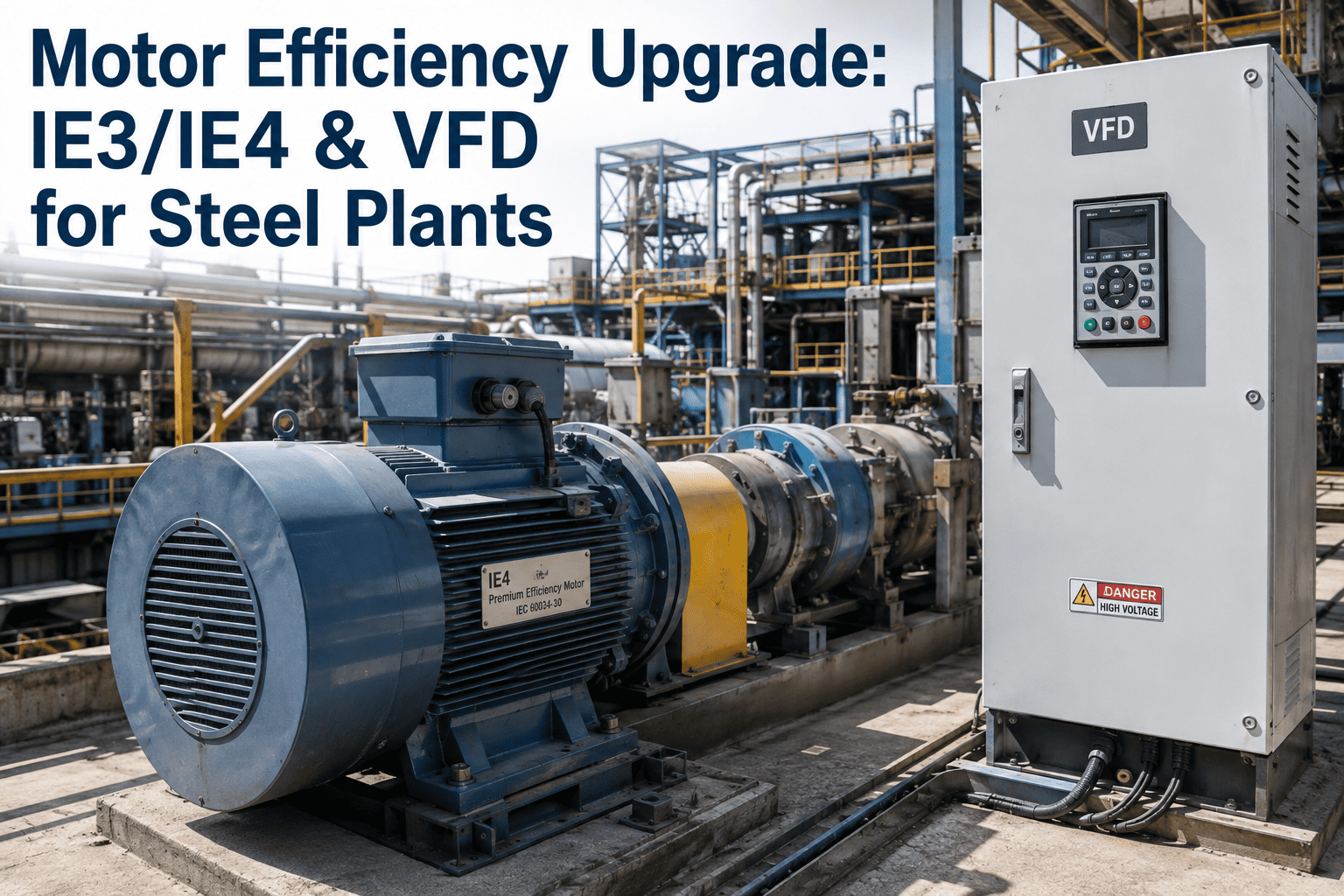
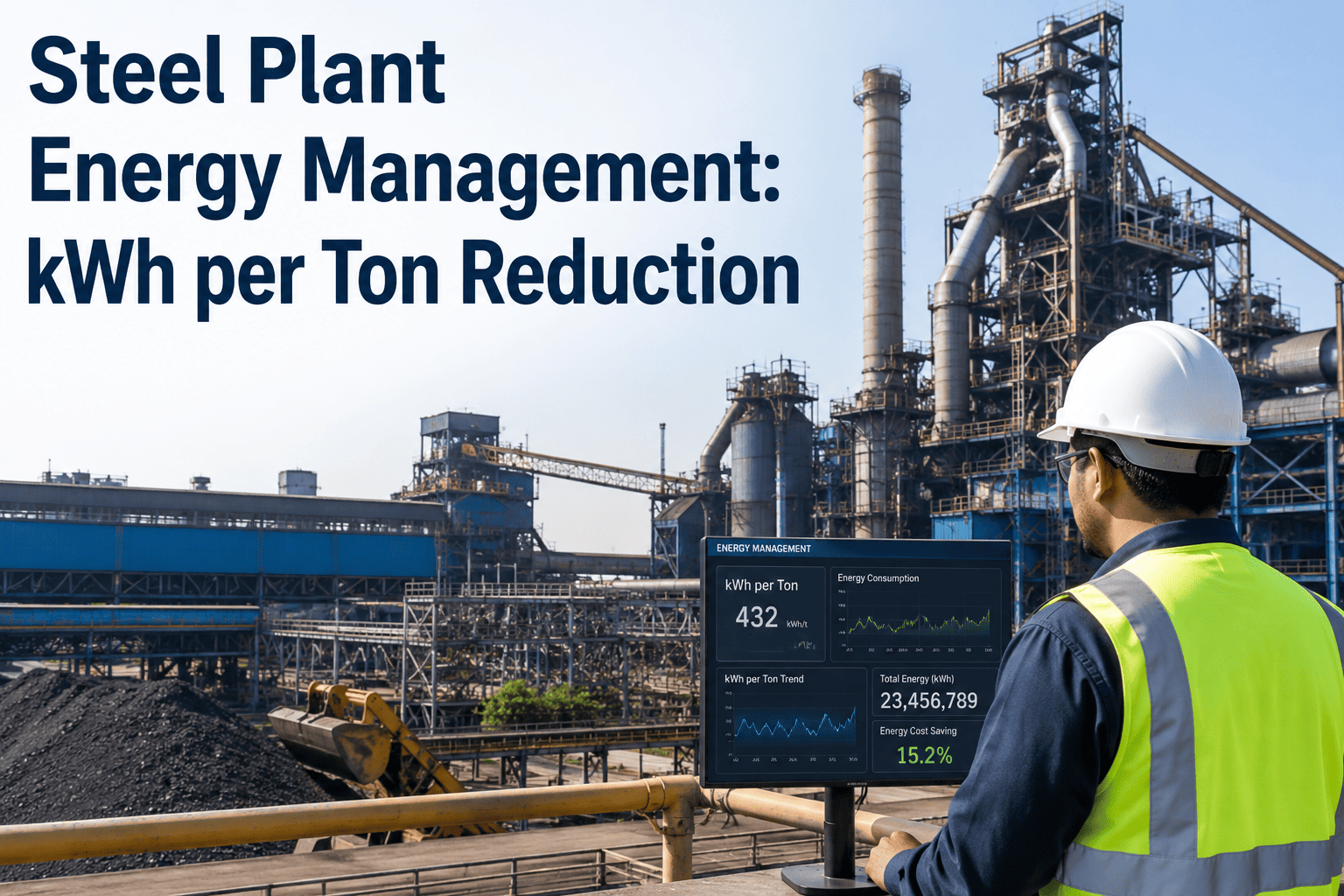
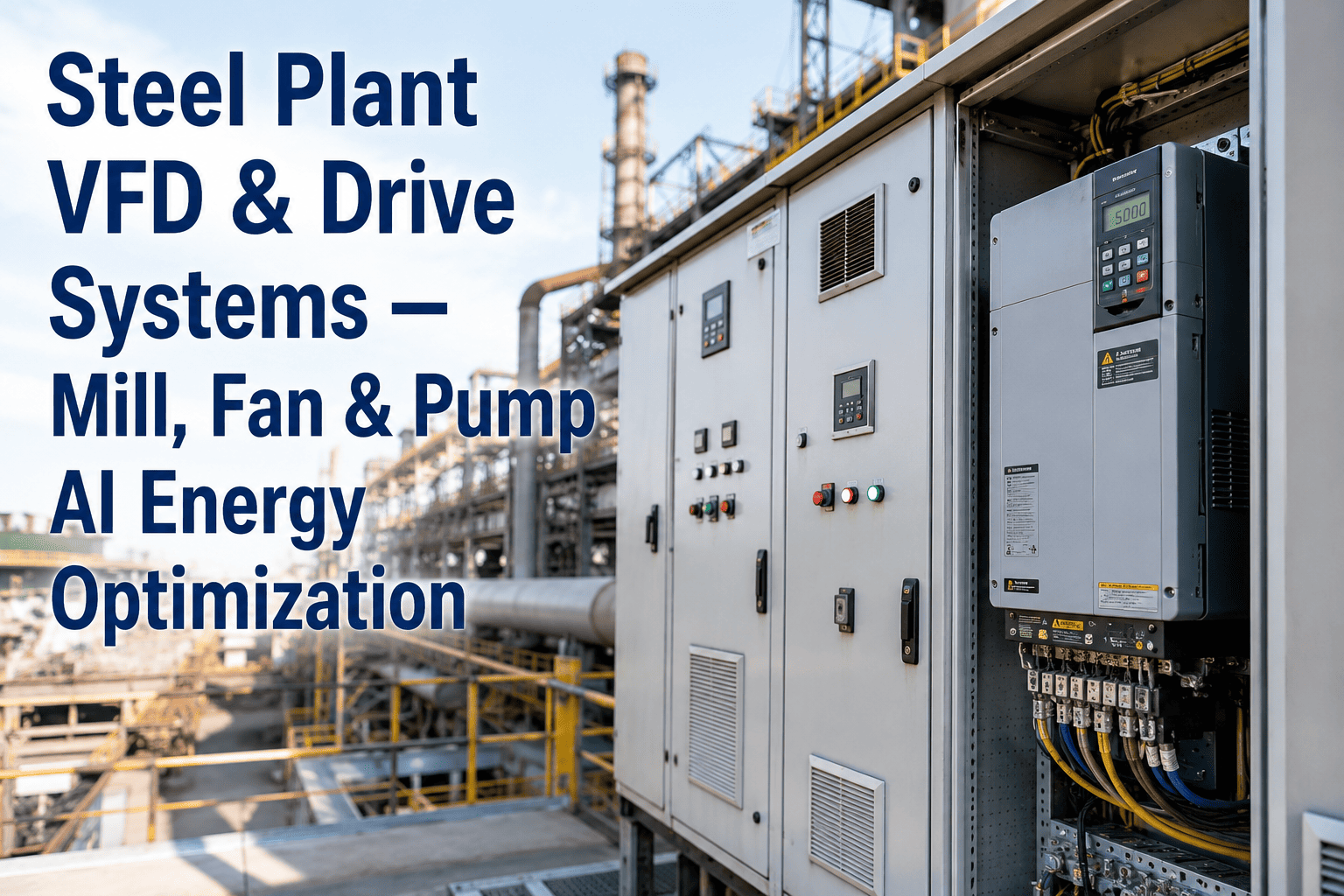
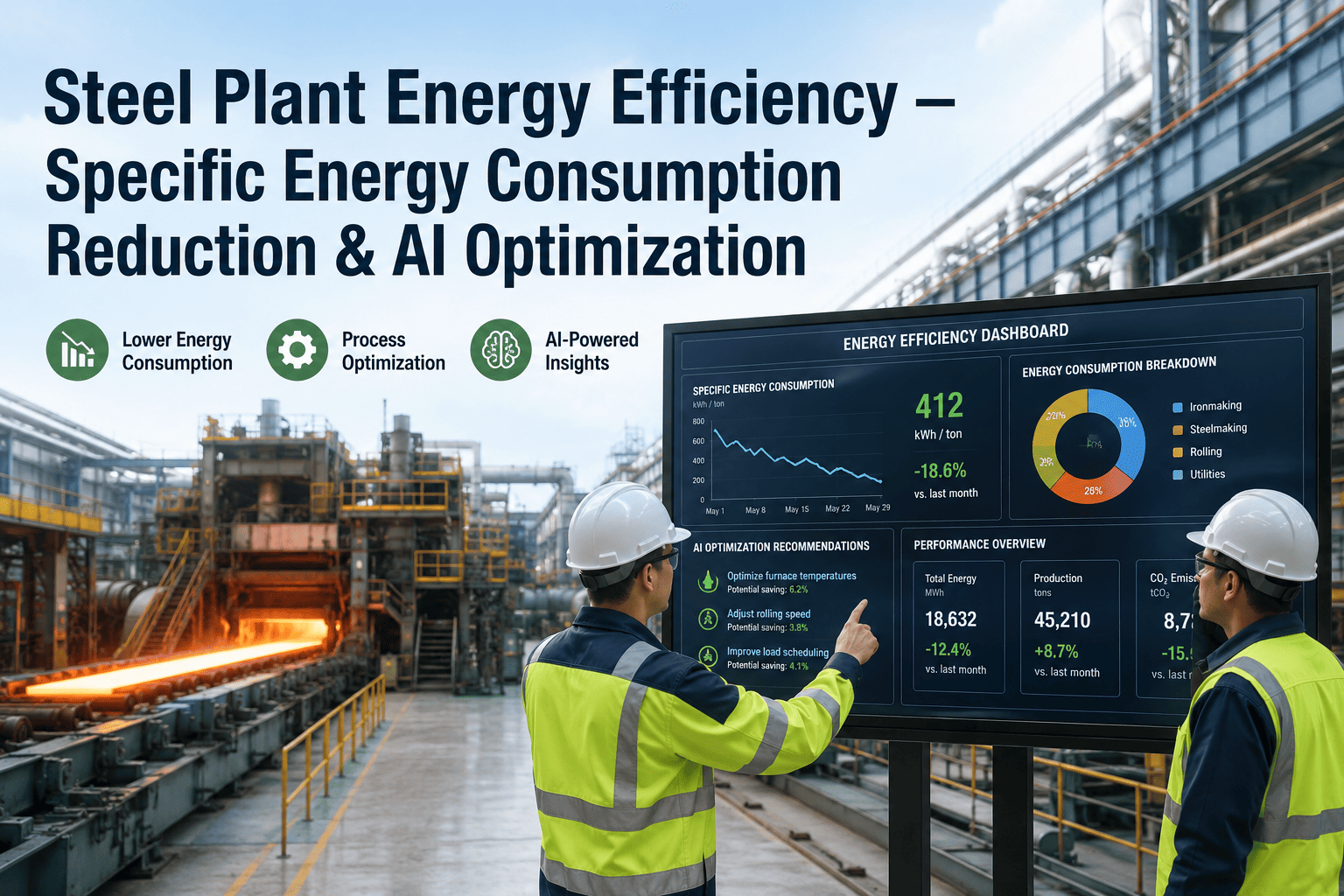
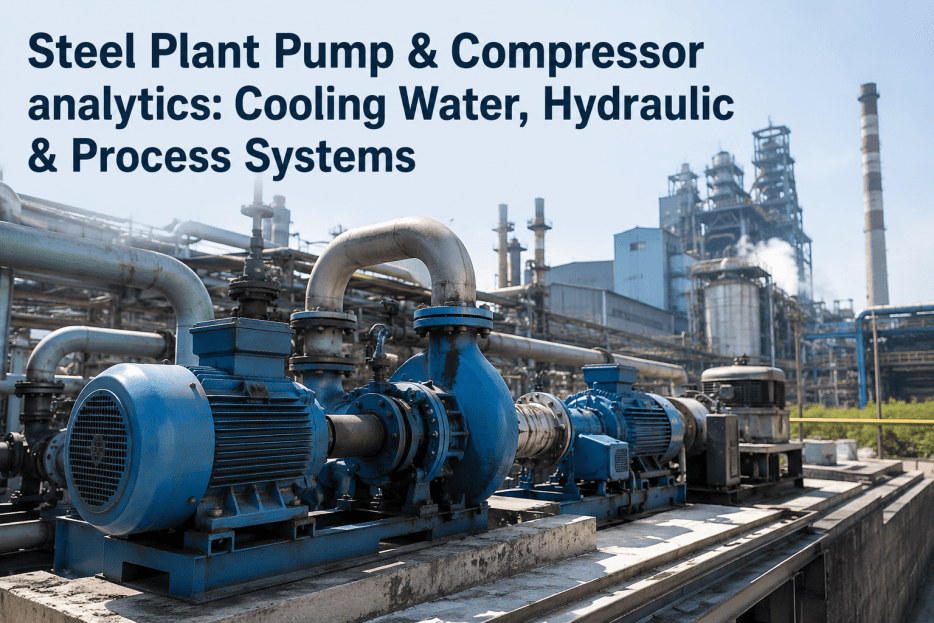
A steel plant runs hundreds of motors across fans, pumps, and compressors, and most of that population was installed years apart, sized by whoever specified the original equipment package rather than by a deliberate efficiency standard. Older motors quietly cost more to run every single hour they operate, and because electricity is billed in aggregate, nobody notices which specific motor is dragging down the plant's overall energy performance until an efficiency program actually goes looking. iFactory tracks motor-level load and runtime data across the plant, ranks candidates for IE3 or IE4 replacement and VFD retrofit by expected payback, and verifies actual savings once a project is complete. You can book a demo to see your own motor population ranked by upgrade opportunity.
MOTOR EFFICIENCY · IE3 / IE4 UPGRADES · VFD APPLICATION
Not Every Motor Deserves the Same Upgrade Priority
iFactory tracks load, runtime, and duty cycle across your fan, pump, and compressor motors, then ranks replacement and VFD retrofit candidates by expected payback so capital goes to the motors actually worth upgrading first.
IE4
Super premium efficiency
THE HIDDEN COST OF AN AGING MOTOR FLEET
Efficiency Loss Is Invisible Until Someone Measures It Motor by Motor
A motor installed a decade or more ago was likely specified to meet a standard efficiency class common at the time, and that gap compounds across every hour of continuous operation in a fan, pump, or compressor application that runs around the clock. Because energy cost is billed in aggregate across the whole plant, the specific motors driving that inefficiency stay hidden without a deliberate effort to measure load and consumption at the individual motor level.
2-8%
Typical efficiency gain moving from an older standard motor to an IE3 or IE4 replacement
20-50%
Energy reduction achievable on variable-load fans and pumps once a VFD replaces throttling or damper control
90%+
Share of a motor's lifetime cost that comes from the electricity to run it, not its purchase price
WHERE VFDs CHANGE THE ECONOMICS MOST
The Biggest Wins Are on Loads That Vary, Not Loads That Do Not
A VFD retrofit delivers dramatically different savings depending on how variable the actual load is, since a motor running at a constant fixed speed against a constant load gains little from variable speed control, while one currently throttled or damper-controlled against a fluctuating demand can save a substantial share of its energy use.
Fans
Combustion air, cooling, and ventilation fans currently controlled by dampers see some of the largest VFD savings available in a plant.
Pumps
Cooling water and process pumps throttled by a control valve are strong VFD candidates when flow demand varies across the production cycle.
Compressors
Compressed air systems with fluctuating demand benefit from VFD-equipped compressors that match output to actual load instead of cycling on and off.
Conveyors and Material Handling
Motors running at fixed speed regardless of actual throughput are candidates for both right-sizing and speed control.
Find Out Which Motors Are Actually Worth Upgrading
iFactory ranks your motor population by load, runtime, and expected payback so upgrade budget goes to the highest-return candidates first. Book a demo and review your own motor data.
STANDARD VS PREMIUM EFFICIENCY CLASSES
What the IE Rating Actually Means for Your Energy Bill
International efficiency classes give a standardized way to compare motor performance, and the gap between classes translates directly into measurable energy cost difference across a motor's operating life.
| Efficiency Class |
Relative Performance |
Typical Application Fit |
| IE1, Standard Efficiency |
Baseline, common in older motor installations |
Legacy equipment nearing replacement age regardless of efficiency |
| IE2, High Efficiency |
Moderate improvement over IE1 |
Often a minimum baseline required by regulation in many regions |
| IE3, Premium Efficiency |
Meaningful, measurable reduction in losses |
Standard target for most continuous-duty replacement projects |
| IE4, Super Premium Efficiency |
Highest efficiency currently standardized |
Best justified on the highest runtime, highest load applications |
HOW A REALISTIC UPGRADE PROGRAM IS SEQUENCED
Right-Sizing First, Then Efficiency Class, Then Speed Control
The most effective motor programs address these three factors in a deliberate order, since replacing an oversized motor with a same-size premium efficiency unit locks in a mismatch that a VFD alone cannot fully fix.
01
Verify Correct Motor Sizing
Confirm the motor is sized to actual load, not a legacy specification, since an oversized motor wastes energy regardless of efficiency class.
02
Prioritize by Runtime and Load
Rank candidates by hours run and load factor, since the highest runtime motors return the fastest payback on an efficiency upgrade.
03
Replace With IE3 or IE4 Where Justified
Move top-ranked candidates to premium or super premium efficiency motors at their next planned replacement or failure event.
04
Add VFDs on Variable Loads
Layer variable frequency drives onto applications with genuinely fluctuating demand for the largest additional savings.
05
Verify Savings After Installation
Track actual post-upgrade consumption against the pre-upgrade baseline to confirm the projected savings materialized.
WHO THIS APPLIES TO
Any Plant With a Large, Continuous-Duty Motor Population
Motor efficiency programs return the most value wherever motors run for long hours against loads that either never vary or vary significantly enough to justify speed control.
Rolling Mill Drive Systems
Evaluate large continuous-duty drive motors for efficiency class and speed control opportunities.
Utility and Auxiliary Systems
Target cooling water, ventilation, and compressed air motors that run continuously regardless of production rate.
Multi-Site Producers
Compare motor efficiency opportunity across plants to prioritize capital budget consistently.
Maintenance and Reliability Teams
Combine efficiency upgrades with planned replacement cycles to avoid separate capital projects.
FREQUENTLY ASKED QUESTIONS
Questions Engineering and Maintenance Teams Ask First
How do we identify which motors in a large plant are actually worth upgrading first?
The highest-value candidates are typically motors combining long annual runtime with a meaningful load factor, since a motor that runs continuously against a real load returns its upgrade cost far faster than one that sits mostly idle or lightly loaded. Ranking the full motor population by these two factors together, rather than by age or size alone, is what separates a genuinely prioritized program from a guess.
Book a demo to see your own motors ranked by this method.
Is it worth replacing a motor before it fails, or should we wait for natural end of life?
For high runtime, high load motors, the energy savings from an early replacement often justify the cost well before natural failure, particularly when moving several efficiency classes at once, while lower runtime motors are usually better handled at natural replacement to avoid discarding remaining useful life. This tradeoff is specific to each motor's duty cycle rather than a single rule that applies plant-wide.
Contact our support team to review early replacement economics for specific motors.
Do all variable-load applications benefit equally from adding a VFD?
No, the benefit scales with how much the load actually varies and how it was previously controlled, since a fan or pump currently throttled by a damper or valve has significant energy to recover through variable speed control, while one already running close to full load continuously has much less to gain. Measuring the actual load profile before specifying a VFD avoids overestimating the payback.
Book a demo to review load profiles on your candidate applications.
How do we verify a motor upgrade actually delivered the projected savings?
Verification requires comparing metered consumption on that specific motor or circuit before and after the upgrade under comparable load conditions, which is a step many programs skip once a project is installed and assumed successful. Continuous post-installation tracking catches cases where an upgrade underperformed due to incorrect sizing or an unaddressed mechanical inefficiency elsewhere in the system.
Contact our support team to set up post-installation verification tracking.
Can this help justify a motor efficiency project for an energy incentive or rebate program?
Many utility and government incentive programs for industrial motor efficiency require documented baseline consumption and projected savings as part of the application, and having metered, motor-level data available makes that documentation significantly easier to assemble than working from nameplate assumptions alone.
Book a demo to discuss documentation for an incentive application on your motor upgrades.
Put Capital Behind the Motors That Actually Pay It Back
iFactory ranks your motor population by runtime, load, and expected efficiency payback, then verifies the savings after the upgrade is installed. Book a demo and see it running on your own motor data.