A rebar bundle leaves the rolling mill looking almost identical to every other bundle of the same size sitting on the same rack, which is exactly the problem the moment a customer calls asking which heat their delivery came from. Without a marking and tracking system that survives handling, stacking, and outdoor storage, that question turns into a search through delivery logs and a hope that someone wrote the right heat number on the right paperwork. A single misidentified bundle during a recall investigation can force a much wider hold than necessary, because without confident traceability, the safest move is to quarantine everything that might be affected instead of the specific bundles that actually are. AI-based identification and tracking ties every bundle to its heat, mill certificate, and shipment record from the moment it's tagged through delivery. See what end-to-end rebar traceability looks like for your shipments.
A Bundle That Can't Be Identified Is a Bundle You Can't Defend
Without durable marking and continuous tracking, a recall or customer inquiry forces a guess about which bundles are actually affected. AI-based identification keeps every bundle traceable from tag to delivery.
of bundles need durable identification for a recall to target only the affected heat instead of an entire shipment window
wider recall scope typically required when bundle-to-heat traceability can't be confirmed with confidence
the time it should take to answer a customer's question about which heat and shipment their rebar came from
The Journey From Rolling to Customer
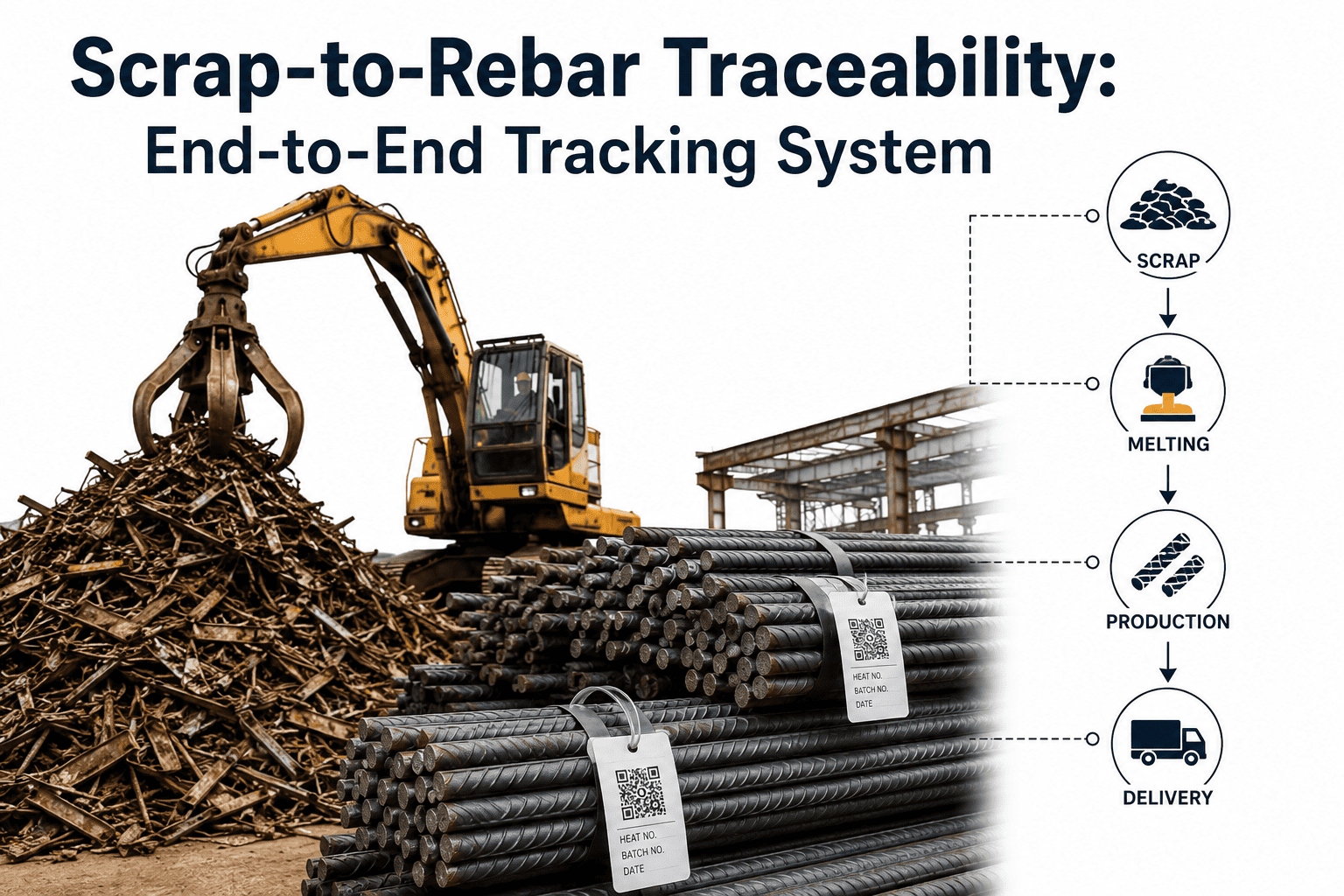
Every stage in a bundle's journey needs its identity carried forward, or the trail breaks the moment it changes hands.
What Actually Has to Survive Along the Way
A rebar identification system only works if the marking itself survives everything that happens to a bundle between the mill and the job site.
Durable Tag Marking
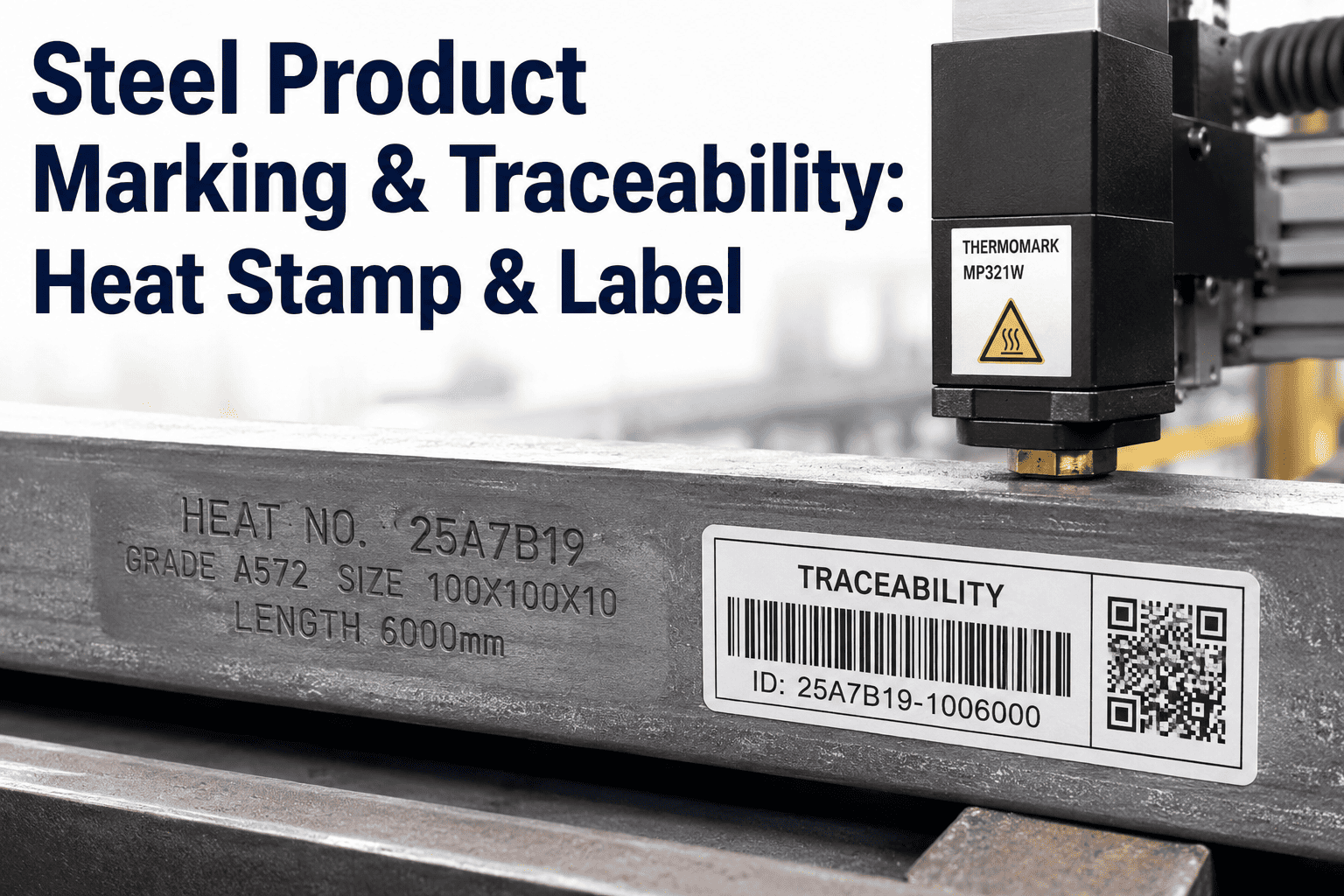
Heat number, grade, and size are marked in a way that survives outdoor storage, handling, and stacking without fading or detaching before delivery.
Bundle-Level Identification
Each bundle gets a unique identifier linking it back to its specific heat and mill test certificate, rather than relying on a batch-level approximation.
Shipment Documentation
Bundle identifiers are captured at loading and matched against delivery documentation, closing the loop between what left the mill and what the customer received.
Check Whether Your Bundles Are Actually Traceable
iFactory reviews your current marking and shipment documentation process to show exactly where bundle-to-heat traceability breaks down today.
Identification Method Compared
Each identification method carries a different balance between cost, durability, and how confidently a bundle can be traced back to its heat months after shipment.
What Changes When Every Bundle Is Traceable
Figures reflect typical outcomes within the first year after moving from manual tagging to continuous digital bundle tracking.
A Quality Manager's View on Bundle Traceability
A customer once called asking about a specific delivery from months earlier, and matching their bundle back to a heat number took us the better part of two days digging through handwritten yard logs. Once bundle identification was digital and tied directly to shipment records, that same kind of question became a lookup instead of an investigation, and it changed how confidently we could respond to any traceability request.
The Bottom Line on Rebar Identification and Tracking
A bundle's identity is only useful if it survives the journey from rolling to the job site intact, and a handwritten tag or a batch-level approximation rarely holds up to that test. Digital bundle identification tied continuously to heat number, mill certificate, and shipment record turns a recall or customer inquiry from a days-long search into a confident, immediate answer.
Frequently Asked Questions
What information actually needs to be captured at the bundle level?
At minimum, heat number, grade, size, and bundle weight need to be captured and linked to a unique bundle identifier, since these are the data points a mill test certificate and a customer inquiry both depend on. Book a review to see what your current process is capturing versus what a full traceability chain would need.
How does bundle-level tracking actually reduce recall scope?
When bundle identity is confirmed reliably rather than approximated, a quality issue traced to a specific heat can be matched against exactly which bundles from that heat shipped to which customers, instead of quarantining every bundle that shipped during a broader time window because individual bundle identity can't be confirmed with confidence.
What marking methods actually hold up through outdoor storage and handling?
Metal tags and durable printed labels designed for outdoor exposure generally outperform paper tags or handwritten markings, which degrade quickly from weather and handling. The right choice often depends on typical storage duration and handling equipment used at a specific facility, since forklift and crane handling stresses tags differently than manual handling does.
Can this integrate with existing mill test certificate generation?
Yes — bundle identification data is typically linked directly to the same heat and chemical composition records used to generate a mill test certificate, so a customer or auditor requesting documentation for a specific bundle can be matched instantly to its corresponding certificate rather than requiring a separate manual lookup.
Does this work across multiple yards or only within a single facility?
Bundle tracking is designed to follow a bundle across transfers between yards, storage locations, and shipment points, maintaining the same identifier and linked record throughout rather than losing traceability the moment a bundle moves outside a single facility's tracking system. Talk to a specialist about extending traceability across your specific distribution network.
Make Every Bundle Traceable From Tag to Delivery
Book a 30-minute assessment. iFactory reviews your current marking and shipment process and shows exactly where traceability needs strengthening.