A customer receives a shipment of structural beams and asks for the mill test certificate matching a specific piece, and the answer depends entirely on whether that piece was marked correctly and consistently as it moved from casting through rolling, inspection, and finally the shipping yard. If a heat number was stenciled illegibly, or a label fell off during outdoor storage, the chain connecting that beam back to its chemistry and mechanical test results breaks, and the mill is left either re-testing material it already qualified or explaining a traceability gap to an auditor. iFactory tracks marking status alongside production data at every stage, flags pieces missing a required mark before they leave the yard, and keeps the full identification history tied to the actual product rather than a paper travel card. You can book a demo to see marking and traceability tracked against your own product flow.
PRODUCT MARKING · TRACEABILITY · IDENTIFICATION CONTROL
Every Piece Marked, Every Mark Traceable, Nothing Left to Chance
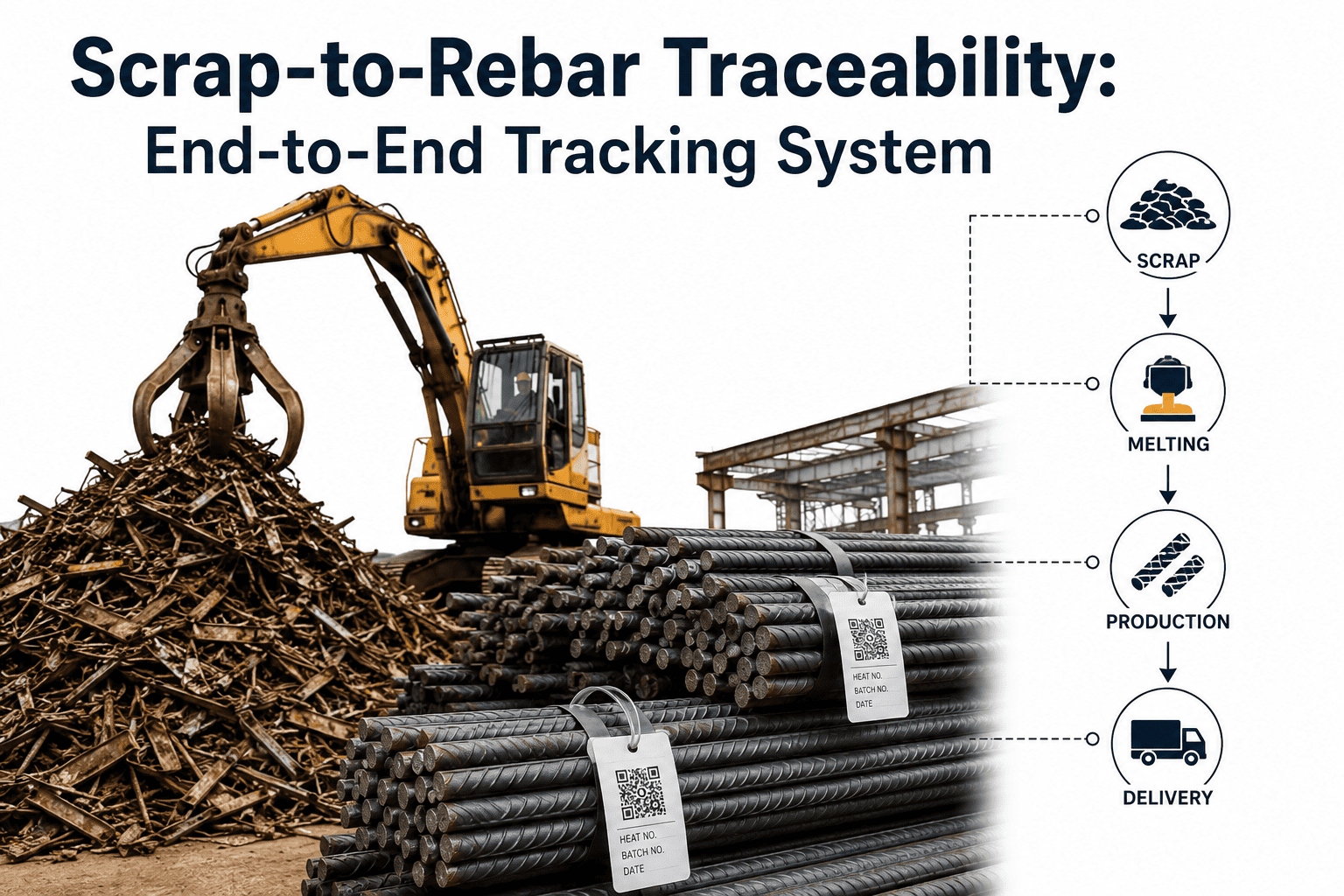
iFactory tracks heat stamping, stenciling, and labeling status at each production stage, flags gaps before shipment, and links every identification mark back to the chemistry, dimensional, and mechanical data that qualified that specific piece.
1
Cast
Heat number assigned
›
2
Roll or Form
Heat number carried forward
›
3
Inspect
Test results linked to mark
›
4
Mark
Stamp, stencil, or label applied
›
5
Ship
Mark verified before dispatch
WHAT A BROKEN TRACE ACTUALLY COSTS
A Missing Mark Turns Qualified Material Into a Question Mark
Marking failures rarely happen because a mill lacks a marking procedure, they happen because marking status is tracked separately from production data, often on a paper travel card that can be misplaced, smudged, or simply not updated at the right stage. When a customer or auditor later asks for traceability on a specific piece, the mill has to reconstruct the chain manually, cross-referencing heat logs, inspection records, and shipping documents that were never actually linked to each other in the first place.
3-6%
Typical rate of marking gaps or illegible marks found during outbound inspection at mills without automated tracking
Hours
Time typically spent manually reconstructing a traceability chain when a customer requests documentation after shipment
1 Record
Single digital identity per piece replacing paper travel cards and disconnected marking logs
MARKING METHODS
Different Products Call for Different Marking Methods
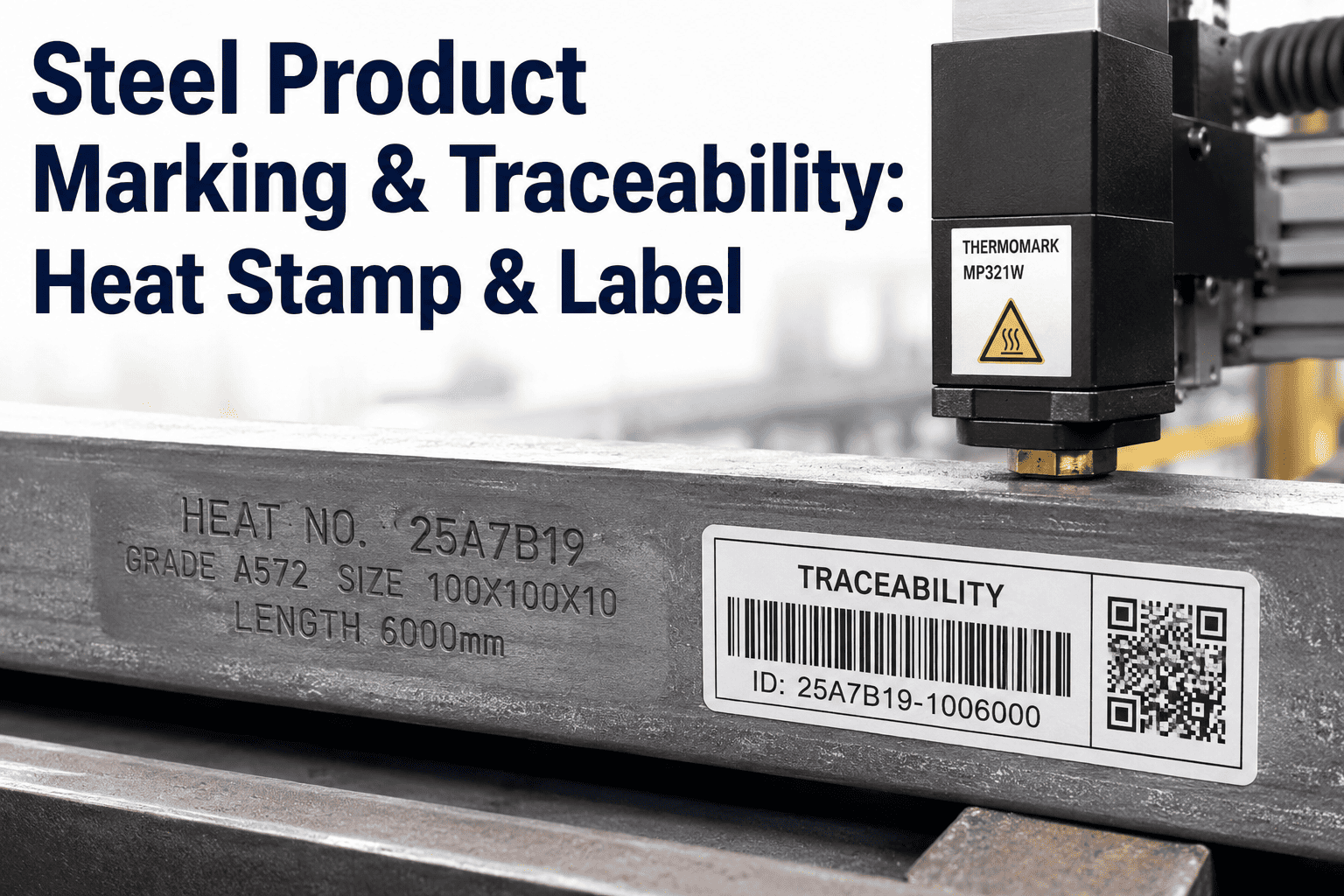
Heat stamping, stenciling, and labeling each suit different product forms, environments, and durability requirements, and most mills use more than one method depending on what is being shipped and how it will be stored or installed. iFactory tracks marking requirements by product type so the correct method, and its verification step, is never left to memory.
Heat Stamping
Permanent low-stress steel dies impressed directly into the product surface, common on plate, bar, and structural shapes where durability through outdoor storage matters.
Stenciling
Paint-based identification applied to coils, bundles, or large surfaces where stamping is impractical, requiring periodic legibility checks in humid or outdoor conditions.
Tag and Label Systems
Attached tags carrying heat number, grade, and dimensional data, used widely on bundled bar, tube, and smaller finished goods for fast visual identification.
Barcode and RFID
Machine-readable identifiers that link a physical piece directly to its digital record, reducing manual data entry errors at receiving and shipping.
Stop Reconstructing Traceability After the Fact
iFactory links every heat, mark, and inspection result into one traceable record per piece, verified before it ever leaves the yard. Book a demo and see it against your own product flow.
STANDARDS THAT GOVERN MARKING
Marking Is Not Optional Documentation, It Is a Specification Requirement
Most steel products ship under a specification that explicitly requires identification marking as a condition of certification, not as a courtesy to the customer. Meeting the letter of these standards, correct heat number placement, legible grade marking, required certification symbols, is what makes a mill test certificate actually enforceable if a dispute arises later.
ASTM A6 / A6M
General requirements for rolled structural steel bars, plates, shapes, and sheet piling, including identification marking rules by product size and grade.
EN 10204
Defines the types of inspection documents and the marking traceability level required to support each certificate type across European supply chains.
ASTM A700
Covers packaging, marking, and loading practices for steel products for domestic shipment, including durability requirements for outdoor transit.
Customer and Project Specifications
Many contracts, particularly in construction and pressure equipment, layer additional marking and traceability requirements on top of base material standards.
MANUAL VS DIGITAL TRACEABILITY
What Changes When Marking Status Lives With the Product Data
A paper travel card and a digital traceability record can technically capture the same information, but only one of them can be searched instantly, flagged automatically when incomplete, and cross-referenced against inspection results without someone pulling a physical file.
| Factor |
Paper Travel Cards |
iFactory Digital Traceability |
| Marking Verification |
Checked visually at each stage, easy to miss under time pressure |
Flagged automatically if a required mark is not confirmed |
| Data Linkage |
Heat number cross-referenced manually against separate test records |
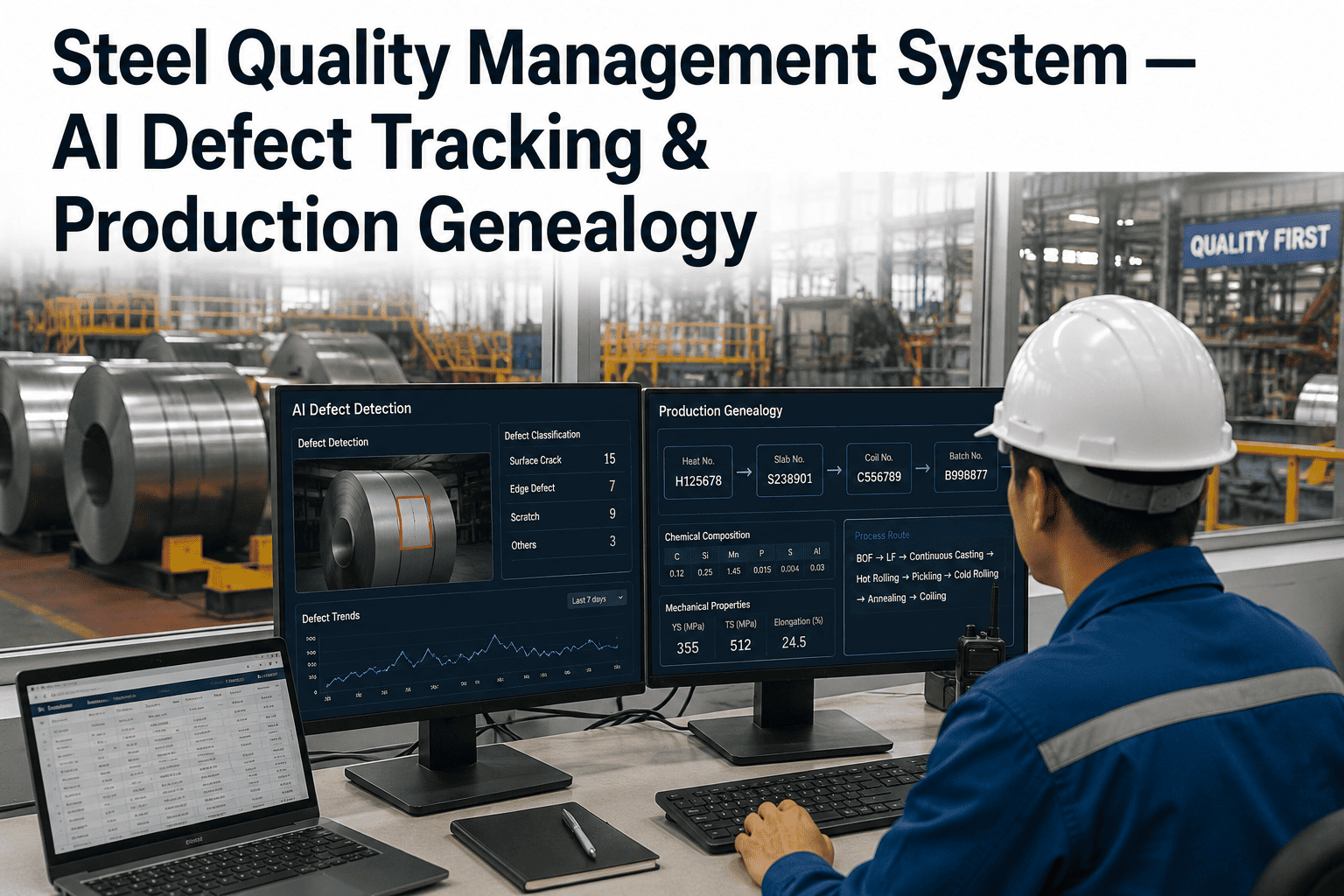
Chemistry, dimensions, and mechanical results linked directly to the mark |
| Retrieval Speed |
Minutes to hours depending on filing and shift handoffs |
Searchable in seconds by heat, lot, or customer order |
| Damage Risk |
Card can be lost, smudged, or separated from the physical piece |
Digital record persists independently of physical mark condition |
| Audit Readiness |
Reconstructed on request, often under time pressure |
Always current and exportable on demand |
WHERE MARKING CONTROL MATTERS MOST
Any Producer Whose Certificate Has to Hold Up to Scrutiny
Marking and traceability discipline matters most wherever a downstream customer, inspector, or regulator can request documentation tied to a specific physical piece, which spans most structural and pressure-critical steel production.
Structural Steel Fabricators
Maintain traceability from mill certificate through fabrication for construction projects requiring documented material origin.
Pressure Vessel and Pipe Producers
Support code-required traceability where a single untraceable piece can hold up an entire vessel's certification.
Service Centers and Distributors
Preserve original mill marking through cutting and processing so downstream customers retain full material history.
Automotive and Rail Component Producers
Meet supplier traceability requirements that trace a finished part back to the specific heat it was produced from.
FREQUENTLY ASKED QUESTIONS
Questions Quality and Shipping Teams Ask First
Can this work alongside our existing heat stamping and stenciling process, or does it require new marking equipment?
iFactory is built to track and verify the marking methods you already use rather than requiring new stamping or labeling equipment on the floor. The platform records marking completion at each stage and flags gaps, so the physical marking process stays the same while the tracking behind it becomes far more reliable.
Book a demo to see it configured around your current marking methods.
How does the platform know a mark is actually legible and not just present?
Legibility ultimately requires a visual or photographic check, and iFactory supports capturing that verification step, often through a quick photo or checklist confirmation at inspection, tied directly to the piece record. This turns a step that used to depend entirely on an inspector's memory into a documented confirmation with a timestamp and responsible party attached.
Contact our support team to review verification workflow options.
What happens if a piece reaches shipping without a required mark confirmed?
The platform flags that piece before it clears for dispatch, since a missing or unconfirmed mark at the shipping stage is exactly the gap that causes traceability disputes later. This gives the shipping team a clear hold rather than relying on someone remembering to double check a travel card manually.
Book a demo to see the shipping hold workflow in action.
Can we retrieve full traceability for material shipped months or years ago?
Yes, as long as the material moved through the platform originally, its full marking and test history remains searchable by heat number, customer order, or shipment date well after the fact. This is typically the exact scenario that causes the most difficulty with paper-based systems, since older travel cards are the ones most likely to be misfiled or discarded.
Contact our support team to discuss data retention for historical shipments.
Does this help with customer-specific marking requirements that go beyond standard specifications?
Yes, customer and project-specific marking requirements can be configured alongside base material standards, so a contract requiring an additional stencil, tag, or certificate note is tracked with the same rigor as the underlying specification. This is common in construction and pressure equipment work where project specifications layer requirements on top of standard practice.
Book a demo to configure requirements for a specific customer contract.
Give Every Piece a Traceability Record That Actually Holds Up
iFactory tracks marking status against production and test data at every stage, so nothing ships without a verified, traceable identity. Book a demo and see it running on your own product flow.




-procedures-for-steel-plant-equipment-digital-management-system.png)