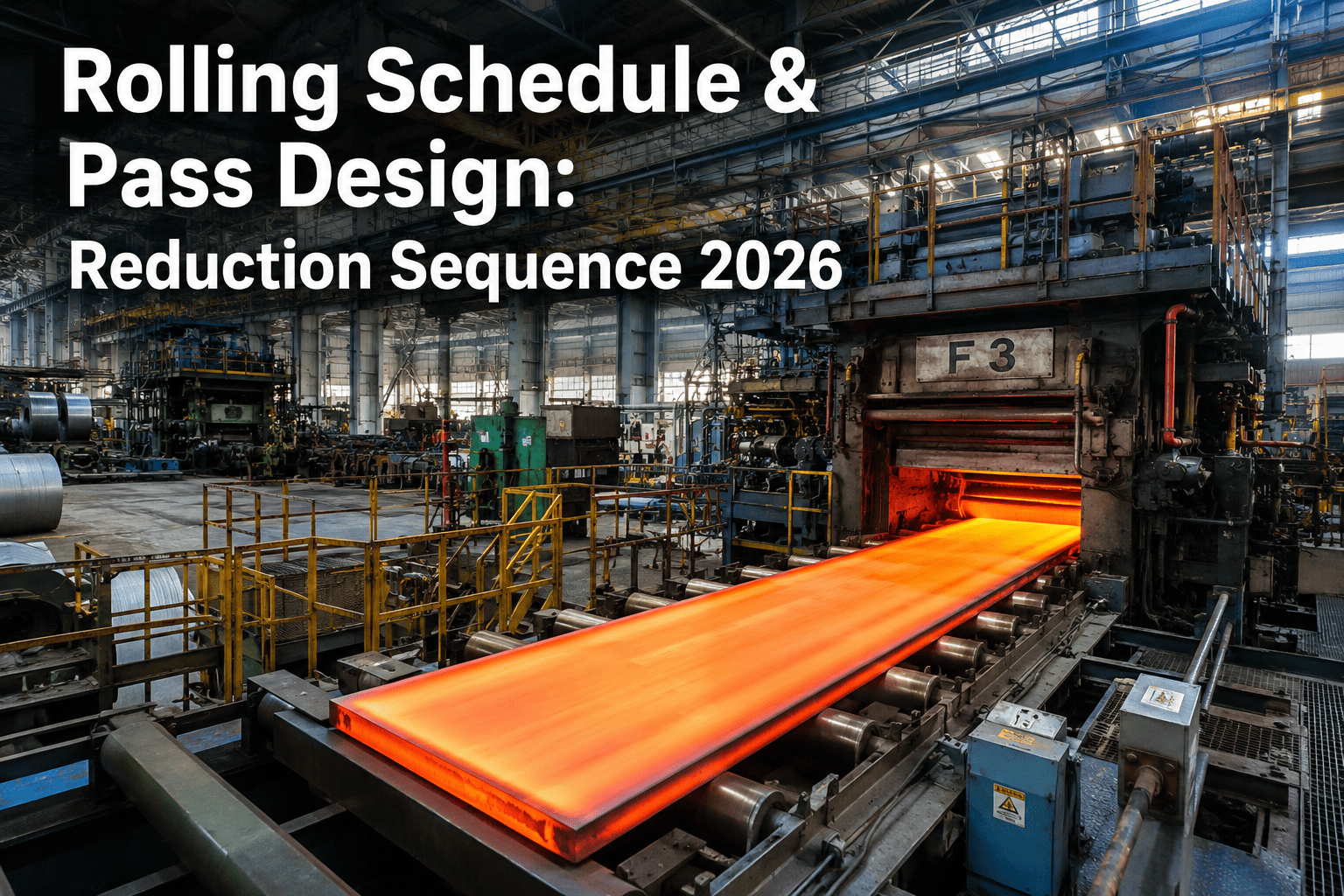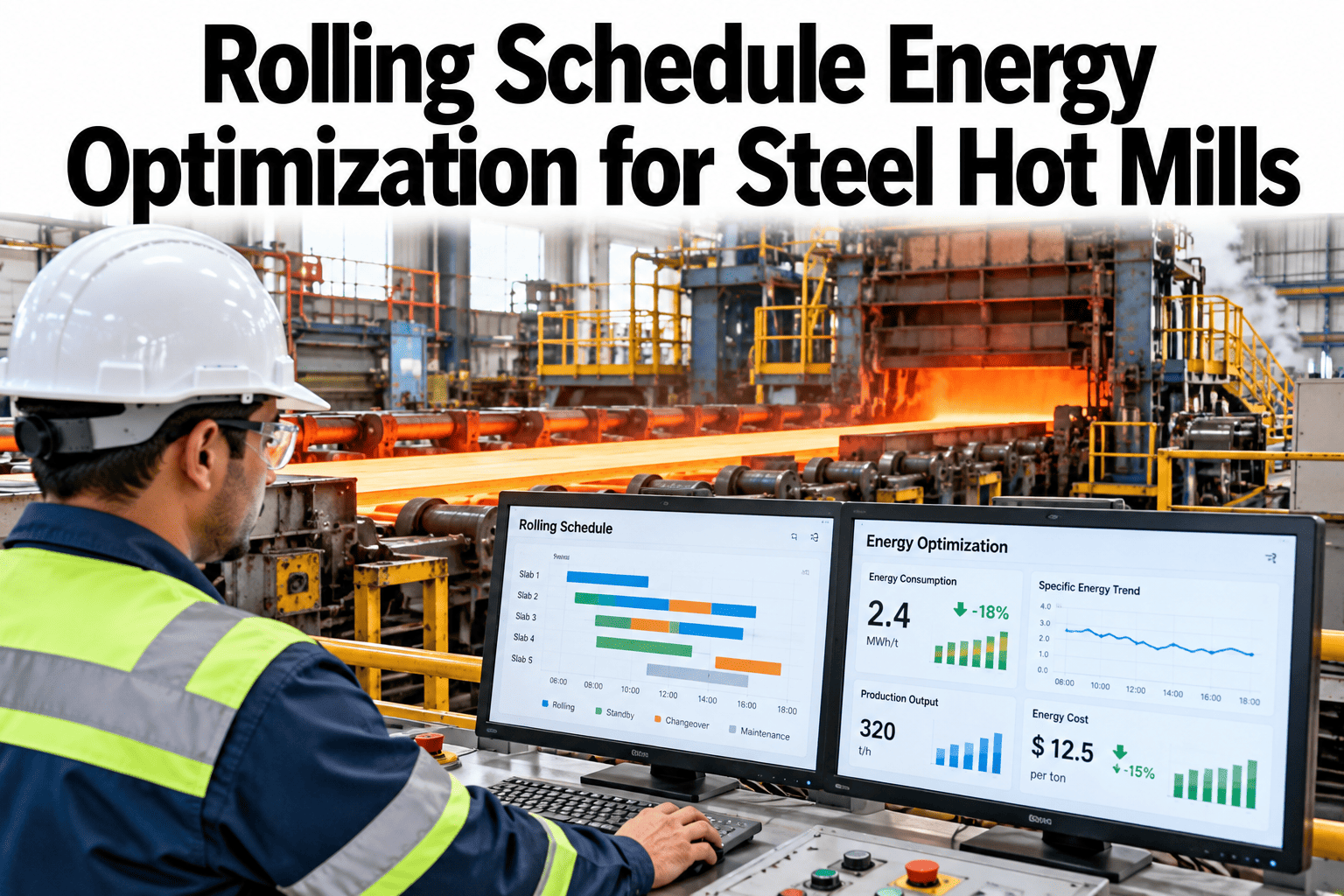
The order in which coils get rolled through a hot mill matters almost as much as how the mill itself is tuned, because every width jump between consecutive coils costs roll-gap adjustment time and reheating energy that a smoother sequence would avoid. A classic coffin sequence, narrow widths at the start and end of a campaign with wider coils in the middle, exists precisely to minimize those jumps, yet many schedules still get built primarily around due dates and inventory position, with energy efficiency treated as a secondary consideration if it's considered at all. Planning the schedule with width jump and pass reduction in mind from the start captures savings a reactive schedule never will. Mill planning teams can review their own rolling schedule against this approach in a short session.
A Coffin Sequence Isn't Just Tradition, It's an Energy Strategy
iFactory builds rolling schedules around coffin sequencing, width jump minimization and pass reduction to cut kWh per tonne.
Why Schedule Order Drives Energy Cost
Every width change between consecutive coils requires a roll-gap adjustment, and a large jump often means more passes to reach final gauge, more reheating to compensate for temperature loss during the adjustment, and more motor load variation across the sequence.
| Schedule Factor | Energy Impact | Optimization Approach |
|---|---|---|
| Width jump between coils | Larger jumps need more roll-gap adjustment and reheating | Sequence coils to minimize jump size between neighbors |
| Pass count per coil | Each extra pass adds motor energy and processing time | Plan gauge reduction to use the minimum passes the product allows |
| Campaign structure | An unstructured sequence creates unpredictable energy demand | A coffin or similar structured sequence keeps demand more consistent |
Find Out How Much Energy Your Current Sequencing Costs
Book a 30-minute session and iFactory will compare your current schedule sequencing against an energy-optimized version.
Three Levers in Schedule Planning
Coffin Sequencing
Arranging a campaign from narrow to wide and back to narrow keeps consecutive width jumps small across the whole run.
Width Jump Minimization
Where a perfect coffin shape isn't achievable given due dates and inventory, minimizing jump size between neighbors still captures much of the benefit.
Pass Reduction Planning
Reviewing pass schedules against product requirements can reveal where an extra pass is being used out of habit rather than necessity.
Balancing Energy Efficiency Against Due Dates
A perfectly energy-optimized sequence that misses every delivery commitment isn't a usable schedule. The real planning problem is finding the sequence that respects due dates and inventory position while minimizing the energy cost of the order chosen within those constraints.
Where iFactory Fits
iFactory builds rolling schedules with energy cost as a first-class input alongside due dates and inventory position, not an afterthought.
Automated Coffin Sequencing
Schedules are structured to minimize width jumps across the full campaign, within your delivery constraints.
Width Jump Cost Modeling
Each potential sequence is scored on its energy cost, so planners can see the tradeoff before committing to an order.
Pass Plan Review
Pass counts are checked against product requirements, flagging cases where a reduction might be achievable.
Energy-per-Tonne Tracking
Actual energy use is tracked against the schedule's planned sequence, confirming the optimization is delivering real savings.
Reviewed by iFactory's Steel Operations team for alignment with standard hot mill scheduling practice. The coffin sequence and energy impact described are illustrative; actual achievable savings depend on your specific product mix, due date constraints and mill configuration.
Frequently Asked Questions
Does energy-optimized sequencing require delaying some due dates?
Not necessarily, since the optimization works within your existing due date constraints rather than overriding them. In cases where a true tradeoff exists, the system shows planners the energy cost of each option so the decision is informed. Support can walk through how constraints are handled.
How much energy savings is realistic from better sequencing alone?
This varies significantly based on how unstructured your current sequencing is, since a mill already running disciplined coffin sequences has less room to improve than one scheduling purely by due date.
Can pass reduction affect product quality?
Pass plans are reviewed against product specification requirements, so reduction is only recommended where it doesn't compromise the gauge tolerance or quality the product requires. See pass plan review applied to your own product mix in a short session.
Does this work with our existing scheduling software?
Yes, the sequencing optimization is built to integrate with your existing scheduling system rather than replace it, adding the energy dimension to the planning process you already run.
How is energy savings actually verified after a schedule goes live?
Actual kWh per tonne is tracked against the planned sequence and compared to historical baseline, confirming the optimization is translating into real measured savings rather than a theoretical estimate. Ask support how verification works for your mill.
Let Sequencing Do Some of the Energy Work
iFactory builds rolling schedules that minimize width jumps and unnecessary passes. Book a walkthrough on your own mill schedule.