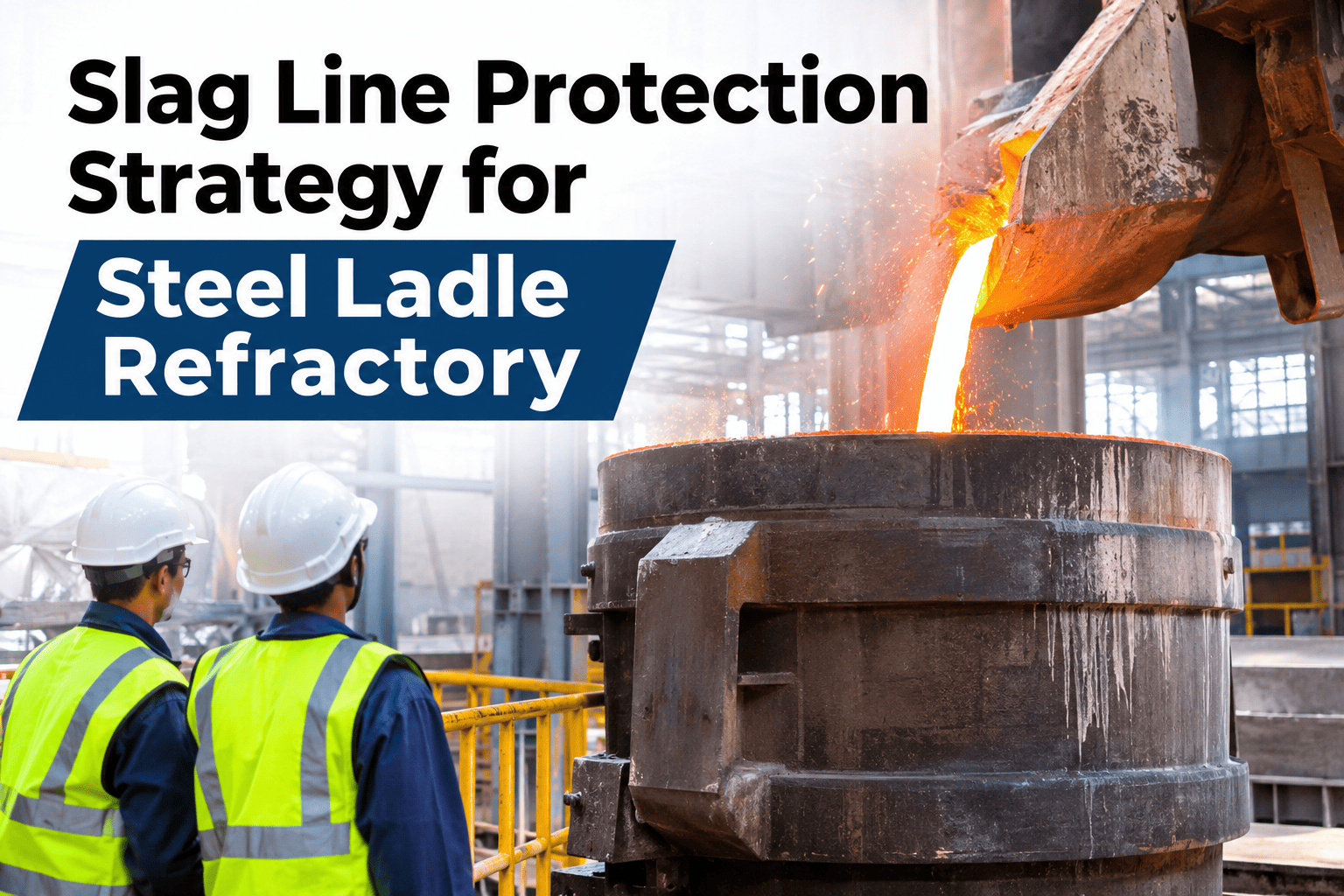
The slag line is where ladle refractory wears fastest, under a combination of chemical attack from slag chemistry, thermal cycling, and mechanical erosion that no other zone of the ladle experiences at the same intensity. A protection strategy that only reacts after wear is measured is always playing catch-up, while one built around MgO-C composition tuning, active slag chemistry control and inert-gas cover tactics addresses the wear mechanisms directly. Getting these three levers right together is what actually extends slag line life rather than just monitoring its decline, and our team can walk through how this strategy applies to your own ladle fleet.
Steel ladle refractory, slag line protection
Protect the Fastest-Wearing Zone of Your Ladle With Three Coordinated Levers
iFactory AI helps tune MgO-C composition, manage slag chemistry and apply inert-gas cover tactics together, addressing slag line wear mechanisms directly rather than just tracking them.
Why the slag line wears fastest
Three Wear Mechanisms Converge at One Zone
No other part of the ladle refractory experiences chemical attack, thermal cycling and mechanical erosion simultaneously the way the slag line does, which is exactly why it typically sets the limit on campaign life.
Chemical attack
Slag chemistry reacts directly with refractory composition
Thermal cycling
Repeated heating and cooling stresses the structure
Mechanical erosion
Slag movement and stirring wear the surface physically
Combined wear rate
The slag line typically fails before any other refractory zone
Three protection levers
What Actually Slows Slag Line Wear
MgO-C composition tuning
Adjusting the brick composition to better resist the specific chemical attack your slag presents.
Slag chemistry control
Managing slag basicity and composition to reduce its aggressiveness toward refractory.
Inert-gas cover tactics
Using gas cover to reduce oxidation-related wear at the slag line.
Review Your Current Slag Line Wear Rate
Share your current slag chemistry data and wear rate history and see where these three levers could extend life.
Lever-to-effect table
How Each Lever Addresses a Specific Wear Driver
| Lever | Wear driver addressed | Typical impact |
|---|
| MgO-C composition tuning | Chemical resistance to slag attack | Slower chemical erosion at the slag line |
| Slag basicity control | Aggressiveness of slag toward refractory | Reduced chemical attack rate |
| Inert-gas cover | Oxidation of carbon content in refractory | Slower oxidation-related wear |
| Stirring practice review | Mechanical erosion from slag movement | Reduced physical wear at the interface |
Strategy process
Four Steps to a Coordinated Protection Strategy
1
Characterize current wear
Measure current slag line wear rate and its relationship to slag chemistry.
2
Tune composition
Adjust MgO-C brick composition to better resist the specific slag chemistry.
3
Control slag chemistry
Manage basicity and additions to reduce aggressiveness toward refractory.
4
Apply gas cover tactics
Use inert gas cover to reduce oxidation-driven wear at the interface.
Common pitfalls
Three Mistakes That Limit Slag Line Life Extension
1
Tuning composition without addressing slag chemistry
A better brick still wears fast against an unusually aggressive slag.
2
Treating wear as purely a materials problem
Stirring practice and gas cover are overlooked as contributing factors.
3
No tracking of slag chemistry by heat
Without this data, correlating wear spikes to specific chemistry events is impossible.
Expert review
Slag line wear is rarely solved by changing brick composition alone. The strongest results come from treating composition, slag chemistry and gas cover as one coordinated strategy rather than three separate decisions made in isolation.
Watch for
A wear reduction plan that only addresses brick composition without reviewing slag chemistry practice.
Do next
Track slag chemistry by heat alongside wear measurements before deciding which lever to adjust first.
— iFactory steel specialists
Frequently asked questions
What Plants Ask About Slag Line Protection
How do we know if our slag chemistry is unusually aggressive?
Comparing your slag basicity and composition data against your measured slag line wear rate over time can reveal whether chemistry is a major driver, especially when wear spikes align with specific chemistry shifts.
Discuss your slag chemistry data.
Does changing MgO-C composition require a different brick supplier?
Not necessarily, since many suppliers offer a range of MgO-C compositions, so tuning often means selecting a different grade from an existing relationship rather than switching suppliers entirely.
Ask about composition options.
How much does inert-gas cover actually help?
The impact depends on how much of your current wear is oxidation-related, which varies by plant, so measuring current wear patterns helps estimate the potential benefit before investing in gas cover infrastructure.
Talk through gas cover tactics.
Can mechanical stirring practice really affect refractory life?
Yes, stirring intensity and pattern affect how much mechanical erosion the slag line experiences, so reviewing stirring practice alongside material and chemistry changes rounds out a complete protection strategy.
Ask about stirring practice review.
How long before we would see a measurable life extension?
Results typically become visible over a number of campaigns as wear rate data accumulates under the adjusted strategy, so comparing a full campaign cycle before and after is the clearest way to measure impact.
Discuss your campaign cycle.
From reactive monitoring to coordinated protection
Extend Slag Line Life With a Strategy That Addresses the Cause
Book a session with iFactory AI to review your slag chemistry and wear data and build a coordinated slag line protection strategy.