When a steel company announces a science-based target, it is making a public promise that investors, customers and regulators will test against its own numbers. That is why the decision belongs in the boardroom, and why it cannot be made well without a clean emissions inventory underneath it. Setting a target through the Science Based Targets initiative, known as SBTi, means choosing a boundary, a pathway and a timeline the company can actually track. For steel, the sector pathway, the heavy Scope 1 share and the long Scope 3 chain all shape that choice. Boards and sustainability teams can see how iFactory AI builds a Scope 1, 2 and 3 inventory ready for target setting before drafting a commitment.
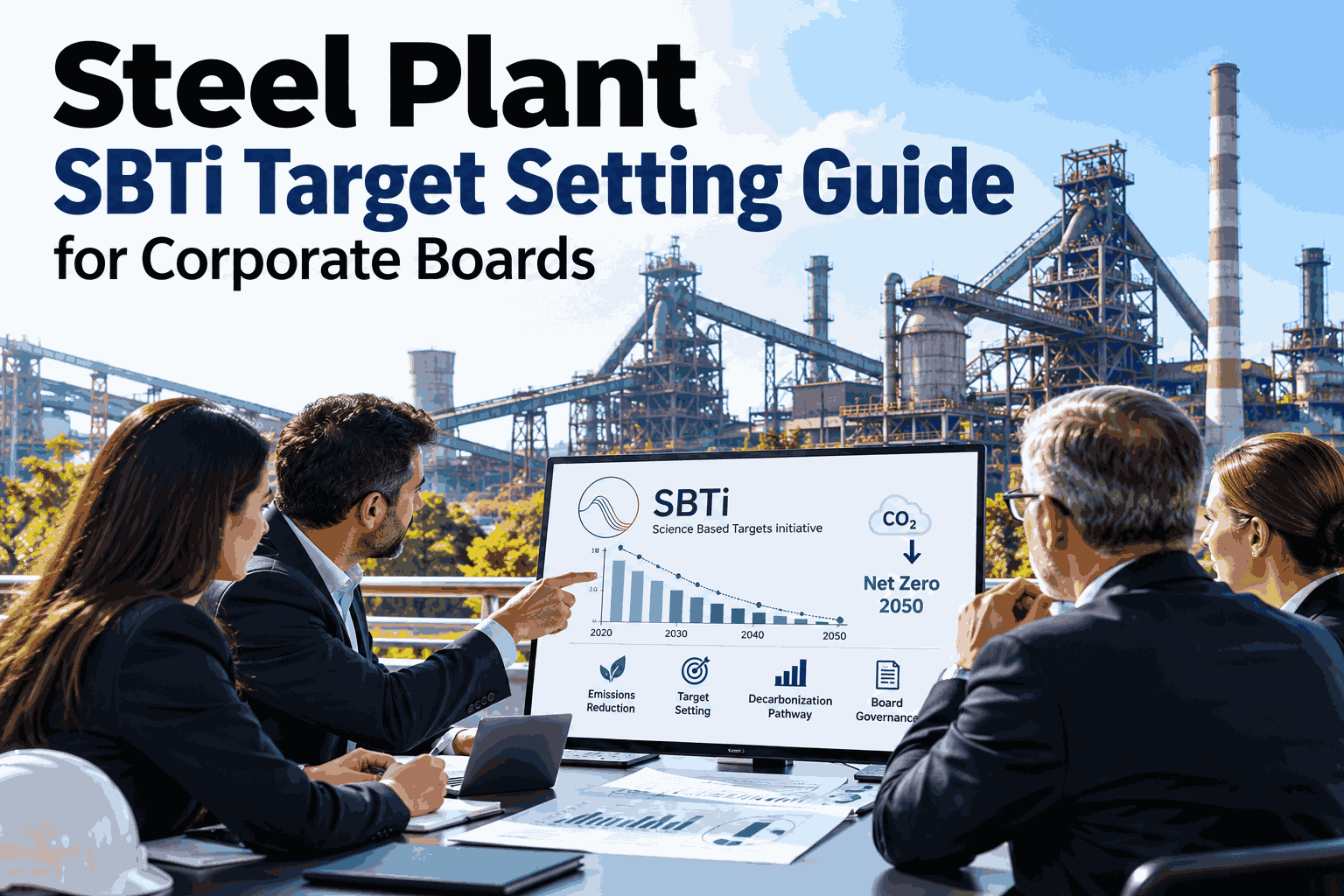
Steel Plant SBTi Target Setting Guide for Corporate Boards
Understand the pathway, the boundary and the evidence a steel company needs before it commits to a science-based target.
Why This Is a Board Decision
A science-based target shapes capital plans for a decade or more. Three reasons put it on the board agenda.
Meeting the pathway steers investment in furnaces, power supply and raw materials.
A public target invites scrutiny from investors, lenders and customers.
Progress must be reported against a fixed baseline, year after year.
A target set without reliable data tends to be restated later. Restatements damage trust faster than a modest, well-evidenced commitment.
Near-Term and Long-Term Targets
SBTi expects companies to set targets over two horizons. Criteria and standards are updated periodically, so confirm the current versions on the SBTi website before you commit.
Choosing a Target Method for Steel
Steel has its own sector guidance, so the method differs from a generic company. A method selection session on your own inventory shows how each would apply.
| Method | How It Works | Fit for Steel |
|---|---|---|
| Sector intensity pathway | Targets emissions per tonne of crude steel, converging on a sector pathway | Often suits producers whose output changes over time |
| Absolute contraction | Cuts total emissions by a set percentage each year | Clear and simple, but can penalise growth |
| Supplier engagement | Commits suppliers to set their own targets | Useful for Scope 3 from ore, coal and scrap |
Check the current SBTi iron and steel guidance for the exact pathway, scope and eligibility rules that apply to your route and products.
See Your Inventory Mapped to a Target Boundary
Book a 30-minute session and iFactory AI will show how Scope 1, 2 and 3 data are organised by source, so a board can see what a target would cover.
Where Steel Emissions Sit by Scope
Knowing the boundary first prevents surprises later. The examples below show typical sources for steel.
Coke ovens, blast furnaces, basic oxygen furnaces, flaring, on-site fuel and process gases.
Purchased electricity, steam and heat, with a large share for electric arc furnaces.
Iron ore, coking coal, purchased scrap and alloys, transport and use of sold products.
A Board Readiness Scorecard
Before committing, ask whether the evidence is ready. The illustrative scorecard below shows the kind of view a board should expect.
| Question | Status | What It Means |
|---|---|---|
| Base year inventory complete? | Ready | Scope 1 and 2 verified for a chosen year |
| Scope 3 screened? | Partial | Major categories identified, data quality varies |
| Production data linked? | Ready | Tonnes available for intensity targets |
| Reduction plan costed? | Gap | Projects not yet tied to capital budgets |
From Draft to Submission
Preparing a submission is a project with owners, not a document. Five stages cover the ground.
Inventory
Build a verified base year across scopes.
Pathway
Choose method, scope and target years.
Roadmap
Cost the projects that deliver the target.
Approval
Board reviews risks, costs and disclosure.
Submit
Prepare evidence and respond to review.
Common Pitfalls
Four mistakes cause most delays and restatements.
An unusual year or incomplete data gives an unstable baseline.
Changing what is included between years breaks comparability.
A target with no costed projects behind it is hard to defend.
Raw material emissions are often large and need early data work.
Where iFactory AI Fits
iFactory AI builds the data foundation behind a target, linking energy, production and cost to emissions by scope.
Scope 1, 2 and 3 inventory
Activity data is converted to emissions with stated factors and a clear audit trail.
Intensity per tonne
Emissions are tied to production, so intensity targets can be tracked by route and unit.
Progress against pathway
Actual emissions are shown against the target path, with the drivers behind any gap.
Ask in plain language
Ask where intensity moved this quarter and receive the ranked drivers with their basis.
iFactory AI arrives pre-configured on an NVIDIA server that ships racked and ready with software pre-loaded. Scope covers cabling, network, ERP and MES integration, team training and 24x7 remote monitoring.
Frequently Asked Questions
What does SBTi validation involve for a steel company?
A company submits its targets and supporting data, and SBTi reviews them against its criteria and sector guidance. Requirements and processes change, so confirm current rules on the SBTi website. You can watch the data foundation for a submission built on sample plant data in a live session.
Should a steel company use intensity or absolute targets?
It depends on the sector guidance, growth plans and how the board wants to communicate progress. Intensity per tonne suits changing output, while absolute targets are easier to explain. To compare both on your data, request a method comparison with the iFactory AI team, or ask support what inventory data to share.
How early should we work on Scope 3 data?
Early. Raw materials and purchased inputs often make up a large share of the footprint, and supplier data takes time to collect. A screening exercise shows which categories matter most. A short product tour of Scope 3 screening views shows what is possible from existing data.
Can we meet a target without changing our iron making route?
Efficiency, renewable power and scrap use help, but deep long-term cuts in a blast furnace route usually need technology change. The roadmap should show which measures deliver which share of the target. See how reduction levers are sized against a pathway in a guided walkthrough.
How do we report progress to the board each year?
Show emissions and intensity against the pathway, the drivers behind any variance and the status of funded projects. Keep the boundary and factors constant, and explain any change. Schedule a walkthrough of board-level progress reporting to see the view directors would receive.
Commit to a Target You Can Evidence
iFactory AI builds the emissions inventory and tracking behind a science-based target. Book a walkthrough to see it built around your own plant.