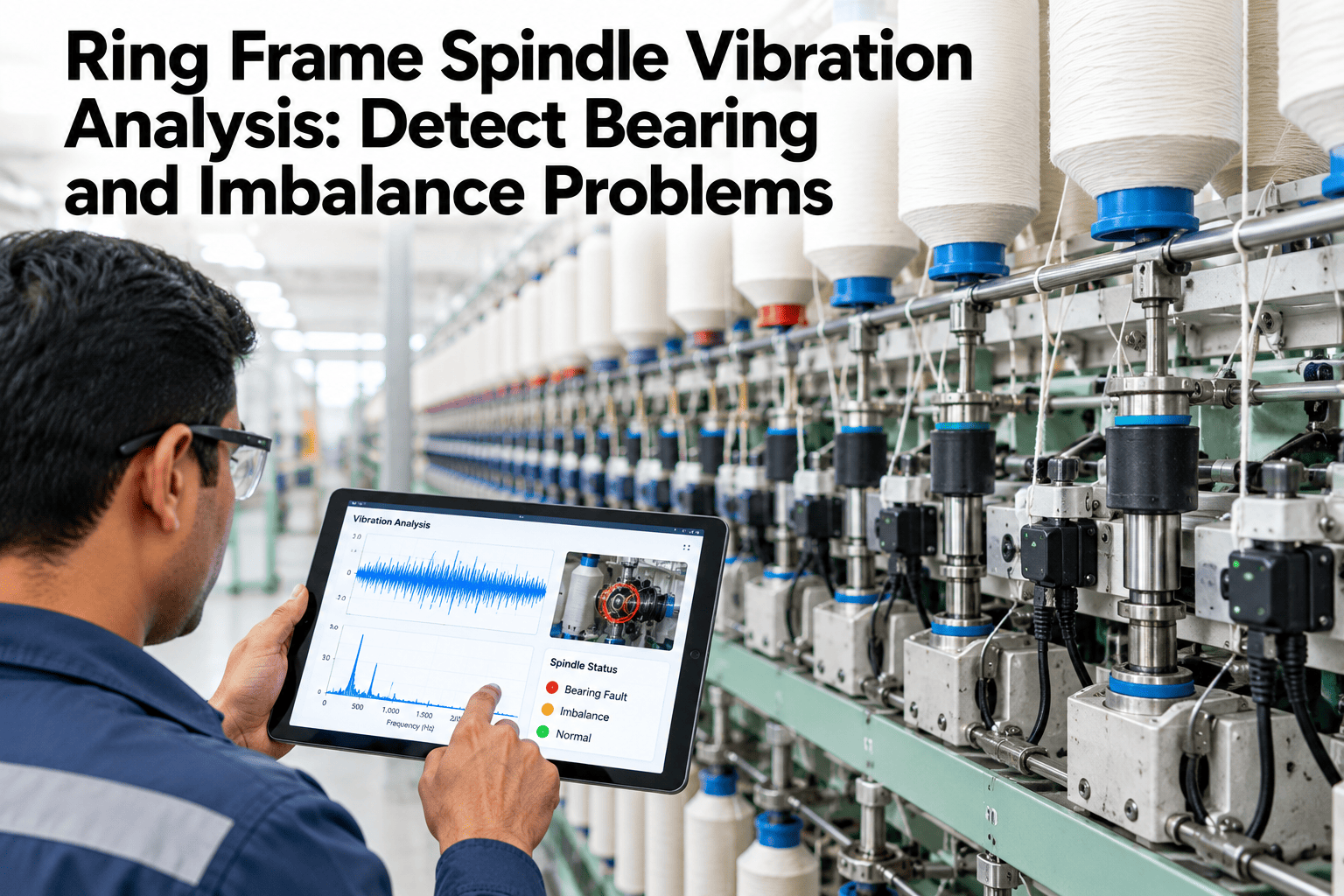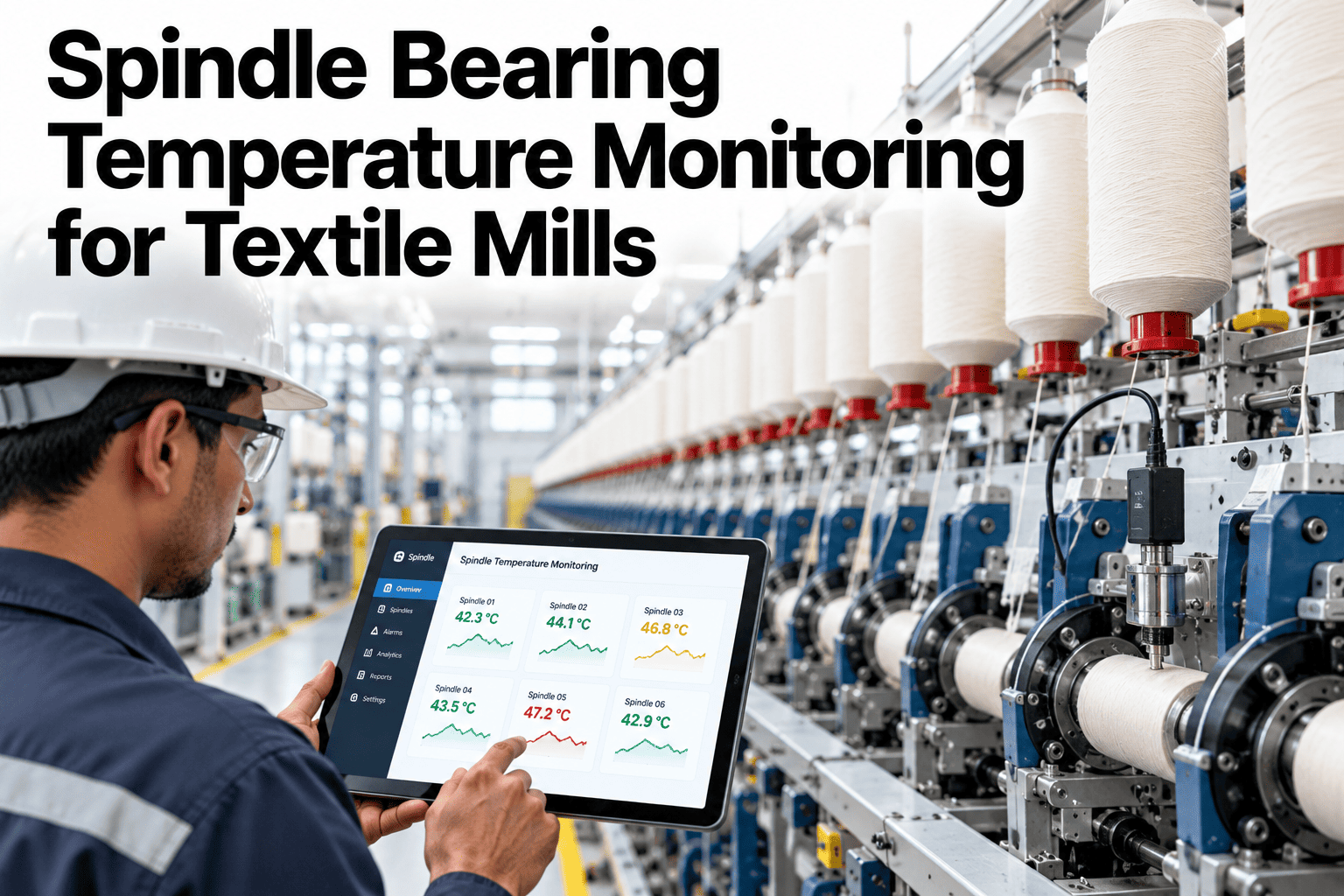
A spindle bearing rarely fails without warning; it runs slightly hotter and slightly less balanced for days or weeks before it seizes, and almost none of that warning period gets noticed because nobody is watching vibration and temperature trends on an individual spindle basis. By the time a spindle actually stops, the mill has already lost yarn quality on everything it produced in its degraded state, plus the unplanned downtime to replace it. Reading the early signal instead of waiting for the failure changes both of those outcomes. See spindle health monitoring running on your own ring frame data.
Catch a Failing Spindle Weeks Before It Stops
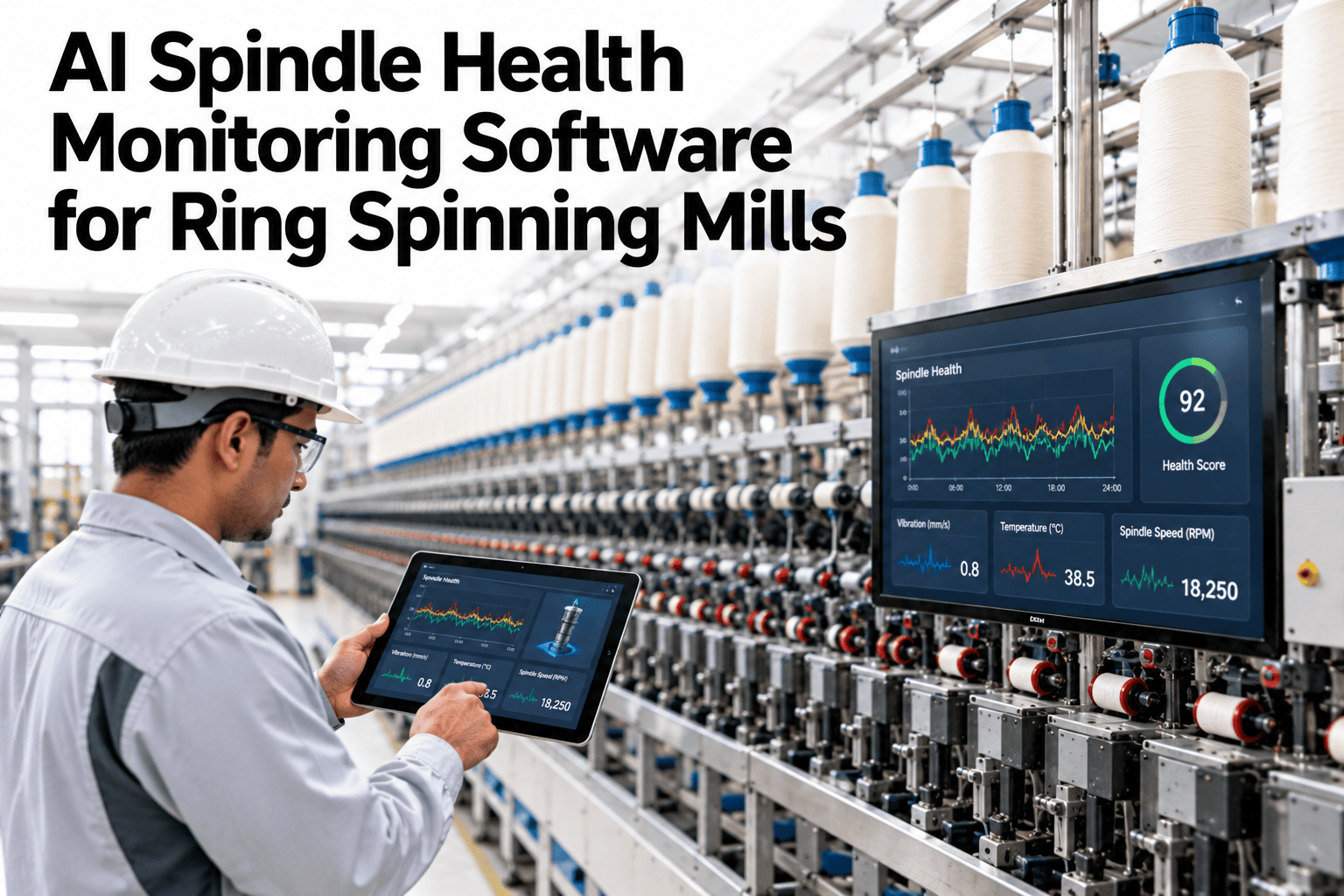
iFactory AI monitors spindle vibration, temperature, imbalance, and bearing condition continuously, flagging early failure signals before yarn quality or production is affected.
A Breakdown Is the Last Stage, Not the First Sign
Spindle failure follows a predictable progression: bearing wear begins, vibration rises slightly, heat builds, imbalance grows, and only after weeks of that progression does the spindle actually seize, so most of the warning window passes completely unnoticed under a maintenance program that only reacts once a spindle has already stopped turning.
Four Signals, Read Together
Each signal on its own can be ambiguous; together they separate a genuinely failing spindle from normal operating variation.
Vibration
Rising vibration amplitude is often the earliest measurable sign of bearing wear beginning.
Temperature
A spindle running warmer than its neighbors signals increasing friction as wear progresses.
Imbalance
Growing imbalance reflects mechanical wear affecting rotation, often tied to yarn unevenness.
Bearing Condition
Direct bearing health indicators combine the other three into a single degradation estimate.
Monitor Your Own Spindle Fleet
Book a 30-minute session and see spindle health monitoring running against your own ring frame's vibration and temperature data.
Where Early Degradation Shows Up
Each signal has a typical healthy range and a pattern that signals developing risk.
| Signal | Healthy Range | Early Risk Pattern |
|---|---|---|
| Vibration amplitude | Stable within normal baseline band | Gradual upward trend over days or weeks |
| Spindle temperature | Within 2-3°C of neighboring spindles | Persistent elevation above neighbors |
| Imbalance reading | Low and stable | Steady increase correlating with vibration rise |
| Bearing condition index | High composite score | Declining score across consecutive readings |
From Sensor Reading to Maintenance Plan
The monitoring pipeline runs continuously, turning raw sensor data into a prioritized maintenance action.
A Condition View Across One Frame Group
Spindle health scored across a frame group, with darker cells showing the spindles closest to needing attention.
Rolling Out on the Spinning Floor
iFactory AI connects to spindle-mounted vibration and temperature sensors, including retrofit sensor kits on frames that do not yet have them installed.
Expert Review
Mills that start spindle health monitoring usually expect the biggest win to be avoided downtime, but the yarn quality improvement often shows up first, since a spindle running with early-stage imbalance is already producing slightly uneven yarn well before it is close to failing outright.
Frequently Asked Questions
Do our existing spindles need new sensors installed?
Frames without existing condition sensors can be fitted with a retrofit sensor kit, while frames with existing vibration or temperature sensors connect directly. Support can confirm what your current frames already have.
How long before the system starts flagging real issues?
An initial baseline period is needed per spindle before degradation alerts begin, after which ongoing monitoring runs continuously against each spindle's own established normal range.
Does this replace our scheduled bearing replacement program?
It shifts replacement from a fixed calendar to actual condition, so bearings that are still healthy are not replaced early while degrading ones are caught sooner. See the shift from scheduled to condition-based on a call.
Can this detect imbalance tied to yarn quality issues specifically?
Yes, imbalance readings are tracked alongside the other condition signals and can be correlated against yarn quality data where that is also available from the mill.
How are flagged spindles prioritized for maintenance?
Flagged spindles are ranked by how far their condition score has declined and how fast that decline is trending, so the maintenance team works the most urgent cases first. Ask support how the ranking is calculated.
Catch the Warning Signs Before the Spindle Stops
iFactory AI monitors vibration, temperature, imbalance, and bearing condition on every spindle, continuously. Book a demo to see it on your own ring frames.