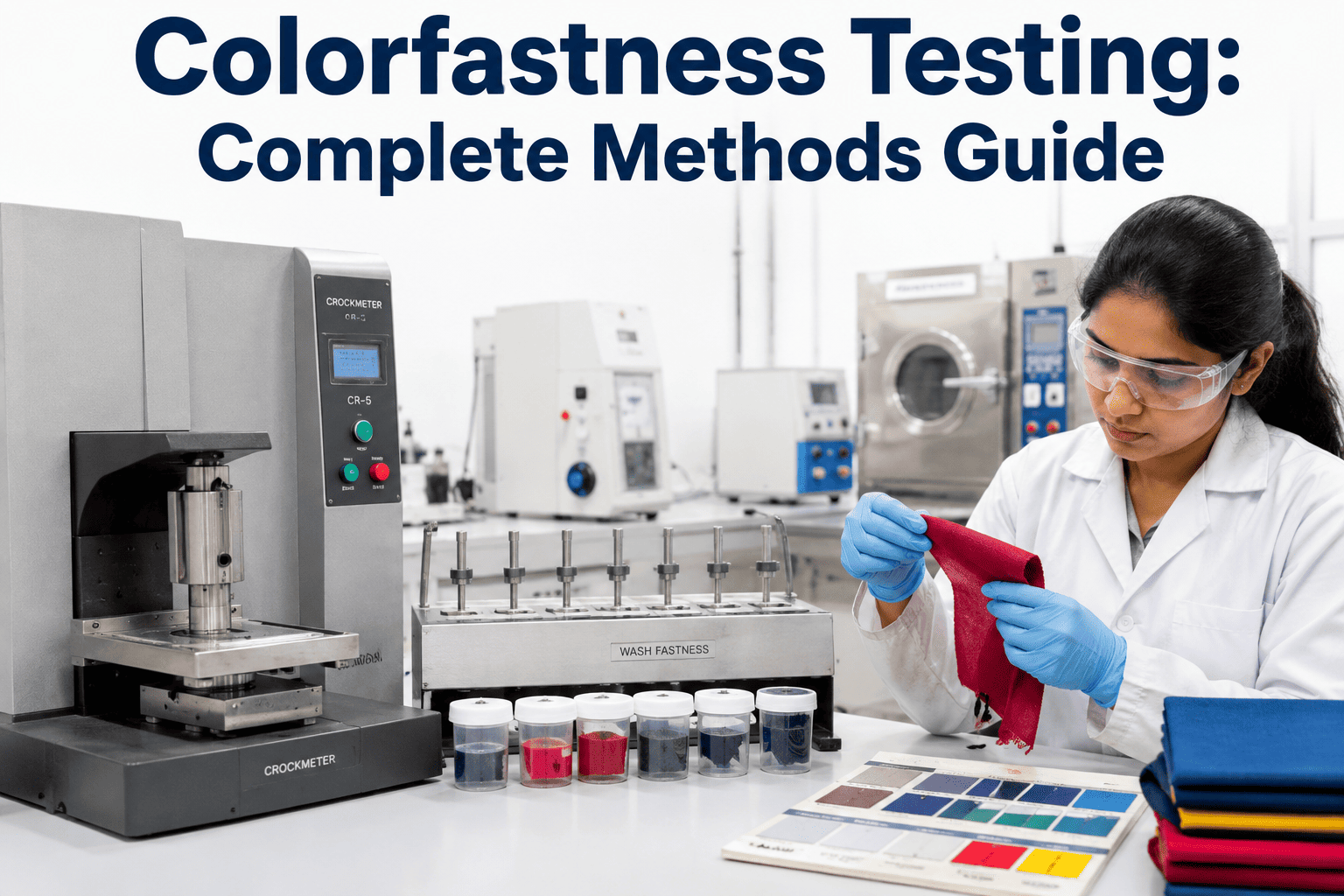
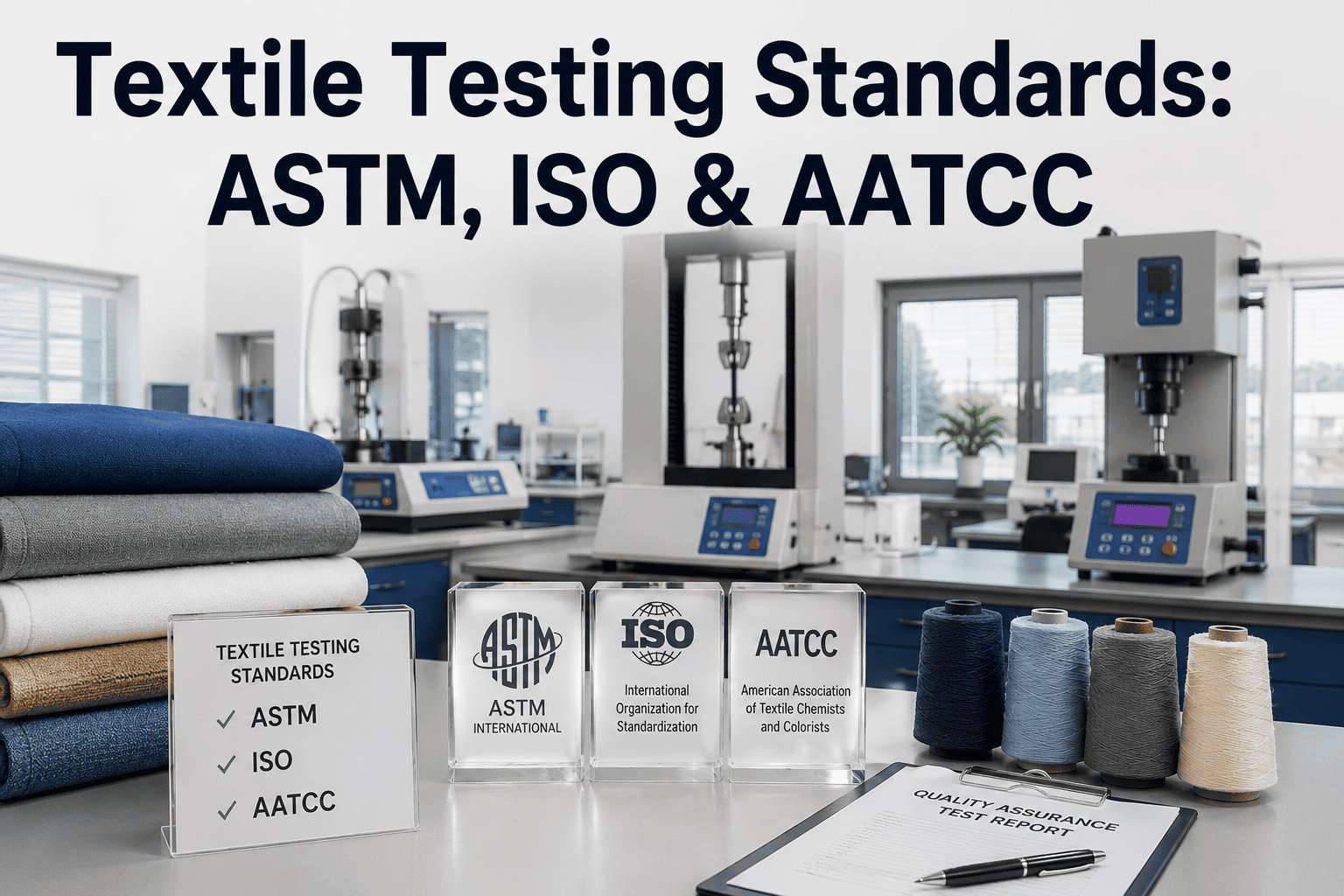
A garment can pass every mechanical strength test a buyer requires and still be rejected on a single failing colorfastness result, because color bleeding onto adjacent white fabric during a customer's first wash is the single most visible quality failure a retailer can experience. Colorfastness testing spans four distinct exposure conditions — washing, light, rubbing, and perspiration — each governed by its own method, grading scale, and pass threshold, and a fabric that performs well under one exposure can fail badly under another depending entirely on dye class and fixation chemistry. Grey scale grading, the visual comparison method underlying most colorfastness results, also carries genuine subjectivity between technicians unless calibration is enforced consistently. For mills exporting to multiple markets, a colorfastness failure caught after shipment is rarely a simple reprint or relabel fix; it typically means a full lot recall, a chargeback negotiation, and a mark against the supplier's quality scorecard that follows them into the next season's order allocation. Book a Demo to see how iFactory standardizes colorfastness grading and flags at-risk dye lots before they reach the customer.
The Grey Scale: How Every Colorfastness Result Gets Graded
4
Slight change, passes most retail specs
3
Noticeable change, marginal pass
2
Considerable change, typically fails
1
Severe change, always fails
Subjective Grading Ships Inconsistent Quality. AI Grading Doesn't.
iFactory captures every colorfastness comparison digitally, applies calibrated grading logic against grey scale references, and flags dye lots trending toward failure before a full production run is committed.
The Four Colorfastness Exposures Every Fabric Must Survive
Colorfastness is not one test but a family of exposures, and a buyer technical pack typically requires all four before a fabric clears compliance. Understanding what each exposure actually simulates helps explain why a fabric can pass one and fail another despite sharing the same dye. Treating the four exposures as a single generic colorfastness check is one of the most common oversights in early-stage development, since a dye and fixation combination optimized for wash performance offers no guarantee whatsoever against light-driven fading or perspiration-triggered migration. Compare your current colorfastness failure pattern against common dye-class weaknesses with our team.
ISO 105-C06 / AATCC 61
Wash Fastness
Simulates repeated home laundering under controlled detergent, temperature, and agitation conditions, then grades both color change on the fabric itself and staining transferred onto adjacent multi-fiber test strips.
ISO 105-B02 / AATCC 16
Light Fastness
Exposes fabric to controlled xenon-arc or carbon-arc light for a defined duration, then compares fading against blue wool references numbered 1 through 8, with higher numbers indicating stronger UV resistance.
ISO 105-X12 / AATCC 8
Rubbing (Crocking) Fastness
Tests color transfer under both dry and wet mechanical rubbing against a white crocking cloth, catching surface dye that has not fully penetrated or fixed into the fiber structure.
ISO 105-E04 / AATCC 15
Perspiration Fastness
Exposes fabric to acidic and alkaline synthetic perspiration solutions under heat and pressure, replicating skin contact and body heat conditions that can accelerate dye migration in activewear and intimates.
Colorfastness Test Comparison and Pass Thresholds
Pass thresholds vary by garment category and buyer, but the table below reflects commonly specified minimum grey scale grades across mainstream apparel programs. Premium and outdoor-rated programs frequently specify a full grade higher across every exposure type, so treating the figures below as a universal minimum rather than a buyer-specific requirement is a common source of under-testing.
| Exposure Type | Typical Minimum Grade | Common Failure Cause |
|---|
| Wash Fastness | Grade 4 (color change), Grade 3-4 (staining) | Incomplete dye fixation, reactive dye hydrolysis |
| Light Fastness | Blue wool 4-5 for apparel, 6+ for outdoor textiles | Low-affinity dye classes, UV-sensitive pigments |
| Rubbing (Dry) | Grade 4 | Surface dye buildup, poor penetration |
| Rubbing (Wet) | Grade 3 | Excess unfixed dye, inadequate washing-off step |
| Perspiration (Acid/Alkali) | Grade 4 | pH-sensitive dye classes, poor thermal fixation |
Why Grading Consistency Breaks Down Between Technicians
Grey scale grading asks a human eye to judge subtle tonal shifts under standardized lighting, and even trained technicians drift over time without regular calibration checks. Fatigue, ambient lighting inconsistency, and natural variation in color perception between individuals all introduce measurable variance into results that are otherwise treated as objective pass or fail decisions. Mills running blind calibration studies across their own grading staff frequently discover a full grade point of disagreement on the same physical sample, which is the difference between a clean pass and a rejected shipment. The financial consequence compounds quickly: a marginal grade 3 read as grade 4 by an optimistic technician can pass an entire production lot into shipment, only for a buyer's independent lab to grade the same fabric a genuine 3 and reject the order after goods have already left the facility.
Cause 1
Inconsistent viewing booth lighting
Grey scale comparisons require standardized D65 lighting; ambient room light or inconsistent booth calibration shifts perceived grade.
Cause 2
No periodic technician calibration
Without regular blind comparison exercises, individual grading tendencies drift gradually and go undetected until a buyer audit disagrees.
Cause 3
Fatigue on high-volume grading days
Grading accuracy measurably declines after extended sessions, particularly on marginal grade 3-4 boundary decisions.
Cause 4
Sample staining read before full drying
Wet staining often appears darker than the dried, final graded state, leading to inconsistent readings if timing is not standardized.
Dye Class Risk Profile: Which Chemistry Fails Which Exposure
Not every dye class carries the same colorfastness risk, and understanding which chemistry is prone to which failure mode allows quality teams to flag high-risk combinations before committing to full production. Reactive dyes, commonly used on cotton, bond covalently to the fiber and generally perform well on wash fastness once properly fixed, but incomplete hydrolysis during dyeing leaves unreacted dye that shows up as poor wet rubbing and staining results. Disperse dyes, used on polyester, tend to perform well mechanically but are more prone to sublimation-related bleeding under heat exposure, which is a distinct failure mode from standard wash fastness. Vat dyes offer some of the strongest overall fastness profiles but carry higher processing cost, making them more common on premium and outdoor-rated programs where light fastness requirements are stricter. Acid dyes on nylon and wool typically show strong color depth but can be more sensitive to perspiration exposure, particularly under alkaline conditions, which is a known weak point for activewear and intimates categories built on these fiber types.
Reactive
Cotton and cellulosic fibers
Strong wash fastness when fully fixed; primary risk is wet rubbing failure from incomplete hydrolysis during dyeing.
Disperse
Polyester and synthetic blends
Good mechanical fastness overall; primary risk is heat-driven sublimation bleeding under pressing or high-temperature exposure.
Vat
Premium and outdoor-rated fabrics
Strongest overall fastness profile including light exposure; higher processing cost limits use to premium programs.
Acid
Nylon, wool, and protein fibers
Strong color depth; primary risk is perspiration fastness failure, especially under alkaline exposure common in activewear.
iFactory's digital grading capture standardizes lighting conditions, timing, and comparison logic across every technician and every shift, closing the variance gap that causes disputed shipments.
Results from Mills Standardizing Colorfastness Grading
The following outcomes reflect real dye house and mill operations after implementing calibrated colorfastness grading. Request the full case study for your dye class and fabric category.
A cotton knit dye house experiencing recurring wash fastness failures on reactive dye lots implemented calibrated grading and early-stage dye fixation monitoring. Identifying incomplete hydrolysis before full production commitment cut wash fastness rejections substantially within two months, and buyer chargebacks tied to color bleeding claims dropped to near zero. The dye house also found that flagging risk at the lab-dip stage, rather than waiting for bulk-lot testing, gave production planning enough lead time to adjust fixation parameters without disrupting delivery schedules.
68%
Reduction in wash fastness failures
$410K
Annual chargebacks avoided
2 months
Time to measurable improvement
An activewear manufacturer supplying premium sportswear brands faced repeated perspiration fastness failures on synthetic-blend fabrics under acidic exposure. Systematic dye class review combined with standardized grading identified pH-sensitive dyes as the root cause, and switching fixation chemistry on affected styles eliminated failures across the following production cycle entirely. The manufacturer subsequently built a permanent dye-class risk reference into their development process, so any new style using a previously flagged pH-sensitive combination triggers an early perspiration screening test before bulk fabric is committed.
100%
Perspiration fastness pass rate post-fix
4 weeks
Root-cause identification to resolution
0
Buyer holds on affected styles since rollout
What Dye House Managers Say About Standardized Grading
We assumed our reactive dye process was solid until calibrated grading showed our technicians disagreeing by a full grade point on the same sample. Fixing the grading process before fixing the dye chemistry was the right order to go in.
Dye House Manager
Cotton Knit Mill, Pakistan
Perspiration fastness failures on our activewear line were costing us entire production runs. Standardized grading and early dye-lot flagging caught the problem before we committed full volume, not after a customer complaint.
Head of Quality
Activewear Manufacturer, Sri Lanka
Light fastness testing used to be a black box for us — three months to find out a whole batch failed. Now we know within days which dye lots are trending toward a low blue wool rating.
Production Director
Outdoor Textile Producer, China
Our buyer audits used to flag grading inconsistency between our two shifts constantly. That gap closed almost immediately once grading was standardized and calibrated across every technician.
QA Lead
Woven Apparel Exporter, India
Frequently Asked Questions
What is the difference between color change grading and staining grading?
Color change grading compares the tested fabric against its own original, unwashed state to measure how much the color itself has faded or shifted. Staining grading instead measures how much dye has transferred onto an adjacent white multi-fiber test strip during the same exposure. A fabric can score well on color change while scoring poorly on staining if it releases loose dye without visibly fading itself, which is why buyer packs typically require both grades separately.
Why does a fabric pass wash fastness but fail rubbing fastness on the same dye lot?
Wash fastness tests dye that has fully penetrated and bonded to the fiber under agitation and detergent exposure, while rubbing fastness tests surface-level dye transfer under dry or wet mechanical friction. A dye lot can have well-fixed internal color while still carrying excess unfixed dye on the fabric surface from an incomplete washing-off step after dyeing, which shows up specifically in wet crocking results.
How often should grading technicians be recalibrated against each other?
Most quality-focused labs run blind comparison exercises monthly, where multiple technicians independently grade the same set of samples without seeing each other's results. Comparing the spread of grades assigned reveals drift before it affects live production decisions. Facilities running multiple shifts or multiple lab locations should calibrate more frequently, since inter-shift and inter-site variance tends to be larger than variance within a single trained team.
Can light fastness results be predicted before running the full exposure cycle?
Dye class and fixation chemistry are strong early indicators of likely light fastness performance, since certain dye classes are inherently more UV-stable than others regardless of application quality. While this does not replace the physical test, tracking dye class against historical light fastness results by fabric type allows quality teams to flag high-risk combinations for closer monitoring before committing to full production runs.
What is the fastest way to reduce colorfastness-related shipment rejections?
The two highest-impact changes are standardizing grading conditions and timing across all technicians, and catching dye fixation issues at lab-dip or pilot-lot stage before full production commitment rather than discovering failures on finished goods. Both changes are procedural rather than chemical, meaning they can typically be implemented without reformulating existing dye recipes, which makes them the fastest path to measurable improvement for most mills.
Book a demo to see how early dye-lot flagging integrates into your existing testing workflow.
Stop Losing Shipments to Colorfastness Disputes. Standardize the Grade.
iFactory calibrates colorfastness grading across every technician and shift, flags at-risk dye lots before full production, and gives you an auditable record for every buyer compliance review.
Calibrated grey scale grading across every technician
Early dye-lot risk flagging before full production commitment
Covers wash, light, rubbing, and perspiration fastness
Full audit trail for every graded result