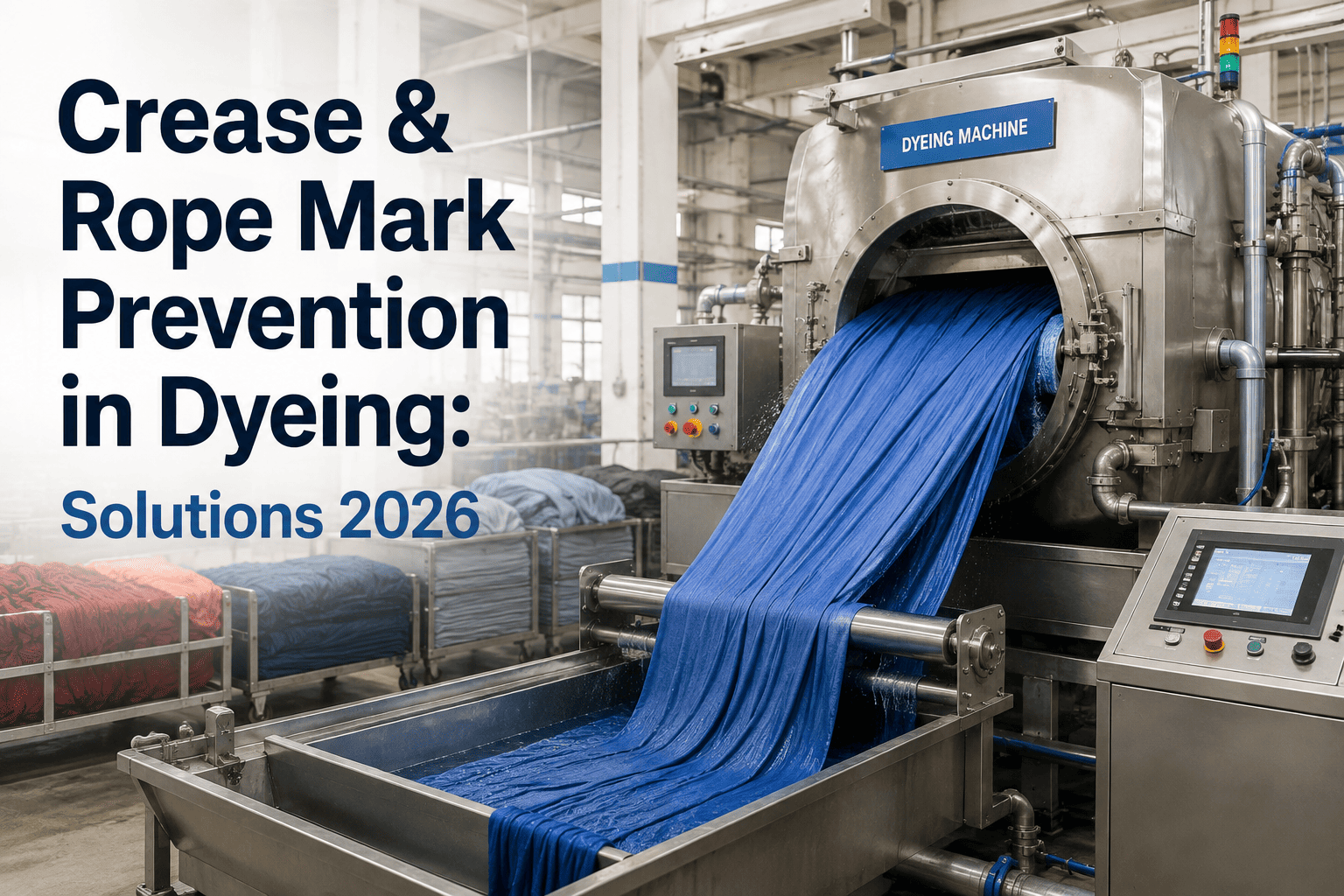
A single roll of fabric can come out of a jet dyeing machine with a permanent crease running its full length, and by the time anyone notices, the whole lot is already sitting in the finishing queue. Crease marks and rope marks are not cosmetic accidents — they are the direct result of how fabric folds, rubs, and drags against itself and the machine drum for hours at high temperature, and once the fold line sets under heat, no amount of finishing will fully remove it. See how iFactory tracks fabric loading, machine cycles, and mark-related rejections in real time through a Book a Demo.
Stop Crease Marks And Rope Marks Before They Set Into The Fabric
iFactory gives dyehouse teams a live view of loading ratio, rope speed, liquor flow, and anti-crease dosing across every batch, so the conditions that cause permanent fold lines get corrected before the fabric ever leaves the machine.
Why Crease Marks And Rope Marks Actually Form During Dyeing
A crease mark forms when a fold in the fabric stays in the same position long enough, under enough heat and tension, that the fibers at the fold line permanently set in a bent orientation rather than lying flat. A rope mark is a related but distinct defect, appearing as a rope-like impression running along the length of the fabric where the rope form itself has rubbed against the machine drum, guide rollers, or against overlapping folds of its own length repeatedly during circulation. Both defects share the same underlying mechanism — localized heat and mechanical stress applied unevenly across the fabric width — but they trace back to different points in the process, which is why a single fix rarely addresses both at once. Understanding this distinction early on saves considerable rework time, because a dyehouse chasing a rope mark with fixes meant for crease marks, or the reverse, can run several corrective batches without ever touching the actual source of the defect.
Overloading The Machine
Loading more fabric into a rope-dyeing machine than its drum and reel geometry can circulate freely forces sections of rope to overlap and drag, creating the exact rubbing contact that produces rope marks.
Excessive Rope Speed Variance
When rope speed is inconsistent across a cycle, sections of fabric spend longer in contact with the drum surface or with each other, concentrating heat and friction at those exact points.
Sudden Temperature Ramping
Fast heating rates give the fold line less time to relax before the fiber sets, locking in whatever fold shape existed at the moment the critical setting temperature was reached.
Poor Liquor Circulation
Uneven liquor flow leaves some sections of the rope less lubricated than others, increasing the friction coefficient exactly where the fabric is already folding against itself.
How Machine Type Changes Your Crease And Rope Mark Risk
Not every dyeing machine handles fabric the same way, and the mechanical form the fabric takes inside the machine — rope, open-width, or batch-wound — is the single biggest factor in whether crease or rope marks are even possible in the first place. The table below compares the common machine types used for piece dyeing and their typical mark risk profile.
| Machine Type | Fabric Form | Mark Risk | Best Suited For |
|---|---|---|---|
| Winch Beck | Rope | High — long rope contact time | Heavy, robust woven fabrics tolerant of rope handling |
| Jet Dyeing Machine | Rope | Moderate — fast circulation reduces contact time | Knits and lighter wovens needing efficient throughput |
| Jigger | Open-width | Low — fabric runs flat under controlled tension | Fabrics highly sensitive to any fold-line marking |
| Beam Dyeing Machine | Wound on beam | Very low — no rope folding at all | Delicate fabrics where even minor creasing is unacceptable |
Switching an at-risk fabric from a winch beck to a jet machine, or from rope form entirely to open-width jigger processing, often eliminates the defect outright rather than requiring the process to be tuned around it. The trade-off is throughput and cost, since open-width and beam machines typically process smaller batches per cycle than a fully loaded winch beck, so the decision usually comes down to how much the fabric's end use can tolerate any visible marking against how much batch efficiency the dyehouse is willing to give up. Many dyehouses handle this trade-off by segmenting their product mix rather than standardizing on a single machine type across the whole facility — routing robust, mark-tolerant fabrics to winch becks and jets to keep throughput high, while reserving jigger and beam capacity specifically for fabrics with tight surface-quality requirements, so the equipment allocation itself becomes part of the defect prevention strategy rather than something decided purely on scheduling convenience.
See Every Batch's Loading And Speed Before The Mark Appears.
iFactory flags overloaded cycles and speed deviations in real time, so operators can correct conditions before the fold line sets.
The Loading And Speed Ranges That Keep Fabric Mark-Free
Every rope-form machine has a loading capacity and rope speed range published by its manufacturer, but many dyehouses push past these limits during busy periods to hit output targets, trading a short-term throughput gain for a much more expensive rework cycle later. The ranges below reflect the general operating window that keeps rope circulation smooth enough to avoid mark formation across most medium-weight woven fabrics.
How Anti-Crease Additives Reduce Friction At The Fold
Anti-crease agents work by reducing the coefficient of friction between fabric layers and between the fabric and the machine drum, so even when folding does occur, the fabric can slide against itself rather than gripping and setting a permanent line. These additives are typically dosed into the dye liquor and are most effective when introduced before the temperature ramp begins, since they need time to distribute evenly across the fabric surface before the fold-setting temperature is reached.
Silicone-Based Lubricants
Provide strong lubrication and a soft handle, widely used on knits and delicate wovens where surface smoothness also affects the final fabric feel.
Fatty Acid Derivatives
Cost-effective lubrication suited to heavier woven fabrics where handle softness matters less than consistent friction reduction across long cycles.
Polyethylene Emulsions
Offer durable lubrication that holds up across multiple liquor exchanges, useful for multi-step dyeing processes with several wash and rinse stages.
A Loading Routine That Keeps Rope Circulation Smooth
How fabric is loaded into the machine at the very start of the cycle has an outsized effect on whether marks form later, since a poorly loaded rope tends to compound its own problems as the cycle progresses. The steps below reflect a loading routine that reduces the chance of early overlap or tangling, and following them in order matters more than any single step in isolation, since a rope that starts tangled tends to compound that problem with every subsequent rotation rather than correcting itself.
Where Crease And Rope Mark Prevention Efforts Usually Fall Short
Most dyehouses already know the general causes of crease and rope marks, yet the defect keeps recurring because the corrective steps taken are often inconsistent, applied only after a problem batch, or reversed the moment production pressure returns. Recognizing these recurring pitfalls is often more useful than learning the root causes themselves, since the causes are rarely a mystery — the discipline to control them consistently is where most operations actually struggle. A useful exercise for any dyehouse is to pull the last several months of crease and rope mark rejections and check how many of them trace back to one of the four pitfalls below, rather than to a genuinely new or unusual cause — in most facilities, the overwhelming majority repeat the same handful of preventable patterns.
Loading Limits Treated As Guidelines
Operators under output pressure frequently push loading past the recommended ratio during peak periods, treating the published limit as a soft target rather than a hard constraint, which reintroduces the exact overlap and drag conditions the limit was meant to prevent.
Anti-Crease Dosing Left Unadjusted
A dosage rate validated for one fabric type is often reused across completely different fabric weights and fiber blends without re-testing, leaving heavier fabrics under-lubricated and lighter fabrics over-treated in ways that affect handle.
No Early-Cycle Visual Check
Many mark-related failures are visible within the first few rotations of a cycle, yet without a defined early-cycle inspection point, the tangling or fold pattern goes unnoticed until the fabric is unloaded hours later and the damage is already set.
Machine Drum Condition Ignored
A worn or rough drum surface increases friction against the fabric regardless of how well loading and speed are controlled elsewhere, and drum condition is frequently overlooked during root-cause investigations that focus only on recipe and loading data.
Turning Loading And Speed Data Into An Early Warning System
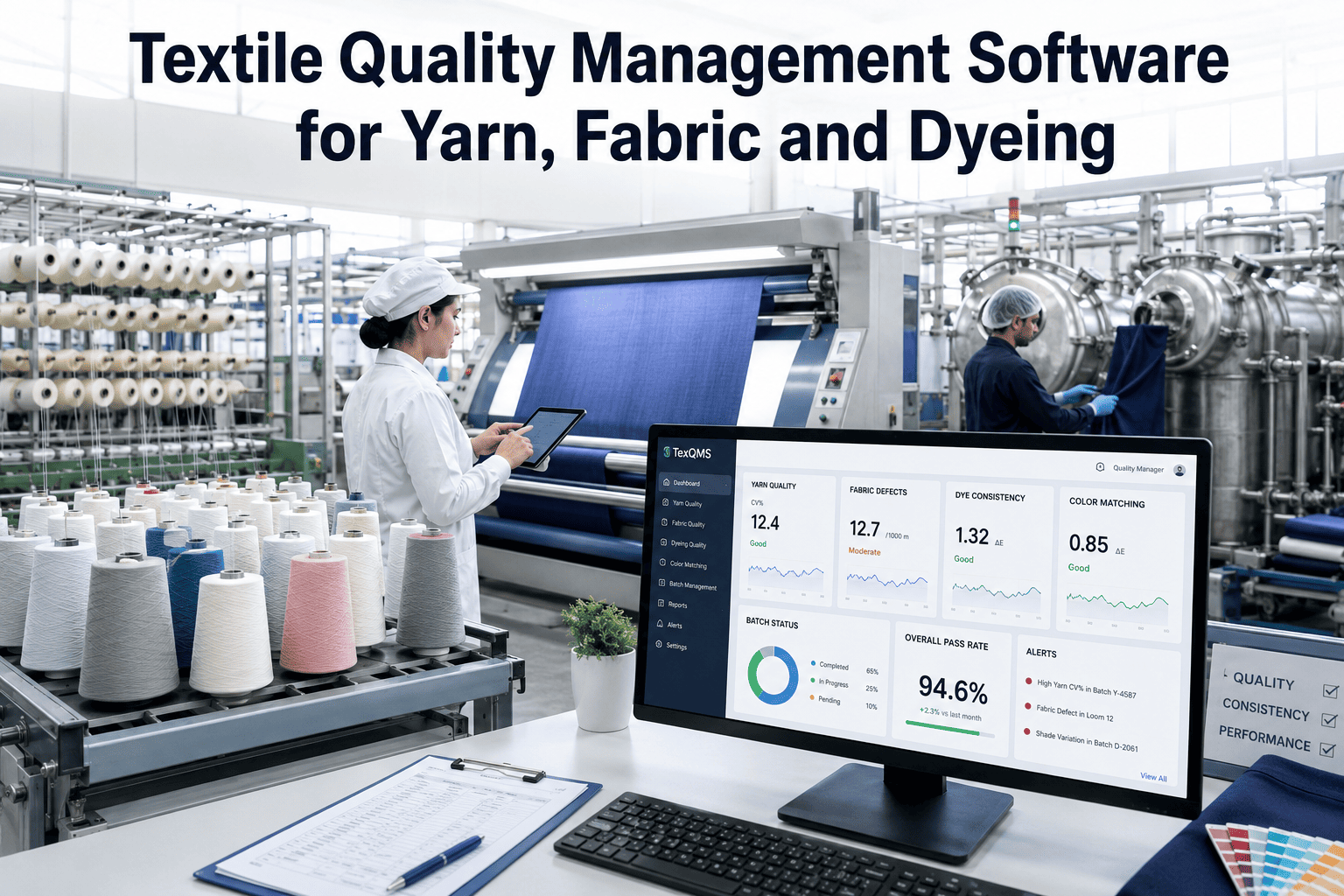
The gap between knowing the correct loading ratio and actually staying within it during a busy shift is where most crease and rope mark defects originate, which is why manual spot checks and end-of-cycle inspection alone rarely solve the problem for long. A system that continuously tracks loading ratio, rope speed variance, and heating ramp rate against each batch's recipe can flag a deviation the moment it happens, giving operators the chance to correct the cycle before the fold line has time to set rather than discovering the mark only after the fabric is unloaded and already in the finishing queue. This shift from reactive inspection to real-time deviation tracking is what separates dyehouses that treat crease marks as an occasional bad batch from those that have brought the defect rate down to a small, predictable fraction of total production. Tying this data back to specific machines, shifts, and fabric types also makes it possible to identify patterns that would otherwise stay hidden — a particular machine whose drum condition has degraded, a shift where loading discipline consistently slips, or a fabric type that needs a dedicated anti-crease dosage profile rather than the standard house recipe. Building this visibility does not require replacing existing machines or recipes; it requires connecting the sensors and control parameters that most modern dyeing machines already report into a single view that flags deviations against the ranges known to keep fabric mark-free, which is exactly the kind of connected quality layer iFactory adds on top of existing dyehouse equipment. Over time, this also builds a historical record that quality teams can use to justify equipment upgrades or process changes with actual defect-rate evidence rather than anecdotal impressions of which machines or shifts tend to produce more rejected fabric, turning what used to be a subjective debate into a data-backed decision.
We were losing close to a tenth of every winch beck batch to visible crease lines, and the frustrating part was that it looked random — some lots came out clean and others didn't, even with the same recipe. Once we started tracking loading ratio and rope speed against every batch that failed inspection, the pattern was obvious: it was almost always the overloaded cycles run during our busiest shifts. Tightening the loading limit and flagging any cycle that drifted outside the speed range cut our crease-related rejections by more than half within two months.
Frequently Asked Questions
Q: Can a crease mark be removed after it has already set into the fabric?
Once a crease mark has fully set under heat, it usually cannot be removed through normal finishing steps like calendering or steaming, since the fiber structure itself has taken on a permanent bend at the fold line rather than a temporary surface impression. In some cases a light re-steaming or re-setting process on delicate fibers can soften the appearance of a mild mark, but this is inconsistent and adds an extra process step and cost that prevention avoids entirely. The more reliable path is catching loading and speed deviations during the cycle itself, which is where Support Contact can help review your current inspection points.
Q: Is rope dyeing inherently unsuitable for fabrics that are very prone to marking?
Rope dyeing is not automatically unsuitable, but it does require tighter control over loading ratio, rope speed, and anti-crease dosing for fabrics known to be mark-sensitive, such as certain synthetic blends or lightweight knits. Many dyehouses successfully process sensitive fabrics on jet machines by running lower loading ratios and gentler speed profiles than they would use for a robust woven, accepting the lower throughput in exchange for a mark-free result. For fabrics where even this level of control isn't reliable enough, switching to an open-width process is usually the more consistent solution.
Q: How much does anti-crease agent dosage typically need to change between fabric types?
Dosage varies meaningfully based on fiber type, fabric weight, and machine type, since heavier fabrics generally need more lubrication to achieve the same friction reduction as a lightweight fabric would with a smaller dose. Getting the dosage right usually takes a short trial run comparing a few dosage levels against visual mark inspection results, then locking in the dosage that consistently produces clean fabric for that specific fabric and machine combination going forward, rather than guessing at a single dosage across every product run. It also helps to document the validated dosage against the fabric's specification sheet so that operators running the same fabric weeks or months later inherit the correct setting automatically instead of re-deriving it from memory or an outdated batch card, which is one of the more common reasons a previously solved marking issue reappears on a later production run.
Q: Does slowing down the entire dyeing cycle guarantee fewer crease and rope marks?
Slowing the cycle helps in some cases, particularly around the heating ramp rate, but it is not a guaranteed fix on its own and can even worsen rope marks if the rope speed itself drops so low that fabric segments sit in contact with the drum or with each other for longer stretches. The more reliable lever is consistency rather than raw speed — keeping loading within capacity and speed variance tight throughout the cycle tends to matter more than simply running everything slower. A Book a Demo session can walk through how to read your specific speed and loading data.
Q: What is the fastest way to tell a crease mark apart from a rope mark during inspection?
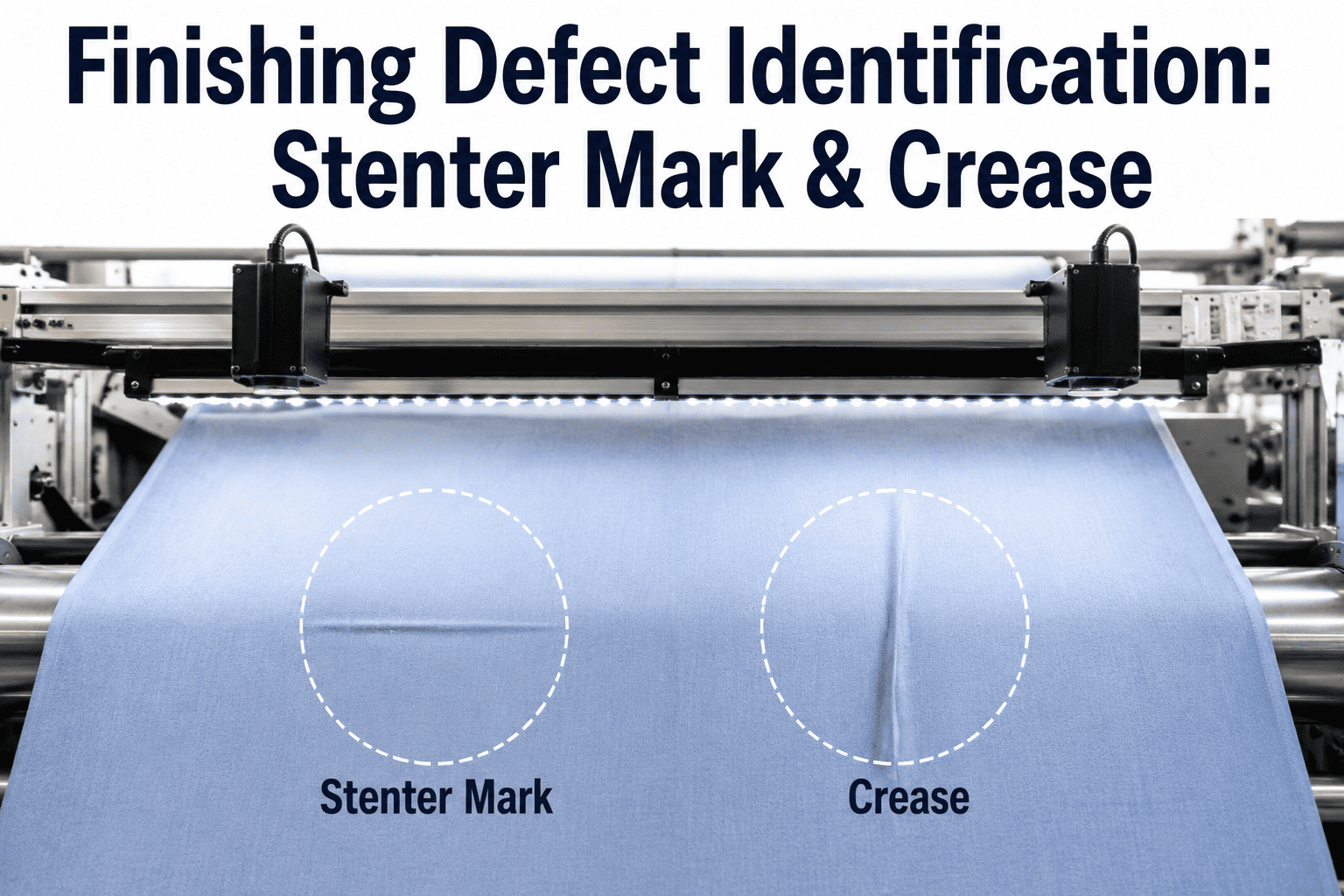
A crease mark typically appears as a sharper, more localized line where the fabric was folded at a specific point, often visible as a slightly different shade or texture right along the fold. A rope mark tends to run more continuously along the fabric length in a wavier pattern, reflecting the rope's rotation and contact against the drum rather than a single fixed fold. Distinguishing between the two matters because the corrective action differs — crease marks point back to loading and fold handling, while rope marks point back to drum contact, speed, and liquor circulation. Training inspectors to recognize this distinction consistently also improves the quality of the batch data being fed back to production, since a mark logged under the wrong category tends to send the corrective investigation down the wrong path entirely, wasting time adjusting a parameter that was never actually the source of the defect.
Catch Overloaded Cycles Before The Fabric Comes Out Marked.
iFactory connects loading ratio, rope speed, and dosing data to every batch so mark-causing conditions get corrected in real time.