Finishing is the last set of hands a fabric passes through before it becomes someone else's problem or someone else's approved shipment, which makes finishing defects some of the most expensive to catch late. A stenter mark along the selvedge, a crease baked in by an uneven roller, or a bow that shows up only once the fabric is laid flat for cutting can each turn an otherwise perfect piece of cloth into a rejection, and because these defects often form in the final minutes of processing, there is no downstream stage left to catch and correct them before the customer does. Most finishing lines still rely on an operator's eye and a periodic manual check to catch these issues, which works until fatigue, changeover pace, or a subtle equipment drift lets a run of defective fabric through unnoticed for far longer than anyone would like to admit. iFactory logs finishing line parameters continuously and flags the equipment and cycle window most associated with stenter marks, creases, and bow or skew, and you can book a demo to see it running against your own finishing data.
Three Defect Categories That Dominate Finishing Rejection
Each category has a distinct visual signature and a distinct set of usual causes, which is why treating them as one generic bucket called "finishing defects" makes root cause work harder than it needs to be.
Tension Settings Drift Faster Than Most Lines Track Them
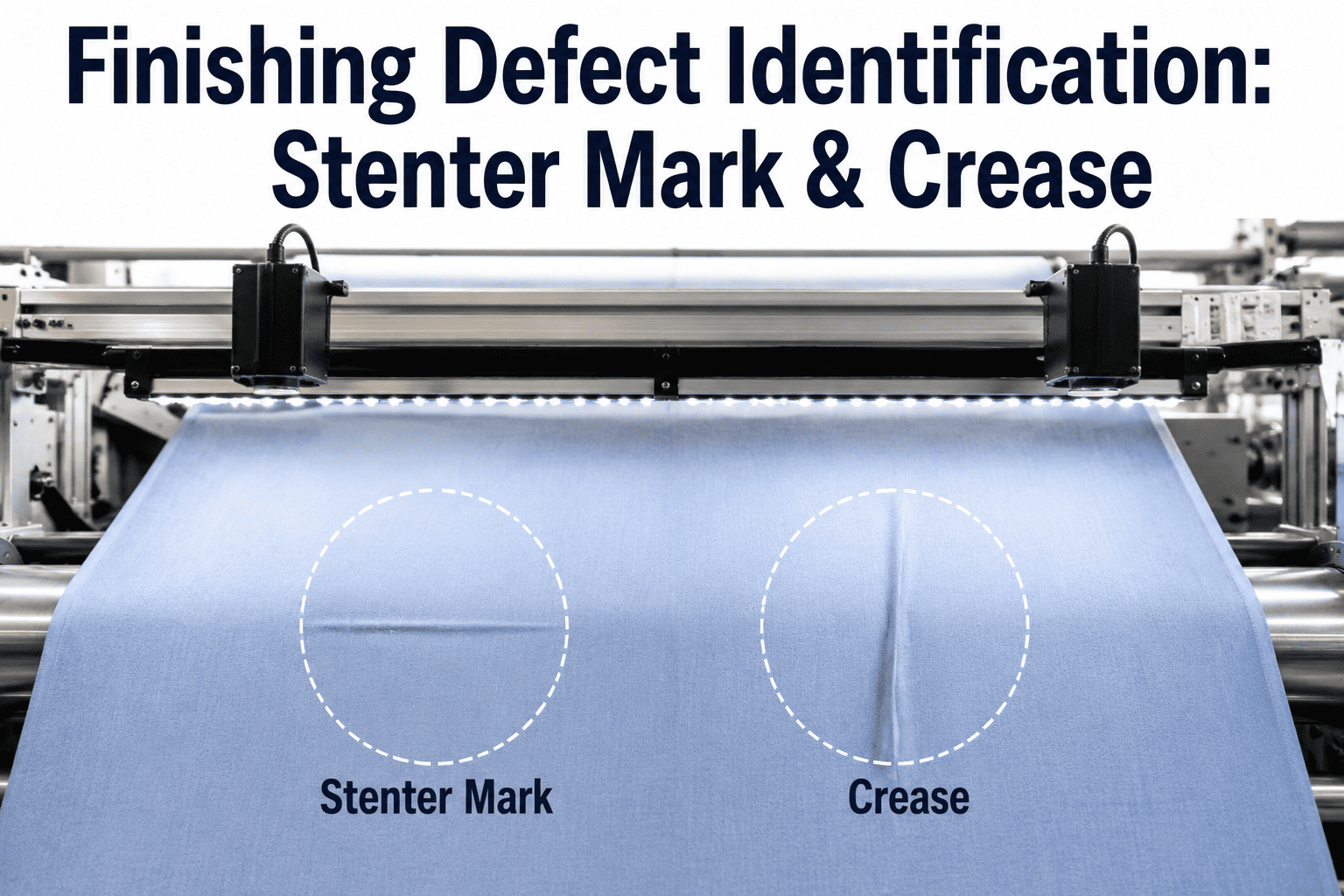
A stenter frame holds fabric at controlled width using pins or clips while heat sets the finish, and the tension applied at that holding point is one of the more sensitive settings on the entire finishing line. Too much tension and the holding mechanism leaves a visible mark or even damages the fabric structure at the edge; too little and the fabric can slip, producing width inconsistency that shows up later as a different kind of rejection. Worn pins, clip plates that have not been inspected on a regular schedule, and tension settings that get nudged during a changeover and never reset are the three most common root causes, and all three are easy to miss without a log that ties defect location back to the specific stenter pass that produced it. A worn pin in particular can look visually indistinguishable from a healthy one during a quick walk-past inspection, which is exactly why relying on visual equipment checks alone tends to under-catch this specific failure mode until the marks are already showing up on finished fabric.
Why a Periodic Visual Check Misses So Much
A manual finishing check typically happens at the start of a run, occasionally mid-run if a supervisor has time, and then again if a customer complaint comes back weeks later, which leaves long unmonitored stretches where something can quietly go wrong. In between those checkpoints, tension can drift, a roller can shift a few millimeters out of alignment, or a temperature zone can run slightly hot, and none of it gets caught until the next scheduled look or, worse, until an entire lot has already shipped and a customer is the one raising the flag. Continuous parameter tracking closes exactly that gap by watching the same settings a technician would check, but doing it on every pass rather than a handful of sampled moments across a shift.
Catch Finishing Defects Before They Reach the Final Roll
iFactory monitors stenter tension, roller alignment, and line speed continuously, flagging the exact pass and equipment position most associated with marks, creases, and skew.
A Crease Is Usually a Guide Roller Problem, Not a Fabric Problem
Crease lines form when fabric passes through a heated roller or calendar section while folded, wrinkled, or misaligned rather than lying fully flat, and the heat and pressure that set the desired finish also permanently set that fold into the fabric structure. Because the crease is only visible after the heat-setting stage, by the time it is caught the fabric has already completed the process and cannot simply be re-run through the same step without risking further damage. Guide roller misalignment, a spreader bar that has drifted out of position, or fabric entering the line with a fold already present from an upstream handling step are the usual suspects, and distinguishing between them requires knowing exactly where on the roll the crease begins. A crease that appears at regular intervals along the roll length points toward a rotating component like a roller, while one that appears once and never repeats more often traces back to a single handling event before the fabric even reached the finishing line.
Distortion That Only Becomes Obvious After Cutting
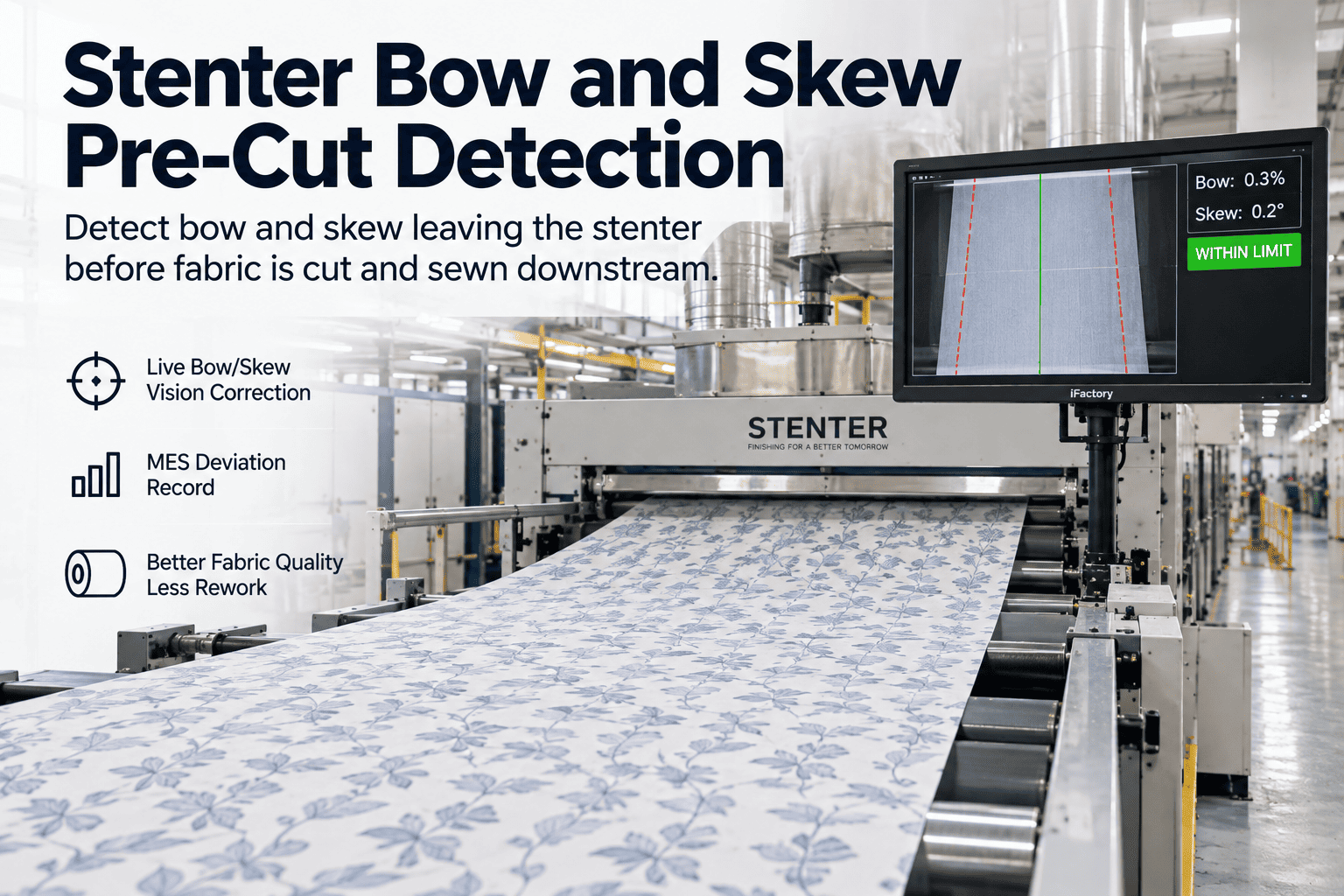
Bow and skew describe two related forms of weft distortion, where the crosswise yarns curve or angle away from a true perpendicular line to the fabric selvedge. Bow typically shows the weft curving toward the center or edges in an arc, while skew shows a consistent diagonal angle across the full width. Neither is usually visible to a casual glance across an inspection table, which is exactly why so much bow and skew makes it through finishing undetected and only becomes a visible, costly problem once a garment maker cuts and sews the fabric and the pattern no longer lines up correctly.
Compensator rollers on a stenter frame are specifically designed to correct bow and skew before the fabric is heat-set, but their effectiveness depends entirely on whether they are calibrated correctly for the current fabric construction and running speed, both of which can change several times in a single shift on a mixed-order finishing line. A calibration that was correct for a heavier fabric earlier in the shift can quietly become wrong the moment a lighter construction starts running, and unless that calibration is checked deliberately at every changeover, the compensator can end up doing more harm than good.
Matching Each Finishing Defect to Its Fastest Fix
| Defect | Primary Cause | Equipment to Check First |
|---|---|---|
| Stenter Pin Marks | Excess edge tension or worn pins | Pin condition and tension setpoint |
| Crease Line | Fabric folded before heat-setting | Guide roller alignment and spreader bar |
| Bow Distortion | Uncorrected weft curvature | Compensator roller calibration |
| Skew Distortion | Uneven feed angle across width | Feed roller and selvedge guide alignment |
| Surface Scorching | Localized overheating or line stoppage under heat | Temperature zone uniformity and interlock response |
A Five-Point Check That Catches Most Finishing Defects Early
Built for Finishing Lines Running Mixed Fabric Constructions
What Finishing Teams Ask Before Adopting Continuous Monitoring
Turn Finishing From a Final Guess Into a Monitored Process
iFactory tracks stenter tension, roller alignment, and skew measurement continuously so finishing defects get caught before they reach the final roll. Book a demo and bring a recent batch of rejection reports.