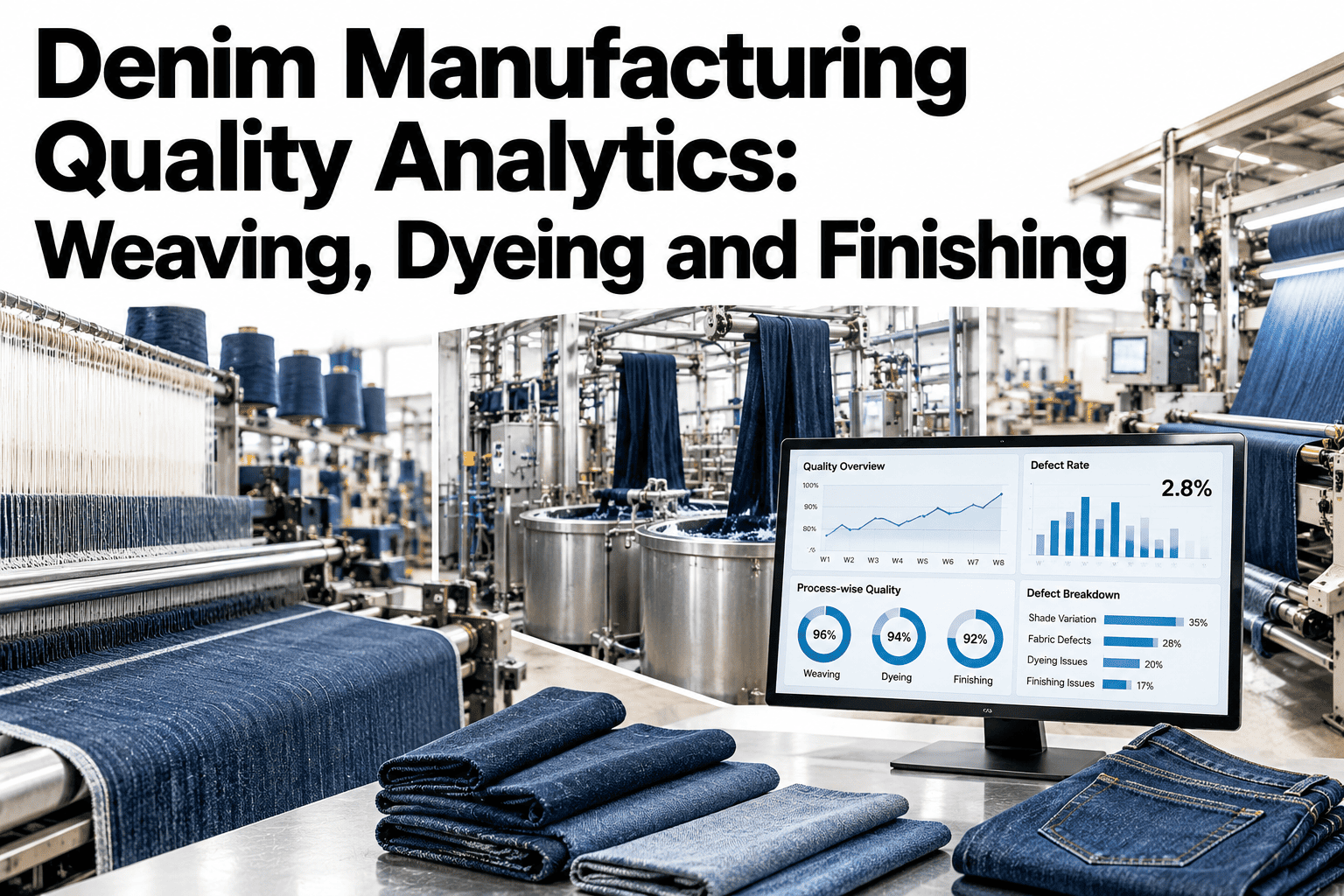
Denim hides very little. A faint shade shift between two rolls, a slightly different shrinkage or a twist in the leg seam becomes obvious the moment garments are cut and washed. The trouble is that the causes sit far apart, in warp preparation, indigo dyeing, weaving and finishing, so by the time a problem shows, it has travelled through every step. Linking the data from each stage changes that, and denim mills can ask iFactory AI how denim quality data is connected from weaving to finishing.
Make Denim Quality Consistent From Warp to Wash
iFactory AI connects dyeing, weaving and finishing data so shade, shrinkage and skew problems are traced to the stage that created them, not the one that revealed them.
The Denim Route and Where Quality Is Decided
A denim roll passes through several very different processes. Each one adds its own variation, and each one is a chance to catch a problem.
What Moves Denim Shade the Most
Shade is the headline defect in denim. The chart shows an illustrative ranking of the factors that most often move it.
Common Denim Defects and Their Usual Causes
Many denim defects repeat in patterns. This table links the most common ones to the stage and checks that usually solve them.
| Defect | Usual Source | First Check |
|---|---|---|
| Shade variation between rolls | Dyeing and bath control | Bath records and shade readings per roll |
| Barre or streaks in the cloth | Yarn variation or uneven dyeing | Yarn lot and dye range settings |
| Skew or leg twist | Weave and yarn twist, plus finishing tension | Finishing settings and yarn twist data |
| Shrinkage out of tolerance | Finishing and shrinkage control | Finishing records and test results by roll |
| Weft bars or bow | Weaving and finishing alignment | Loom stops and finishing straightening |
Trace Every Denim Complaint to Its Source Stage
Book a 30-minute session and iFactory AI will review your dyeing, weaving and finishing records to show where shade and shrinkage problems start.
Two Ways to Look at Shade: By Roll or By Process
Shade can be judged on the cloth or on the conditions that made it. Using both gives faster answers than either alone.
What a Good Fix Order Looks Like
When shade drifts, teams often change many things at once. A fixed order avoids chasing symptoms.
Check the measurement
Confirm the reading before changing the process.
Check the dye bath records
Look for a change in concentration, oxidation or temperature.
Check the yarn lot
Compare against previous lots on the same article.
Check finishing
Review temperature, tension and shrinkage settings.
Escalate to a trial
Run a small controlled trial before changing production.
Denim KPIs Worth Tracking
A small set of measures tells you whether quality is improving. Keep them visible to the whole team.
A Composite Scenario: The Lot That Faded in the Wash
This is a composite example, not a named mill. It shows how connected records shorten the search.
Approving a New Shade in Five Steps
A clear approval loop avoids arguments later. These steps work for new shades and repeat orders.
Dye a trial against the customer reference.
Check shade after finishing and a standard wash.
Record the approved reading and conditions.
Produce with the approved settings locked.
Compare each roll to the approved reading.
A Composite Scenario: Skew That Appeared Only After Wash
This is another composite example. It shows why finishing records matter.
What iFactory AI Adds to Denim Quality
iFactory AI is smart manufacturing and industrial software for denim and other textile operations. Explore denim analytics in a live product tour on realistic roll data.
Roll-Level Shade Tracking
Every roll carries its shade reading and process conditions.
Cross-Stage Linking
Dyeing, weaving and finishing records are linked by roll and lot.
Drift Alerts
Rolls trending toward a limit are flagged while the lot can still be adjusted.
Complaint Tracing
Garment complaints are traced back to the roll and the settings that made it.
Review of Denim Quality Analytics
A practical review of what helps denim mills control quality, written as editorial guidance rather than a named expert quote.
Link before you analyse
Without a shared roll identity, dyeing, weaving and finishing data cannot be compared.
Measure shade early
Checking shade at the dye range is cheaper than finding it after finishing.
Lock approved settings
An approved shade is only repeatable if the settings that made it are recorded and held.
Frequently Asked Questions
Why is denim shade so hard to keep consistent?
Indigo dyeing is sensitive to bath conditions, speed and oxidation, and small changes show up clearly after washing. See how shade drift is tracked in a live demo with your own data. Connected records make the cause easier to find.
Can analytics predict shrinkage problems?
It can flag rolls whose finishing conditions differ from approved settings, which are the usual cause. This gives an early warning before the roll is tested or cut. Tests still confirm the final result.
How are skew problems traced?
By linking finishing tension, yarn twist and weave data to the rolls affected. Ask support how skew results are linked to finishing records on your lines. The pattern across shifts or lots often points straight to the cause.
Do we need new equipment to start?
Usually not. Many mills already record dye range, weaving and finishing data in separate places. Connecting them is the first step, and new sensors come later only where gaps matter.
How quickly can a denim mill see results?
Often within weeks of linking records for one article. Book a call to scope a first denim article with the team. A single clear win is the best argument for wider rollout.
Make Every Denim Roll Match Its Approval
iFactory AI links dyeing, weaving and finishing so shade, shrinkage and skew are traced to their source. Book a walkthrough to see it on your own rolls.



.jpg)