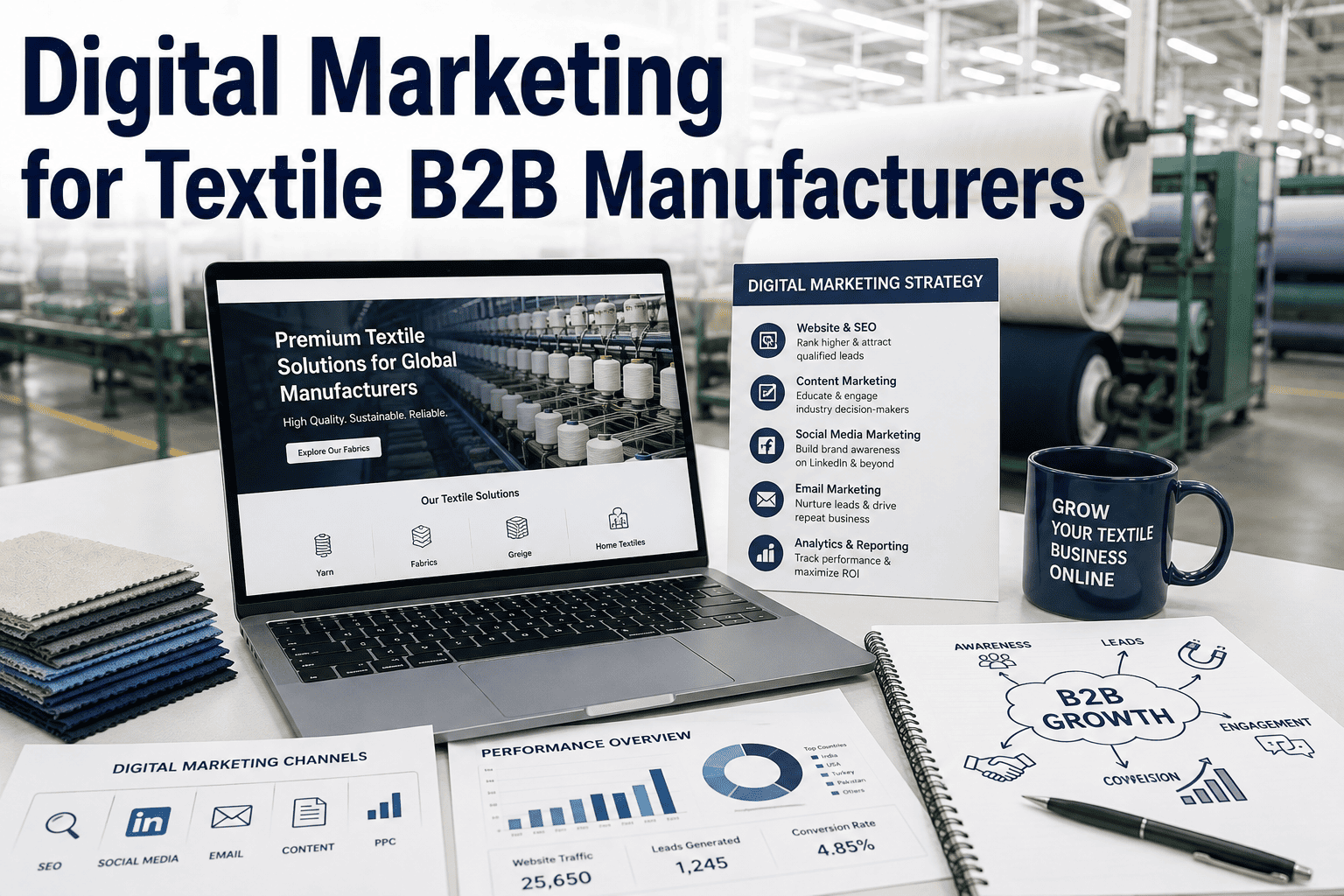
Most textile manufacturers still win business the way their fathers did — trade shows, agent networks, and word of mouth from existing buyers. That's not wrong, exactly, but it means a mill's next big customer is currently forming an opinion about potential suppliers on LinkedIn and industry trade portals, and if the mill has no real presence there, it simply isn't in the conversation. Digital marketing for a textile manufacturer looks nothing like consumer marketing — there's no viral post that lands an order, but there is a compounding effect from consistent, credible presence where sourcing managers actually spend their research time. iFactory works with manufacturers to connect their production and quality data into content that actually earns buyer trust — see examples through iFactory support.
B2B Growth · Textile Manufacturer Marketing
Sourcing Managers Are Already Researching Suppliers Online. The Question Is Whether They Find You.
A practical digital presence for a textile manufacturer isn't about going viral — it's about showing up credibly on LinkedIn, trade portals, and search where buyers are already looking, with content that reflects real production capability instead of generic stock photography.
Where Buyers Actually Look
Four Channels That Matter Most for a Textile B2B Manufacturer
LinkedIn
The primary channel for reaching sourcing managers and merchandisers directly, particularly for capability announcements, certifications, and behind-the-scenes production credibility.
Trade Portals
Sector-specific directories and sourcing platforms where buyers actively search by capability, certification, and MOQ — an incomplete or outdated profile here quietly costs real inquiries.
Search & SEO
Buyers researching a specific capability, such as a certification standard or a niche fabric process, frequently start with a search engine query rather than a directory browse.
Content Marketing
Case studies, process explainers, and compliance guides build the kind of credibility a single sales call rarely can, especially with a buyer evaluating several unfamiliar suppliers at once.
The Buyer's Path
How a Sourcing Decision Actually Moves From First Search to Signed Order
Awareness
Buyer discovers the manufacturer exists, usually through search, a trade portal listing, or a LinkedIn post shared within their network.
Credibility Check
Buyer reviews certifications, case studies, and capability content to decide whether the manufacturer is worth a direct inquiry at all.
Direct Inquiry
Buyer reaches out through a contact form, LinkedIn message, or trade portal RFQ, typically after comparing three or more suppliers.
Evaluation & Order
Sampling, factory audit, and pricing negotiation follow, with the earlier content-driven credibility often shortening this stage considerably.
A Strong Factory Floor Doesn't Market Itself. Someone Still Has to Show a Buyer What's Actually Happening on It.
iFactory helps manufacturers turn real production and quality data into content buyers actually trust — process transparency, not stock photography.
Getting Started
A Realistic Content Checklist for a Manufacturer With Limited Marketing Bandwidth
✓
Complete every trade portal profile field — capability, certifications, MOQ, and lead time fields left blank are a common reason buyers filter a supplier out before ever reaching out.
✓
Post production and process content consistently on LinkedIn — a quarterly update on a new certification or capability upgrade builds far more credibility than an inactive company page.
✓
Publish detailed case studies with real outcomes — specific numbers on defect reduction, lead time, or compliance performance are considerably more persuasive to a sourcing manager than general capability claims.
✓
Target search terms buyers actually use — specific certification names, fabric types, and process capabilities tend to convert far better than broad, generic industry keywords.
✓
Respond to inquiries within the same business day — buyers evaluating multiple suppliers simultaneously often eliminate the slowest responder regardless of how strong that supplier's actual capability is.
Applied Example
A Mid-Sized Mill That Doubled Qualified Inbound Inquiries Without Increasing Ad Spend
A knit fabric manufacturer with strong production capability but almost no digital presence had relied entirely on agent relationships and repeat buyers for years. After publishing a series of detailed process and compliance case studies, completing previously incomplete trade portal listings, and posting consistent production updates on LinkedIn over six months, inbound inquiries through the website and LinkedIn nearly doubled, and a meaningfully larger share of those inquiries came from buyers who had already reviewed specific certification and capability content before reaching out — meaning the sales team spent less time on basic capability questions and more time on actual commercial negotiation.
~2xQualified inbound inquiries over six months
0Increase in paid advertising spend
6 monthsTo see meaningful inquiry growth
Typical Outcomes
What Manufacturers Report After Building a Consistent Digital Presence
45%
More Qualified Inbound Inquiries Within 6 Months
3x
Higher Trade Portal Profile View Rate With Complete Listings
28%
Shorter Sales Cycle When Buyers Arrive Pre-Informed
Frequently Asked Questions
Digital Marketing for Textile Manufacturers — Common Questions
Do we really need a dedicated marketing team to make this work?
Not necessarily at the start — many manufacturers see meaningful results from a single person spending a few consistent hours a week on trade portal upkeep, LinkedIn updates, and basic case study documentation, especially if that person has direct access to real production and quality data rather than having to chase it from other departments. A dedicated resource becomes more valuable once inbound volume grows enough to justify it.
Book a Demo to see how production data can be turned into content with minimal extra effort.
Which channel should we prioritize if we can only focus on one?
For most manufacturers, completing and actively maintaining trade portal listings delivers the fastest return, since buyers using those platforms are already in active sourcing mode rather than passively browsing. LinkedIn tends to pay off over a longer horizon by building broader brand credibility, and is worth prioritizing once the more immediately transactional trade portal presence is solid.
Contact support to talk through a prioritization plan for your specific market.
How do we create content without exposing sensitive production or client information?
Effective case studies and process content generally focus on capability, methodology, and aggregate outcomes rather than specific client names or proprietary process details, and most buyers are more interested in what a manufacturer can consistently deliver than in a specific client's identity. A simple internal review step before publishing anything keeps sensitive details out without sacrificing the credibility the content is meant to build.
Is paid advertising worth it for a textile manufacturer, or is organic enough?
Organic presence — complete trade portal profiles, consistent LinkedIn activity, and search-optimized content — typically delivers the strongest return for manufacturers because B2B textile sourcing decisions are research-driven rather than impulse-driven, and a credible organic presence tends to influence that research more than a paid ad a buyer scrolls past. Paid campaigns can accelerate visibility for a specific capability launch, but rarely replace the need for genuine organic credibility.
How long before we see a measurable increase in qualified inquiries?
Manufacturers starting from a reasonably complete baseline — existing trade portal presence, some LinkedIn activity — typically see a noticeable uptick in qualified inquiries within three to four months of consistent effort. Manufacturers starting from little to no digital presence generally need four to six months to build enough content and credibility to see a meaningful shift.
Book a Demo to set realistic expectations for your starting point.
Turn Your Actual Production Capability Into Content Buyers Trust.
Build a credible digital presence where sourcing managers are already researching suppliers.