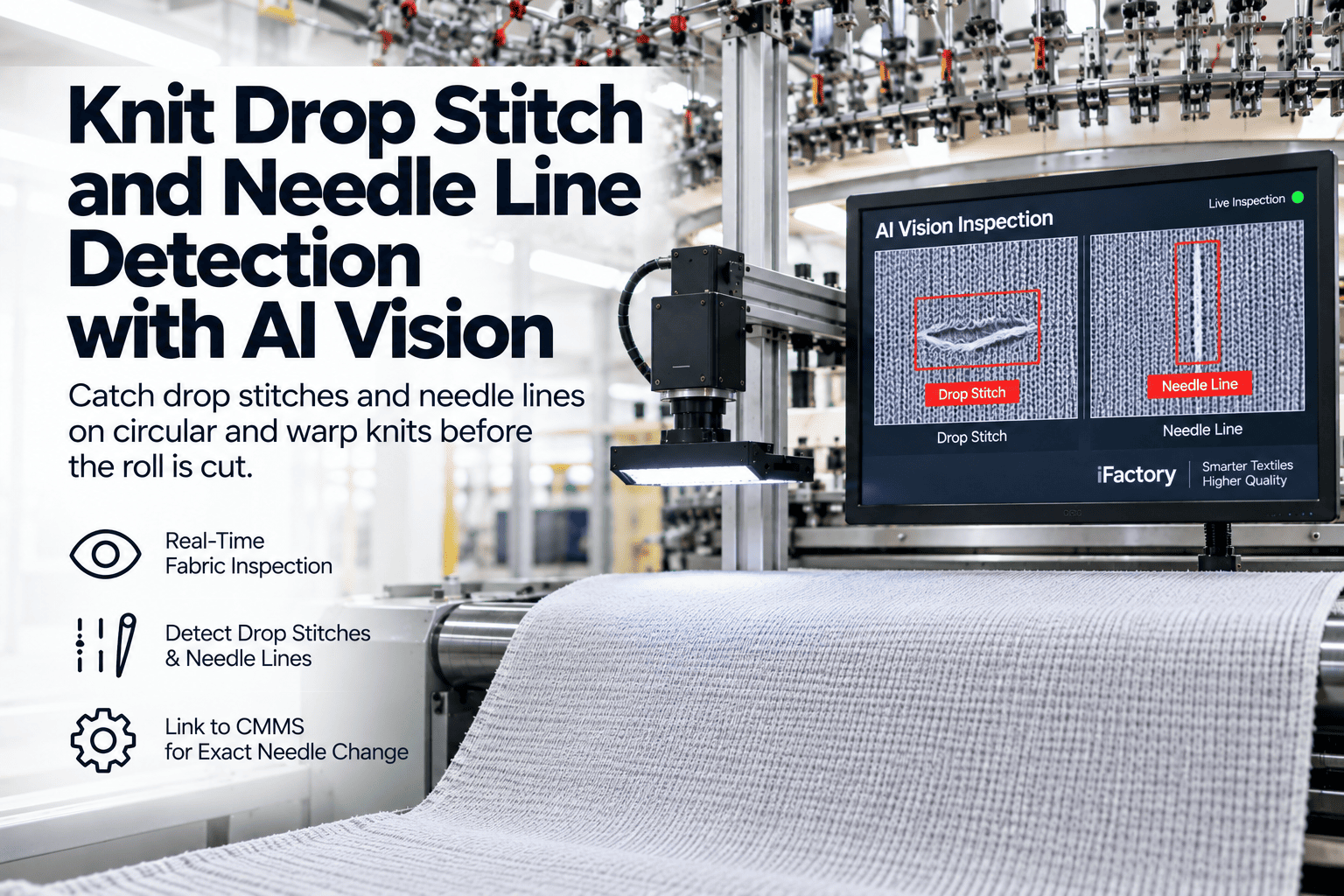
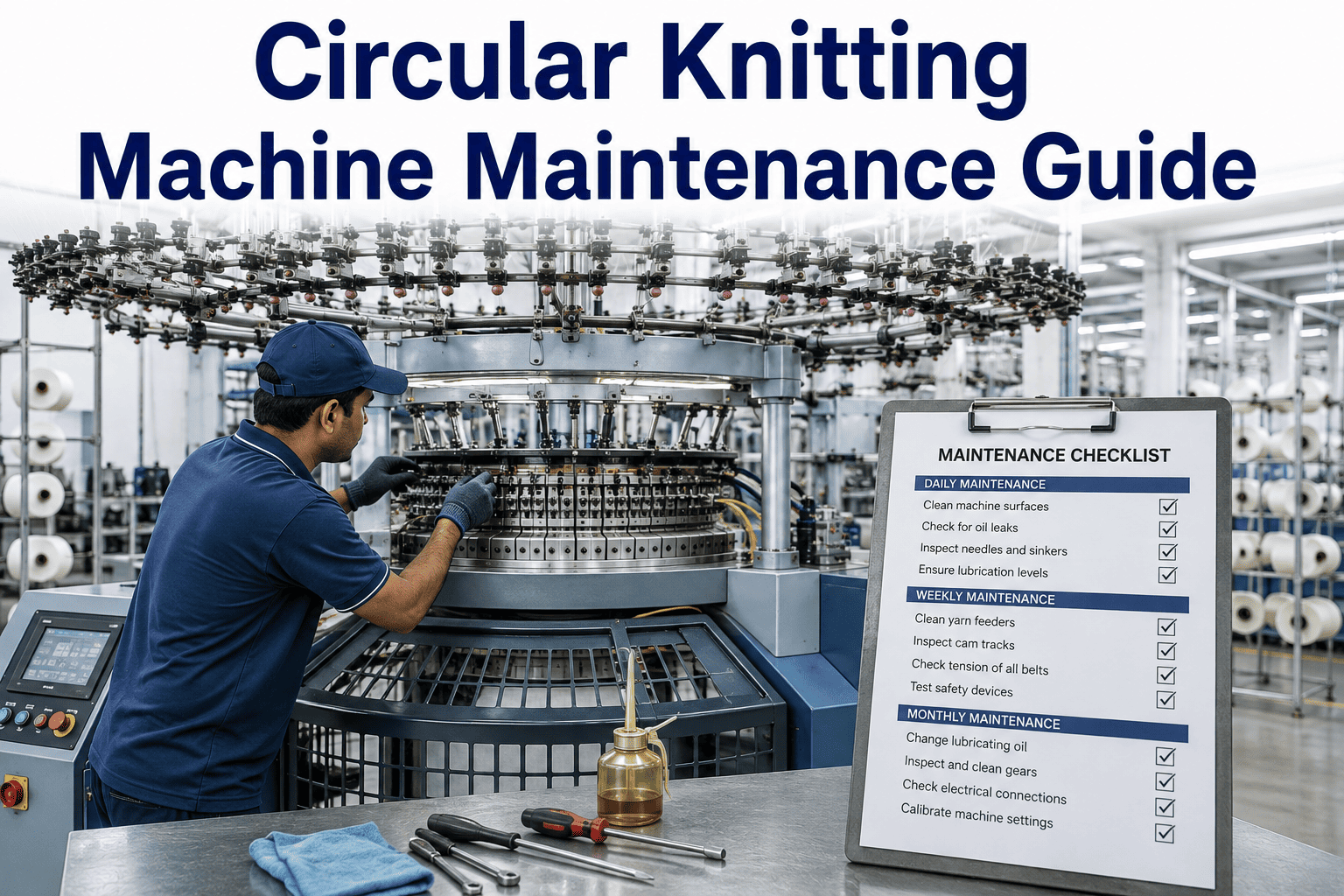
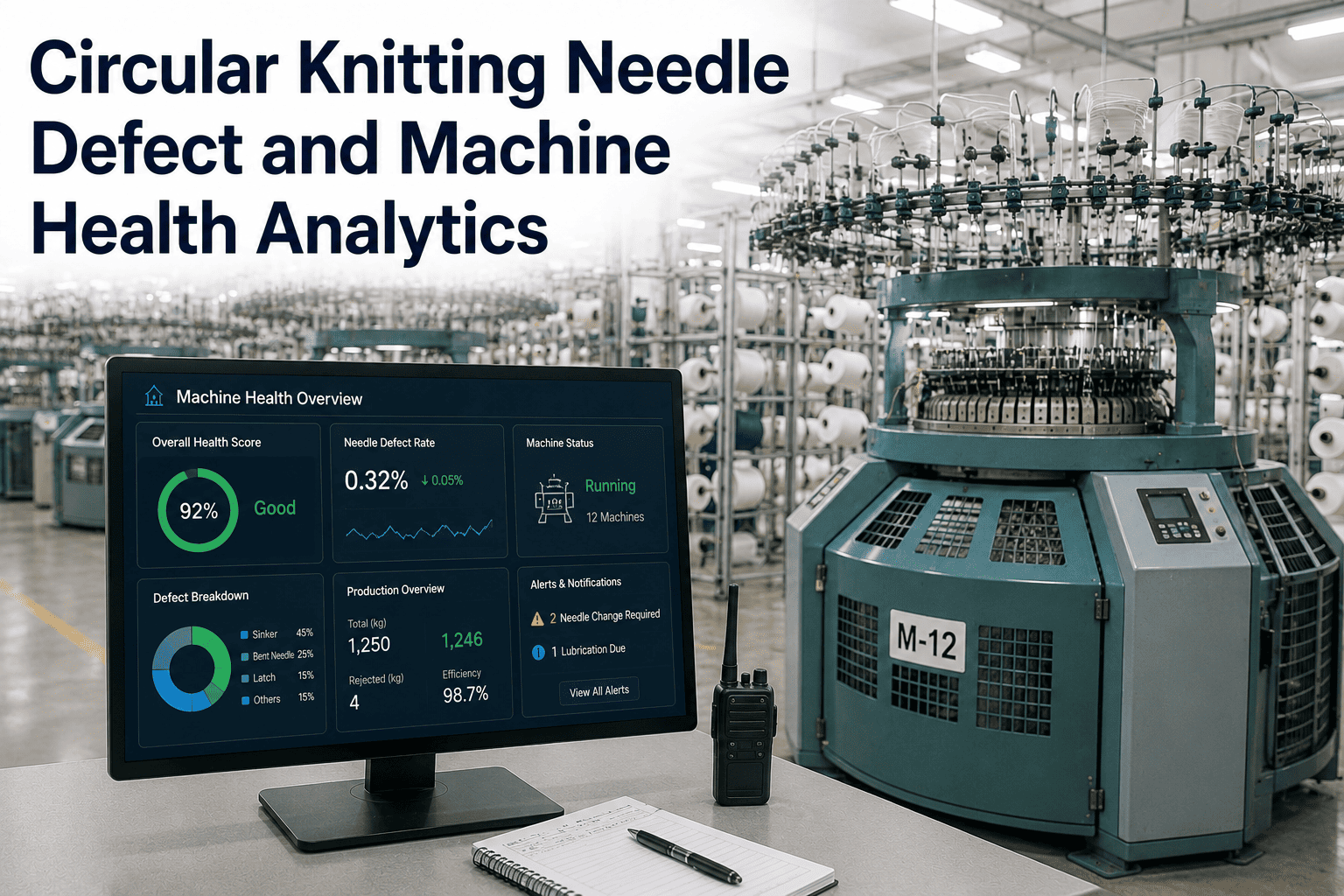
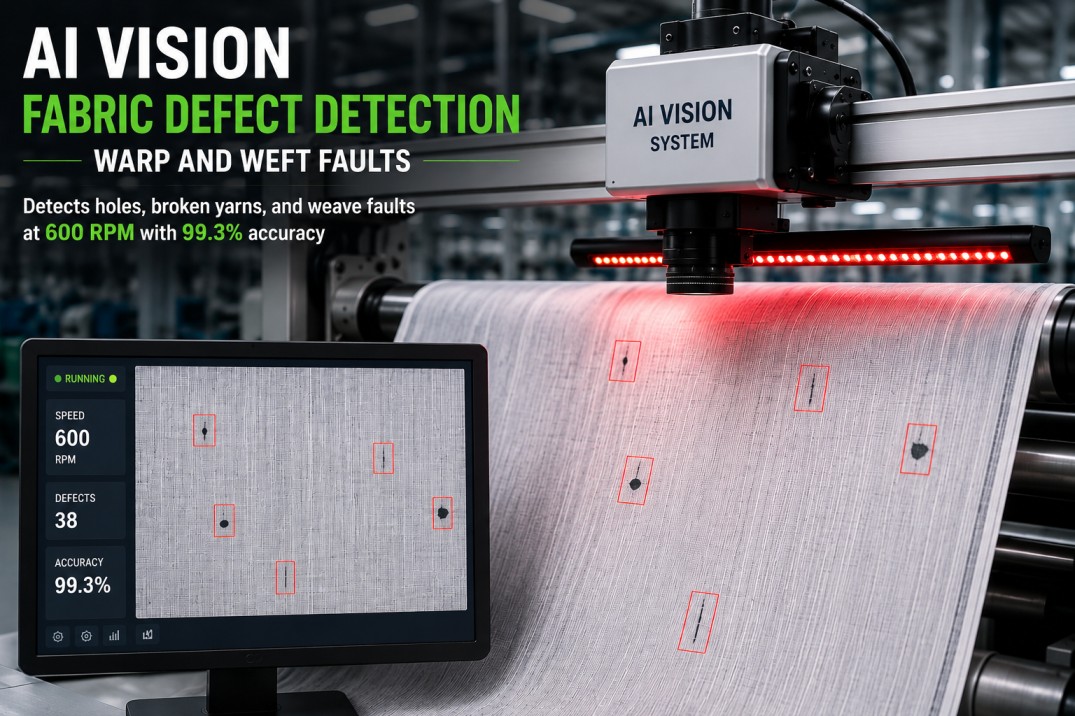
Drop stitches and needle lines on knits are the mechanical-attribution defects — every one traces to a specific needle position, and every hour of production without catching them multiplies the affected roll length. On circular knits, a single broken needle drops the same stitch on every revolution, cutting a diagonal line; on warp knits, a damaged needle leaves a wale-way line down the whole roll. Grey inspection catches the pattern but rarely names the needle, so mechanics take a needle-hunting walk while the machine keeps running. Vision AI at the machine reads needle position within the first affected metres.
iFactory / Knit needle-position vision
Localise Drop Stitches and Needle Lines to the Exact Needle — Not the Machine
Vision at circular and warp knit machines detecting drop stitches and needle lines within the first affected metres — localised to specific feeder and needle position with CMMS work order raised carrying the exact needle change specification.
Circular M-14
Feeder 3 · N 447
Drop stitch
Warp knit W-6
Bar 2 · N 118-119
Needle line
Circular M-22
Feeder 1 · N 892
Bent needle
M-14 CMMS
WO-2308
Feeder 3 · replace N 447
Circular + warp
knit machines
Needle-position
localisation
The Problem in Knit Defect Attribution
A typical circular knitting operation runs machines 24 hours producing tubular fabric at 15-40 rpm across 60-120 feeders. When a single needle breaks or bends, it drops the same stitch on every revolution — producing a diagonal line across fabric that spirals as the tube advances. Grey inspection catches the pattern but attributes it to the machine, not the needle. Mechanic walks the cylinder inspecting hundreds of needles by eye, sometimes finds it in an hour, sometimes half a shift; meanwhile the machine either sits idle or keeps producing defective fabric. Warp knitting is similar — hunting the needle across multiple bars takes time nobody has.
Where Knit Defect Attribution Actually Fails
Knit machine defect failure modes are consistent across circular and warp knit. Each traces to a specific needle position that vision AI localises directly.
Drop stitch diagonal
Broken needle on circular knit drops same stitch every revolution, creating diagonal line. Grey inspection catches; mechanic walks cylinder hunting for the needle by eye.
Needle line wale-way
Damaged needle on warp knit bar creates wale-way line. Multiple bars and hundreds of needles per bar make eye-based hunting slow and error-prone.
Bent vs broken needle
Bent needle drops stitches intermittently; broken needle drops consistently. Different failure modes need different response — vision distinguishes.
Cascade damage
One damaged needle wears its neighbours over hours. Delay to intervention causes cascade — one broken needle becomes three that need replacement instead of one.
What Good Looks Like in Knit Vision
A working knit vision system holds four disciplines together — first-metres detection, needle-position localisation, CMMS work order with exact position, and cascade prevention.
First-Metres Detection
Vision at machine output detects drop stitch and needle line within first affected metres — before the roll is committed to defect. Drop stitch pattern distinctive from other defects.
First metres, not first roll
Position Localisation
Vision correlates defect position to needle position via machine geometry. Circular knit: feeder number and needle number in cylinder. Warp knit: bar number and needle position in bar.
Exact position, not general
Exact-Needle CMMS
CMMS work order raised with machine, feeder or bar, and specific needle number requiring change. Mechanic walks to the exact position; no eye-hunting.
Named needle, not machine
Cascade Prevention
Intervention within minutes of first detection prevents cascade damage. Single-needle change vs multi-needle change per event. Cost recovery compounds.
Single change, not cascade
How iFactory AI Fits
iFactory AI overlays your knit machines (Mayer & Cie, Terrot, Fukuhara, Karl Mayer for warp), CMMS, and knitting MES — providing needle-position vision that localises defects to specific needles and the CMMS integration that carries the exact change specification.
Machine Vision
Vision Layer
Vision at knit machine output detecting drop stitch and needle line patterns within first metres. Circular knit: reads tubular fabric; warp knit: reads flat output.
Position Mapper
Vision + Machine
Defect position correlated to needle position via machine geometry. Circular: feeder and cylinder needle number. Warp: bar and needle number. Machine profile per model.
CMMS Writer
Vision + CMMS
Work order raised in CMMS with machine, specific position (feeder/bar and needle number), and defect signature (bent, broken). Mechanic walks to exact location.
Cascade Preventer
Vision + Machine
Fast intervention response reduces cascade damage. Vision continues monitoring after change to confirm resolution; further defects surface adjacent needle involvement.
Ask your knitting section head how long between drop-stitch or needle-line first occurrence and the specific needle being replaced. If the answer is measured in hours, the vision-based needle localisation is the specific recovery — for both fabric quality and cascade prevention. Book a knit vision review.
10-Week Knit Vision Pilot on One Machine Family
One family of knit machines (5-15 machines of same or similar model), ten weeks. The pilot mounts vision, activates needle-position localisation, connects to CMMS, and closes the first month of exact-needle work orders.
Weeks 1–2
Vision + Geometry
Vision at machine output mounted per machine. Machine geometry configured per model (feeder positions, needle counts, bar positions). Baseline defect-to-intervention cycle time.
Weeks 3–5
Position Live
Needle-position localisation live per detected defect. Accuracy verified against mechanic ground truth. Model tuning for machine-specific patterns.
Weeks 6–8
CMMS Integration
CMMS work orders raised with exact needle position. Mechanic response cycle measured. Single-vs-multi-needle change ratio tracked as cascade prevention proxy.
Weeks 9–10
Roll Yield Improvement
Full-roll yield improvement from faster intervention measured. Rollout to remaining knit families scoped.
Who Owns the KPI
Knit vision crosses knitting production, maintenance, QA, and CMMS. Each function owns a specific KPI or the eye-hunting cycle stays the norm.
Knitting Section Head
First-metres-to-intervention cycle
Owns the response outcome — time from first-metres detection to needle change complete. Under 30 minutes is the working target for the pilot.
Knit Machine Mechanic
Single-needle vs multi-needle changes
Owns the intervention discipline — the share of interventions that change one needle vs multiple. Fast intervention keeps the ratio single.
Knit QA
Roll first-pass yield
Owns the yield outcome — the share of rolls passing inspection without defect-driven downgrade. Fast intervention lifts yield directly.
Knit Maintenance
Needle spare consumption
Owns the spare life — needle spare consumption per production month. Cascade prevention reduces total needle consumption per equivalent fabric output.
FAQ
How does this work on circular knit vs warp knit — geometry is quite different?
Circular and warp knit present different vision challenges. Circular knit produces a tube with continuous rotation — vision reads the flattened tube and correlates defect position to feeder number and cylinder needle position via revolution geometry. Warp knit produces flat fabric with multiple guide bars each carrying its own needles — vision reads flat output and correlates wale-way defects to the specific bar and needle position. The vision models train per machine type with machine-specific geometry configured. Where a mill runs both (typical in large tier-1 knit operations), the same vision infrastructure handles both with different machine profiles. What's shared is the needle-position localisation discipline; what differs is the geometry mapping.
What about jacquard patterns where drop stitches are intentional — how does vision distinguish?
Jacquard patterning intentionally drops or transfers stitches to create pattern effects. Vision distinguishes intentional from defect by comparing observed pattern against the machine's loaded pattern file — same source the machine uses to drive its needle selection. Deviations from the pattern are defects; conformance to the pattern is pattern effect. Where the machine has electronic jacquard (Mayer & Cie Relanit, Terrot, Fukuhara with electronic selection), pattern file integration is direct; where the machine runs mechanical patterning, the pattern is loaded to the vision separately at style setup. Either way, jacquard patterns are read as pattern rather than misclassified as defects.
Book a demo to see jacquard pattern handling.
How does this integrate with our CMMS for the exact-needle work order?
CMMS integration creates work orders through the CMMS API with structured position data — machine, feeder or bar number, needle number, defect type. IBM Maximo, SAP PM, eMaint, Fiix, and UpKeep all support work orders with custom fields for the position data. The work order carries priority, position, defect signature, and recommended action; mechanic receives it on mobile or terminal and walks directly to the exact needle. Where the CMMS routing prioritises by criticality, needle-line defects on style with tight buyer tolerance auto-escalate. Where the CMMS integrates with parts inventory, needle spare availability is confirmed at work order creation so mechanic doesn't discover a spare shortage at the machine. The exact-needle discipline is what makes fast intervention possible.
Stop letting mechanics walk cylinders hunting for needles.
Localise Knit Defects to Exact Needles — Live on One Machine Family
Bring one knit machine family's last quarter of drop-stitch and needle-line events, current diagnosis-to-change cycle time, and the CMMS in use. We'll walk what vision-based needle localisation would have shortcut, and demonstrate the exact-needle work order workflow.