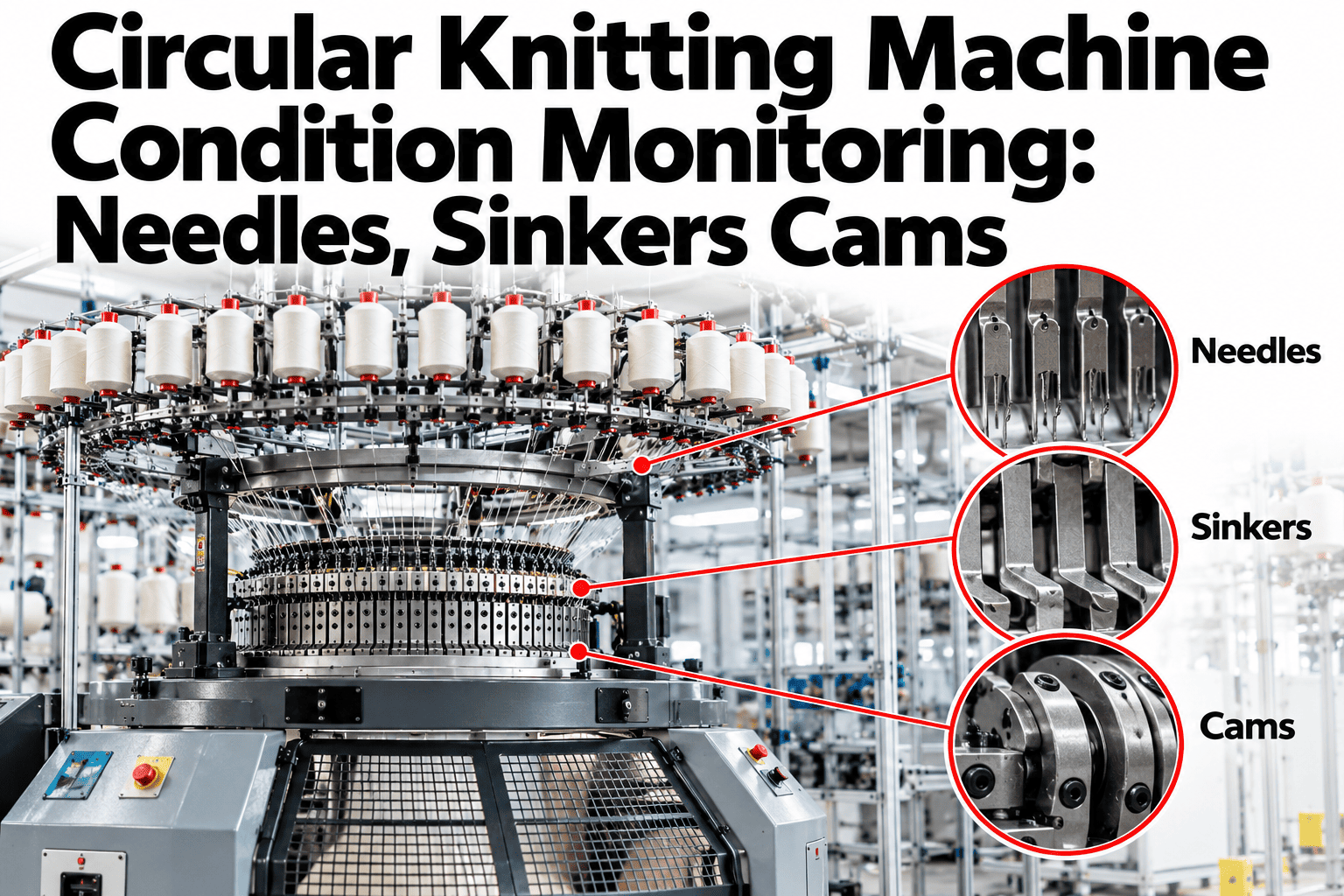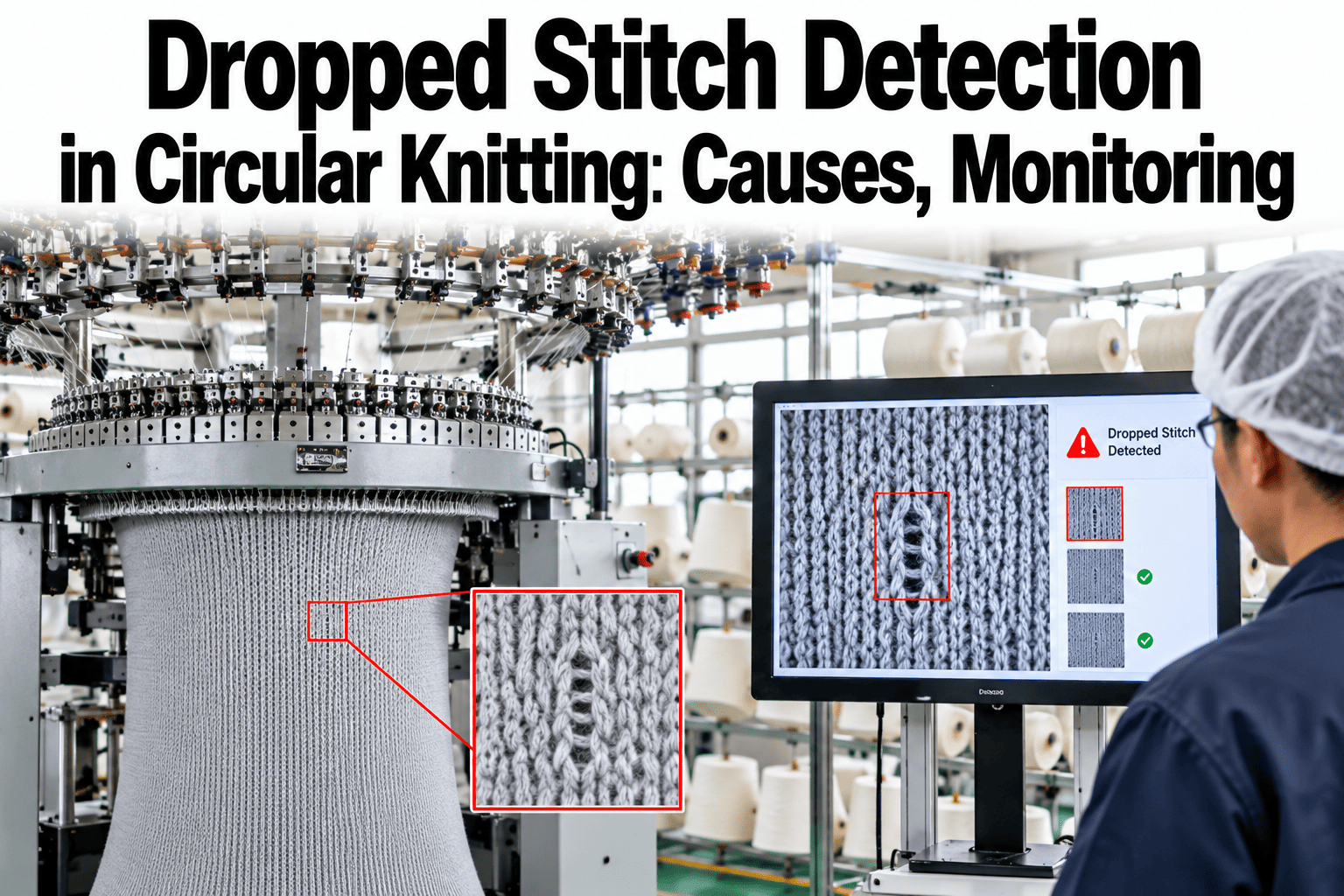
A dropped stitch is a small flaw with a large reputation. One missed loop leaves a ladder or hole that runs through a whole roll, and by the time it is seen at inspection, hundreds of metres may already be knitted. Detecting it early means understanding what causes it, which signals warn of it and how fast someone can respond. This guide covers all three for circular knitting, and mills who want to track them can ask iFactory AI how dropped stitch risk is monitored on knitting machines.
Catch Dropped Stitches at the Machine, Not at the Inspection Table
iFactory AI links stop events, needle signals and fabric defects, so a dropped stitch trend is flagged while the machine is still knitting and the roll can still be saved.
What a Dropped Stitch Looks Like and Why It Spreads
The defect appears in a few forms. Knowing them helps match the symptom to the cause.
Single vertical line
A needle is not forming its loop, repeating the fault down the roll.
Hole or ladder
A loop was dropped and the stitch above has run.
Random scattered drops
Often tied to yarn faults, knots or tension spikes.
Cluster after a stop
Linked to restart conditions, fabric take-down or timing.
The Most Common Causes
The chart shows an illustrative ranking of causes in circular knitting.
Reading the Pattern Back to the Cause
The way a dropped stitch repeats tells you where to look. This table links patterns to likely causes.
| Pattern | Likely Cause | First Check |
|---|---|---|
| Same needle position every course | A faulty needle | Inspect and replace needles at that position |
| Drops spread across the width | Yarn or tension problem | Check yarn lot, feeders and tension |
| Drops only at certain feeders | Feeder or yarn path fault | Check guides, eyelets and tension at those feeders |
| Drops after every restart | Restart or take-down issue | Check start-up settings and fabric tension |
| Rising drops over days | Gradual wear | Plan needle and cam inspection |
The Detection Chain From Machine to Decision
Detection is a chain. Each link adds time or removes it.
Find Dropped Stitches While There Is Still Time to Save the Roll
Book a 30-minute session and iFactory AI will review your machine events and fabric defects to show how early dropped stitch signals can be flagged.
Where to Detect: At the Fabric or at the Machine
Both have a place. Detecting at the machine is faster, and detecting at the fabric confirms.
Response Ladder for a Dropped Stitch Alert
A clear sequence stops people improvising. Agree the steps in advance.
Check the fabric
Look at the last metres for the defect.
Check the needles at the suspect position
Inspect for bent hooks and stuck latches.
Check yarn and tension
Review the feeders, guides and lot.
Restart and watch
Run a short length and confirm the defect is gone.
Record and escalate
Log the cause and call maintenance if it returns.
Building a Dropped Stitch Program in Five Steps
A modest program on a few machines is enough to start.
Log every dropped stitch with machine, feeder and position.
Tag each by form and suspected cause.
Watch stop and needle signals against the machine's normal.
Notify the operator when the pattern changes.
Review confirmed causes monthly and adjust thresholds.
A Composite Scenario: The Line That Followed One Needle
This is a composite example, not a named mill. It shows how pattern reading shortens the search.
Mistakes That Prolong Dropped Stitch Problems
These habits turn a small defect into a large one.
What iFactory AI Adds to Dropped Stitch Detection
iFactory AI is smart manufacturing and industrial software for knitting and other textile operations. Explore dropped stitch monitoring in a live product tour on realistic machine data.
A 30-Day Plan to Start
A month is enough to build a first dropped stitch picture for a few machines.
Review of Dropped Stitch Detection
A practical review of what makes dropped stitch detection useful, written as editorial guidance rather than a named expert quote.
Record position and feeder
A defect with a position is a clue, and one without is just a complaint.
Check needles first
Needle condition is the most frequent cause and the cheapest to inspect.
Close the loop
Confirmed causes make the next search shorter.
Frequently Asked Questions
What causes dropped stitches in circular knitting?
The most common causes are worn or bent needles, yarn tension and feeding problems, yarn faults, and cam or timing wear. See causes tracked on a live machine in a short demo. The pattern of repetition helps identify which one.
How do I tell a needle problem from a yarn problem?
A defect repeating at the same needle position points to the needle, while scattered drops usually point to yarn or tension. Recording the defect position makes this quick. Always inspect before replacing.
Can dropped stitches be detected before inspection?
Often yes, through stop events and needle signals that change before the defect is seen. Ask support how machine signals are used for early detection in your mill. A technician confirms by inspection.
How many metres can early detection save?
It depends on the machine speed and how quickly someone responds. Even a few minutes can save many metres. The earlier the alert, the less fabric is affected.
How soon can we start?
Many mills begin recording and classifying within weeks on a few machines. Book time to scope a dropped stitch pilot with your knitting team. A confirmed pattern is the best proof.
Stop One Missed Loop From Becoming a Ruined Roll
iFactory AI links machine signals to dropped stitch patterns so problems are caught in minutes. Book a walkthrough to see it on your own knitting floor.