A batch comes out of the dye bath looking perfect, and then it sits in the drying oven or gets packed into storage, and the color starts moving on its own. Migration on disperse-dyed polyester and bleeding on reactive-dyed cotton are two different mechanisms with the same visible result — uneven color, patchy shade, and a finished lot that fails inspection after the dyeing itself was done correctly. Mills chasing this problem down to its root cause can Book a Demo to see how iFactory tracks drying and fixation conditions against migration outcomes.
Two Defects, Two Different Root Causes
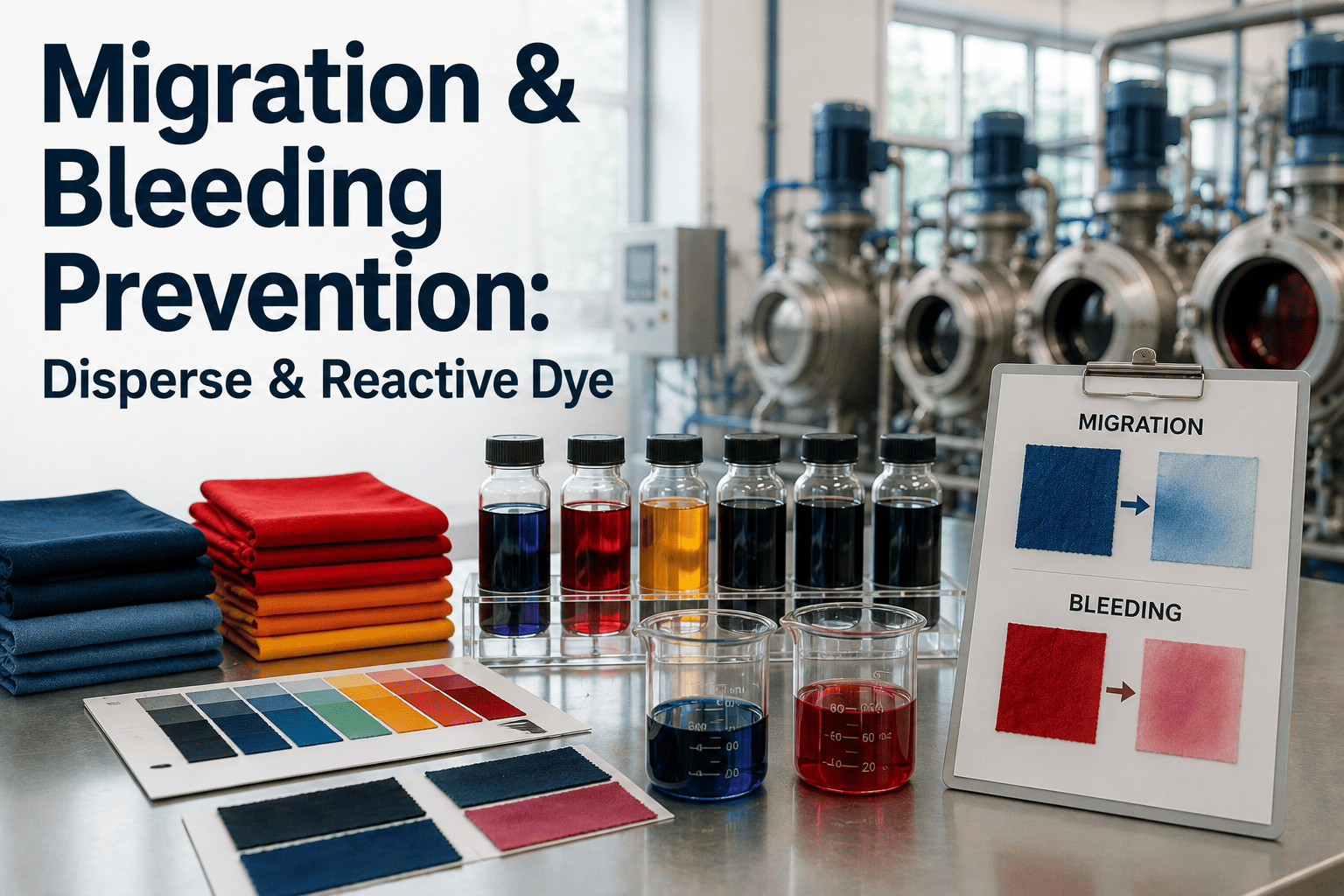
Migration and bleeding get discussed together because they both show up as uneven color after a dyeing process that appeared successful, but the underlying mechanisms have almost nothing in common. Migration happens during drying, when disperse dye particles that are not yet fully fixed to polyester fiber move toward the fabric surface as water evaporates, concentrating color unevenly and often leaving a lighter core with a darker, sometimes frosted surface. Bleeding happens after dyeing is complete, when reactive dye that never chemically bonded to the cotton fiber washes out during rinsing or later laundering, transferring color onto adjacent fabric or contaminating wash water.
What Drives Migration During Drying
Migration is fundamentally a drying-rate problem. When fabric dries too quickly, moisture is pulled toward the surface faster than the disperse dye can properly fix to the polyester, carrying unfixed dye particles along with it. Slower, more controlled drying gives dye more time to fix before the moisture gradient develops enough to transport it. The temperature profile through the drying process — not just the peak temperature — determines whether this happens.
What Drives Bleeding After Reactive Dyeing
Bleeding traces back to fixation efficiency during the dyeing process itself. Reactive dyes bond chemically with cellulose fiber under the right alkali concentration, temperature, and time, but a portion of the dye applied always hydrolyzes and never bonds at all — this unfixed fraction is what causes bleeding if it is not thoroughly removed afterward. Higher fixation efficiency during dyeing reduces the unfixed fraction to begin with, and thorough soaping afterward removes what remains before it has a chance to transfer during later washing.
Disperse vs. Reactive: Comparing the Two Failure Pathways
Because migration and bleeding stem from different chemistry and different process stages, the prevention strategy for each is almost entirely separate — a mill correcting one has to treat it as a distinct problem from the other, even when both defects show up as a color complaint on the same finished-goods inspection line.
| Factor | Disperse Dye Migration | Reactive Dye Bleeding |
|---|---|---|
| Fiber type | Polyester and polyester blends | Cotton and other cellulosic fibers |
| Root process stage | Drying, after dye bath exhaustion | Dye bath fixation, before soaping |
| Primary control lever | Drying temperature profile and anti-migration agent dosage | Alkali dosing, fixation time, and soaping thoroughness |
| Visible symptom | Surface-concentrated color, uneven core-to-surface shade | Color transfer onto adjacent fabric or wash water |
Anti-Migration Agents: How They Work and Where They Fall Short
Anti-migration agents work by increasing the viscosity of the liquor film surrounding each fiber during drying, physically slowing the movement of unfixed dye particles as moisture evaporates. They are genuinely effective within their designed operating range, but they are not a substitute for proper drying temperature control — an agent dosed correctly for a moderate drying rate can still be overwhelmed if the dryer runs significantly hotter or faster than the process was designed around. Treating anti-migration agents as insurance against poor drying control, rather than a complete solution on their own, avoids a common and costly mistake.
Correct Dosage Range
Agent concentration needs to match both the fabric's dye loading and the planned drying rate; underdosing at high drying speed leaves migration largely uncontrolled.
Compatibility With Dye Class
Not every anti-migration formulation performs equally well across different disperse dye chemistries, and mismatched pairing can reduce effectiveness even at correct dosage.
Interaction With Drying Rate
An agent's protective effect has practical limits; drying significantly faster than the tested range can outpace even correctly dosed migration inhibitors.
Setting a Drying Temperature Profile That Prevents Migration
Rather than a single target temperature, migration prevention depends on a staged profile — starting cooler to allow gradual moisture release, then increasing once the fabric is closer to dry and less prone to internal moisture migration. Mills that run a flat, aggressive temperature from the start of drying see meaningfully more migration complaints than those using a staged ramp, even when the total drying time and final moisture content are the same.
Frequently Asked Questions: Migration & Bleeding Prevention
Can migration and bleeding both occur on the same fabric if it's a polyester-cotton blend?
Yes — a polyester-cotton blend dyed with both disperse and reactive dyes carries risk for both defects independently, since the polyester component can migrate during drying while the cotton component's reactive dye can bleed during washing regardless of how well the drying stage was controlled. This means blend fabrics need both drying profile control and thorough soaping addressed as separate steps, rather than assuming one corrective measure covers both fiber types. Mills managing blend dyeing can Book a Demo to review a combined prevention approach.
How much anti-migration agent is typically needed relative to dye depth?
Dosage generally scales with dye depth, since deeper shades carry more total dye available to migrate, but the exact ratio depends on the specific dye chemistry and drying equipment in use, which is why supplier-recommended starting dosages should be validated against a mill's actual drying conditions rather than applied as a fixed universal rule. Running a small trial batch at the target shade depth before committing a full production run is the most reliable way to confirm dosage adequacy.
Is bleeding always caused by insufficient soaping, or can it happen even with a thorough wash?
Thorough soaping removes unfixed dye effectively when fixation efficiency during dyeing was already reasonably high, but if a large fraction of applied dye never bonded to the fiber in the first place, even an excellent soaping process has more unfixed dye to remove than it can fully eliminate. This is why bleeding troubleshooting should always start by checking fixation efficiency during the dye bath stage, not just the aftertreatment that follows it.
What is the fastest way to diagnose whether a color complaint is migration or bleeding?
Migration typically shows as an uneven shade within a single piece of fabric — often a visible core-to-surface difference when the fabric is cross-sectioned — while bleeding shows as color transfer onto a different, adjacent material during washing rather than unevenness within the original piece itself. Checking whether the complaint involves shade unevenness on the fabric itself versus color appearing somewhere it shouldn't quickly points toward the correct root cause category.
Does slowing down drying to prevent migration reduce overall production throughput significantly?
A staged temperature profile does typically extend total drying time compared to a flat, aggressive setting, but the throughput cost is usually small relative to the cost of reworking or discounting an off-shade lot, and many mills find that migration-related rework and claims exceed the throughput gained from faster, uncontrolled drying once the full cost comparison is made. Contact iFactory Support for help balancing drying speed against migration risk for a specific fabric and dye combination.