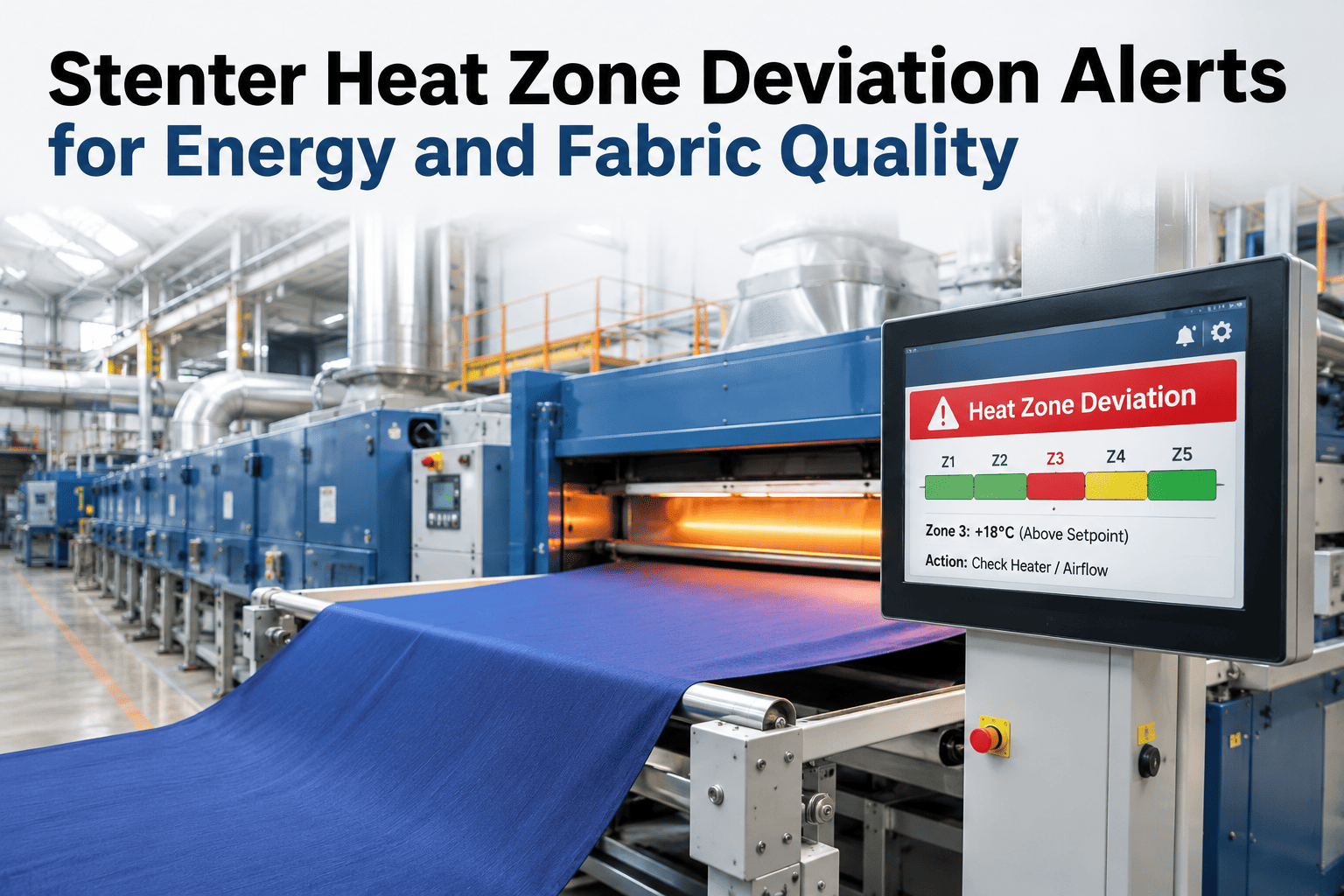
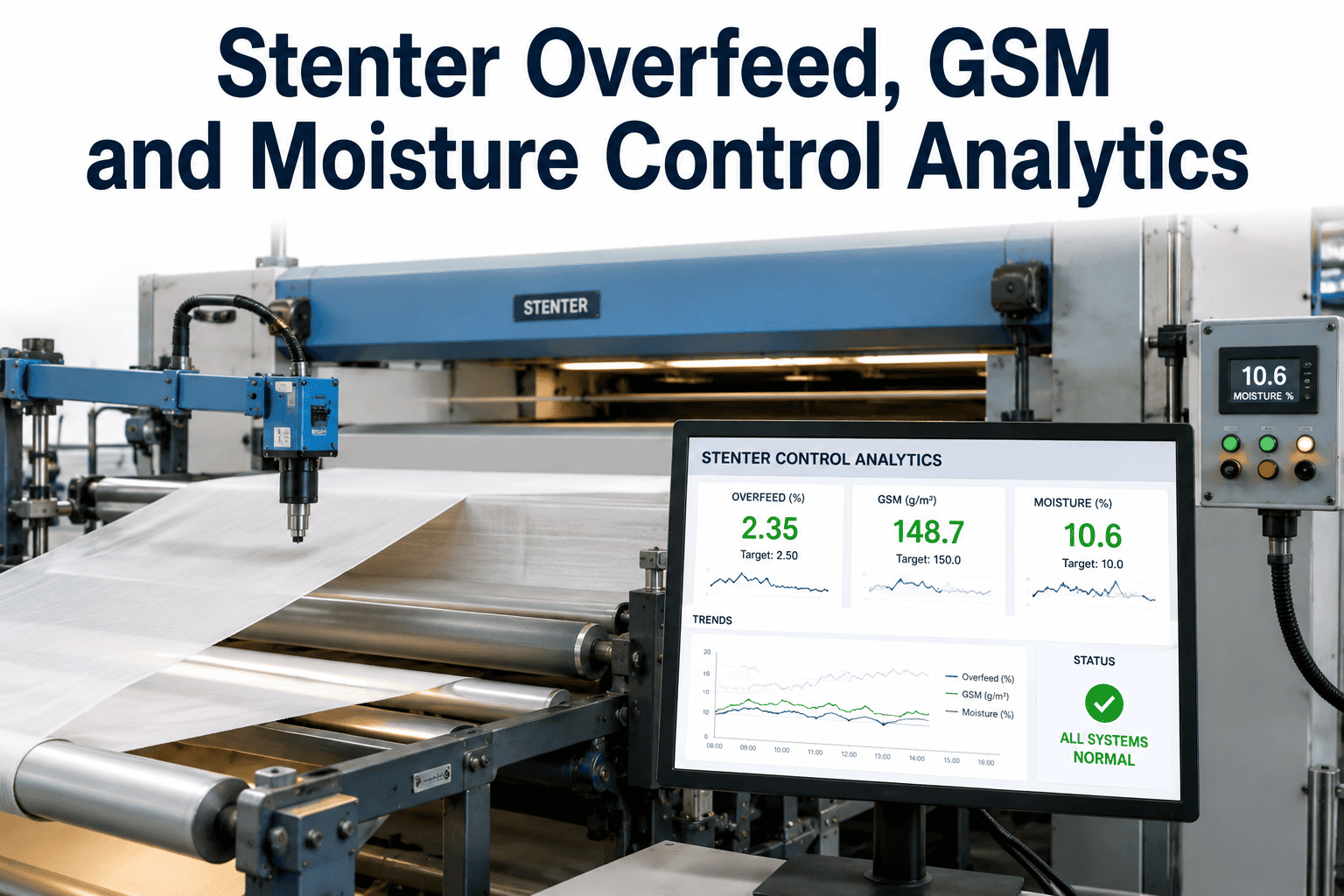
A stenter's heat zones each need to hold a specific temperature band — run one zone too hot and energy is wasted, run it too cool and the fabric comes out with residual moisture or incomplete heat-setting. iFactory, an on-premise AI platform with energy monitoring and quality analytics built in, watches every heat zone against its target band continuously. Finishing teams who want this visibility on their own stenter lines can request a demo with our team.
Stenter Heat Zone Deviation Alerts · Finishing, 2026
One Zone Running Hot Is an Energy Problem. One Running Cool Is a Quality Problem.
iFactory AI tracks every stenter heat zone against its target band in real time, catching both the energy waste and the quality risk before either compounds.
Why this is two problems, not one
Energy and Fabric Quality Fail in Opposite Directions
A heat zone running above its target band wastes gas or electricity without improving the fabric — the excess heat just radiates away or over-dries the fabric. A zone running below target undersets the finish or leaves residual moisture, which shows up later as a quality complaint, a fabric-feel issue, or a shrinkage problem rather than as an obvious fault at the stenter itself.
What a deviation points to
Four Common Causes of a Zone Running Off Target
Burner or element wear
A degrading burner or heating element struggles to hold its setpoint consistently.
Airflow imbalance
Uneven air circulation within a zone creates hot and cool spots across the fabric width.
Sensor drift
A thermocouple reading inaccurately can mask a real deviation or create a false alarm.
Setpoint left over from a prior recipe
A changeover that didn't fully reset zone targets for the new fabric and finish combination.
What each failure mode costs
Running Hot vs Running Cool
| Direction | What it costs | What it risks |
|---|
| Running hot | Avoidable fuel or electricity consumption | Fabric over-drying, handle changes, possible scorching on sensitive fabrics |
| Running cool | Rework or re-run of the affected fabric | Incomplete heat-set, residual moisture, downstream shrinkage complaints |
See What Your Current Zone Temperatures Are Actually Doing
Share your current stenter zone data and iFactory AI will show whether any zones are drifting outside their target band today.
From alert to correction
Four Steps From a Zone Flag to a Resolved Deviation
1
Zone exceeds its band
Temperature in a specific zone moves outside its target range for the current recipe.
2
Sensor health confirmed
The reading is checked against adjacent sensors to rule out a faulty thermocouple.
3
Cause identified
Burner, airflow, or setpoint configuration is checked against the specific deviation pattern.
4
Fix confirmed
The zone returning to its target band confirms the correction actually worked.
Connecting to fabric outcomes
Linking a Zone Deviation to the Actual Fabric Produced
A heat zone deviation only becomes genuinely useful information when it's linked to which fabric roll passed through that zone at that time — without that link, a flagged deviation tells a plant that something went wrong somewhere, but not which specific production lot might need a quality recheck.
Expert review
What a Finishing Manager Checks First
Heat zone monitoring earns its place when a deviation alert is specific enough to point at a cause, not just a generic "temperature is off" notification.
Verdict
Strong when zone data is linked to the specific fabric roll that passed through during the deviation window.
Watch for
A recipe changeover that leaves a stale zone setpoint from the previous fabric running on the new one.
Do next
Check whether your current zone setpoints are actually verified at every changeover or just assumed to carry over correctly.
Frequently asked questions
What Finishing Teams Ask About Stenter Zone Monitoring
How many zones does a typical stenter need to be monitored across?
Zone count varies by stenter design, but most commercial lines have multiple independently controlled heating zones, each of which should be tracked against its own target band for the fabric currently running.
Discuss your specific stenter configuration.
How do we tell a real deviation from a faulty sensor?
Comparing the flagged reading against adjacent zone sensors and historical sensor behavior for that specific zone is the standard way to rule out a sensor fault before treating the deviation as real.
Ask support about sensor validation.
Does this require new temperature sensors on our stenter?
Most stenters already have zone-level thermocouples feeding a controller — the usual first step is connecting that existing data rather than installing new sensors.
Discuss your current sensor setup.
Can this flag a specific fabric roll as needing a quality recheck?
How often does a zone target band need to be updated?
Catch the zone running hot or cool, before either compounds
Monitor Every Heat Zone Against Its Target Band
Book a demo to see how iFactory AI watches your stenter zones for both energy waste and quality risk.