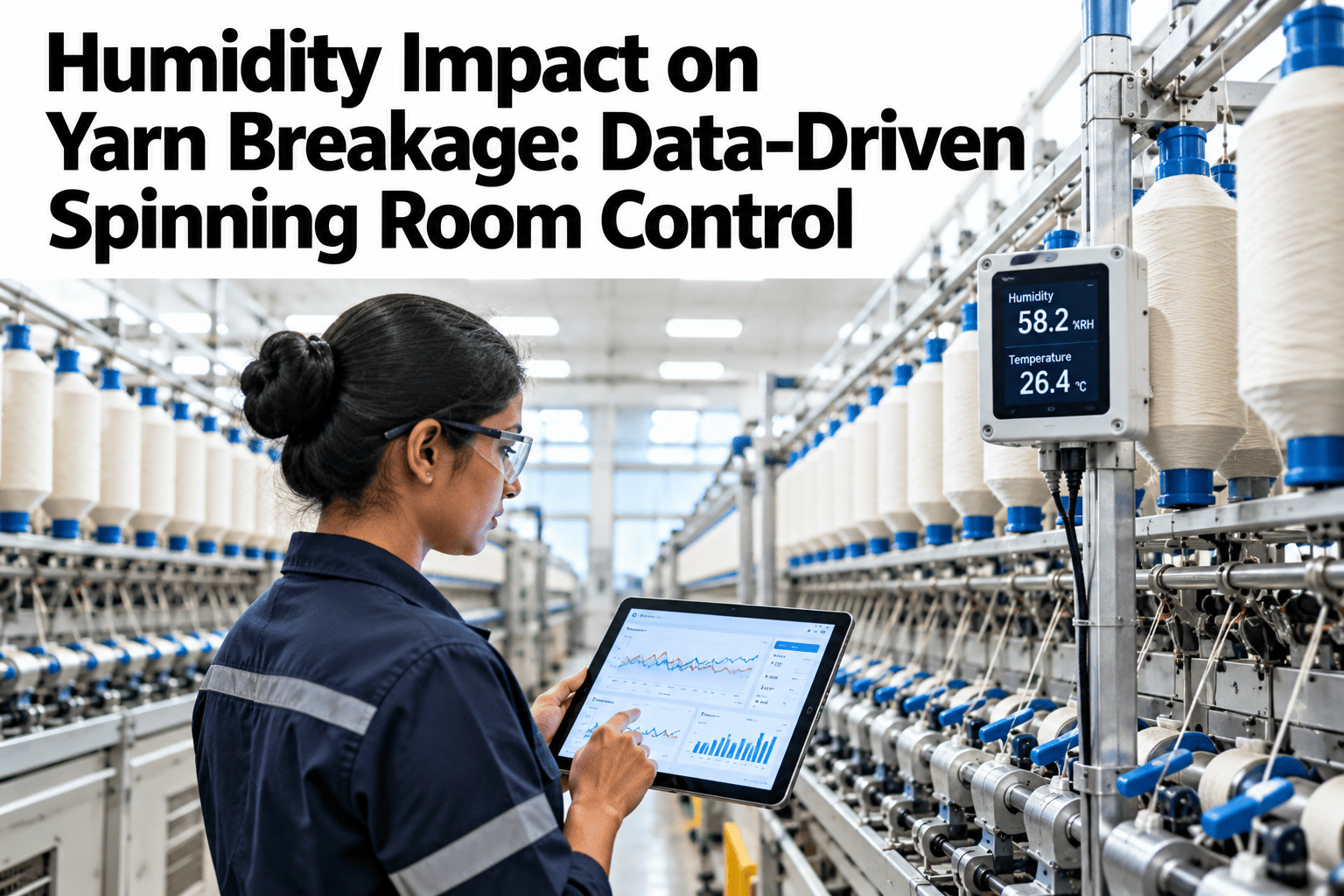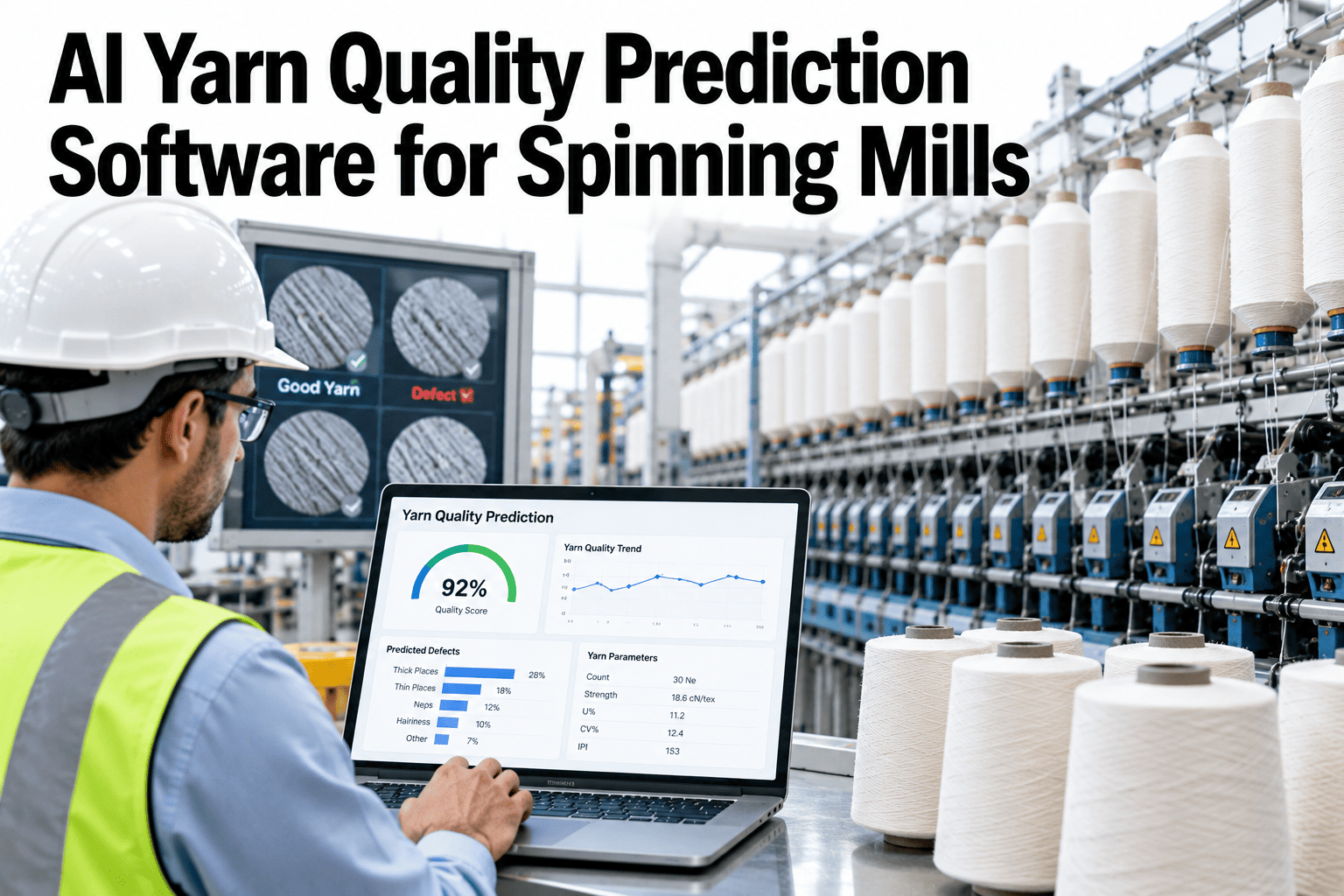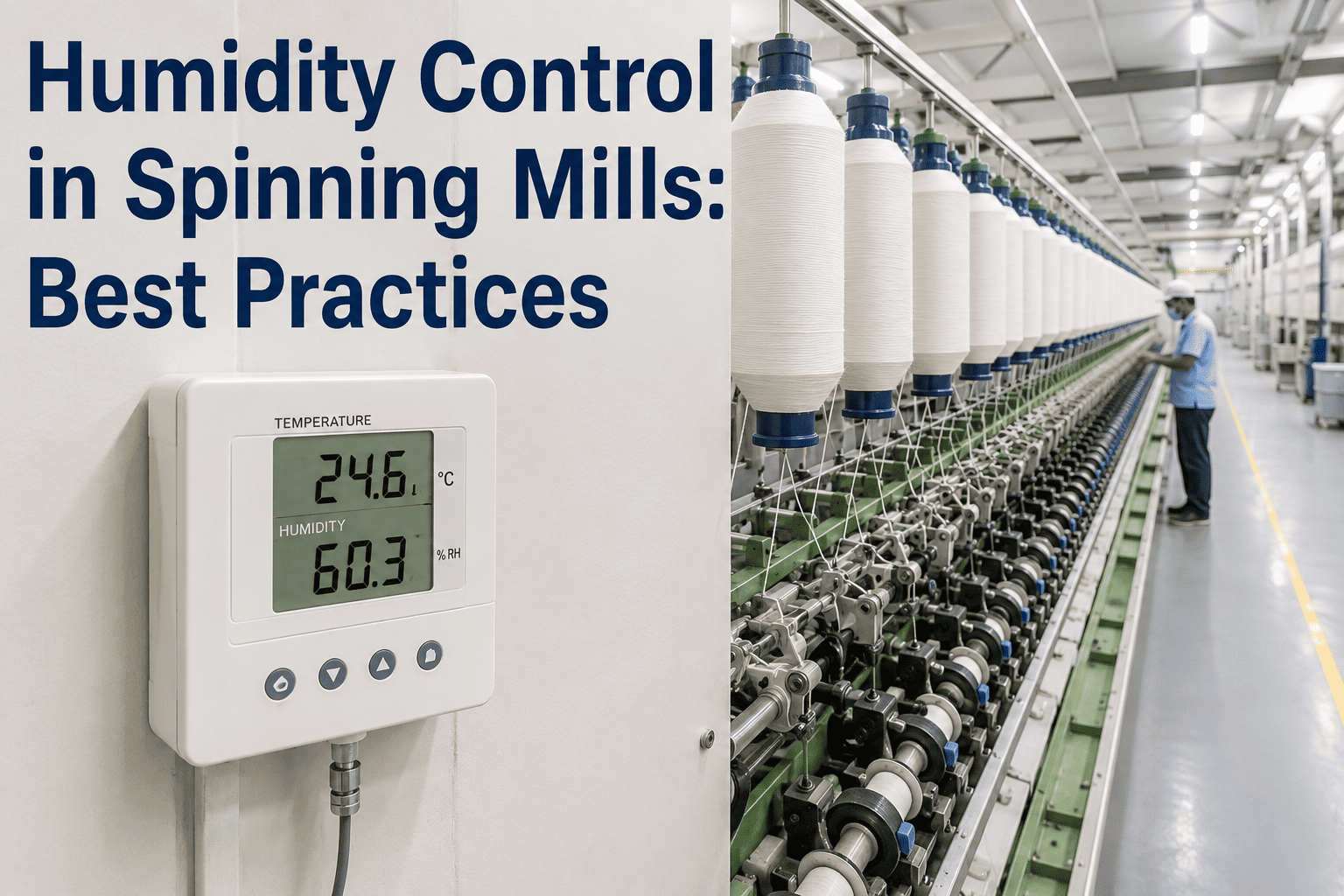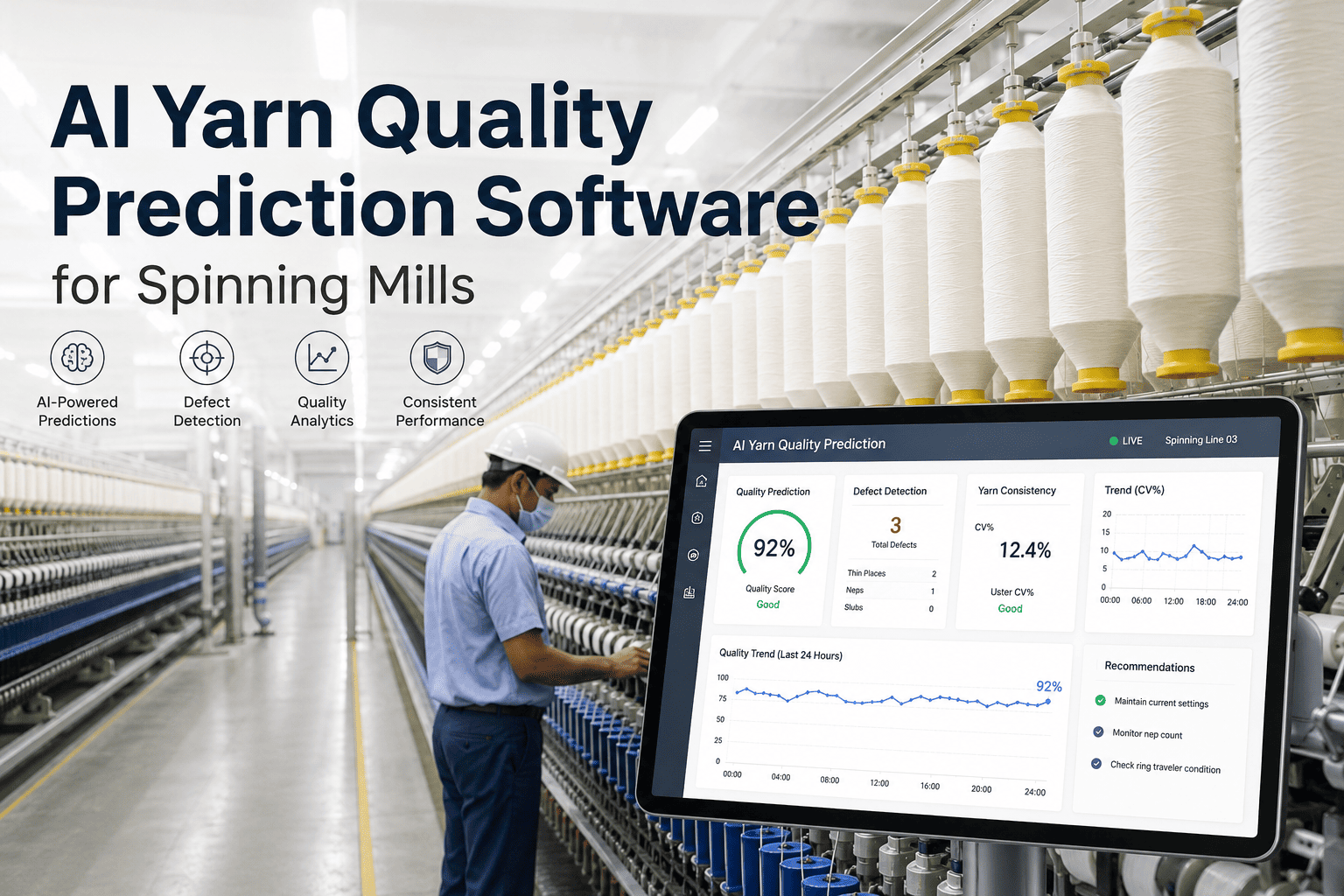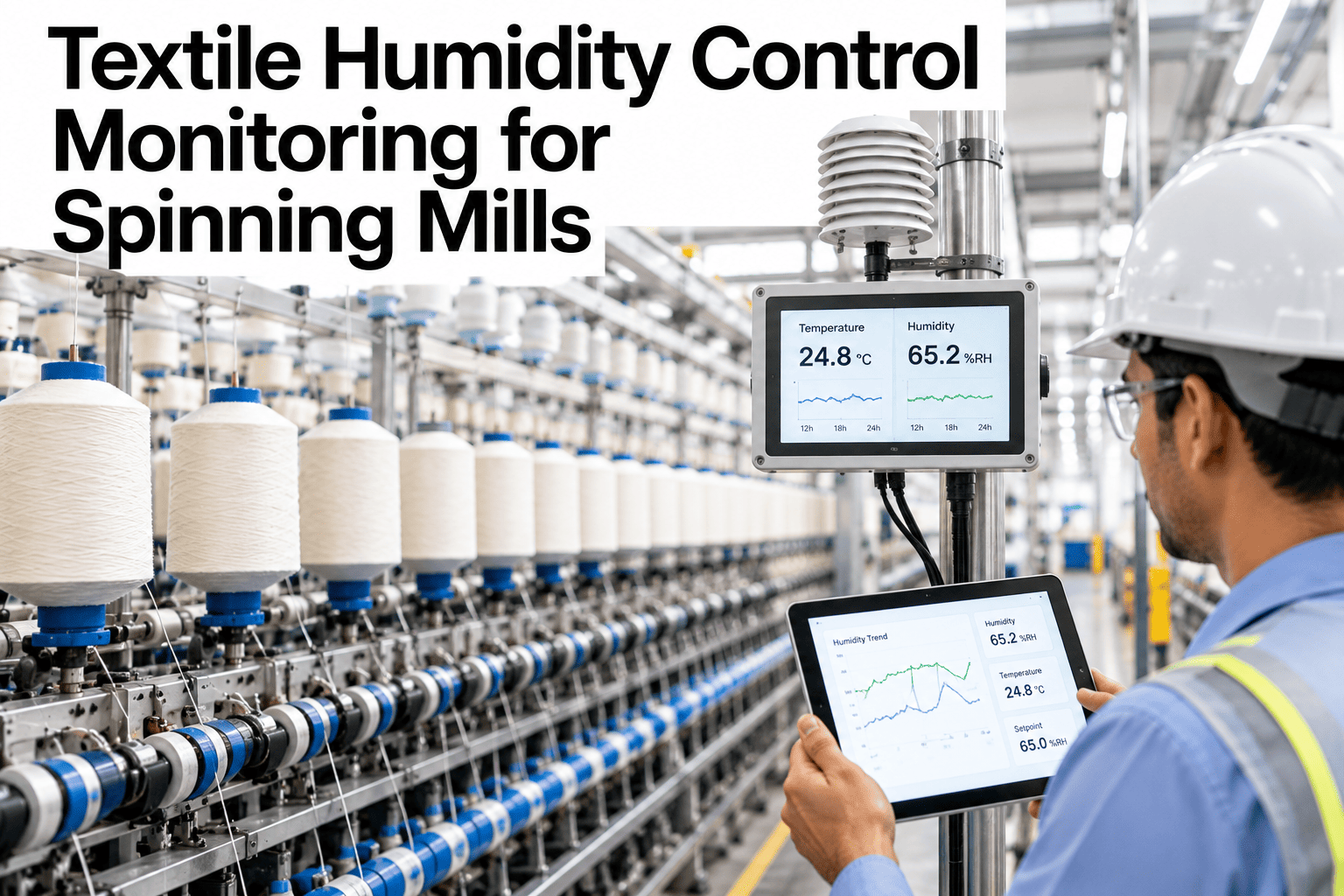
Cotton fiber behaves differently at 55% relative humidity than it does at 65%, and a spinning room rarely holds still at either number for long. When humidity drifts, static builds, ends break more often, and production slows without anyone immediately connecting the dots back to the climate system. Monitoring temperature and humidity across spinning areas, continuously and by zone, turns that invisible drift into something a shift team can see and act on before it shows up as a yarn break. This guide covers how humidity monitoring is built for a spinning mill. Mills ready to see their own zones monitored can book a demo with the iFactory AI team.
Textile Humidity Control Monitoring for Spinning Mills
Monitor temperature and humidity across spinning areas to control static, fiber behavior, yarn breaks and production instability.
Why One Reading for the Whole Room Is Not Enough
A single humidity sensor near the HVAC return rarely reflects conditions at the far end of a spinning hall, where airflow, equipment heat and door traffic all shift the local climate.
Zone-level monitoring tracks each area separately, so a dry corner near a loading dock does not hide behind a comfortable reading from across the room.
Target Bands by Process Area
Different stages of spinning tolerate different humidity ranges, and a single mill-wide target often serves none of them well.
| Process Area | Typical Target Band | Risk Outside Band |
|---|---|---|
| Blow room and carding | Moderate humidity, process dependent | Fiber handling issues, fly generation |
| Ring spinning | Higher humidity range | Static, end breaks, hairiness |
| Winding | Controlled, consistent range | Yarn breaks, package quality |
From Sensor Reading to Shift Action
The monitoring loop runs continuously, comparing live readings against each zone's target band and flagging drift before it affects production.
See Every Zone's Climate, Not Just One Average
Book a 30-minute walkthrough and see zone-level humidity monitoring built for your spinning floor.
A Sample Zone Alert, Illustrative
The figures below are invented to show the shape of an alert, not to benchmark your mill.
Common Humidity Monitoring Mistakes
The same gaps repeat across mills setting up humidity monitoring for the first time.
Beyond Quality: What Else the Data Shows
Once humidity is tracked continuously, the same data supports more than just quality troubleshooting.
Energy teams use zone-level humidity trends to right-size humidification load by area instead of running the whole system at a single conservative setting. Maintenance uses persistent drift in one zone to flag a failing damper or sensor before it causes a bigger problem.
Frequently Asked Questions
How many sensors does a typical spinning hall need?
It depends on hall size and airflow pattern, but most mills find a handful of zones per hall gives enough resolution to catch meaningful drift without over-instrumenting the floor. Book a demo to size zones for your own hall.
Does this replace our existing HVAC controls?
No, it monitors and alerts alongside your existing HVAC system rather than replacing the control hardware, giving visibility the system itself may not surface.
How is a target band determined for each zone?
Target bands are typically set based on the process running in that zone and refined using historical quality data, so the band reflects what has actually worked rather than a generic textbook figure.
Can this connect to our existing building management system?
In most cases, yes. iFactory AI can read from existing BMS sensors or add dedicated zone sensors where coverage is missing. Ask support which systems connect.
Catch Humidity Drift Before It Breaks Yarn
iFactory AI monitors temperature and humidity by zone and alerts your team before quality is affected. Book a walkthrough built around your mill.