Energy typically runs 15 to 20 percent of total production cost in a textile mill, trailing only raw materials, and in plants running older utility systems that share can climb toward a quarter of total spend. Motors, compressed air, and steam boilers are consistently where the largest and most fixable losses hide, yet most mills chase whichever fix is loudest that week instead of ranking opportunities by actual payback. The waste pattern tends to repeat itself from spinning to weaving to finishing, even though the equipment on the floor looks different. This guide breaks down where energy dollars actually go across these three systems and how to prioritize fixes with real numbers instead of guesswork, and you can see it in action to see how that prioritization plays out with live plant data.
Rank Your Textile Energy Savings by Impact, Not by Whichever Fix Is Loudest
iFactory AI lines up motor load, compressor run-time, and boiler efficiency against your actual energy bills, so the next dollar you spend goes to the fix with the fastest real payback.
Compressed air leak repair, boiler blowdown scheduling, compressor pressure setpoint reduction
IE3 motor replacement program, boiler economizer install, VSD compressor upgrade
Steam trap survey, pipe insulation patching, motor lubrication schedule cleanup
Full boiler replacement without a load study, plant-wide motor swap with no usage data
Energy Already Costs More Than Most Mills Admit
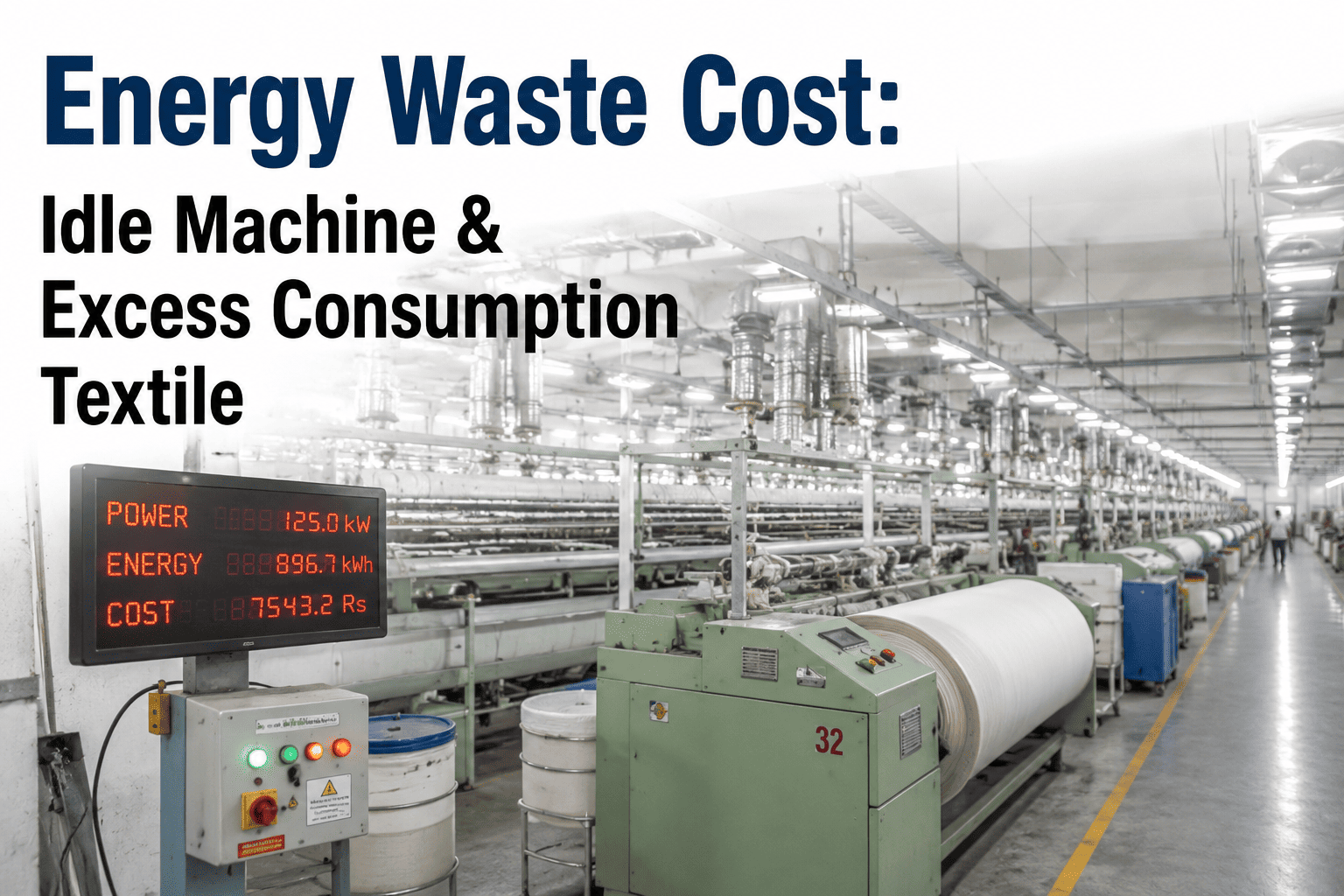
Energy usually sits second only to raw materials on a textile mill's cost sheet, yet it rarely gets the same structured review that fiber, yarn, or dye costs receive every month. Part of the reason is that energy waste is distributed across dozens of motors, a handful of compressors, and one or two boilers, so no single line item looks alarming on its own even when the combined total is significant.
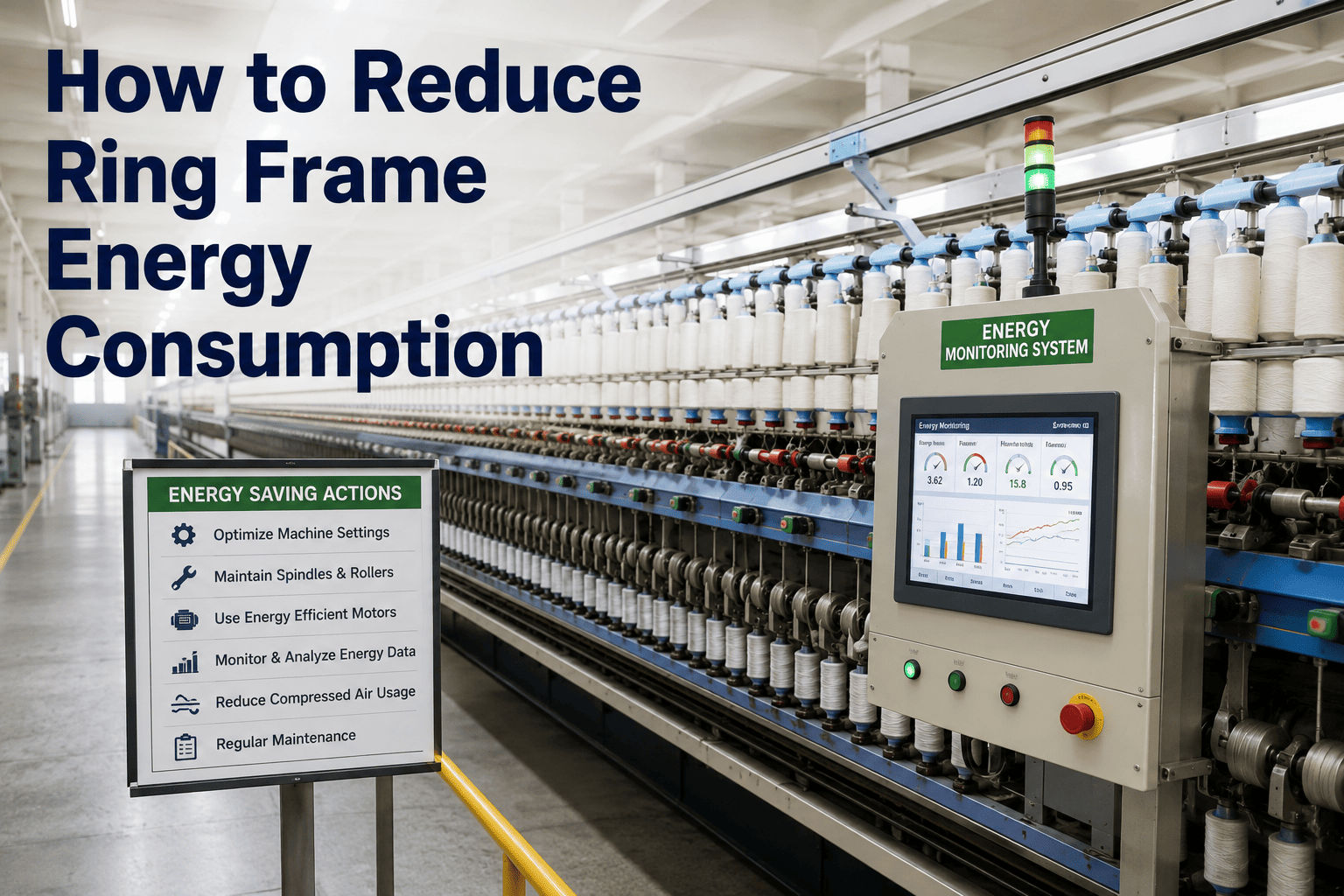
Motors sized for a peak load that rarely occurs spend most of their life running well below optimal efficiency, quietly burning extra electricity every shift.
A single quarter-inch leak can waste a meaningful chunk of compressor output around the clock, and most plants only find leaks during a scheduled audit, not continuously.
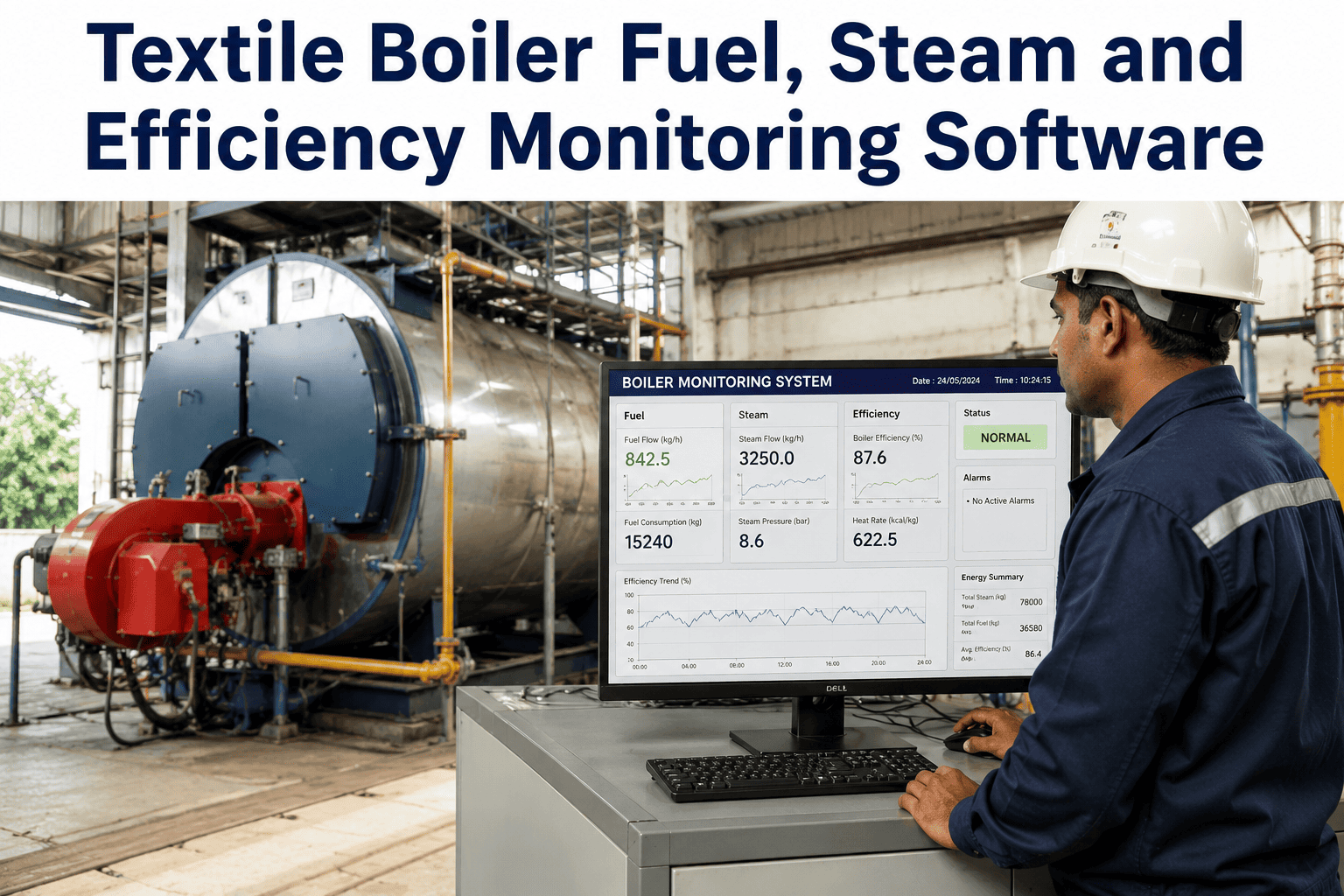
Manual blowdown schedules and untuned combustion air ratios both waste usable heat that a properly tuned boiler would keep in the system.
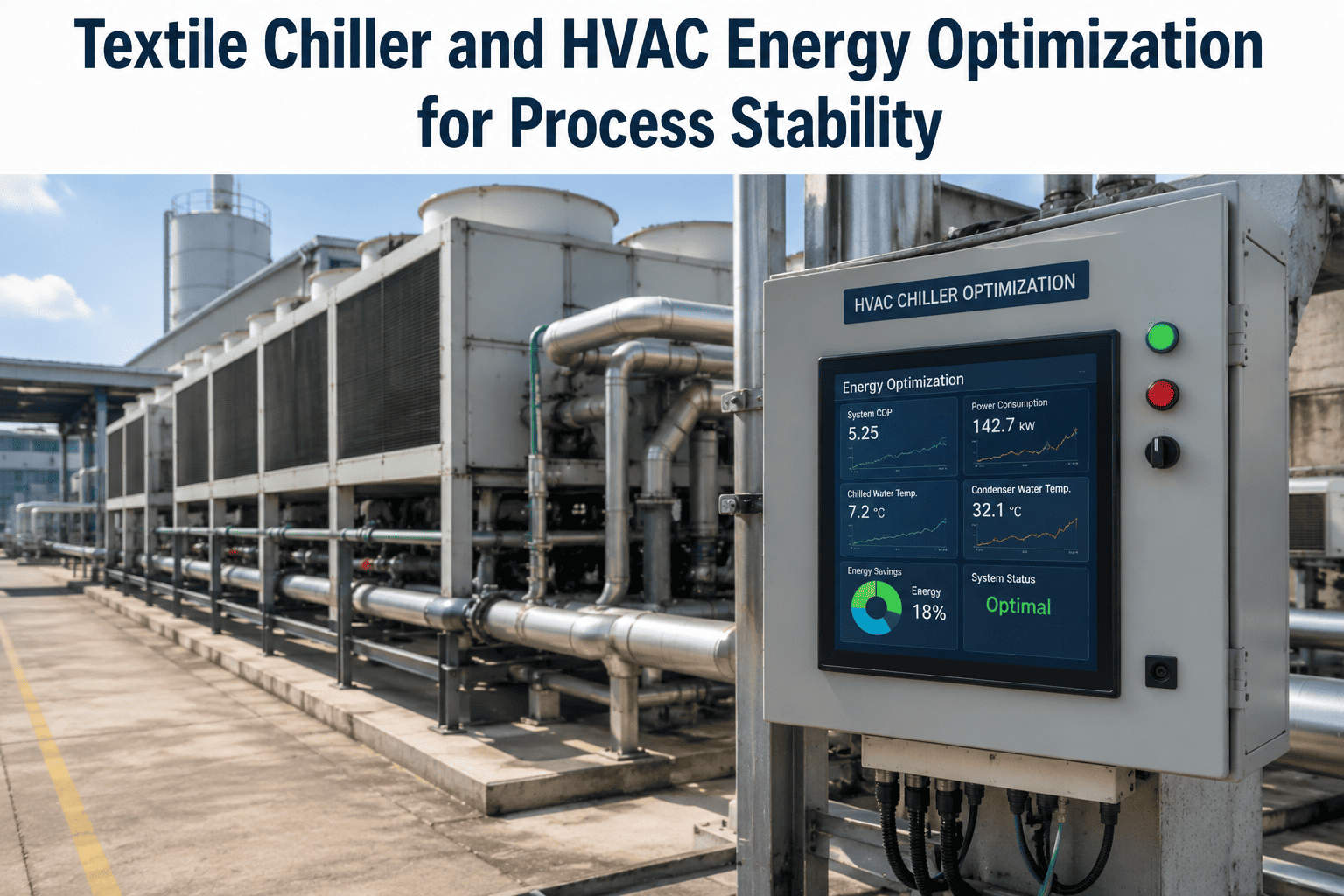
Boilers, compressors, and HVAC systems often keep consuming energy at close to full rate even when production volume drops, which quietly inflates cost per unit produced.
Motor, Compressor, and Boiler Systems Compared
Before ranking fixes, it helps to see the three systems side by side, since the size of the opportunity and the type of fix needed differ meaningfully between them.
| System | Common Source of Waste | Typical Fix Type | Savings Potential |
|---|---|---|---|
| Motor Systems | Oversizing, standard-efficiency windings, no speed control on variable loads | Right-sizing, IE3/IE4 upgrade, VFD retrofit | Often the single largest onsite loss category |
| Compressed Air | Unpatched leaks, pressure set higher than needed, no VSD control | Leak survey and repair, pressure reduction, VSD compressor control | Frequently one of the fastest-payback categories in a mill |
| Steam Boilers | Untuned combustion, manual blowdown, poor condensate return | Combustion tuning, blowdown heat recovery, condensate return repair | Meaningful fuel savings with a moderate payback period |
| Lighting and HVAC | Legacy fixtures, chiller and air washer loads running off-schedule | LED retrofit, scheduling automation | Smaller total impact but usually the quickest win to execute |
Four Motor Fixes That Actually Move the Energy Bill
Swapping a standard motor for a premium-efficiency one without checking actual load first can lock in the wrong horsepower for another decade, so a load study should always come before a purchase order.
The motors that run continuously across most shifts, not the occasional-use ones, are where a premium-efficiency winding upgrade pays back fastest.
Fans, pumps, and any process with a variable duty cycle waste the most energy when they run at fixed speed against a throttled output, which is exactly where a VFD retrofit delivers the clearest savings.
A motor running on a worn bearing or old lubricant draws more current to deliver the same output, so a disciplined PM schedule protects the efficiency gains from every other fix on this list.
Compressed Air Is Usually the Fastest Payback in the Building
Compressed air is often called the most expensive utility in a plant because so much of what's generated never reaches productive use, and textile mills that run pneumatic controls, air jet looms, or blow-room cleaning systems are especially exposed to this waste.
A recurring ultrasonic leak survey, not a one-time audit, is what keeps leak losses from creeping back up within a few months of the last repair round.
Many systems run several PSI higher than any downstream equipment actually needs, and even a modest setpoint reduction across the whole system compounds into a real electricity saving.
A VSD-controlled compressor matches output to actual demand instead of cycling a fixed-speed unit on and off, which is especially valuable in mills with swinging shift-to-shift air demand.
Rotary screw compressors reject a large share of input energy as heat, and routing that heat into space heating or process pre-warming turns a waste stream into a usable one.
Boiler Efficiency Gains That Don't Require a New Boiler
Replacing a boiler is rarely the first move that makes sense, since most mills can recover a meaningful share of fuel cost from the boiler they already have through tuning and heat recovery alone.
Regularly checking excess air and adjusting the burner to the correct oxygen level keeps flue gas heat loss from creeping up as ambient conditions and fuel quality shift.
Automating blowdown to a schedule based on actual water chemistry, rather than a fixed manual routine, and recovering heat from the blowdown flash tank both reduce wasted energy.
Every gallon of condensate that doesn't make it back to the boiler has to be replaced with cold makeup water and reheated from scratch, so leaks in the return line are a direct fuel cost.
Bare pipe sections and failed steam traps lose heat continuously and rarely get flagged until an energy audit specifically goes looking for them.
Common Mistakes That Erode the Savings Case
Picking a project because an incentive program covers part of the cost, rather than because it has the fastest genuine payback, can leave a bigger opportunity sitting untouched.
Leak rates, motor loading, and boiler tuning all drift back toward waste within months of a one-time audit unless someone keeps tracking the numbers.
Assuming boilers, compressors, and HVAC must run at a constant rate regardless of production volume leaves real savings on the table during low-output shifts.
Replacing a motor with an identically sized premium-efficiency unit, without first checking whether the original size was even correct, wastes part of the investment before it starts.
Turning a Flat Energy Bill Review Into a Ranked Project List
A composite mill's energy bill had crept up over two years, but the plant team's only response had been a general instruction to "watch usage," with no system telling anyone which piece of equipment was actually responsible for the increase.
Once motor load, compressor run-time, and boiler fuel data were lined up against production volume, a cluster of underloaded spinning motors and a compressor running well above the pressure the plant actually needed stood out immediately, and fixing both delivered savings within a single fiscal quarter.
Building a Ranked Energy Savings Plan
Pull twelve months of energy bills against production volume to see whether cost per unit is climbing, holding steady, or already trending down.
Run a compressed air leak survey and a basic motor load check before committing capital to any single large project.
Sort every identified opportunity into a quick-win, major-project, fill-in, or reconsider bucket based on real impact and effort, not urgency.
Recheck leak rates, motor loading, and boiler tuning on a recurring schedule so early gains don't quietly erode over the following year.