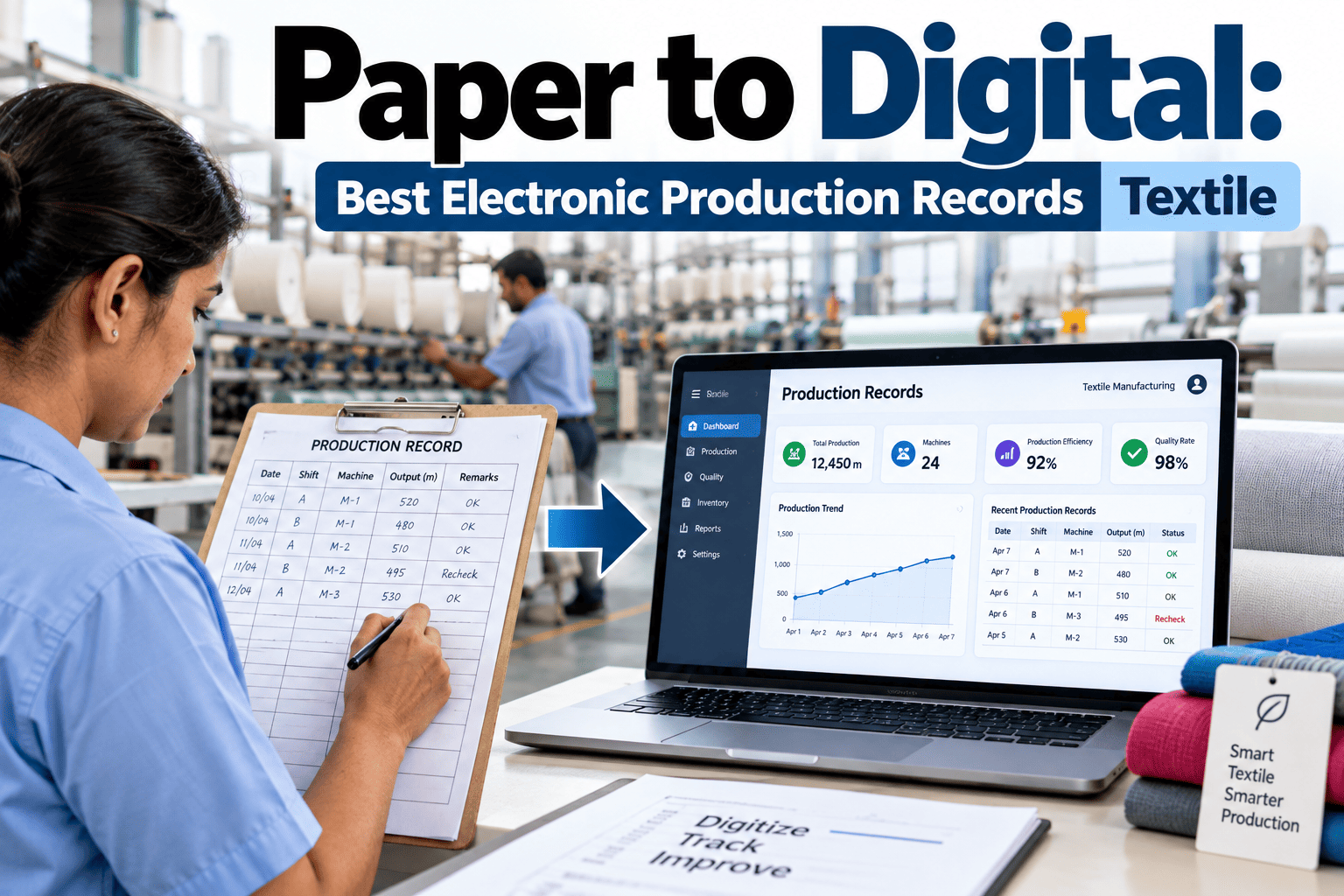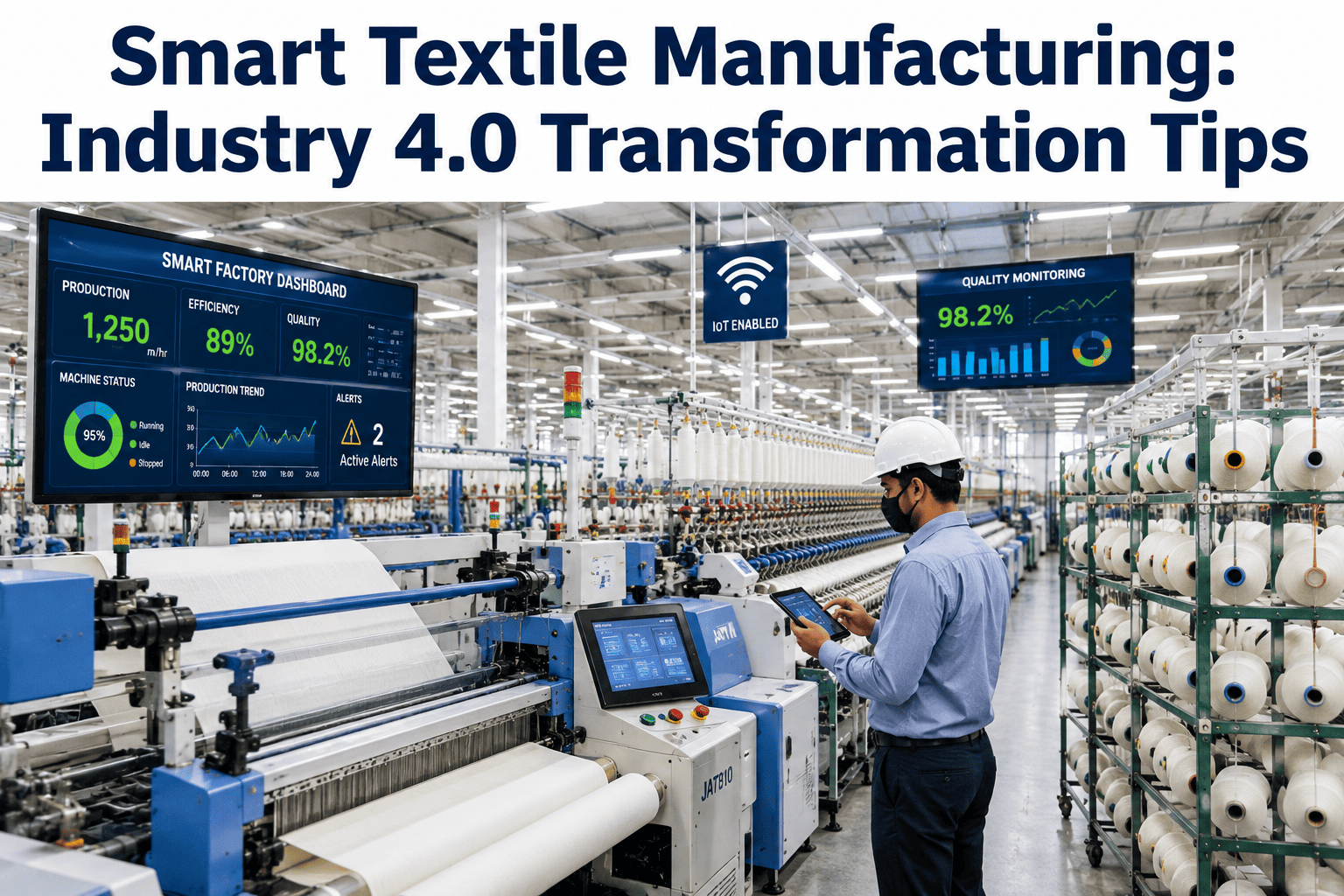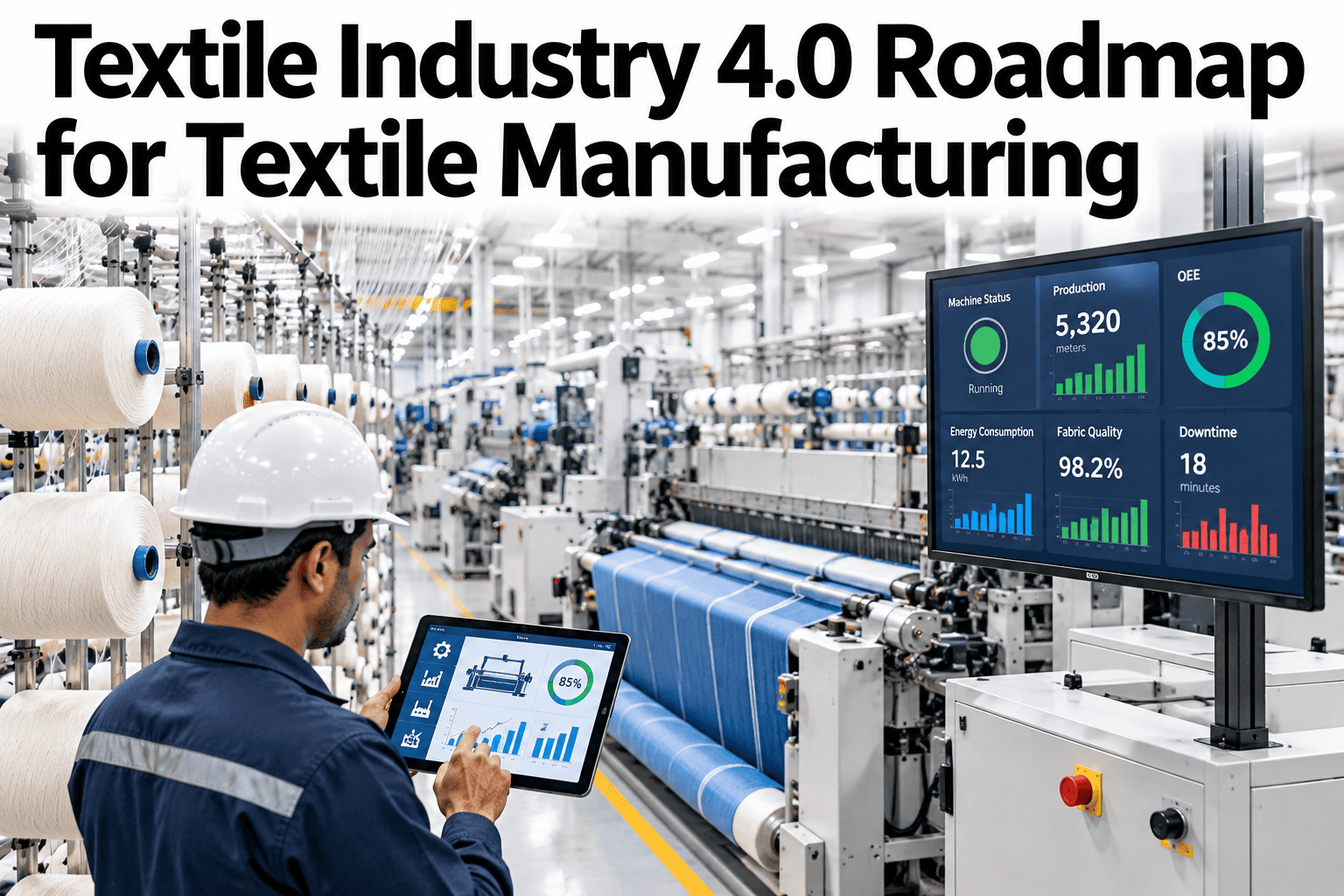
Industry 4.0 sounds like a leap, but most textile mills reach it in small, practical steps. Paper logs become spreadsheets, spreadsheets become connected records, machines start reporting for themselves, and only then do analytics and AI have good data to work with. Skipping a step usually means paying for it later. A roadmap names the stages, sets the order and keeps each investment tied to a result. Mills planning one can ask iFactory AI how a staged path from paper to AI is scoped for a textile plant.
A Practical Industry 4.0 Roadmap for Textile Mills, From Paper to AI
iFactory AI follows a staged path from paper and spreadsheets to connected machines, linked systems and AI, with every step tied to a measurable result.
Six Stages of Textile Digital Maturity
Mills sit at different stages, and different departments in the same mill often sit at different stages too. Knowing yours is the starting point.
The Building Blocks
Industry 4.0 is not one product. It is a set of building blocks that work best when connected.
Machine connectivity
Reading data from looms, frames and dyeing machines automatically.
MES and production tracking
Following orders, lots and output across the floor.
QMS and inspection
Capturing quality results and defects in a structured way.
CMMS and maintenance
Managing work orders, spares and machine health.
ERP integration
Sharing orders, stock and costs with the business system.
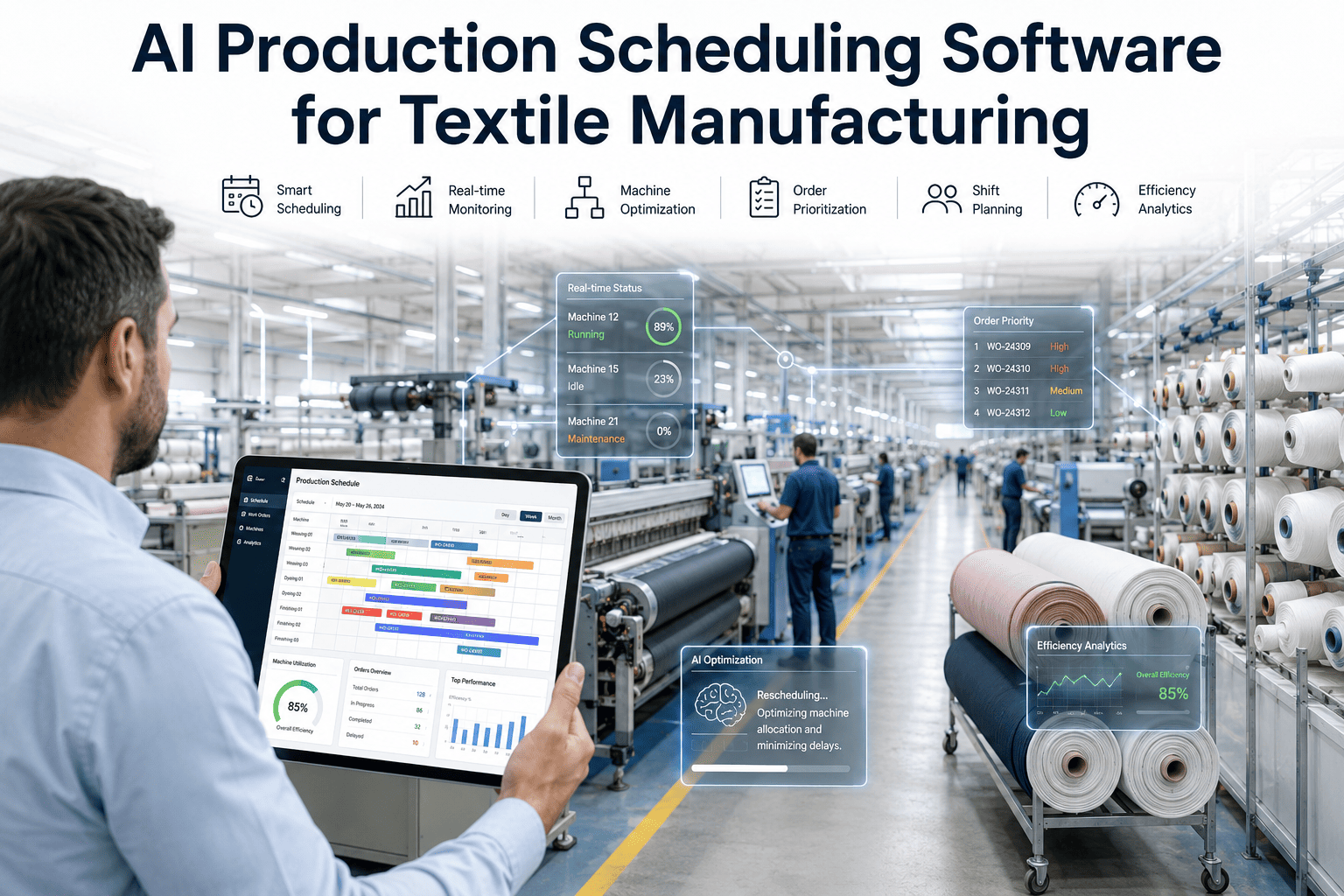
Analytics and AI
Turning the combined data into insight and prediction.
Value Versus Effort
Not every step is equally rewarding. The chart shows an illustrative view of where early effort usually pays back the most.
Three Phases of a Realistic Roadmap
A roadmap works in phases, each with its own goal. Skipping ahead is the most common mistake.
See Where Your Mill Stands and What to Do Next
Book a 30-minute session and iFactory AI will review your current systems, data and priorities to outline a staged roadmap with a clear first step.
Big Bang or Phased Rollout
Large all-at-once programs often stall. Phased programs deliver value early and build trust.
Where to Start by Department
Departments differ in what they need first. The matrix, shown as an illustration, ranks typical priorities.
| Department | Downtime Capture | Quality Records | Traceability |
|---|---|---|---|
| Spinning | High | Moderate | Moderate |
| Weaving | High | High | Moderate |
| Knitting | High | High | Moderate |
| Dyeing and finishing | Moderate | High | High |
| Garmenting | Moderate | High | High |
Building Your Roadmap in Five Steps
A good roadmap is short, specific and owned.
Describe where each department sits today.
Pick two or three problems worth solving first.
Order the steps so each prepares the next.
Prove the first step on one line or department.
Extend what worked and review the roadmap each quarter.
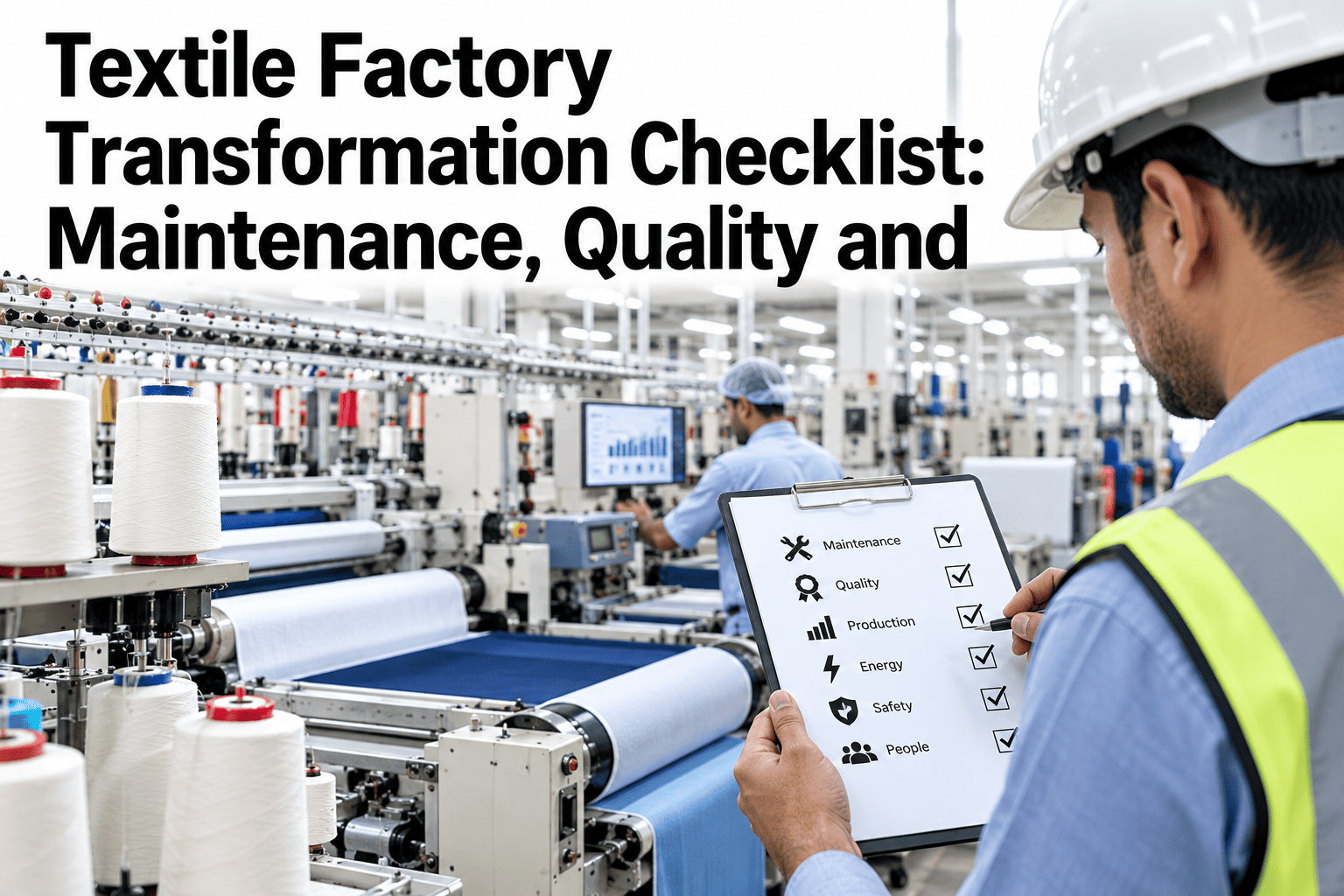
Roadmap Readiness Checklist
Use this list before launching any digital step. Each box should be answerable by the project owner.
A Composite Scenario: From Spreadsheets to Connected Insight
This is a composite example, not a named mill. It shows how a staged path pays back.
Mistakes That Derail Digital Programs
These habits turn promising programs into shelfware.
Buying technology before defining the problem
Tools without a target rarely pay back.
Skipping data discipline
AI on poor data produces confident nonsense.
Ignoring the floor
Systems nobody uses deliver nothing.
Measuring activity, not results
Count savings, not screens installed.
What iFactory AI Adds to the Roadmap
iFactory AI is smart manufacturing and industrial software for textile and other manufacturing operations. Explore the roadmap modules in a live product tour on realistic plant data.
A 30-Day Plan to Start
A month is enough to assess, choose and begin the first step.
Review of the Textile Industry 4.0 Roadmap
A practical review of what makes digital programs succeed, written as editorial guidance rather than a named expert quote.
Solve a problem, not a trend
Each step should answer a named business problem.
Respect the order
Data discipline comes before analytics, and analytics before AI.
Bring the floor along
A system people use beats a better one they avoid.
Frequently Asked Questions
What is Industry 4.0 in textile manufacturing?
It is the use of connected machines, linked data systems and analytics to run a textile plant more intelligently. See a staged roadmap in a live demo for a textile mill. It is a journey of steps, not a single purchase.
Where should a mill start?
Start with a problem such as stops, repairs or defects, and digitise its records on one department. Quick wins build trust. Connect and analyse once the basics are reliable.
Do we need new machines for Industry 4.0?
Not necessarily. Many older machines can be connected through add-on sensors or controller data. Ask support how older machines are connected in a typical mill. Connectivity can be added gradually.
When is AI worth adding?
When data is complete, consistent and trusted, which usually follows the earlier stages. AI on weak data disappoints. A strong foundation makes AI useful quickly.
How long does a roadmap take?
A first phase can show results within weeks, while the whole journey runs over years. Book time to scope a roadmap workshop with your leadership team. Steady steps with proof beat a single large launch.
Start Your Journey From Paper to AI With a Clear First Step
iFactory AI helps textile mills build a staged path where every phase pays for the next. Book a walkthrough to see a roadmap built around your own plant.