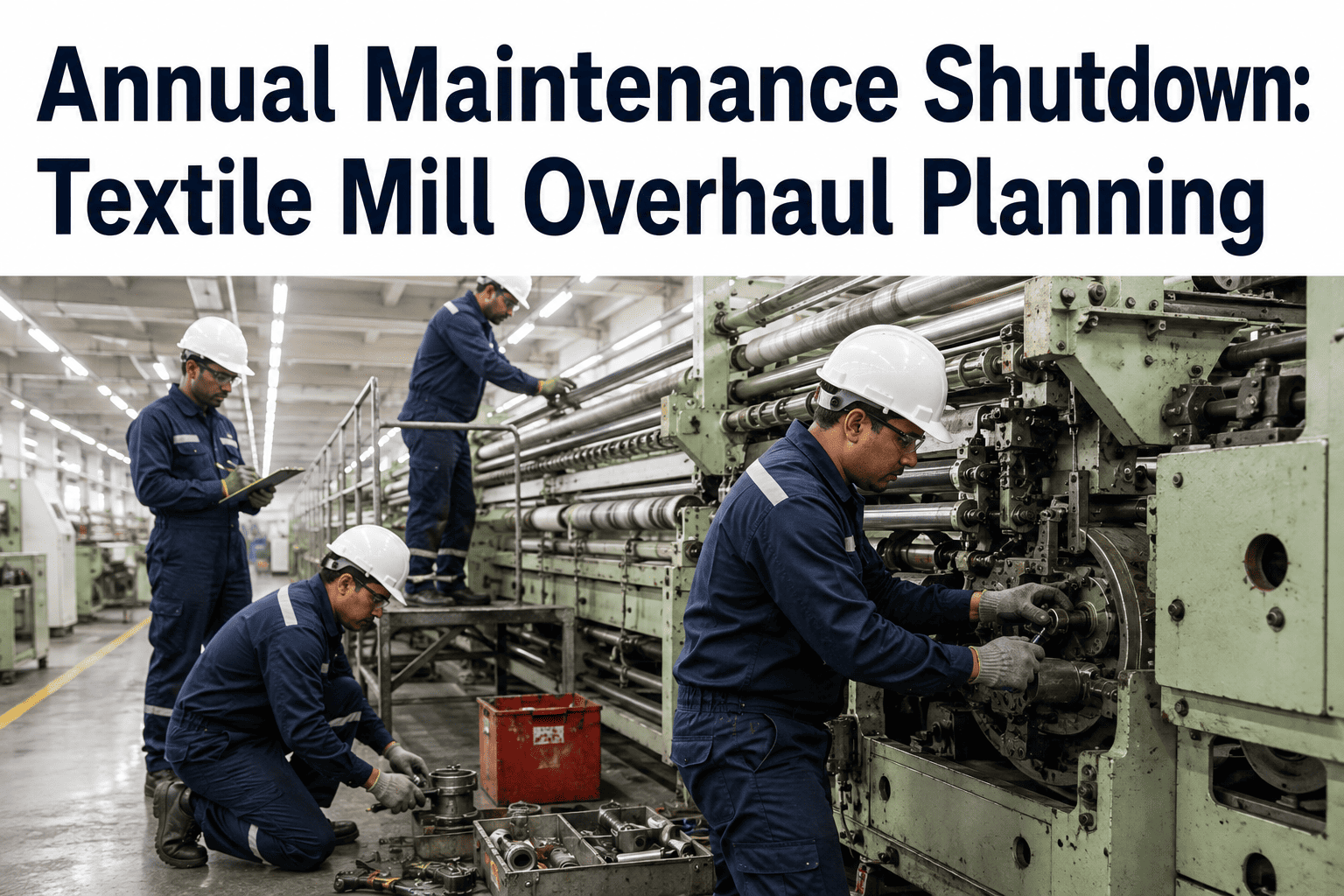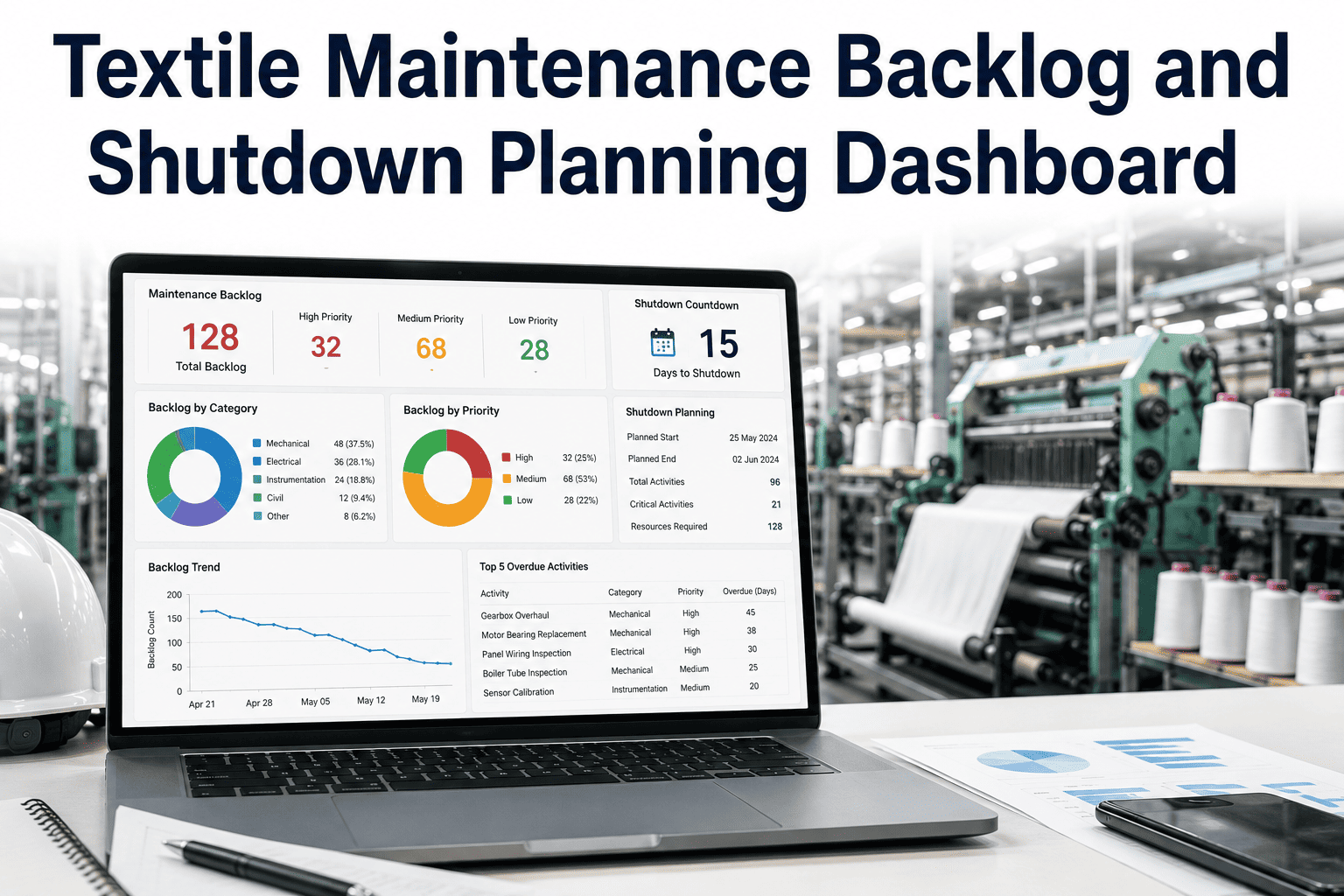
Every textile mill loses production time to shutdown maintenance once a year — the only question is whether that time is spent on planned, prioritized work or on chaotic firefighting once the machines stop. A well-planned annual shutdown compresses months of deferred maintenance, inspection, and overhaul into a tight window measured in days, while an unplanned one bleeds into weeks of lost spindle-hours and missed shipment dates. Mills that treat shutdown planning as a project, with scope, critical path, and material readiness locked weeks in advance, routinely finish faster than those that plan it as a checklist. Book a demo to see how iFactory plans and tracks your next shutdown.
Why Annual Shutdowns Go Wrong
Most shutdown overruns are not caused by the work itself, they are caused by things the team could have known in advance. Spare parts ordered too late. Two departments needing the same crane on the same day. A contractor booked without confirming scope. A scaffold not released until inspection is already behind schedule. None of these are technical failures, they are planning failures, and every one of them is preventable with the right sequence of decisions made weeks before the first machine stops.
Department-Wise Scope: What Typically Goes Into a Textile Shutdown
| Department | Typical Jobs | Avg. Duration | Common Delay Cause |
|---|---|---|---|
| Spinning | Ring frame overhaul, spindle replacement, blowroom cleaning | 2-3 days | Spindle stock shortage |
| Weaving/Knitting | Loom timing check, shuttle/needle replacement, beam servicing | 2 days | Contractor availability |
| Dyeing & Processing | Machine descaling, dosing pump calibration, effluent line flushing | 1-2 days | Chemical delivery delay |
| Utilities | Boiler inspection, compressor overhaul, cooling tower cleaning | 1-2 days | Statutory inspection scheduling |
| Electrical | Panel thermography follow-up, motor rewind, cable termination checks | 1 day | Shutdown of shared feeders |
| Civil & Structural | Roof leak repair, floor resurfacing, drainage clearing | 1-2 days | Weather dependency |
The Four Pillars of a Shutdown That Finishes On Time
Coordination Risks That Derail an Otherwise Good Plan
Frequently Asked Questions
For a mid-size textile mill, planning should begin roughly eight weeks before the shutdown date. Scope freeze happens around week eight, material ordering by week six, contractor and resource booking by week four, and final critical path sequencing by week two. Mills that compress this timeline into two or three weeks routinely see material shortages and contractor conflicts that extend the actual downtime well beyond the planned window. Book a demo to build a shutdown calendar for your mill.
Material shortage is the single largest cause, accounting for a large share of overrun days industry-wide, followed by shared resource conflicts between departments and contractor scope disagreements discovered only after work has started. Weather-dependent civil work and delayed statutory inspections round out the remaining causes. Almost all of these are visible risks weeks in advance if scope, material status, and resource bookings are tracked in one shared view rather than in separate department spreadsheets.
Not necessarily. Many mills stagger department shutdowns across a broader window so shared resources like cranes, contractors, and utility crews can be scheduled without conflict, while production loss is minimized by keeping unaffected departments running. The right approach depends on how interdependent your departments are, a mill where dyeing feeds directly into weaving may need a fully synchronized shutdown, while independent process lines can stagger freely.
A documented restart checklist per machine, covering lubrication, guard reinstallation, electrical isolation removal, and a supervised no-load run, should be completed and signed off before any machine returns to production. Skipping this step to save time is one of the most common reasons mills see a wave of trip-related stoppages in the first shift after restart, which quietly erodes the time saved during the shutdown itself. Contact support to set up a digital restart checklist.
Yes, and it typically improves visibility significantly compared to spreadsheet-based tracking, since every department's scope, material status, and daily progress are visible in one shared view instead of five disconnected files. This also makes it far easier to spot resource conflicts and material gaps two or three weeks before the shutdown starts, when there is still time to fix them, rather than discovering them on day one when options are limited.