-for-manufacturing.jpg)
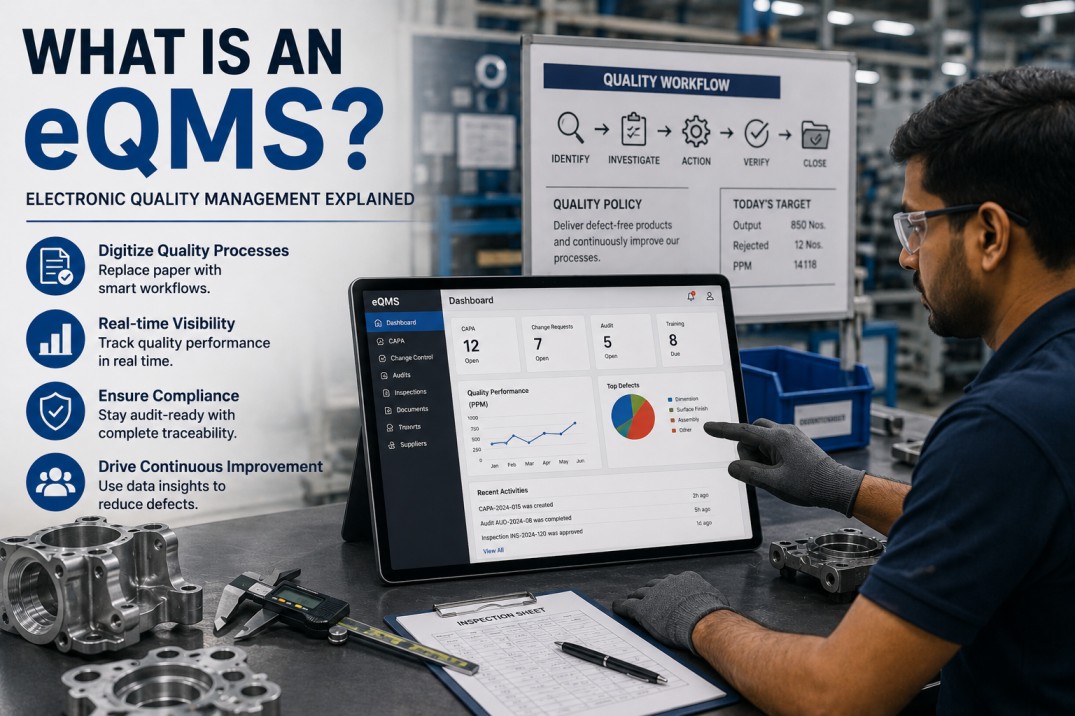
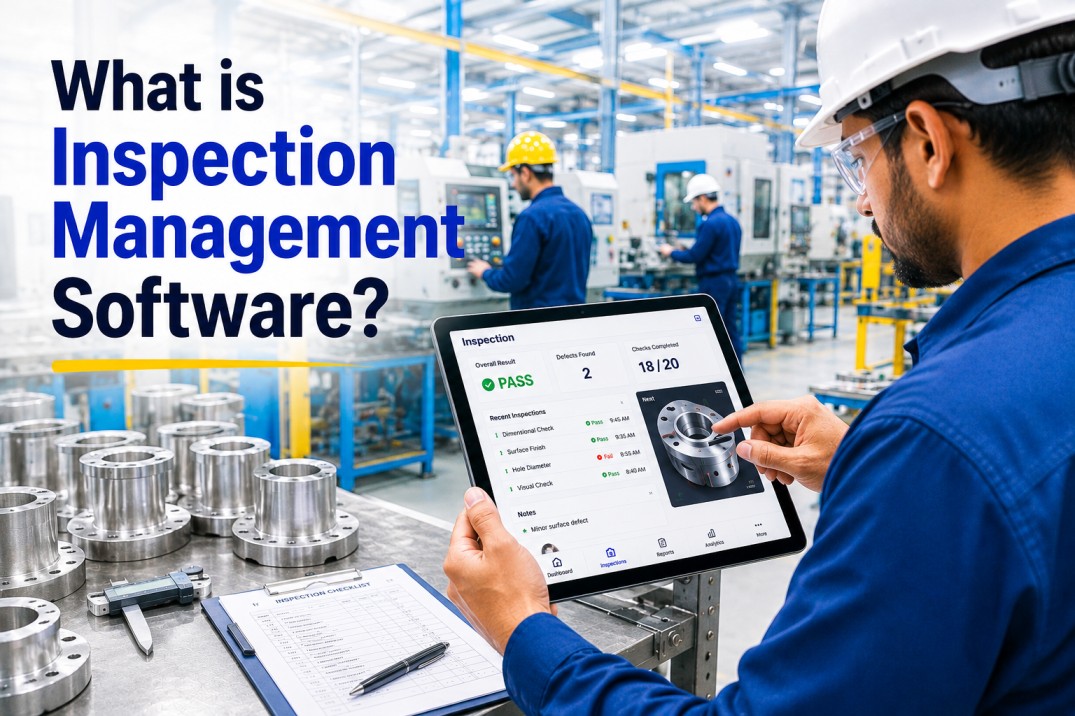
A digital QMS — electronic Quality Management System, or eQMS — is the software platform that manages the complete quality lifecycle: document control, training records, inspection and audit management, non-conformance reporting, corrective and preventive action, supplier quality, and quality metrics and reporting. In 2026, the migration from paper-based QMS to digital eQMS has accelerated sharply — driven by increasing customer audit requirements, expanding regulatory documentation mandates, and the practical impossibility of connecting AI-based inspection systems to paper quality records. This guide explains what makes an eQMS different from a collection of quality management spreadsheets, what to look for in 2026, and how iFactory unifies inspection, NCR, CAPA, and audit in a single manufacturing-first platform that goes live in weeks, not months.
eQMS Module Interconnection — How the Six Modules Connect
A manufacturing eQMS is only as strong as the connections between its modules. An NCR created from an inspection must automatically trigger a CAPA. A CAPA action updating a work instruction must trigger document re-approval. A supplier finding must link back to receiving inspection history. The flow diagram below shows how each iFactory module feeds into the next — creating a closed quality loop with no manual handoffs.
Paper QMS vs. eQMS — Capability by Capability
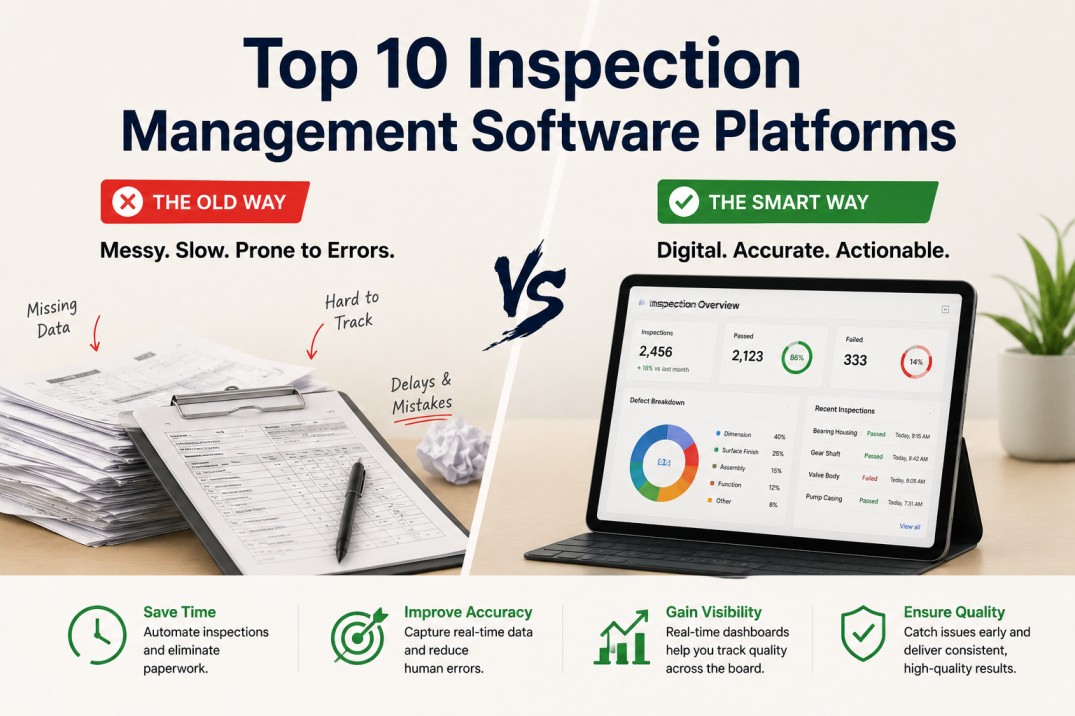
The comparison below covers the ten capabilities where the difference between a paper-based or spreadsheet QMS and a digital eQMS is most significant operationally. Each row shows exactly what paper provides and what iFactory delivers instead.
iFactory eQMS — Inspection, NCR, CAPA, and Audit in One Platform
iFactory unifies the complete quality management workflow — AI inspection, non-conformance management, corrective action, and audit — in a single platform connected to your ERP and MES. Live in 6 to 8 weeks.
eQMS Maturity Ladder — Which Level Is Your Operation At?
Quality management system maturity progresses through five levels — from paper records through fully AI-augmented eQMS. Each level represents a step change in capability, auditability, and quality performance. iFactory delivers Level 5 — AI-augmented eQMS — from day one of deployment.
iFactory eQMS Implementation Timeline — Week by Week
iFactory's eQMS implementation follows a structured eight-week plan. The pilot line goes live in week three — producing real quality data before the full platform is deployed. Subsequent modules activate progressively, so each week delivers a working capability rather than waiting for an all-or-nothing go-live.
eQMS ROI — Before and After iFactory
The six metrics below show the operational improvement manufacturers report after switching from paper or spreadsheet-based quality management to iFactory. Each metric reflects a direct operational cost or time saving — not a theoretical model.
Frequently Asked Questions
What is the difference between a QMS and an eQMS?
A QMS is the complete set of policies, procedures, and records that manages quality — it can be paper-based or software-based. An eQMS is a software platform that digitises and enforces the QMS workflows: document control with version management, digital inspection forms with auto-generated reports, NCR workflows with automated routing, CAPA with root cause analysis tools, and audit management. The core distinction is enforceability — an eQMS enforces the quality process technically, while a paper QMS relies on procedural compliance without technical enforcement.
How long does it take to implement a digital QMS?
Implementation timelines range from 2 weeks (iFactory pilot line) to 24 months (enterprise QMS platforms requiring extensive configuration). iFactory's typical full eQMS deployment — inspection, NCR, CAPA, document control, and audit — completes in 6 to 8 weeks, with the pilot line live in 2 weeks from contract signature. Book a Demo to walk through your specific implementation scope.
What is FDA 21 CFR Part 11 and why does it matter for eQMS?
FDA 21 CFR Part 11 establishes requirements for electronic records and signatures to be considered equivalent to paper records. For pharmaceutical and medical device manufacturers, the eQMS must enforce: individual authentication for every record entry, immutable audit trail for all modifications, access controls preventing unauthorised changes, and the ability to generate accurate copies for inspection. A QMS that does not meet Part 11 is not a valid quality record system for FDA-regulated operations.
Can an eQMS replace paper quality records for a customer or regulatory audit?
Yes. Digital quality records from a compliant eQMS are accepted as equivalent to paper records for ISO 9001, IATF 16949, AS9100, and FDA audits — provided the system meets record integrity requirements: audit trail, electronic signature with authentication, and the ability to generate complete print copies on request. Most auditors now prefer eQMS records because they can review larger volumes faster and retrieve specific records without a file room search. Book a Demo to see iFactory's auditor portal.
What makes iFactory different from a traditional enterprise QMS?
Traditional enterprise QMS platforms are built document-management-first — procedures, SOPs, training records — with inspection and NCR as secondary modules. iFactory is built inspection-first: the daily workflow of operators and quality engineers on the production floor is the primary design priority, with document management and audit extending from that production-floor core. iFactory runs on a tablet at the machine, connects to ERP and production data in real time, and includes AI visual inspection natively — capabilities traditional QMS platforms do not offer. Book a Demo to see the difference.
iFactory: The Manufacturing eQMS That Goes Live in Weeks, Not Months
iFactory pilots in two weeks — digital inspection, NCR management, CAPA tracking, and audit workflows connected to your ERP. The complete manufacturing eQMS without an 18-month implementation.