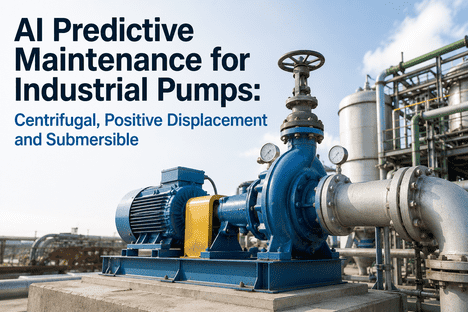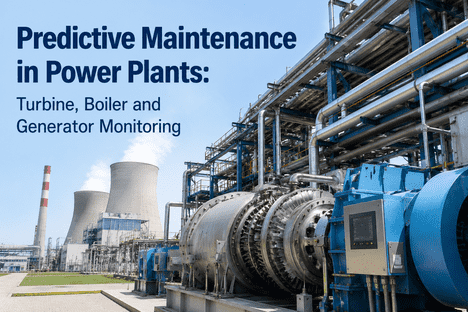
In the power generation industry, boiler feed pumps (BFPs) occupy a unique position in the forced outage hierarchy. A single BFP failure does not merely stop one piece of equipment — it forces a unit derate or complete unit trip, triggering a cascade of costs that include replacement power purchase, start-up fuel penalties, secondary equipment damage from rapid thermal cycling, and lost revenue that compounds at rate schedules penalising unscheduled outages. For a 600 MW supercritical coal-fired unit operating in a competitive wholesale market, each hour of forced derate below 70% capacity costs $12,000–$28,000 in lost margin, and a full forced outage during peak demand periods can exceed $100,000 per hour before accounting for the repair cost itself. In 2024, a Midwestern U.S. generating station operating two 600 MW supercritical units faced exactly this risk on its 6A boiler feed pump — a 10-stage barrel-type BFP rated at 6,000 HP, operating at 5,200 RPM, delivering 4,500 GPM of high-pressure feedwater at 185°C. The pump's outboard bearing housing temperature had begun a subtle upward trend — 3°C above baseline over 30 days — that the plant's SCADA historian recorded but no alarm system flagged. The bearing degradation that produced that temperature trend would have progressed to a catastrophic failure at Week 12, triggering a unit trip during summer peak load, a 14–21 day forced outage, and an estimated $500K+ in combined repair and replacement power costs. iFactory AI's predictive maintenance platform, including its Shift Logbook and rotating equipment analytics engine, detected the bearing fault signature 6 weeks before the failure threshold, enabling a planned bearing replacement during a scheduled off-peak maintenance window that cost $18,000 and required 3 days instead of an emergency $500K forced outage. Book a Demo to see how iFactory protects critical power plant rotating equipment.
Power Plant Prevents $500K Forced Outage with Boiler Feed Pump AI
AI detected bearing degradation in a critical boiler feed pump 6 weeks before failure — enabling a planned repair that prevented a $500K+ forced outage. Continuous vibration, temperature, and motor current signature analysis protecting critical power plant rotating equipment.
The Boiler Feed Pump Reliability Challenge in Modern Power Plants
Boiler feed pumps are among the most mechanically and thermally stressed rotating assets in any power plant. A supercritical BFP operates at 4,500–6,000 RPM delivering feedwater at pressures exceeding 250 bar and temperatures approaching 200°C. The pump's multi-stage barrel design places the balance disc, thrust bearing, and journal bearings under extreme axial and radial loads that fluctuate with unit load demand, drum level control response, and feedwater regulation valve position. Bearing degradation in a BFP follows a characteristic progression pattern: microscopic subsurface fatigue initiates in the bearing raceway, propagates through the hardened layer under cyclic loading, and emerges as a spall that generates measurable vibration and temperature signals 4–8 weeks before functional failure. Once the spall reaches the bearing's load zone, the degradation rate accelerates exponentially — a bearing that shows 2°C of temperature elevation at Week 4 may reach catastrophic failure within 72 hours at Week 8 if operating conditions remain constant.
The plant's pre-existing monitoring for the BFP consisted of SCADA-based bearing temperature trending with a fixed alarm threshold of 85°C, monthly portable vibration data collection by the plant's in-house vibration technician, and quarterly oil analysis. This monitoring program had three structural gaps. First, the 85°C SCADA alarm threshold was set at the bearing manufacturer's absolute maximum operating temperature — far above the temperatures at which incipient spalling generates detectable signals. Second, monthly vibration data collection created a 4-week sampling interval during which the bearing's degradation trajectory could advance from incipient spall to the exponential failure phase. Third, temperature and vibration data were captured in separate systems — the SCADA historian and the portable vibration data collector — with no cross-correlation that could detect a compound condition like "bearing temperature rising 0.5°C per week with concurrent envelope spectrum amplitude elevation at the BPFO frequency." iFactory closed all three gaps by deploying continuous wireless triaxial accelerometers and RTD temperature probes on the BFP bearing housings, feeding data at 10-minute intervals to AI models that computed envelope spectra and correlated temperature trends, and generating predictions 6 weeks before the failure threshold was reached.
Week-by-Week: How AI Detected the Bearing Degradation 6 Weeks Before Failure
The bearing degradation timeline reconstructed from iFactory's continuous monitoring data illustrates the precise window in which AI prediction provides value that traditional threshold-based SCADA alarming cannot. Understanding this timeline is essential for evaluating whether the same prediction capability applies to your power plant's critical feedwater and circulating water pump fleet.
Baseline Capture — Normal Operating Signature Recorded
iFactory sensors installed on BFP inboard and outboard bearing housings. 14-day baseline data collection captures the pump's normal operating signature across the full load range — 100 MW to 600 MW unit load — establishing asset-specific vibration envelope spectra and temperature profiles. Baseline shows outboard bearing temperature at 62°C at full load, with envelope spectrum amplitudes below 0.02 g at all fault frequency bands.
First Anomaly — Envelope Spectrum Amplitude Rise at BPFO
AI model detects a 35% increase in envelope spectrum amplitude at the outer race fault frequency (BPFO = 213 Hz for the BFP's angular contact thrust bearing). Temperature remains stable at 63°C. The model classifies this as a Stage 1 incipient fault — subsurface spall initiation with 78% confidence. No SCADA alarm would have fired at this point; temperature is unchanged and overall vibration velocity remains within ISO 10816 Zone B.
Confirmed Progression — BPFO Amplitude +120% · Temperature Rise Begins
BPFO envelope amplitude has increased 120% above baseline. Outboard bearing temperature rises from 63°C to 66°C — a 3°C increase that falls well below the SCADA system's 85°C alarm threshold. The AI model reclassifies the fault to Stage 2 (moderate spall progression) with 92% confidence and estimates remaining useful life at 28 days under current operating conditions. A work order is auto-generated in the CMMS recommending bearing replacement planning.
Planned Intervention — Bearing Replacement Completed
With an estimated 14 days remaining before the spall enters the exponential failure phase (Stage 3), the maintenance team replaces the outboard bearing during a scheduled weekend off-peak outage. The replacement cost is $18,000 including bearing cartridge, labour, and oil replacement. The removed bearing is sent for forensic analysis, which confirms a 4 mm spall on the outer race at the loaded zone position — consistent with the AI model's BPFO classification.
Counterfactual — Catastrophic Failure Without AI Intervention
Counterfactual analysis by the plant's reliability engineering team confirms that without AI detection, the bearing would have reached Stage 4 (catastrophic failure) at approximately Week 12 — only 2 weeks after the actual replacement date. The failure would have caused rapid heating, cage fracture, and rotor seizure, tripping the unit during a summer peak load period. Estimated cost: $160K bearing replacement + $340K replacement power + $28K emergency logistics = $528K total.
The Bearing Failure Physics — Why SCADA Alarming Missed the Signal
The root cause of the missed detection is not a sensor gap — the plant's SCADA system recorded bearing temperature every 30 seconds — but a threshold gap. The bearing temperature alarm was set at 85°C based on the bearing manufacturer's published maximum operating temperature for the grease lubrication system. This threshold represents the temperature at which the grease degrades and lubrication film breaks down — not the temperature at which bearing spalling initiates. Bearing fatigue spalls initiate at the subsurface level through cyclic stress accumulation that produces no temperature elevation at all. The first detectable signal is envelope spectrum amplitude at the fault frequency — generated by microscopic impacts as the rolling element passes over the developing spall. This signal appears at Stage 1, when the spall is still below the bearing surface and no temperature change is measurable. The temperature rise appears only at Stage 2, when the spall breaks through to the raceway surface and begins generating frictional heating. In this case, the temperature rose from 63°C to 66°C — a 3°C increase that represented a developing fault but was invisible to an alarm system calibrated to 85°C. iFactory's AI models detect the envelope spectrum amplitude at Stage 1, before any temperature change occurs, providing the 6-week lead time that the SCADA system could not.
"The bearing temperature trend was right there in our SCADA historian — a 3°C rise over 30 days. Every operator and engineer in the control room had access to that data. But no alarm fired because 66°C was still 19°C below the SCADA alarm threshold. The AI model didn't have access to any data we didn't have. It just had the pattern recognition capability to see what the data meant. That is the difference between SCADA and AI — SCADA tells you when something has failed. AI tells you when something is about to fail."
Sensor Architecture and AI Model Configuration for Boiler Feed Pump Monitoring
The BFP monitoring deployment followed iFactory's standard configuration for high-speed centrifugal pump applications. Two wireless triaxial ICP accelerometers (100 mV/g sensitivity, ±50 g range) were installed on the inboard and outboard bearing housings using high-temperature epoxy mounts. Two RTD surface temperature probes (−40°C to +150°C range) were mounted adjacent to each accelerometer. Motor current transformers on the 6.9 kV motor feeder provided current signature data for motor health monitoring. All sensor data was transmitted at 10-minute intervals to an industrial edge gateway via a 900 MHz LoRaWAN mesh network, with the gateway performing initial FFT computation and envelope spectrum extraction before transmitting processed data to the iFactory cloud platform via secure LTE cellular connection.
The AI model for the BFP was trained on the 14-day baseline data and calibrated against the pump's specific bearing geometry: the thrust bearing was a 7326 B angular contact pair with BPFO = 213 Hz, BPFI = 287 Hz, BSF = 142 Hz, and FTF = 12.5 Hz at the pump's nominal 5,200 RPM operating speed. The model's envelope spectrum analysis continuously monitored all four fault frequency bands independently, tracking amplitude trends and classifying severity across four stages. Temperature data was cross-correlated with envelope spectrum amplitudes: a BPFO amplitude increase without temperature change triggered a Stage 1 alert; a BPFO increase with concurrent temperature elevation triggered escalation to Stage 2 with automatic work order generation. The model also monitored overall vibration velocity against ISO 10816 Zone D limits as a secondary safety check, but the primary prediction engine was envelope spectrum-based, providing detection at Stage 1 where ISO limits would not trigger until Stage 3 or 4.
From Single Pump to Plant-Wide Critical Asset Coverage
Following the BFP bearing detection success, the plant expanded iFactory's deployment to an additional 14 critical rotating assets in Year 2: both boiler feed pumps on Unit 6 and Unit 7, main condensate pumps, circulating water pumps, induced draft fans, forced draft fans, and primary air fans. The phased expansion followed the same deployment model — 14-day baseline, shadow mode validation, CMMS integration — with each asset's AI model calibrated to its specific bearing geometry, operating speed, and load profile. The plant's reliability superintendent reports that the primary operational insight from the expansion was not the volume of predictions generated but the quality: in Year 2, the AI platform generated 22 validated alerts across 14 assets, 19 of which resulted in planned corrective actions during scheduled outages, and zero of which were false positives that wasted maintenance team time. Book a Demo to discuss expanding AI predictive maintenance across your power plant's critical rotating equipment fleet.
| Asset Group | Assets Covered | Primary Failure Modes Detected | Avg Prediction Lead Time | Year 2 Validated Alerts |
|---|---|---|---|---|
| Boiler Feed Pumps | 4 (Unit 6 & 7) | Bearing spalling, balance disc wear, shaft misalignment | 4–6 weeks | 8 |
| Condensate & Circ Water Pumps | 4 | Bearing wear, mechanical seal failure, impeller cavitation | 3–5 weeks | 6 |
| Forced Draft & Induced Draft Fans | 4 | Bearing degradation, rotor imbalance, blade fouling | 3–6 weeks | 5 |
| Primary Air Fans | 2 | Bearing wear, coupling misalignment, motor current signature | 2–5 weeks | 3 |
Protect Your Critical Power Plant Rotating Equipment with AI
Continuous vibration, temperature, and motor current signature monitoring for boiler feed pumps, condensate pumps, ID/FD fans, and circulating water pumps — integrated with your existing CMMS and SCADA infrastructure through iFactory's Shift Logbook and PdM analytics engine.
Power Plant Boiler Feed Pump AI Monitoring — Common Questions
Does AI predictive maintenance replace the plant's existing SCADA system and bearing temperature alarms?
No. Your existing SCADA system, bearing temperature sensors, and ISO 10816 vibration alarming continue operating exactly as before — they remain essential for real-time machine protection and post-event analysis. What AI monitoring adds is a parallel detection layer that operates on different physics: envelope spectrum analysis detects the subsurface spall initiation that produces no temperature or overall vibration change, while temperature trend analysis at sub-threshold levels detects the 2–5°C excursions that precede alarm-level temperatures by 2–6 weeks. The AI layer generates predictions 4–6 weeks before the SCADA alarm threshold would fire, enabling planned intervention that the SCADA system was never designed to support.
What bearing failure modes can AI detect on boiler feed pumps?
Production-grade AI bearing monitoring on BFPs covers all four fault types: outer race faults (BPFO — the dominant failure mode in BFP thrust bearings, detected via envelope spectrum harmonics at 213 Hz in this case), inner race faults (BPFI — detected via amplitude modulation at shaft speed), rolling element faults (BSF — detected at twice the spin frequency with cage modulation), and cage faults (FTF — detected via subharmonic vibration typically at 0.38–0.48× RPM). Each fault type is detected, classified, and severity-trended independently through four progression stages with confidence scores and remaining useful life estimates updated every 10 minutes.
Can the AI model handle variable load conditions and pump speed changes?
Yes. BFP operating conditions vary significantly with unit load demand — bearing temperature, vibration amplitude, and envelope spectrum fault frequency amplitudes all change with pump speed and discharge pressure. iFactory's AI models use load-condition normalisation: each asset's model learns the relationship between unit load (measured via motor current draw) and bearing vibration amplitude during the 14-day baseline period, then normalises all subsequent measurements to a reference load condition before comparing against thresholds. A BPFO amplitude at 50% unit load is scaled to the equivalent amplitude at 100% load before the fault severity classification is applied. This eliminates the false alarms that fixed-threshold systems generate when unit load varies across daily and weekly dispatch cycles.
What is the typical investment and timeline for a power plant Boiler Feed Pump AI deployment?
For a single BFP deployment — two sensors (inboard and outboard bearing housings), edge gateway, CMMS integration, and platform subscription — the total Year 1 investment ranges from $28,000 to $42,000. The deployment timeline is 6–8 weeks from sensor installation to first validated alert: sensor installation and 14-day baseline (weeks 1–2), AI model training and calibration (weeks 2–4), shadow mode validation (weeks 4–6), and CMMS integration go-live with automated work order generation (weeks 6–8). The BFP in this case study delivered its first validated alert at Week 6 — 78% confidence on BPFO amplitude elevation — with the confirmed prediction at Week 8 at 94% confidence triggering the work order that prevented the $500K forced outage. The single-event ROI payback period was approximately 10 minutes from the time the $500K avoided cost was posted to the plant's maintenance cost accounting system.
Does the platform require new wiring or network infrastructure in the power plant?
No. iFactory's wireless sensor platform uses a 900 MHz LoRaWAN mesh network that transmits sensor data reliably through power plant reinforced concrete structures, steel equipment, and electromagnetic interference from high-voltage switchgear and motor control centres. Each wireless sensor has a 5-year battery life and communicates directly with an industrial edge gateway mounted within 500 metres line-of-sight. The edge gateway transmits processed data to the iFactory cloud platform via a secure LTE cellular connection — no plant network connection, firewall rule change, or IT approval required. For plants that prefer hardwired sensors for specific critical applications, iFactory also supports Modbus TCP and 4–20 mA analog input connections to existing plant DCS and SCADA wiring. Book a Demo to discuss the optimal sensor architecture for your power plant's critical rotating equipment.