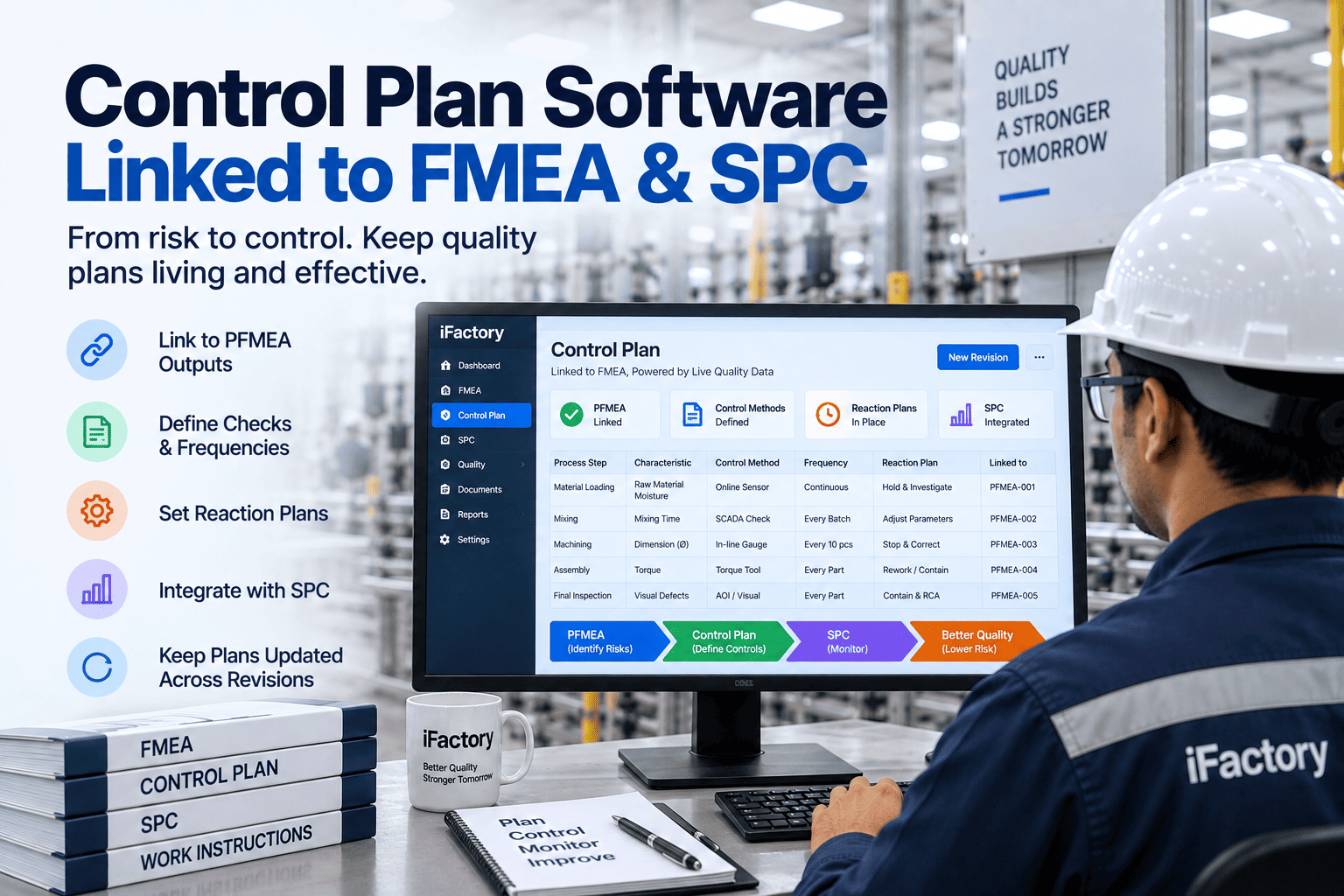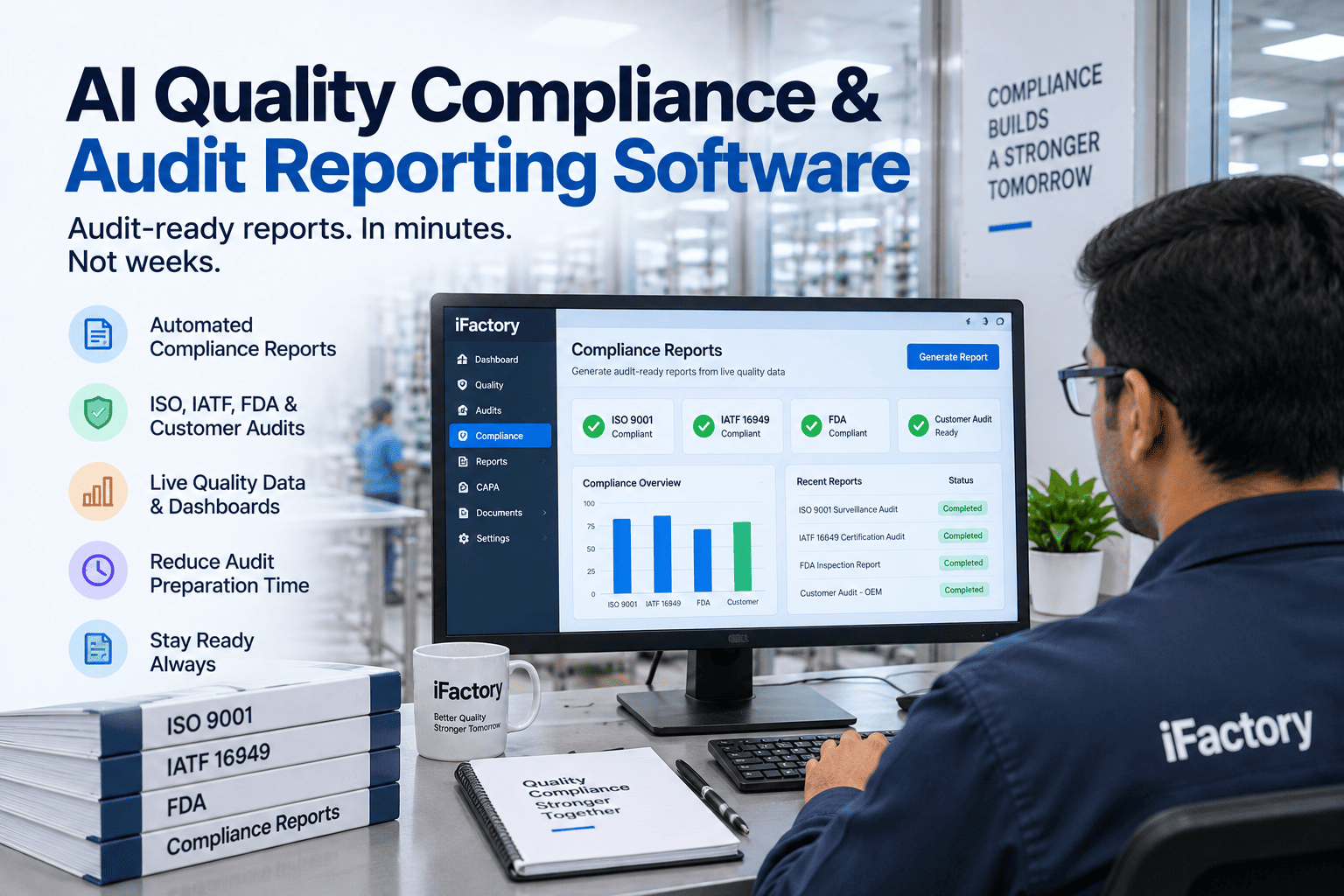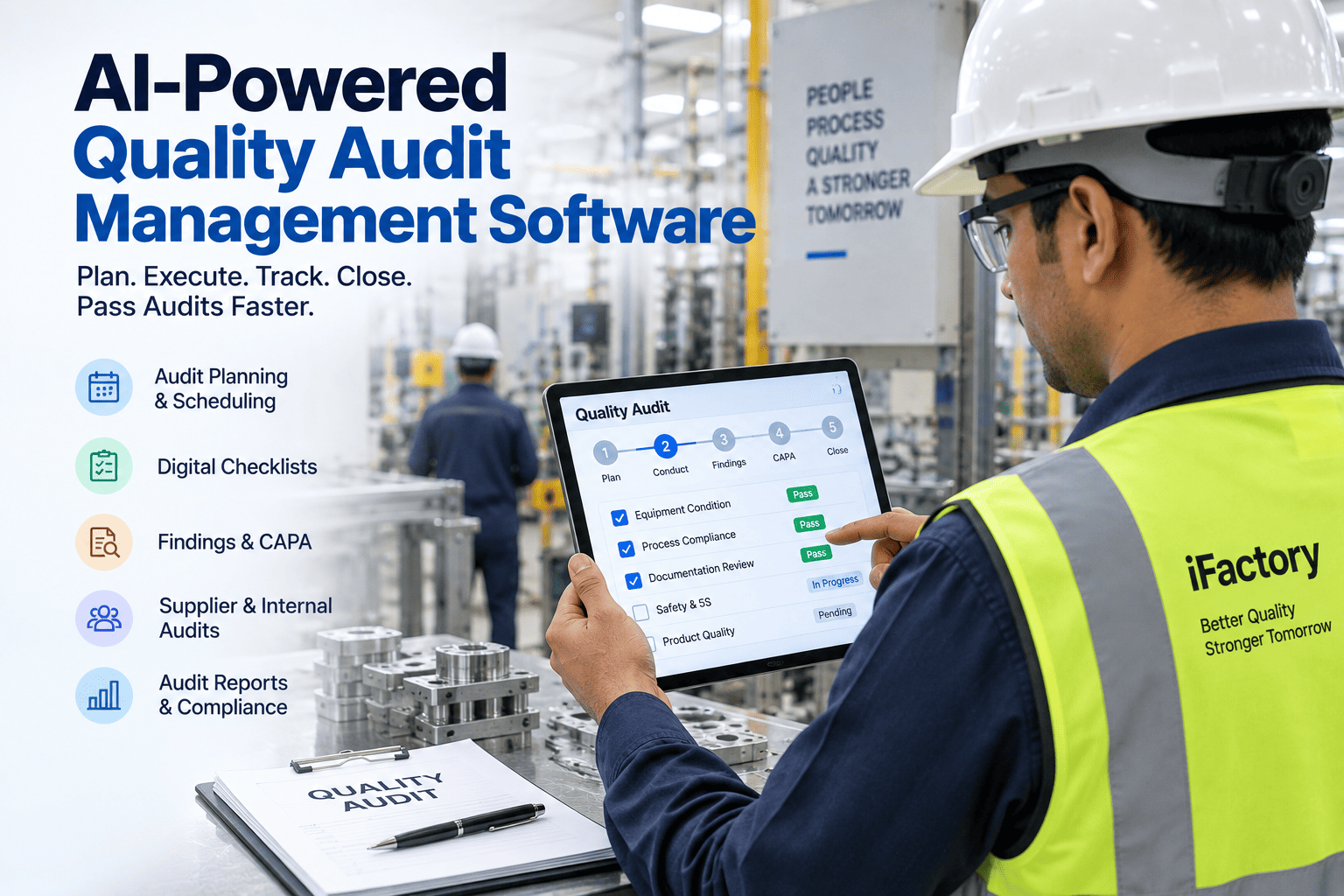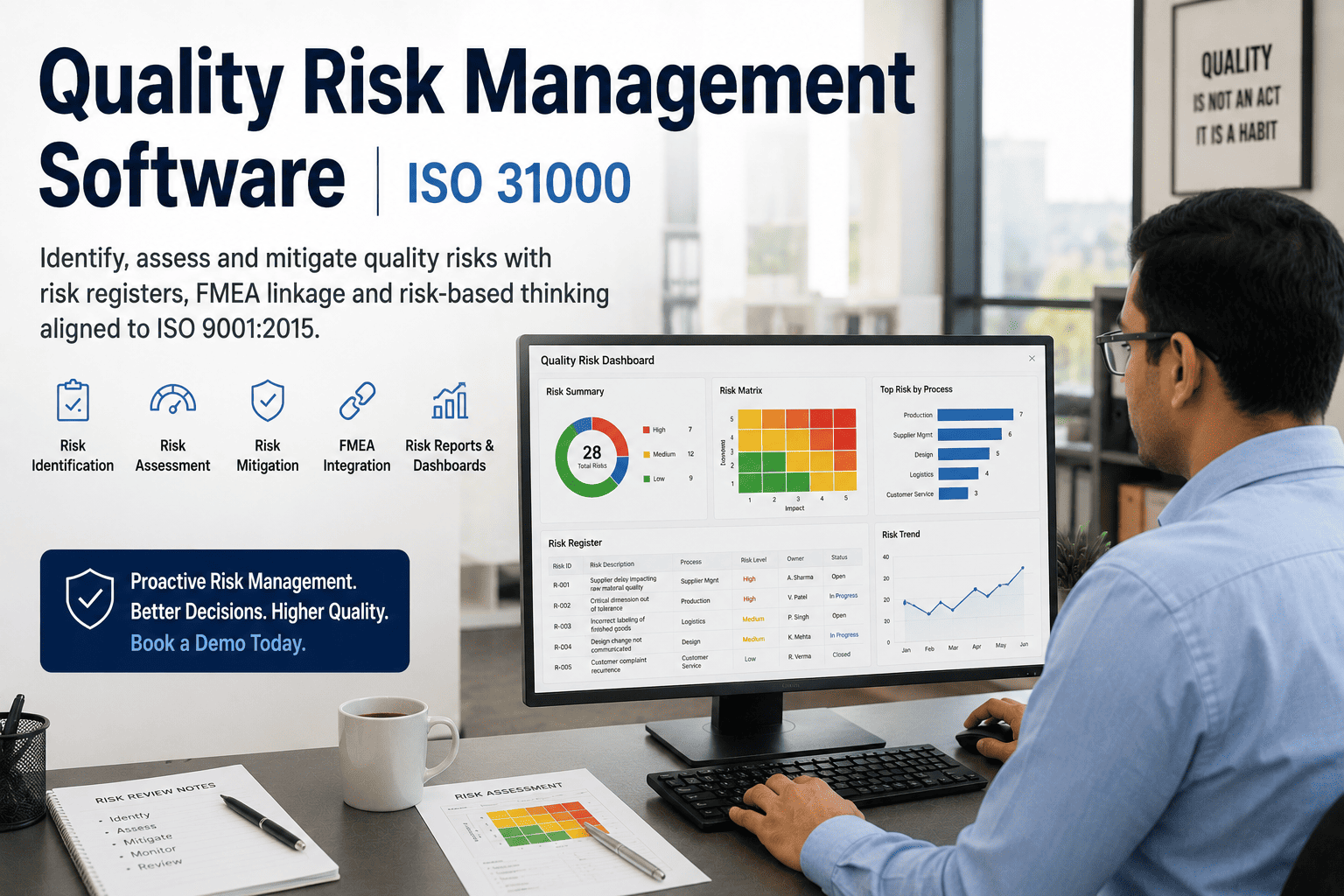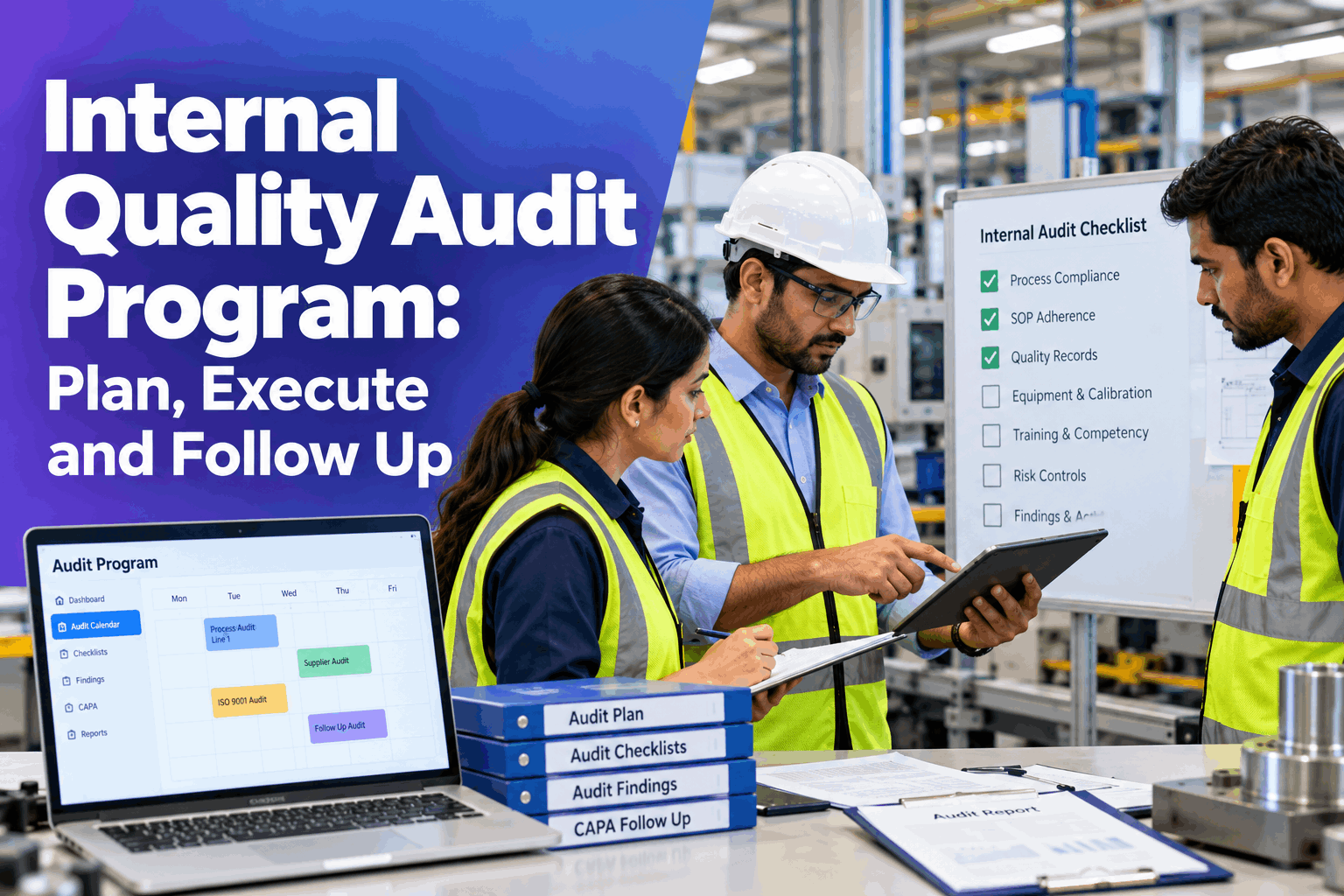
Internal audit programs rarely fail loudly. They drift: the calendar is the same every year, the checklist is copied from the last audit, findings are written down and forgotten, and the report takes longer to write than the audit itself. An internal quality audit program that works is planned by risk, run on mobile checklists with qualified auditors and followed through to closed corrective actions. This page shows how to build it, with a worked example and what to bring to a pilot. Plant managers can see it on their own processes in an audit program demo.
Internal Quality Audit Program: Plan, Execute and Follow Up
The Audit Program builds a risk-based audit calendar, puts mobile checklists with voice notes in the auditor's hand, sends findings to CAPA and uses AI to draft audit reports for auditor review. It runs on a turnkey on-prem AI server, next to your quality systems.
- Audit frequency set by process risk
- Findings routed to CAPA with an owner and due date
- Reports drafted by AI and signed by the auditor
Why Internal Audit Programs Stall
The audits happen, but they do not change much.
A program that ticks every box on the calendar can still miss the processes that matter. Auditors reuse old checklists, findings sit in spreadsheets and the audit report is written days later from memory. The result is an audit trail that satisfies the schedule and teaches the plant very little. Our audit program specialists can map where yours loses value.
Calendar by habit
Every process audited the same way every year.
Stale checklists
Questions copied forward, not tied to risk.
Lost findings
No owner, no due date, no follow-up.
Report backlog
Writing takes longer than the audit.
The Five Parts of the Audit Program
Each part answers a question the program must settle.
The table below shows what each part holds and how it works. Together they cover the whole cycle, from the internal audit schedule to the closed finding. The program uses the processes, standards and people your plant already has. Build the plan for your plant in a working session.
The AI drafts from the checklist results and voice notes, but it never raises, grades or closes a finding by itself. The auditor checks the evidence, edits the draft and signs, so the judgement stays with a qualified person.
A Worked Example: One Process Audit
From checklist to corrective action in one pass.
Take a process audit of a packaging line using a clause-based checklist of 40 questions. The auditor walks the line with a mobile checklist and records voice notes at each point. 36 items conform, 3 minor findings are raised and 1 observation is noted. Each finding opens a CAPA action with an owner and a due date, and the AI sends a draft report to the auditor for review. All figures are illustrative.
See Your Own Audit Program Run
Bring your last audit schedule, a checklist and a few open findings, and watch the plan, the audit and the follow-up run in one place.
From Plan to Follow-Up
Five steps from the calendar to a closed finding.
An audit is only finished when the corrective action is verified. Each step has an owner and a record, so the program can show what was planned, what was found and what was fixed. Plan the rollout with our implementation team.
Plan
Build the audit calendar from process risk.
Prepare
Assign a qualified auditor and build the checklist.
Audit
Walk the process with mobile checklists and voice notes.
Report
AI drafts the report and the auditor signs.
Follow up
Track each finding to a verified fix.
Ask the Program What Is Due
Ask in plain words and get an answer from the live program.
Quality managers and plant managers can question the program directly, instead of searching spreadsheets and chasing owners. The answers come from the calendar, the findings log and the corrective action records. See it on your own program in a live walk-through.
Choosing the Right Kind of Audit
Different audits answer different questions.
A strong program mixes audit types instead of repeating one. A process audit follows the work, a clause-based audit checks the system against the standard, and a follow-up audit confirms the fix. The program builds each checklist from the same source, so the questions stay consistent. Discuss the mix with our quality systems team.
Process audit
Follows the work from input to output.
Clause-based audit
Checks the system against standard clauses.
Follow-up audit
Confirms that a fix worked and held.
Triggered audit
Added after a complaint, change or incident.
Who Decides What
The program keeps the process, and auditors keep the judgement.
A good audit program is clear about responsibility. The software handles the calendar, the checklists, the routing and the first draft. Qualified people judge what they see, grade the findings and decide what is closed.
The program handles
- Building the risk-based audit calendar
- Matching qualified auditors to audits
- Mobile checklists with voice notes
- Drafting reports and routing findings to CAPA
People decide
- What the evidence shows on the floor
- How each finding is graded
- Final wording and sign-off of the report
- Whether a corrective action is effective
Internal Audit Program Mistakes to Avoid
A full calendar is not the same as a useful program.
These are common best practice gaps in internal quality audits. A short readiness review can find them before a pilot starts.
What works
- Audit frequency set by process risk
- Qualified auditors independent of the area
- Every finding with an owner and a due date
- Follow-up that verifies the fix
What fails
- The same calendar repeated every year
- Checklists copied without review
- Findings tracked in separate spreadsheets
- Reports written long after the audit
How iFactory Runs the Audit Program
The program and the server, delivered together.
iFactory loads your processes, standards, auditor records and open findings, builds the risk-based calendar with you and runs the Audit Program on one on-prem server. After the pilot, results are reviewed against your baseline. Fit questions go to our solutions team.
Audit calendar
Frequency set by process risk.
Mobile checklists
Clause-based questions with voice notes.
Auditor matching
Qualified and independent auditors.
AI-drafted reports
Drafts for the auditor to review and sign.
Findings to CAPA
Owner, due date and closure tracked.
On-prem
Audit data stays in the plant.
The figures and exchanges on this page are illustrative. Your own results depend on your processes, standards, auditors and systems, and we measure them on your data during the pilot.
Turnkey AI: Delivered, Connected and Live in 6–12 Weeks
You do not build this. It arrives ready.
iFactory ships as a pre-configured NVIDIA AI server with the software pre-loaded, racked and ready. Rack it, plug in power and Ethernet, and the AI is live on your network. Our team handles cabling, network setup, PLC, SCADA, DCS and CMMS integration, quality system links, auditor training and 24×7 remote monitoring. Data stays on your network. For an implementation guide and a quote matched to your plant, request a turnkey quote.
Ship, network and baseline
Server installed. Processes, auditors and open findings loaded and the baseline captured.
Setup and pilot
Calendar and checklists configured. Live audits run on a few processes.
Go-live and measured result
Roll-out across the plant. Auditors trained. Results compared with the baseline.
Frequently Asked Questions
What is an internal quality audit program?
It is the plan, method and records for auditing your own processes against requirements: a calendar, qualified auditors, checklists, findings, corrective actions and reports, run as one connected cycle.
How does a risk-based audit plan work?
Each process is scored using factors such as past findings, complaints, recent changes and its effect on product quality. Higher-risk processes are audited more often, and the calendar updates when the risk picture changes.
How is auditor qualification handled?
The program holds each auditor's training and experience and assigns audits to qualified people who do not audit their own work, so independence is built into the schedule.
How does AI help with audit report writing?
The AI drafts the report from checklist results, voice notes and evidence. The auditor checks the draft against what they saw, edits it and signs. The AI does not grade or close findings.
What happens to internal audit findings?
Each finding is classified by the auditor, then routed to a corrective action with an owner and a due date. The program tracks it to closure and prompts a follow-up check that the fix worked.
Is there a template, and what are the best practices?
The five-part table and the worked example on this page are the template, and we load the same structure with your own processes in a working session. Best practice is a risk-based plan, qualified independent auditors, current checklists and findings that always have an owner.
What does it cost and when is the return?
Cost depends on the number of sites, processes, auditors and integrations, so we issue a turnkey quote after a short scoping call. Return shows up as less time on scheduling and report writing and faster closure of findings, and the pilot measures it against your baseline.
What do plant managers need to prepare?
Your last audit schedule and reports, the open findings log, a process list with any complaint or risk data, the auditor list and your current checklists. A short working session turns these into a pilot scope.
How do we start?
Start with a short session to review your calendar and findings. A 6-week pilot then loads your processes, captures the baseline and runs live audits on a few processes. To plan it, contact our team.
Build an Audit Program That Changes Things
In thirty minutes we take your audit schedule and a recent finding through the program and show how it would have been planned, run and closed. You keep the findings either way.
- 1Last year's audit schedule and reports
- 2Your open findings and CAPA log
- 3A process list with risk or complaint data
- 4Auditor list and qualifications
- 5Current audit checklists or templates