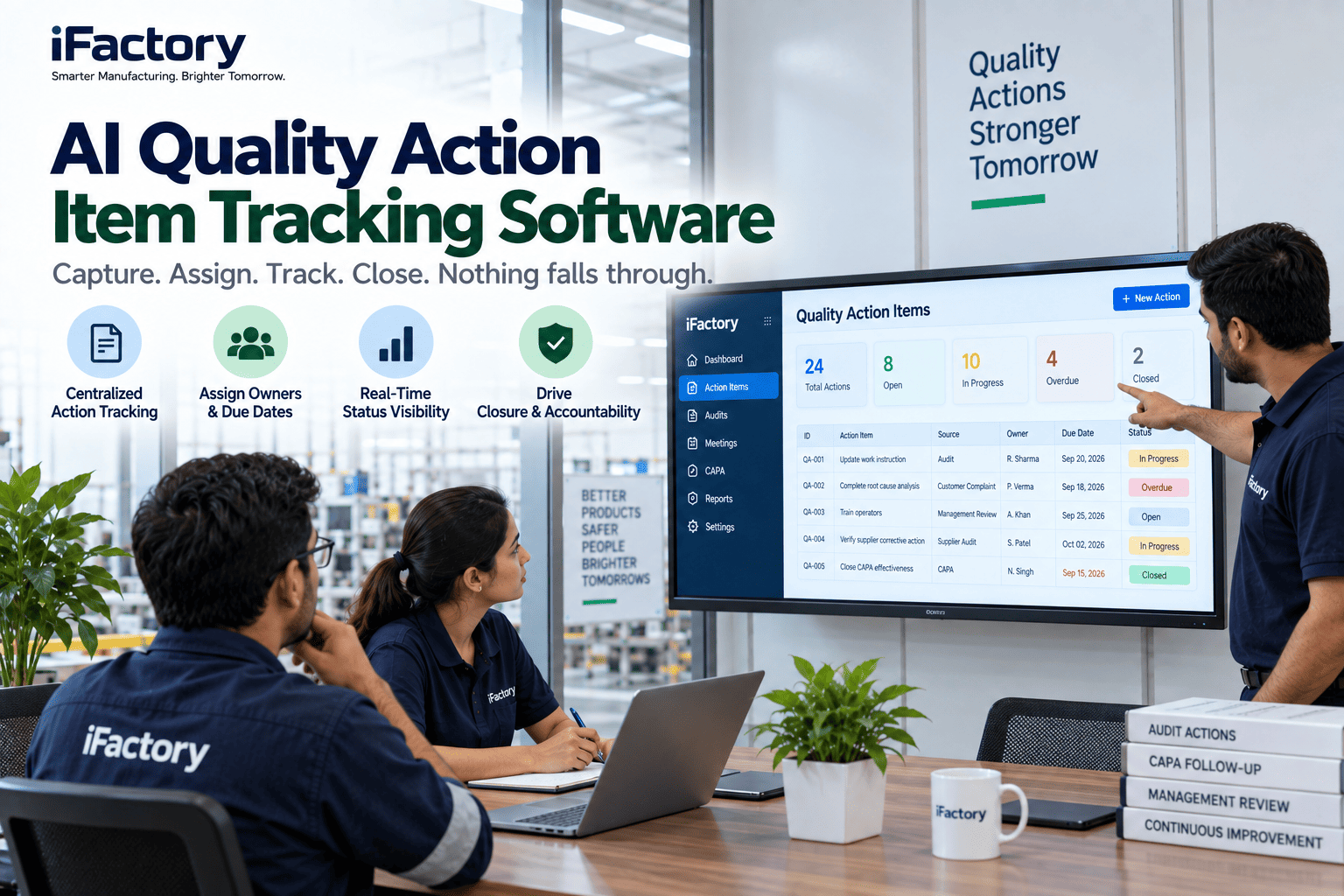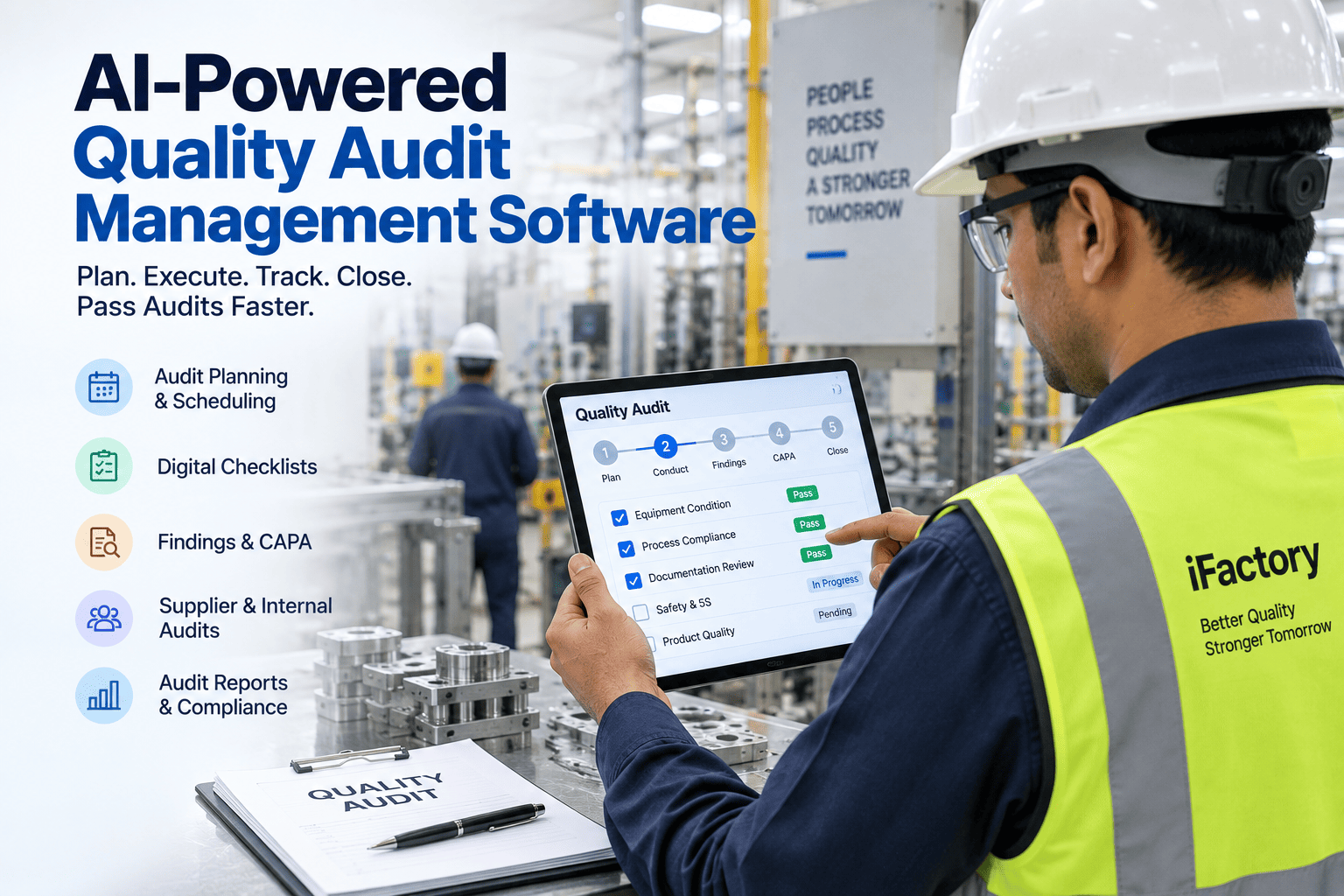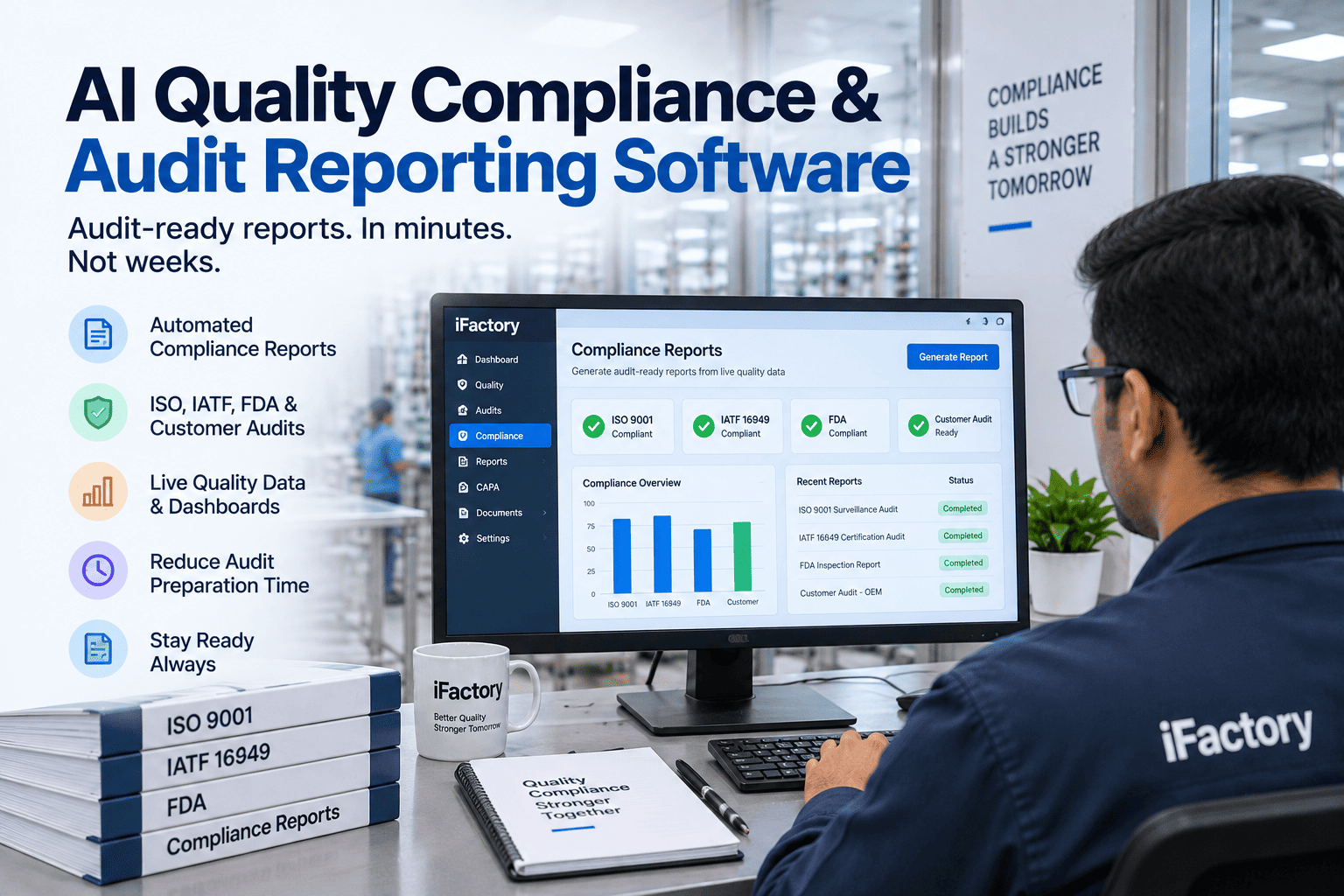
Audit preparation is a phase that shouldn't exist. In most plants a compliance report is something you assemble — weeks of pulling records from spreadsheets, drives, and inboxes, reconciling versions, and packaging evidence into whatever format ISO, IATF, the FDA, or a customer wants. ISO prep commonly runs four to eight weeks; FDA prep can start six months out. And it's fragile: nearly half of manufacturers can't retrieve a controlled document inside the two minutes an auditor expects. The scramble exists only because the report is treated as something you build after the fact. When reports generate themselves from live quality data, that phase collapses to minutes — the evidence already exists, so you're not preparing for the audit, you're simply compliant. You can book a demo to see a report built from your live data.
Stop Assembling Compliance Reports. Generate Them From Live Data.
Produce audit-ready compliance reports for ISO, IATF, FDA, and customer audits in minutes — pulled from live quality data, not compiled by hand from spreadsheets. Audit prep collapses from months to minutes because the evidence already exists.
A Report Built by Hand Is Always Late, Always Fragile, Always Stale
When a compliance report is assembled manually before each audit, every property that makes it painful comes from the assembly, not the audit. The data is scattered, so gathering it takes weeks; it's copied by hand, so it's error-prone; and it's a snapshot pulled at prep time, so it's already out of date when the auditor reads it. These are the specific failures of report-as-assembly that report-as-query removes.
Inspection histories, CAPA status, calibration records, training logs, and audit findings live in different tools, so building one report means hunting across all of them — the single biggest consumer of audit-prep hours.
Auditors expect a controlled document produced on request in about two minutes, and nearly half of manufacturers can't. Obsolete revisions circulate while the current version sits buried in a shared drive nobody checks.
A report built from an outdated template can fail an auditor's schema validation outright. Manual assembly is exactly where a stale format or a superseded record slips into the submission unnoticed.
A report compiled at prep time reflects the plant weeks ago, not today. Anything that changed since — a new nonconformance, a lapsed calibration — is invisible in a document that was frozen the moment it was assembled.
From a Report You Build to a Report You Query
The entire value of compliance reporting software is one conceptual shift: the report stops being an artifact you construct and becomes a view you generate on demand from data that's already there. Because every quality event is captured live as it happens, the evidence trail is complete at all times — so producing a report is querying a current dataset, not assembling a historical one. That shift is what turns audit prep from a project into a click.
Inspections, nonconformances, CAPAs, calibrations, training, and audit results are recorded as they occur, into one connected record — so the raw material for any compliance report is always current and complete, not gathered retrospectively.
A compliance report is produced from that live data whenever it's needed — for a scheduled certification, a surprise inspection, or a customer request — in minutes rather than weeks, because nothing has to be collected or reconciled first.
The same underlying data is rendered into the structure each standard expects — ISO, IATF, FDA, or a customer's template — so you're never rebuilding the evidence per audit, only re-presenting it in the required format.
Because the report reflects the data at the moment it's generated, it's never a frozen snapshot going stale. A report pulled an hour before the auditor arrives shows the plant as it is now, gaps and all — which is what lets you fix them first.
Turn a Six-Week Prep Into a Six-Minute Report
iFactory generates audit-ready compliance reports from your live quality data on demand — so the evidence is assembled continuously and producing it for any standard is a query, not a quarter's work.
The Same Evidence, Presented the Way Each Auditor Expects
A plant rarely answers to just one standard, and each one wants the evidence in its own structure, thresholds, and documentation format. The power of generating from live data is that the underlying facts are shared — so one quality record serves every framework, re-rendered rather than rebuilt. These are the report types the system produces from the same source.
Documented processes, traceable corrective actions, verifiable inspection histories, and internal-audit records rendered to the ISO structure — the evidence a certification or surveillance audit walks through.
The automotive layer on top of ISO 9001 — layered-process-audit results, PPAP and control-plan linkage, and customer-specific requirements presented in the format OEM and certification auditors expect.
Device history records, calibration and validation currency, and a compliant electronic audit trail — the risk-based evidence the FDA QMSR now makes inspectable, generated rather than reconstructed.
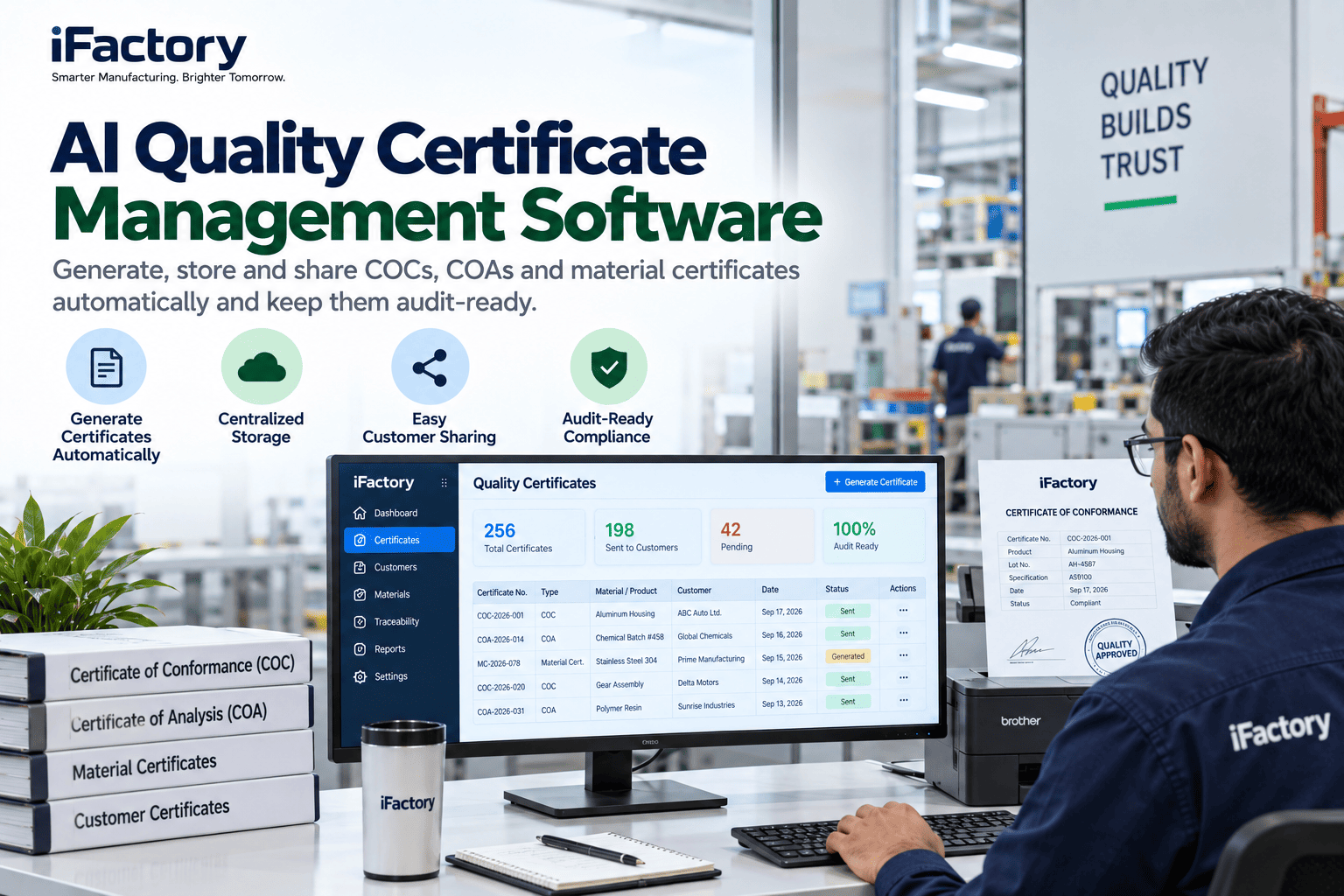
Customer quality-portal summaries and second-party audit packs in the requested layout, exportable as signed PDF or structured data and scheduled to push to customer portals automatically.
A Report Auditors Trust Is More Than a Nicely Formatted PDF
Generating fast is only useful if what's generated actually withstands scrutiny. An audit-ready report has to carry the properties an auditor probes — traceability, a defensible trail, and current status — not just present numbers attractively. These are what separate a real compliance report from a dashboard screenshot.
Every data point traces to its source event with a time-stamp, operator, and — where a value changed — the old value, new value, and reason. The trail exists as a byproduct of the work, not something built during prep.
Findings link to their CAPAs and closure evidence, so a report shows not just that an issue was found but that it was resolved and verified — the closed loop auditors most want to see.
Reports export with the electronic-signature and approval chain intact, satisfying the Part 11-style requirement that records be attributable and approvals be non-repudiable.
Because the report is current, it surfaces the open items — a lapsed calibration, an overdue action — before the audit rather than during it, so gaps get closed on your schedule, not written up on theirs.
You Don't Get Ready for the Audit — You Already Are
The cumulative effect of continuous capture and on-demand generation is that the concept of a preparation phase dissolves. There's no six-month countdown, no thousands of quality-team hours spent printing and searching and hoping nothing was missed. The dashboard is live, the evidence is assembled, and the audit becomes a review of a system that was ready the whole time.
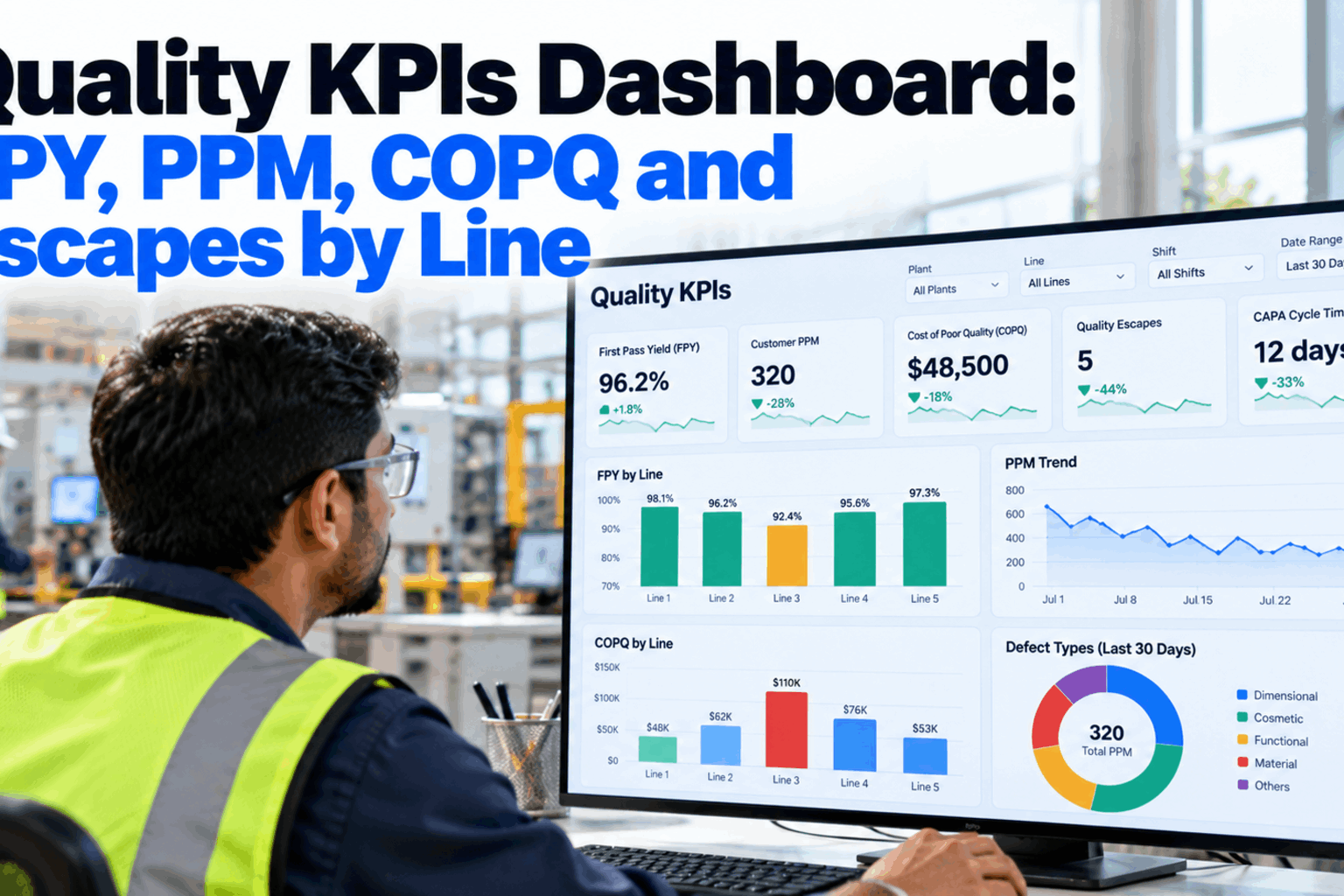
Batch-record status, calibration coverage, validation currency, and training compliance refresh continuously from operational data, so leadership sees true readiness at any moment instead of a quarterly compilation.
The system flags documentation gaps and expiring items as they arise — a certification lapsing, an inspection overdue — so they're closed in the normal course of work rather than discovered in a pre-inspection scramble.
The hundreds or thousands of hours a quality team spends assembling evidence become minutes reviewing a dashboard, returning senior quality resources to the work that actually improves the plant.
A surprise inspection or a short-notice customer audit stops being a crisis, because readiness isn't a state you switch on before a known date — it's the continuous condition of the system.
Live Data In, Audit-Ready Report Out, for Any Standard
iFactory turns the quality data your operation already generates into compliance reports on demand: it captures every quality event into one connected, audit-trailed record, and renders that record into whatever standard's format you're being audited against — so reporting is continuous readiness rather than periodic assembly.
What Quality Teams Ask About Compliance Reporting Software
Make Every Audit a Review, Not a Fire Drill
iFactory generates audit-ready compliance reports for ISO, IATF, FDA, and customer audits from your live quality data — with a complete audit trail and traceable actions — so audit prep collapses to minutes and readiness becomes continuous.