Most audit programs don't fail during the audit — they fail in the gaps between the pieces. The schedule lives in one spreadsheet, the checklists in another, the findings end up in an auditor's email, and the corrective actions get written on a whiteboard that's wiped by Friday. So a finding falls through a crack, its CAPA never quite closes, and a year later the next audit re-discovers the exact same nonconformity. The audit was fine; the system around it leaked. Audit management software fixes that by putting the whole lifecycle — schedule, checklist, findings, CAPA, close — in one connected place where a finding automatically triggers a tracked action. The result is a plant that's audit-ready by default. You can book a demo to see the closed loop on your program.
Audits Don't Fail in the Room — They Fail in the Gaps Between the Spreadsheets
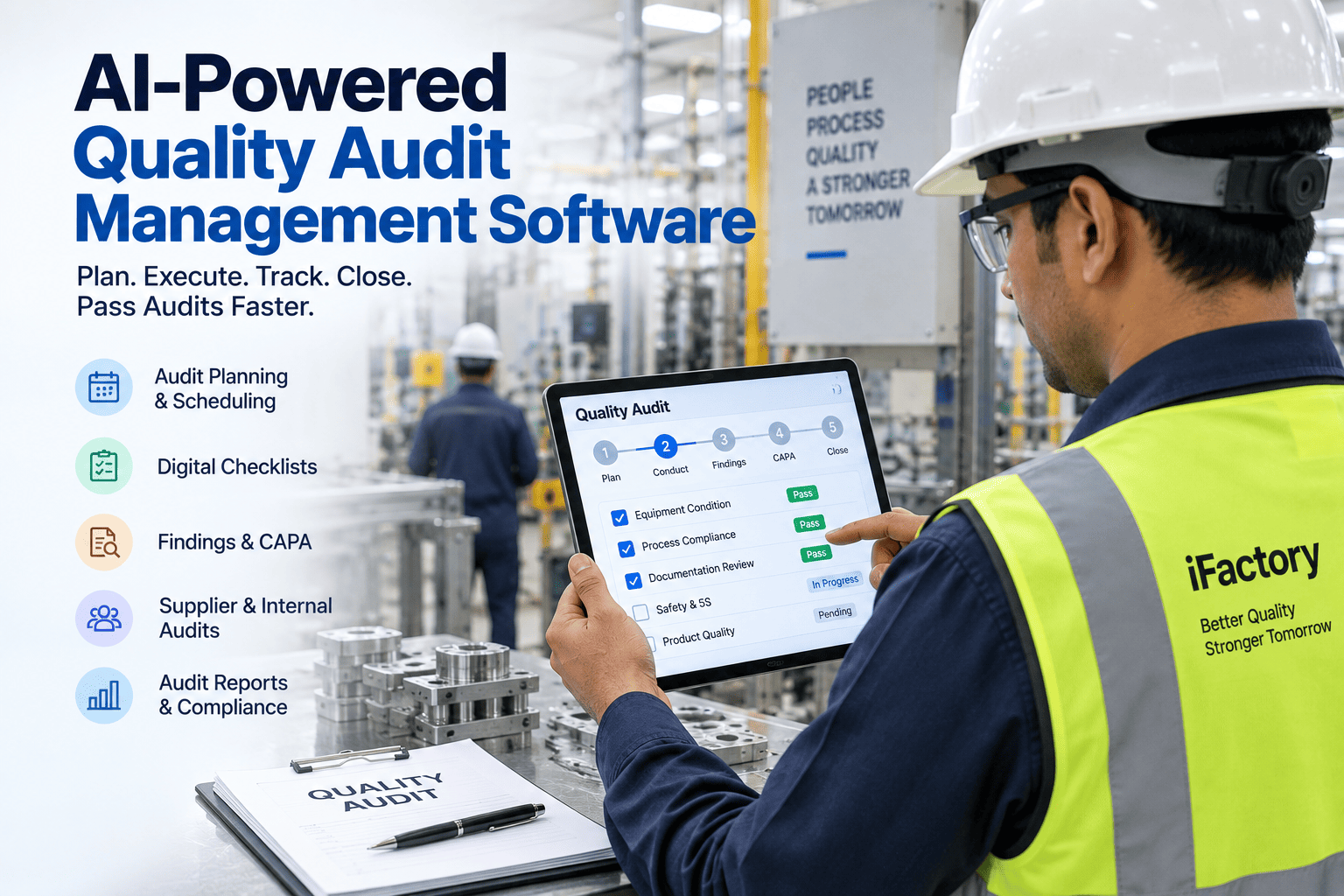
Plan and conduct internal, supplier, and certification audits with digital checklists, findings, and CAPA in one connected system — so every finding drives a tracked action to closure and the plant is audit-ready by default, not the week before.
A Scattered Audit Program Loses Findings in the Handoffs
When audit records are distributed across email threads, shared drives, and disconnected spreadsheets, every transition between stages is a place something can be dropped. The audit gets conducted competently, but the value leaks out afterward — in the handoff from finding to action, from action to owner, from owner to closure. These are the gaps a connected system closes.
An auditor's findings sitting in an inbox or a one-off report aren't linked to anything. Without an automatic path into a corrective action, a finding depends on someone remembering to transcribe and assign it — and some don't survive that step.
A corrective action with no owner, deadline, or tracking drifts. The most common audit-program failure is the finding whose CAPA was opened, half-done, and never verified closed — which the next audit then re-finds.
When the audit calendar lives in one person's spreadsheet, a planned-interval internal audit or a due supplier re-audit can slip unnoticed until it's overdue — a gap an ISO auditor will find before you do.
When records are scattered, preparing for a certification audit means a frantic hunt to assemble evidence that should already exist as a whole. The scramble itself is the symptom of a program that isn't continuously audit-ready.
Every Stage Connected, So Nothing Falls Through
The core of audit management software is that the whole audit lifecycle lives in one controlled environment where each stage references the next. Instead of five disconnected tools, there's one thread from the scheduled audit to the verified-closed action — which is what makes findings impossible to lose and evidence always assembled.
The full audit calendar — internal audits at their planned intervals, supplier re-audits, certification cycles — is managed in one place with visibility across the program, so nothing slips silently past its due date and resources are planned rather than scrambled.
Auditors work from standardized digital checklists on a mobile device, capturing responses, scores, and photo evidence on the spot — even offline on the shop floor — so the audit record is complete and consistent rather than reconstructed from handwritten notes afterward.
Each finding is recorded and classified — nonconformity, observation, opportunity for improvement — with its evidence attached, so its severity and required response are clear and it becomes a tracked item the moment it's raised, not a line in a report.
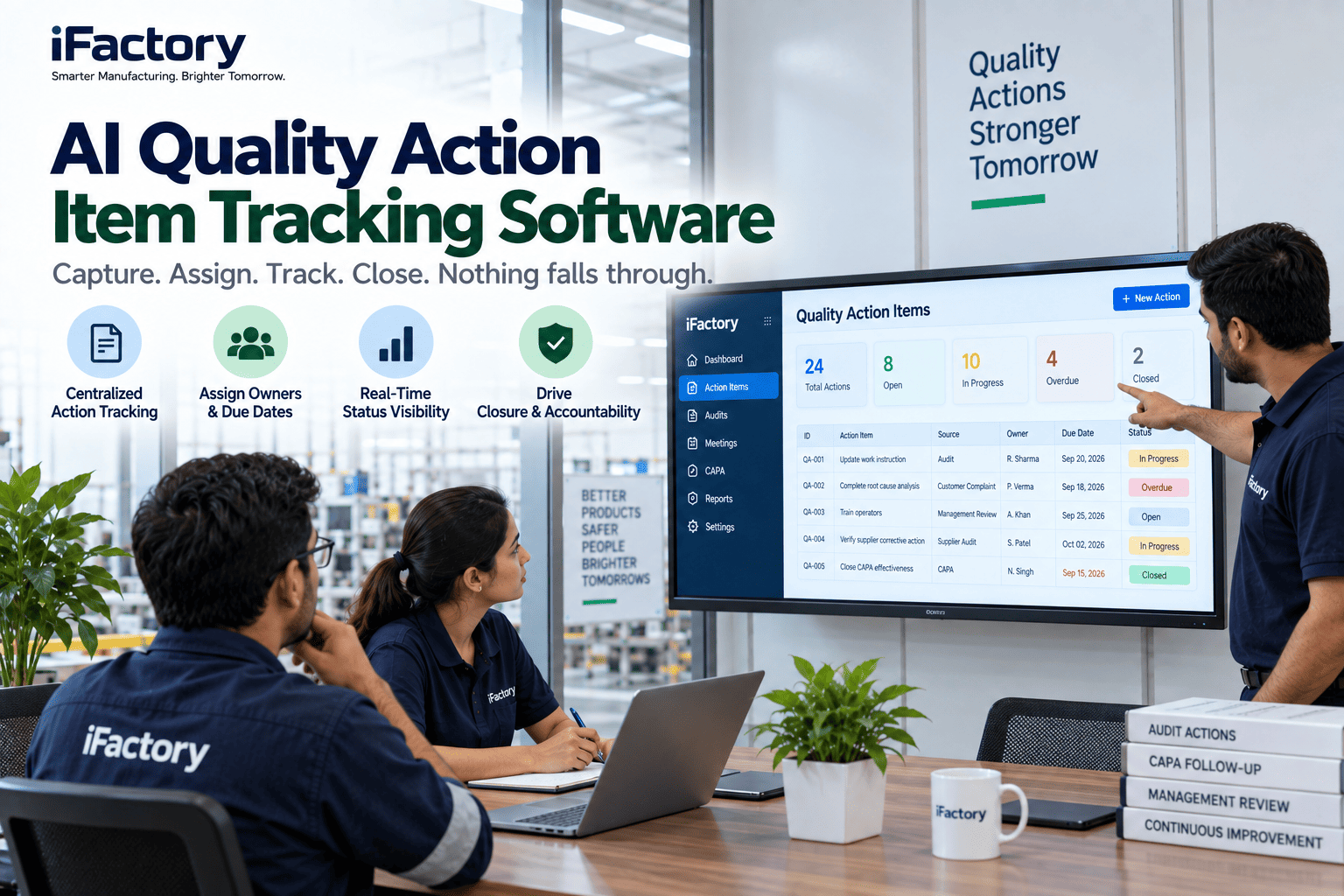
A finding automatically opens a corrective action with an assigned owner and a deadline, tracked to verified closure with no manual handoff — the connection that eliminates the gap where findings historically disappeared between the audit and the fix.
Close the Loop From Finding to Verified Fix
iFactory links every audit finding straight to a tracked CAPA with an owner and a deadline — so nothing falls through the handoff and the same nonconformity doesn't reappear at next year's audit.
Internal, Supplier, Certification, and Layered — All in One Program
A plant doesn't run one kind of audit, and a platform worth adopting has to handle the full range without a separate tool for each. The value of consolidating them is a single view of audit activity and one place findings and actions live, whatever the audit's origin. These are the audit types the system runs.
Self-assessments of your own processes and QMS controls. Under ISO 9001 and ISO 13485 these are mandatory at planned intervals, verifying that procedures are followed and the quality system stays effective over time.
Second-party audits of the suppliers your quality depends on, with their findings and corrective actions tracked in the same system — so a supplier's open CAPA is as visible as an internal one, not lost in a separate file.
Third-party audits against standards like ISO 9001. Because the evidence, findings, and CAPA history already live in one place, the certification audit becomes a walkthrough of an organized record rather than a document hunt.
Short, frequent checks performed across management layers — operator to plant manager — to verify standard work. Pioneered in automotive under CQI-8, LPAs satisfy and complement the ISO 9001 internal-audit requirement.
LPAs Only Work When the Schedule and Escalation Are Enforced
Layered process audits deserve their own attention because they're where a paper program most visibly breaks down. An LPA program means many short audits, performed frequently, by people at every level from the line up to the plant manager — a volume and cadence that's unmanageable on paper but exactly what software is built to sustain. Here's what makes an LPA program hold together.
Each management layer audits against its own checklist at its own frequency — an operator checks daily basics, a manager verifies less often at a higher level — configured and scheduled automatically rather than coordinated by hand.
The program's health depends on audits actually being done, so missed or overdue layer audits are surfaced and escalated — turning leadership presence on the floor from an intention into a tracked, verifiable commitment.
Because LPAs happen at the workstation, auditors run them from a phone or tablet, capturing findings and photos on the spot and offline — the practical requirement that keeps a high-frequency program from reverting to paper.
An LPA deviation opens a tracked action just like any other audit finding, so the shop-floor check and the formal quality system share one improvement loop rather than living in a separate binder.
The Best Time to Prepare for an Audit Is Never — Because You Already Are
The deepest shift a connected audit system produces is that being audit-ready stops being a project you spin up before each certification and becomes the default state of the program. When every audit, finding, action, and piece of evidence already lives in one referenced record, there's nothing to assemble — the preparation happened continuously as the work was done.
Schedules, completed checklists, findings, and closed CAPAs live together and reference each other, so producing the evidence trail an auditor asks for is a query, not a fire drill across drives and inboxes.
Every action in the system is time-stamped and attributable, so the record of who did what and when — the thing an auditor probes hardest — exists as a byproduct of using the system rather than something reconstructed.
Dashboards show audit completion, overdue actions, and CAPA status across the program, so you walk into an audit knowing exactly what's open and closed instead of being surprised by it in the room.
Because findings are captured consistently, recurring nonconformities surface as patterns to fix at the root — so the program demonstrably improves rather than re-finding the same issues cycle after cycle.
One Connected Program From Schedule to Verified Closure
iFactory runs the entire audit lifecycle in one system: it schedules every audit type, drives them from mobile digital checklists, classifies findings, and links each straight to a tracked CAPA — so the loop closes, the trail is complete, and the plant stays audit-ready between certifications, not just before them.
What Quality Teams Ask About Audit Management Software
Stop Scrambling Before Audits — Be Ready Between Them
iFactory runs internal, supplier, certification, and layered process audits in one connected program, linking every finding to a tracked CAPA and keeping a complete audit trail — so you close the loop, prevent repeat findings, and pass audits faster.