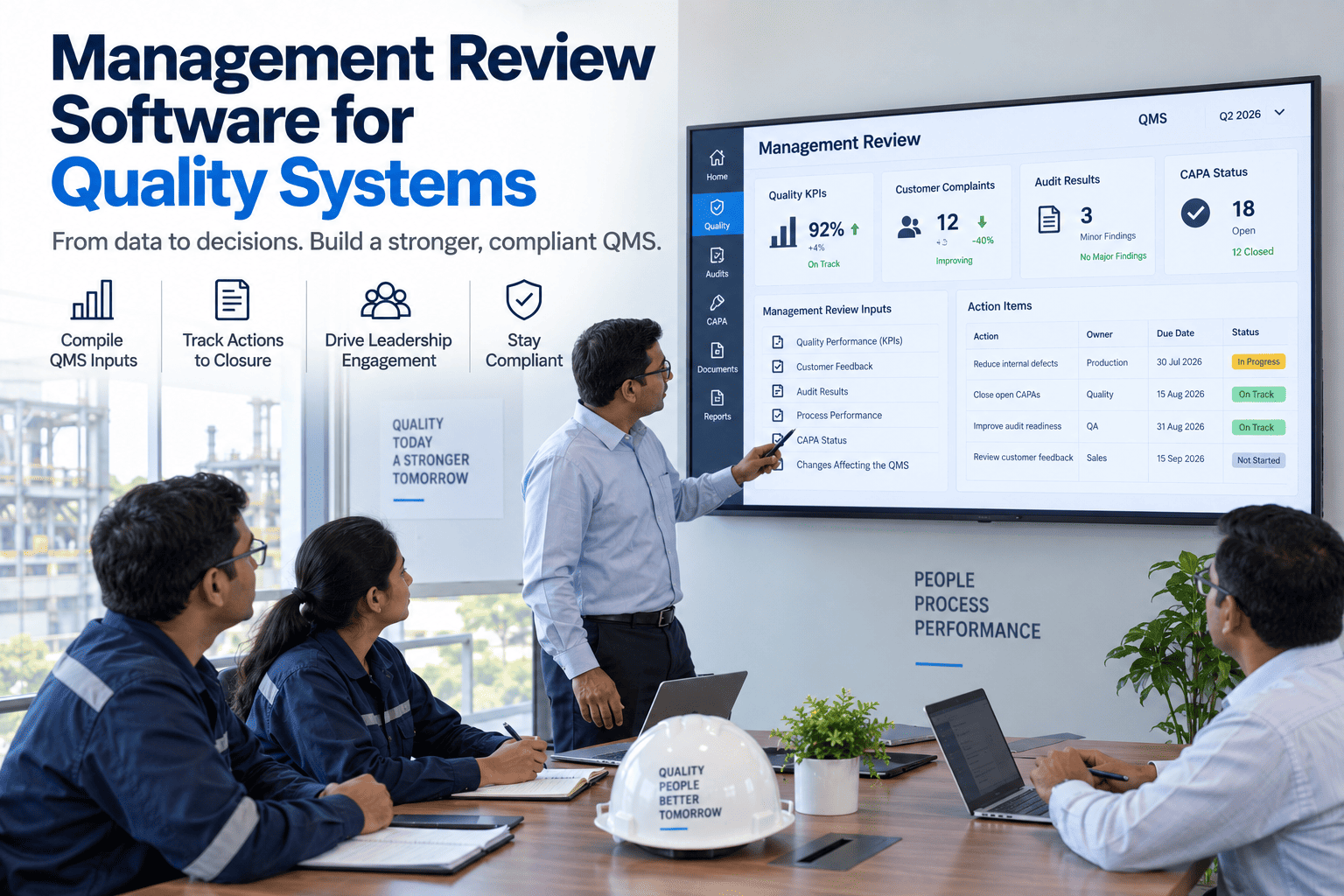
Management review is where the whole quality system gets judged — and it's one of the most commonly cited nonconformities in an ISO 9001 audit. Not because organizations skip the meeting, but because it fails in three predictable ways: a required input is missing from the record, the "review" was a discussion of opinions rather than data, or its decisions were never tracked to closure. Clause 9.3 doesn't ask for a meeting; it asks for a documented, data-driven leadership evaluation against a mandatory list of inputs, ending in assigned actions. Reconstructing that from scattered spreadsheets the night before an audit is how the gaps appear. Management review software compiles every input automatically, forces the review onto data, and tracks each action to closure. You can book a demo to see a review built from your live QMS data.
Turn Management Review From a Top Audit Finding Into a Governed Process
Compile every clause 9.3 input — KPIs, audit results, CAPA status, supplier performance — into a structured, data-driven review, and track every decision to closure. So the review is complete, evidence-backed, and audit-ready by default.
Three Ways Management Review Fails — and Every One Is Preventable
Failure to conduct an effective management review is a major nonconformity, and the reasons it gets cited are consistent across audits. It's almost never that the organization didn't meet; it's that the meeting didn't produce the complete, data-backed, action-tracked evidence the standard requires. Understanding the three failure modes is how you build a review that doesn't get flagged.
Clause 9.3.2 lists specific inputs that must all be addressed. Auditors expect every one to appear in the record, and supplier performance and resource adequacy are the two most commonly skipped. If any input is missing or unsupported by data, it gets flagged.
The most common substantive issue: a review that "discusses performance" without showing it. A data-driven review presents trends and metrics; an opinion-driven one presents recollections. Auditors want to see the numbers behind every input, not a summary of the conversation.
The review must end in decisions, and those outputs must be assigned, tracked, and closed. When actions are recorded but never followed up, the next review shows the same issues recurring — the clearest sign to an auditor that the review isn't driving improvement.
The standard requires top management to review the QMS, not the quality manager alone. If leadership delegates attendance or the minutes show only a sign-off with no engagement, auditors question whether the commitment is genuine.
Every Input Clause 9.3.2 Requires, Compiled Automatically
The standard is explicit about what a management review must consider, and the whole list is non-negotiable — a review that covers most of it still fails. The problem is that these inputs live in different systems and spreadsheets, so assembling them by hand is slow and error-prone. Software pulls each one from the live QMS so the briefing is complete before the meeting starts.
Status of the actions decided at the last review — what was committed and what progress has been made, closing the loop the standard opens.
Quality objectives achievement, process performance, product and service conformity, and monitoring and measurement results — the core performance picture.
Trends in customer satisfaction and interested-party feedback, presented as movement over time rather than a single latest figure.
Open and closed nonconformities and the status of corrective actions, so leadership sees whether the corrective-action system is actually resolving issues.
Internal and external audit findings — clause 9.2 audits feed directly into the review as a required input, closing performance evaluation into one loop.
External provider performance — one of the two most commonly skipped inputs, and a frequent audit finding when it's absent from the record.
Whether the QMS has the resources it needs, including people, competence, and infrastructure — the other input teams most often forget to document.
Effectiveness of actions taken on risks and opportunities, changes in internal and external issues, and opportunities for improvement.
Walk In With Every Input Already Compiled
iFactory pulls all eight clause 9.3.2 input categories from your live QMS into one structured briefing — so no required input is ever missing and every number is backed by real data.
A Review That Doesn't End in Tracked Actions Isn't Complete
Clause 9.3.3 is as mandatory as the inputs, and it's where reviews most often fall apart. The review has to produce documented outputs — decisions and actions — and those actions have to be assigned, tracked, and closed. A review that generates a tidy set of minutes but no followed-through actions is the definition of a review that isn't driving improvement, and it shows up as the same issues recurring meeting after meeting.
Decisions and actions on opportunities for improvement — the forward-looking output that turns a performance review into continual improvement rather than a status report.
Any need for change to the quality management system itself, decided by leadership with the authority to make it happen — a process, a procedure, an objective.
Decisions on the resources the QMS requires, connecting the review directly to budget and headcount rather than leaving needs as an observation.
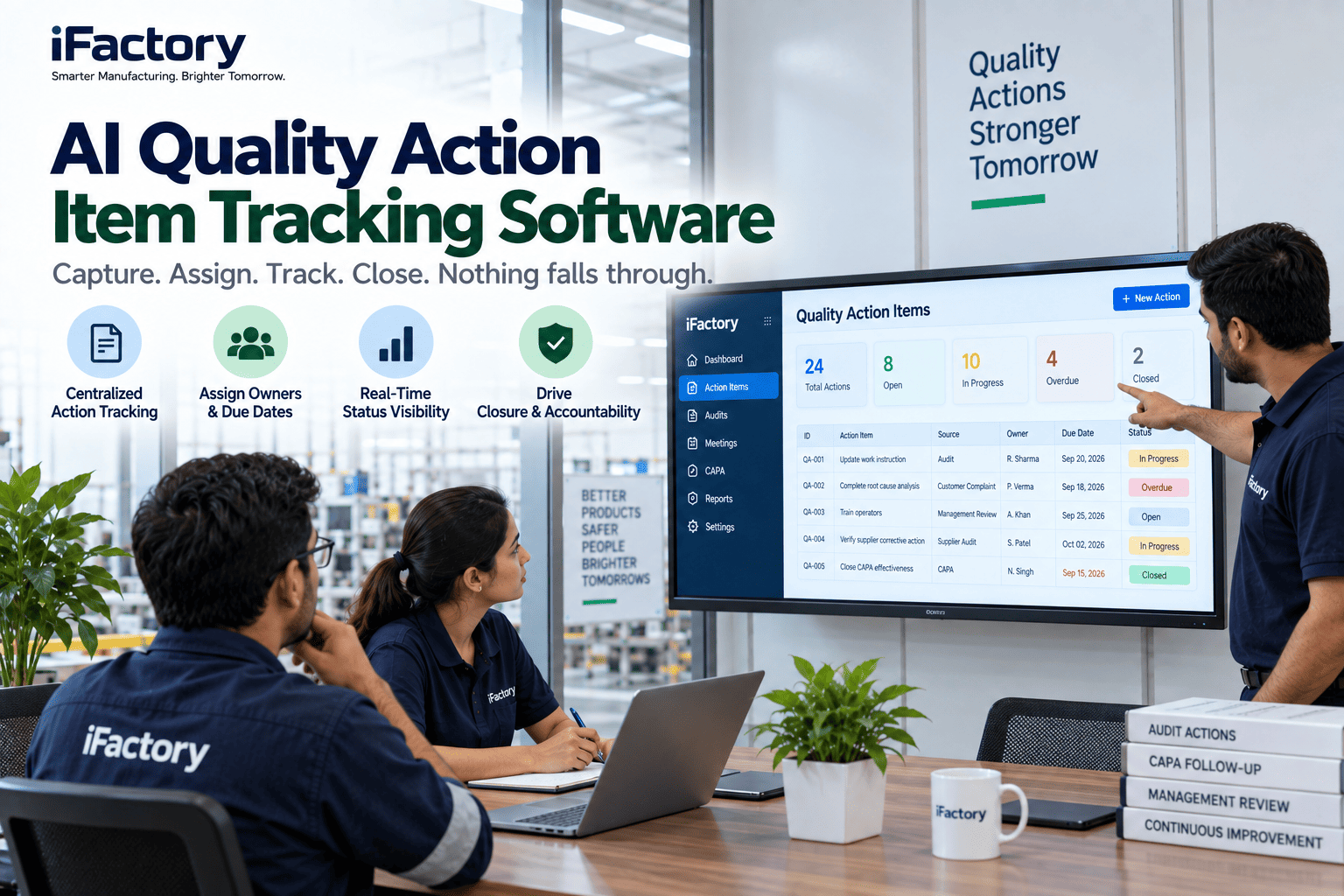
A decision without an owner is a wish. The discipline that separates a review that improves the QMS from one that just documents it is that every output action gets a named owner, a due date, and a verification of whether it worked — then its status is reported at the next review. That tracked loop is exactly what an auditor looks for to confirm the review is a governance mechanism, not a formality, and it's what stops the same findings from reappearing year after year.
Most of the Effort Is Compiling Inputs and Chasing Actions Between Meetings
The meeting itself is an hour or two. The real work is everything around it — pulling every input together from systems that don't talk to each other, then keeping the resulting actions alive across the months until the next review. That's where the effort goes and where the gaps open, and it's exactly the part software removes.
KPIs in one spreadsheet, audit findings in another, CAPA status in a third, supplier scores in a fourth — assembling them by hand takes days and something always gets missed or goes stale in the copying.
When the input pack is compiled manually under deadline, it reflects a snapshot rushed together rather than the current state, and the pressure is exactly when a required input gets dropped.
Decisions recorded in the minutes have no home after the meeting closes, so they surface again only at the next review — as the same open items, now overdue.
Each review is assembled fresh, so leadership sees this period's numbers but not the trajectory — and the standard specifically wants trends, not a single point in time.
The Same Review, Assembled by Hand vs. Compiled Live
The difference between a review that gets flagged and one that sails through shows up at each stage — from assembling the inputs to proving the actions closed. This is where a manual process and a governed one diverge.
| Stage | Manual / Spreadsheet | Management Review Software |
|---|---|---|
| Compiling the inputs | Days of pulling from separate systems | Auto-compiled from the live QMS |
| Input completeness | A required input often missing | All clause 9.3.2 inputs present by default |
| The performance picture | A single latest snapshot | Trends over time, as the standard wants |
| Output actions | Recorded in minutes, then forgotten | Assigned with owner, deadline, verification |
| Between reviews | Actions go quiet until next meeting | Tracked to closure, status always current |
| Audit evidence | Reconstructed before the audit | Complete record exists on demand |
The Same Review Discipline Spans Every Management-System Standard
Management review isn't unique to ISO 9001 — the same clause 9.3 structure of mandatory inputs, documented outputs, and top-management engagement runs through the major management-system standards. A review built around that shared structure satisfies all of them at once rather than being rebuilt per standard.
The clause 9.3 baseline — QMS performance, audits, CAPA, customer satisfaction, and supplier performance reviewed by top management at planned intervals.
The same review discipline applied to environmental performance, compliance obligations, and objectives — often run as one integrated review alongside quality.
Occupational health and safety performance, incident trends, and worker consultation reviewed under the identical inputs-outputs-actions structure.
IATF 16949, AS9100, ISO 13485, and ISO 27001 all carry a clause 9.3 review, so one governed process covers a multi-standard certification.
Inputs Compiled, Review Governed, Actions Closed — in One System
iFactory turns management review from a periodic scramble into a standing governance process: it draws every required input from the live QMS, presents them as trends, and tracks every decision to verified closure — so the review is complete and audit-ready without the manual assembly.
What Quality Leaders Ask About Management Review Software
Make Management Review the Governance Layer It's Meant to Be
iFactory compiles every clause 9.3 input from your live QMS, presents the review on data instead of discussion, and tracks every decision to verified closure — so the review passes the audit and actually improves the quality system it governs.