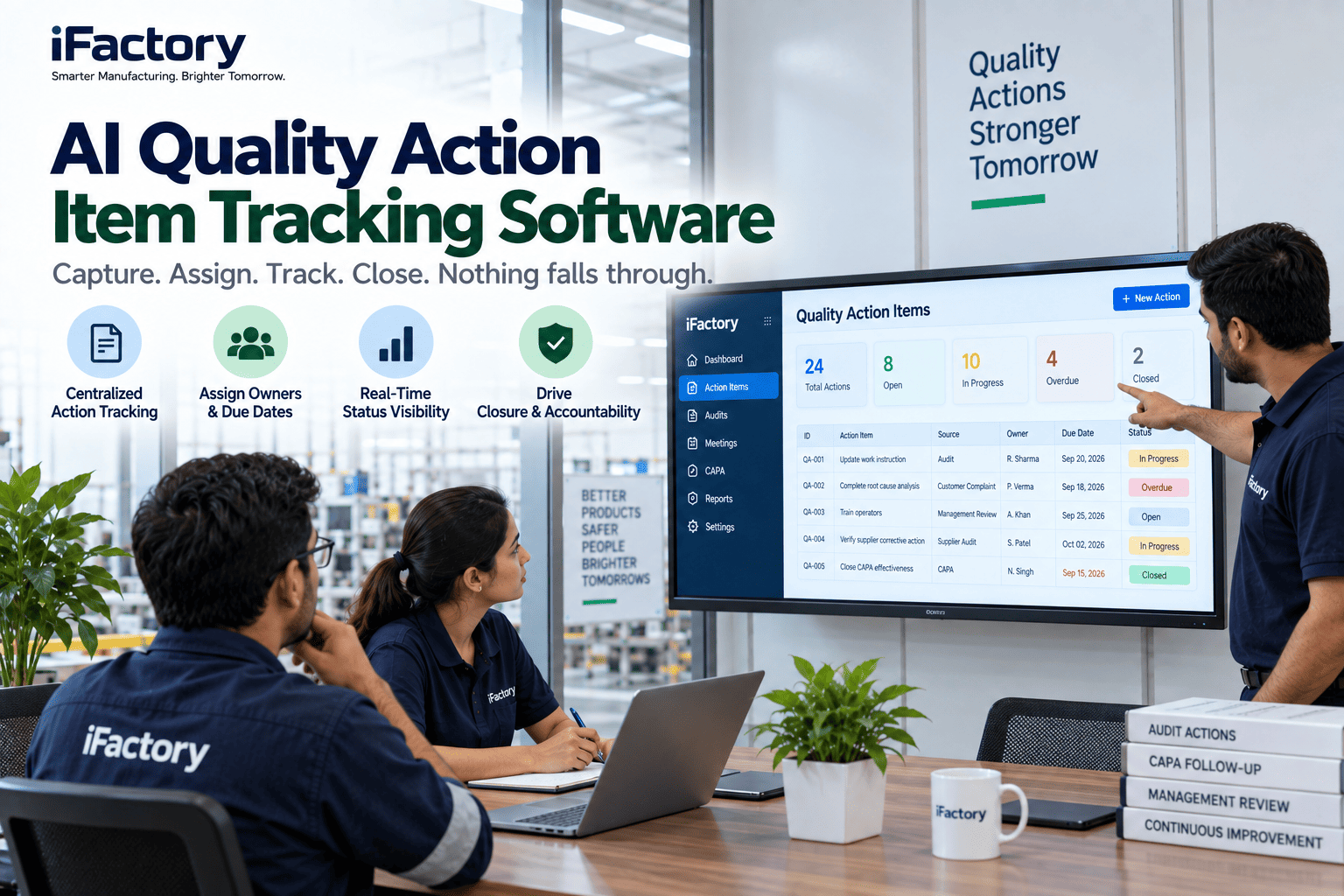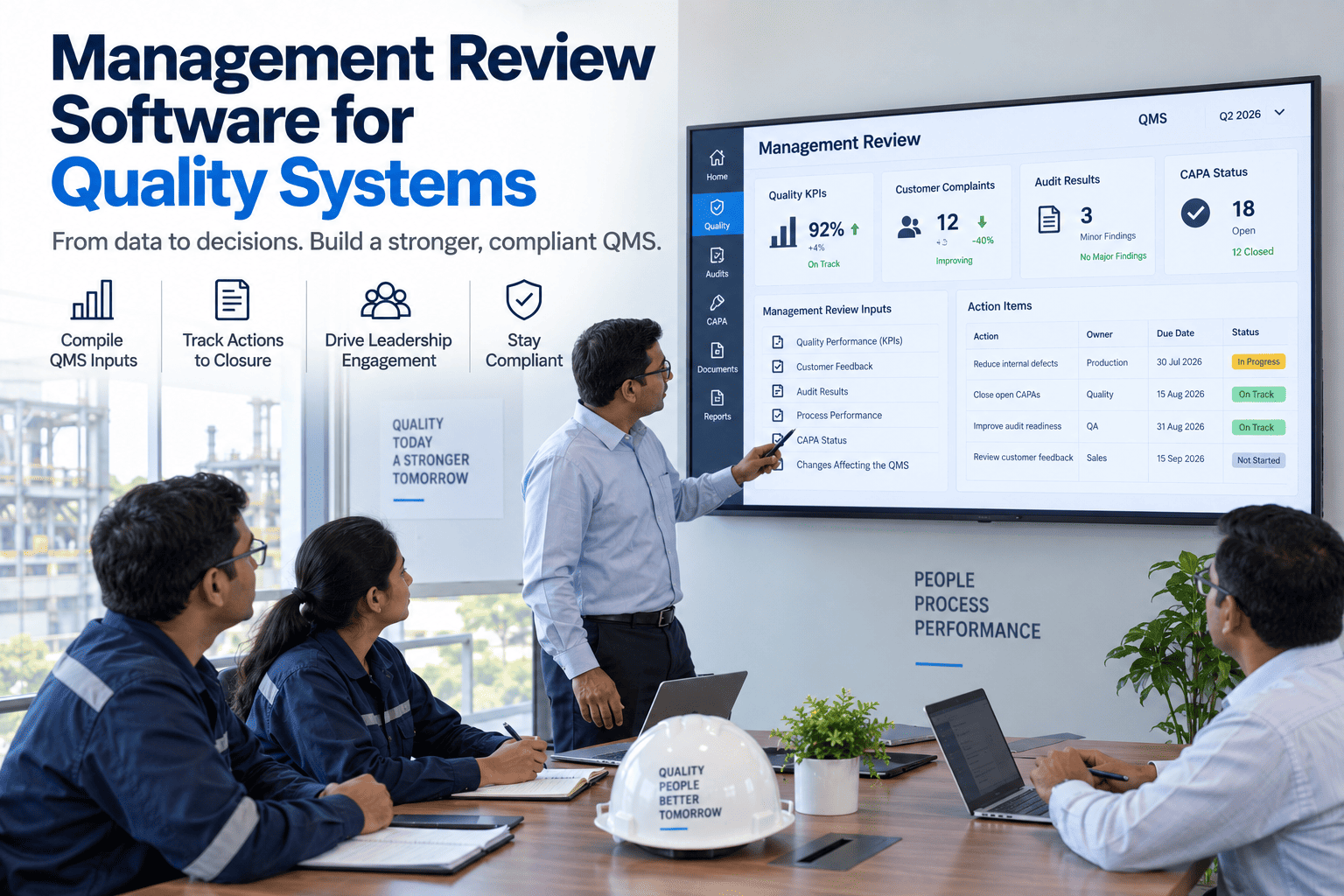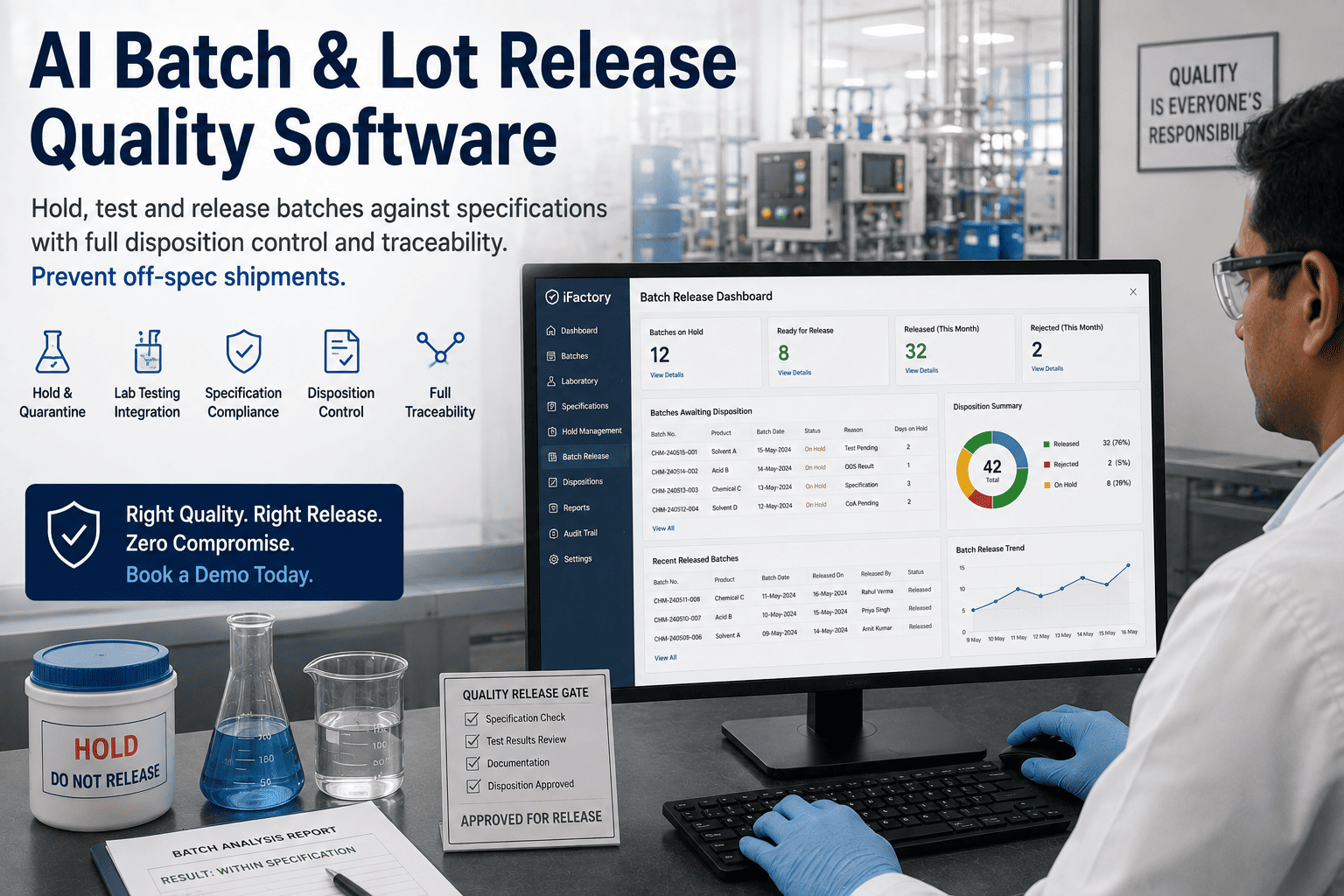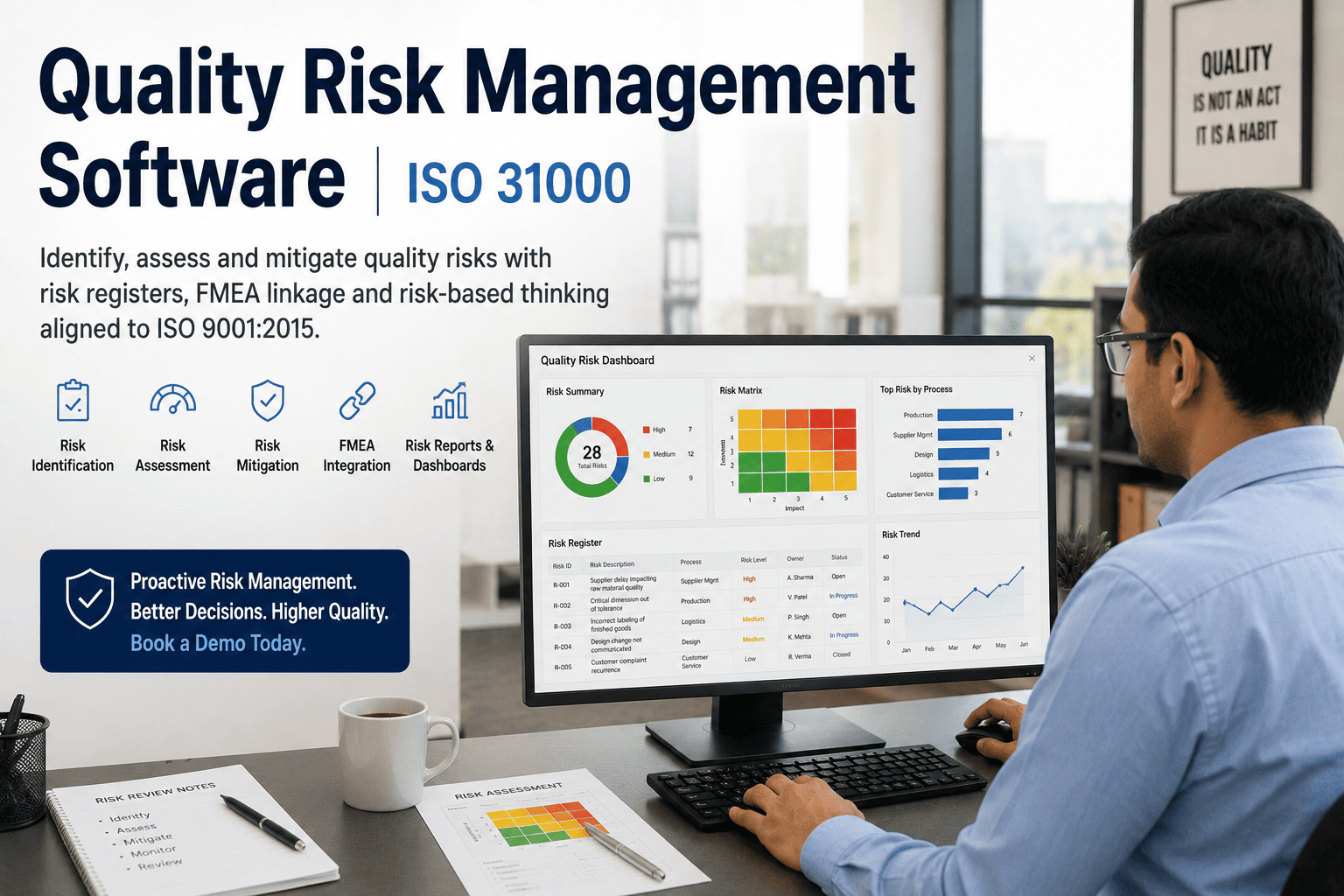
In a GMP operation, deviations aren't the problem — how they're handled is. Something departs from the approved procedure on almost every shift, and a compliant manufacturer isn't one where nothing goes wrong, it's one that catches, investigates, and closes each event with a defensible trail. That's where most sites lose control. Over 65 percent of GMP inspection findings in recent years trace back to weak deviation handling or delayed closure — not the events themselves, but superficial investigations and CAPAs that were never linked or verified. Deviation management software holds the whole lifecycle in one place, from capture through impact assessment and investigation to CAPA closure. You can book a demo to see it on your own events.
Every Deviation From Capture to Closure — Investigated, Linked to CAPA, and Audit-Ready
Log the event, assess impact, route the investigation, and connect it to CAPA in one connected system — with the traceability an FDA or EMA inspector expects and the trend visibility that stops repeats.
Teams Rarely Lose Control at the Event — They Lose It in the Handoffs
Almost no one fails to notice a deviation. The failures happen in the transitions between steps: the event that sat three days before anyone classified it, the investigation that stalled waiting on documentation from another department, the CAPA that was defined but never linked back to the deviation that spawned it, the closure that happened without anyone verifying the action worked. Paper and email systems have no way to hold those handoffs, so events age silently until an inspector finds the backlog.
And those backlogs are almost always structural, not mysterious. When investigators can't get the records they need from another function, when there are no enforced deadlines between stages, and when extensions are easy to grant, events pile up in predictable places. The deviation gets opened fine and the CAPA eventually gets written fine — it's the middle, the investigation and impact assessment where multiple functions have to coordinate, that quietly consumes weeks. A system that makes each handoff visible and each owner accountable is attacking the actual cause of the backlog, not just digitizing the forms around it.
An event logged days after it happened, or classified by gut feel, starts the whole clock wrong. GMP expects the event opened within 24 hours and classified early, because classification drives everything downstream.
The single biggest time killer is a writer who can't get the documentation they need from another function. Without assigned owners and visible due dates, investigations drift past their window with nobody accountable.
A corrective action defined in one place and the deviation that triggered it recorded in another, with no link between them, means neither the effectiveness check nor the audit trail holds together.
Done on paper, deviation management becomes 200 entries in a binder that no one can trend — so the recurring event that a dashboard would flag in seconds keeps recurring, unseen.
Six Stages, One System, No Gaps Between Them
Regulators expect the same structured path for every event, every time, because consistency is what makes the data reliable and the fixes real. Software is what carries an event through each stage without it falling into a handoff. Here's the path.
The event is logged the moment it's spotted — by an operator or a sensor — within the required 24-hour window, with immediate containment actions recorded to protect product while the rest of the process runs.
The deviation is assessed for its effect on product quality, patient safety, and data integrity, then classified minor, major, or critical — the single judgment that sets investigation depth, closure timeline, and whether the batch is held.
The system routes the event to the right owners based on its classification, gathering the cross-functional input a proper impact assessment needs instead of leaving a writer to chase it by email.
Structured root-cause methods — 5 Whys, fishbone — are applied at the depth the classification requires, with the record forced to justify its conclusion rather than defaulting to "human error" without systemic evidence.
The deviation escalates directly into a CAPA, carrying all its context, so corrective actions address the event and preventive actions stop the recurrence — with the link between deviation and CAPA preserved permanently.
QA closes the event only after CAPA effectiveness is verified, and every closed deviation feeds a trend view that surfaces recurring patterns before they become an inspection finding.
One Judgment Sets Investigation Depth, Timeline, and Whether the Batch Holds
Classification isn't a label you attach for the record — it's the decision that determines everything that follows. Get it right and each event gets effort proportional to its risk; get it wrong and you either over-investigate a trivial event or under-investigate a serious one. This is the part a generic quality workflow always glosses over.
| Class | Impact on Product | Investigation Required | Typical Closure |
|---|---|---|---|
| Minor | No product or process impact | Streamlined single-record; justify the no-impact conclusion, close at line-QA level | Days |
| Major | Possible impact on quality | Formal root-cause investigation with documented evidence | Within ~30 days |
| Critical | Direct impact on quality or patient safety | Full investigation, batch hold, escalation, possible regulatory notification | Extended, ~30-90 days |
Many sites still run every deviation on a default 30-day closure clock, even though there's no regulatory requirement for that specific number. Applied to everything, it drives the wrong behavior — pressure to close before the true systemic root cause is found, and a check-the-box mindset that inspectors see straight through. A risk-based system times each class to its actual complexity, so minor events close in days and free the effort for the major and critical ones that deserve it.
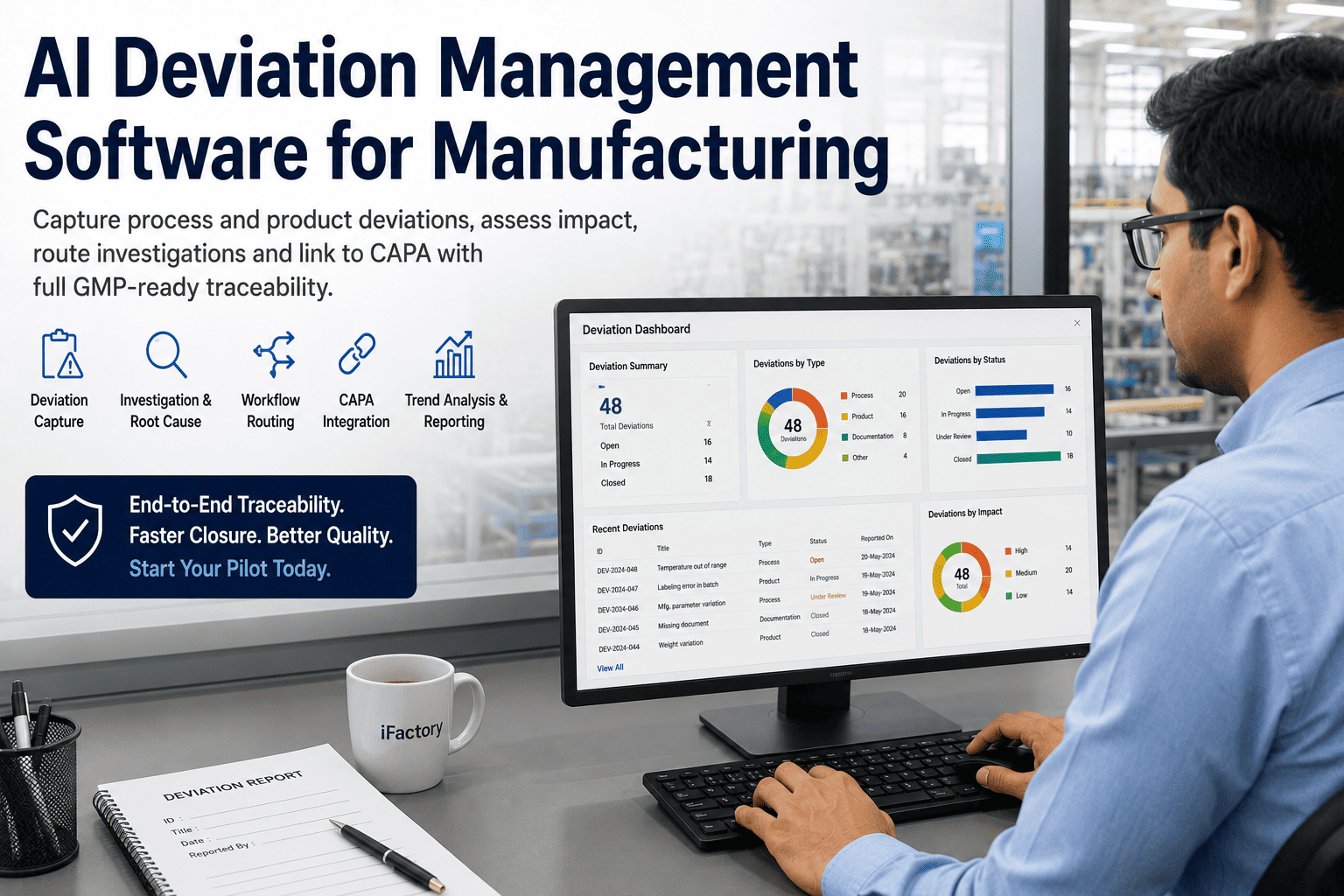
See Every Open Deviation and Its Stage on One Screen
iFactory holds capture, classification, investigation, and CAPA linkage in one connected system — so nothing ages silently in a handoff and every event is closed with its trail intact.
Deviation, Incident, or Change — Handled Differently, On Purpose
Not every departure is a deviation, and treating them all the same either buries you in paperwork or misses the events that matter. A good system routes each type down its correct path from the start.
Something went wrong against the approved standard — a departure that wasn't intended. This is reactive: it must be captured, investigated, and driven to CAPA to prevent recurrence.
A deliberate, pre-approved departure with a justification and impact assessment signed off before it happens. Proactive, and routed through approval rather than investigation.
An unplanned event that doesn't actually depart from GMP procedure or affect product — an operational or environmental blip. Logged and assessed, but not every incident is a deviation.
Traceability Isn't Paperwork — It's the Whole Point
Regulators treat deviation trends as a direct read on an organization's process discipline and inspection readiness. What they're actually assessing is whether every event has a complete, connected trail — and that trail is only possible when the whole lifecycle lives in one system rather than scattered across forms, emails, and spreadsheets.
The reason this matters so much is that an inspector rarely judges you on a single deviation. They judge you on the pattern: how consistently events are classified, whether investigations actually reach systemic root cause or default to "operator error," whether CAPAs get verified before closure, and whether the same deviation keeps reappearing. Every one of those is a question about the trail, not about any individual event — and a trail that's stitched together after the fact from disconnected sources never holds up as well as one that was captured as the work happened.
Capture time, classification, each investigation step, and closure are all recorded with attribution, so the sequence and timing of the response are provable, not reconstructed.
The permanent link between an event and the corrective and preventive actions it produced is what lets you show a deviation was not just closed but actually resolved.
QA-controlled closure that requires CAPA effectiveness to be confirmed first is the difference between an event that's handled and one that's merely filed.
Recurring deviations and systemic gaps surface on a dashboard, so you find the pattern before an inspector does — turning a register into an early-warning system.
Wherever a Process Has an Approved Standard, Deviations Have to Be Managed
Deviation management is most associated with pharma, but the discipline applies anywhere departures from a validated process carry real consequences. The regulatory references change; the lifecycle doesn't.
Batch record and process deviations under 21 CFR Part 211, ICH Q7 and Q10, with batch disposition and inspection readiness on the line.
Nonconformance and process deviations under 21 CFR Part 820 and ISO 13485, tied directly into the device CAPA system.
Departures from HACCP plans and process controls, where a deviation at a critical control point is a food-safety event, not just a quality note.
Any operation running validated processes under ISO 9001 or sector standards, where a departure needs capture, investigation, and a closed loop.
From Paper Deviations to a Governed Lifecycle in Weeks
Because the lifecycle is well established, deployment is fast — your classification scheme, routing rules, and existing open events are what get configured, not a system built from scratch. iFactory maps to your SOPs and goes live in phases.
Set your classification criteria, closure timelines, routing by department, and CAPA linkage rules so the system enforces your SOPs rather than replacing them.
Run real deviations through the full lifecycle, migrate your open backlog into the system with owners and due dates, and validate the trail against your quality unit's expectations.
Extend across areas and sites, switch on trend dashboards and CAPA integration, and connect to the quality and manufacturing systems that feed and consume deviation data.
What Quality Teams Ask About Deviation Software
Close Every Deviation With the Trail Intact
iFactory carries each event from capture through classification, investigation, and verified CAPA closure in one connected system — so deviation management stops being your biggest inspection risk and starts being proof of control.