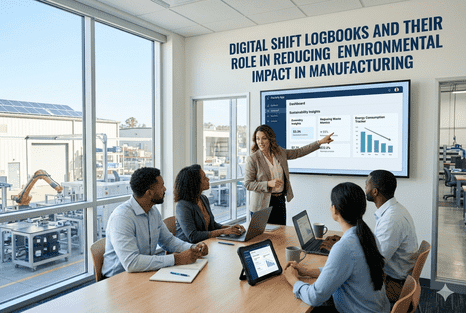
Manufacturing is responsible for roughly 20% of global carbon emissions — and a significant share of that environmental footprint is not caused by the machines themselves, but by the invisible layer of inefficiency that accumulates between them: undetected energy waste, unlogged process deviations, missed corrective actions, and shift changes where critical information about abnormal consumption simply disappears. A chemical plant typically wastes 22 to 38% of its purchased energy annually — not from equipment failures, but from slow-to-detect inefficiencies that no paper logbook or verbal briefing ever captures in time. iFactory's digital shift logbook changes the relationship between shift operations and environmental performance by turning every operator observation, every sensor anomaly, and every energy deviation into a structured, searchable, and actionable record — before the waste compounds and before the ESG reporting window closes. Book a Demo to see how digital shift logs support your sustainability goals.
SUSTAINABILITY · SHIFT INTELLIGENCE
Your Biggest Source
of Environmental
Waste Is Invisible.
Every shift handover that misses an energy anomaly, a process deviation, or an unlogged equipment event is a sustainability gap your ESG report will eventually expose. iFactory captures it all — in real time, before the damage compounds.
ISO 50001 Ready
GHG Protocol
Scope 1 & 2 Tracking
ESG Audit Trail
WAGES Monitoring
SUSTAINABILITY MONITOR — PLANT A
LIVE
−28%
Carbon Intensity
Year-over-Year
84.2%
OEE This Shift
Target: 85%
3
Energy Anomalies
Flagged Today
0
Permit / Compliance
Gaps This Shift
06:14
Compressor C-5 Idle Runtime Detected
31 min idle · Est. 0.8 tCO₂e waste · WO auto-created
05:50
Steam Trap ST-12 Repaired
WO #6210 closed · 18% steam loss eliminated
04:38
Effluent pH Deviation — Tank T-3
pH 5.2 (limit: 6.0) · Env. team notified · Logged
03:22
Shift B ESG Checklist Complete
All 12 environmental checks signed · e-acknowledged
Why Shift Operations Are a Hidden Driver of Environmental Waste
Environmental performance in manufacturing is most often measured at the monthly or quarterly level — energy bills, waste reports, emissions audits. But environmental waste is created at the shift level, in the 8-to-12-hour windows where a steam trap leaks undetected, a compressor runs idle through a handover gap, or a process deviation above the effluent threshold goes unlogged until the next QC review. Paper logbooks and verbal briefings cannot close these gaps. They can only describe what was noticed — and most environmental events are never noticed at all until a utility bill arrives or a regulator asks. Digital shift logbooks are the operational foundation that makes real-time environmental intelligence possible.
22–38%
of purchased energy wasted annually in chemical plants from undetected shift-level inefficiencies
20–30%
typical energy cost reduction when real-time shift monitoring is connected to anomaly detection
−28%
year-over-year carbon intensity reduction reported by iFactory customers with connected shift logbooks
<3 sec
iFactory detection time for an energy anomaly or environmental deviation vs. hours in paper-based operations
Six Ways Digital Shift Logbooks Directly Reduce Environmental Impact
The link between shift logging and environmental performance is not abstract. Each of these six mechanisms operates at the shift level — and each one represents an environmental loss that paper-based operations systematically fail to detect, log, or correct in time.
01
⚡
Real-Time Energy Anomaly Detection
iFactory connects to SCADA, DCS, and IoT energy meters to log energy consumption events as they happen. When a motor runs 40% above its efficiency baseline, when a compressor idles through a shift change, or when HVAC consumption spikes without a correlated production increase, the event is automatically logged, classified by environmental impact, and routed to the responsible operator. Paper logbooks capture none of this. Digital shift logs capture all of it — before the waste becomes a month-end bill or an emissions overage.
WAGES Monitoring · IoT Integration
02
?
Water, Steam, and Gas Loss Tracking
Steam trap leaks, compressed air losses, and water overuse are among the largest hidden environmental costs in manufacturing — and they are almost never caught during shift handovers on paper-based systems. iFactory logs WAGES (Water, Air, Gas, Electricity, Steam) parameters in real time, flags deviations against baselines, and generates work orders the moment a loss event is detected. A single steam trap leak caught in the same shift it starts rather than weeks later can eliminate tonnes of steam waste and significant CO₂ equivalent.
Steam Loss · Compressed Air · Water Usage
03
?
Process Deviation Logging for Effluent and Emissions
Environmental compliance events — pH deviations in effluent, temperature exceedances in thermal processes, VOC threshold crossings — happen at the process level during shifts. Without a structured digital log that captures these events in real time with timestamp, asset, operator, and corrective action, they are invisible to the environmental management system until after the harm is done. iFactory logs every parameter deviation automatically and requires documented corrective action before the event is closed.
Effluent Monitoring · VOC Events · Regulatory Logging
04
?
OEE Improvement as an Environmental Lever
Every percentage point of OEE improvement means producing more output with the same energy, water, and raw materials. iFactory's shift logbook connects directly to OEE tracking — logging downtime events, changeovers, speed losses, and quality deviations by shift in real time. The average manufacturer operates at 60% OEE; world-class is 85%. Closing that gap through better shift visibility reduces energy intensity per unit produced and cuts the raw material and waste streams associated with rework and scrap.
OEE Analytics · Scrap Reduction · Energy Intensity
05
?
Environmental Checklist Enforcement at Every Shift
Environmental compliance checklists — waste bin inspections, spill kit checks, permit status reviews, secondary containment verifications — are only as reliable as the system enforcing their completion. iFactory's structured shift templates make these checklists mandatory, block handover sign-off until they are complete, and create a timestamped, attributed record of every check performed. Environmental audit readiness is built into every shift, not assembled before every inspection.
Waste Management · Spill Prevention · Environmental Audits
06
?
Automated Scope 1 & 2 Carbon Data for ESG Reporting
iFactory automatically calculates Scope 1 and Scope 2 carbon emissions from connected energy and process data, tracks reduction targets against baselines, and generates audit-ready sustainability reports for ISO 50001, GHG Protocol, CDP, and regional regulatory frameworks. The shift logbook is the operational data source that feeds this reporting layer — ensuring that ESG disclosures are built from verified, timestamped shift-level records, not retrospective estimates.
ISO 50001 · GHG Protocol · CDP · CSRD
Want to see how iFactory's shift logbook feeds your ESG reporting automatically? Book a demo — we'll walk through the environmental monitoring workflow and show you exactly which sustainability metrics your current shift logging is missing.
From Paper Log to ESG Data: The Information Chain iFactory Closes
Effective environmental management in manufacturing depends on a complete information chain from the shop floor to the sustainability report. Every gap in that chain — a missed anomaly, an unlogged deviation, an unsigned checklist — becomes a gap in environmental accountability. iFactory connects every link.
1
Event Occurs at Shift Level
Energy anomaly, process parameter deviation, effluent threshold crossing, environmental near-miss, or waste generation event occurs on the plant floor during an active shift.
↓
2
Auto-Logged with Full Context
SCADA, DCS, IoT sensors, or operator observation captures the event. iFactory timestamps it, attributes it to a shift and operator, classifies it by type and severity, and adds it to the unified event timeline — in under three seconds.
↓
3
Environmental Alert Routed and Responded To
Environmental events trigger alerts to the responsible operator, environmental team, or on-call supervisor based on configured severity routing. Critical events auto-generate work orders in the CMMS. Response is measured and timestamped to the second.
↓
4
Corrective Action Documented and Closed
Resolution notes, corrective actions, and sign-offs are captured in the same event thread. The event is closed with a full chain of custody — who detected it, who responded, what was done, carbon impact assessed — before the shift ends.
↓
5
ESG Report Auto-Generated — Audit Ready
Scope 1 and 2 emissions calculated automatically from verified shift data. ISO 50001, GHG Protocol, CDP, and CSRD-aligned sustainability reports generated from a complete, immutable record — not from retrospective estimates assembled before audit season.
ENVIRONMENTAL INTELLIGENCE · SHIFT BY SHIFT
See How iFactory Turns Shift Logs Into ESG Evidence
A 15-minute walkthrough using your industry as the scenario. See the energy anomaly feed, the environmental checklist enforcement, the carbon tracking dashboard — and how it all flows into an audit-ready sustainability report.
Environmental Standards iFactory Supports — From Shift Data to Audit Report
iFactory's shift logbook is not a generic data collection tool. Every environmental event type — energy deviation, effluent exceedance, waste generation entry, permit status log — maps to a specific regulatory or reporting framework. The system is pre-configured for the standards most manufacturing facilities operate under, with shift-level data flowing directly into audit-ready documentation.
ISO 50001
Energy Management System
iFactory logs energy consumption events per asset, per shift, and per production unit — building the verified operational data required for EnMS certification. Anomalies are documented with corrective action records. Baselines and significant energy uses (SEUs) are tracked continuously.
GHG Protocol
Scope 1 & 2 Emissions
Scope 1 direct emissions (combustion, process) and Scope 2 indirect emissions (purchased electricity) are calculated automatically from shift-level energy and process data. Emission factors are applied per source, per shift, with full audit trail attached to every calculation.
CDP
Carbon Disclosure Project
CDP requires verified, granular emissions data with documented reduction initiatives and governance evidence. iFactory provides the shift-level operational record that makes CDP disclosures defensible — not retrospectively assembled, but built entry by entry across every shift throughout the year.
CSRD / ESRS
EU Sustainability Reporting
The Corporate Sustainability Reporting Directive requires site-by-site operational data with documented processes and evidence of governance. iFactory's multi-site logbook provides unified, standardized environmental data across every facility — with role-based access, tamper-proof records, and full audit trail.
OSHA PSM
Process Safety Management
Environmental incidents in chemical and process manufacturing are closely tied to process safety — spills, releases, and effluent exceedances. iFactory captures these events at the shift level with timestamped, attributed, and immutable records meeting OSHA PSM operating procedure documentation requirements.
EPA RMP
Risk Management Program
EPA RMP requires documented evidence of how environmental incidents are detected, responded to, and corrected. iFactory's closed-loop environmental event workflow — from anomaly detection through corrective action closure — produces the exact documentation structure the RMP demands, built during normal shift operations.
Preparing for an ISO 50001 audit, CDP disclosure, or CSRD filing? Book a demo and we'll map iFactory's environmental logging capabilities to your specific reporting obligations — and show you what a shift-level sustainability record looks like under audit conditions.
Before and After: Environmental Visibility Across Your Shifts
The environmental impact of moving from paper-based shift logging to iFactory's connected digital logbook is measurable across every dimension of your sustainability program. These are the outcomes manufacturing facilities report after the transition.
Built for 24/7 Environmental Operations
Environmental compliance does not pause between shifts. iFactory is designed for the operational reality of continuous manufacturing — handling every edge case that causes environmental data gaps in conventional systems.
01
Offline Environmental Logging
Environmental events are logged locally when network connectivity drops — in remote production areas, underground facilities, or during network outages. All data syncs automatically with conflict resolution when connectivity returns. Environmental records are never dependent on Wi-Fi reliability.
02
Multi-Site Environmental Dashboard
Environmental sustainability managers see unified carbon intensity, energy anomaly counts, and checklist compliance rates across all facilities without logging into each site. Site-specific environmental templates and thresholds are configured per facility while reporting rolls up to one consolidated view.
03
Deep Integration with Energy and Process Systems
Bi-directional connections with SAP, Oracle, OSIsoft PI, SCADA, DCS, BMS, and utility metering systems. Environmental data flows from every connected source into the shift logbook — iFactory does not replace your existing systems, it becomes the connective layer that makes environmental data complete and verifiable.
04
Immutable Environmental Audit Trail
Every environmental log entry is timestamped, attributed to a named and authenticated user, and stored with full change history. Entries cannot be backdated, edited, or deleted without trace. The record meets FDA 21 CFR Part 11, ALCOA+ data integrity, and all major environmental regulatory audit requirements out of the box.
Frequently Asked Questions
How does a digital shift logbook specifically help with ESG reporting?
ESG environmental reporting requires verified, granular operational data — not estimates. iFactory's shift logbook captures energy consumption, process parameter deviations, environmental events, and corrective actions at the shift level, with full timestamps and attribution. This data feeds directly into Scope 1 and Scope 2 carbon calculations, ISO 50001 documentation, GHG Protocol disclosures, and CSRD filings — replacing manual data assembly with an automatically generated, audit-ready record built shift by shift throughout the year.
Can iFactory detect energy waste events that operators wouldn't normally notice?
Yes. iFactory connects to IoT sensors, SCADA, DCS, and utility metering systems to monitor energy consumption patterns in real time. The AI engine builds consumption baselines per asset and flags anomalies — idle compressor runtime, motor efficiency degradation, compressed air leaks, steam trap failures — automatically within seconds of detection. These events are logged in the shift record and generate work orders, regardless of whether an operator noticed them.
Which environmental and sustainability standards does iFactory support?
iFactory supports ISO 50001 (energy management), GHG Protocol (Scope 1 and Scope 2 emissions), CDP (Carbon Disclosure Project), CSRD/ESRS (EU sustainability reporting), OSHA PSM (process safety), and EPA RMP (risk management). The system automatically calculates carbon emissions, tracks reduction targets, and generates compliance reports aligned to these frameworks from verified shift-level operational data.
How long does it take to go live with environmental monitoring?
Single-facility deployments with existing meters typically go live within one to two weeks. Full AI analytics with IoT sensor integration completes within three to four weeks. Multi-site enterprise rollouts take six to ten weeks. The AI begins learning energy consumption baselines immediately upon connection — environmental anomaly detection starts from the first shift of deployment.
Does it work for facilities that need both environmental compliance logs and production shift logs in one system?
Yes. iFactory's shift logbook unifies production events, maintenance work orders, quality deviations, safety observations, and environmental compliance entries in a single timeline. Environmental checklists, permit logs, effluent readings, and energy anomalies sit alongside production OEE data and operator notes — in one searchable, auditable record that serves both operational and regulatory purposes simultaneously.
SHIFT-LEVEL SUSTAINABILITY · REAL-TIME VISIBILITY · AUDIT-READY ESG DATA
Stop Estimating Your Environmental Impact. Start Measuring It — Shift by Shift.
iFactory's digital shift logbook captures every energy anomaly, every process deviation, and every environmental checklist completion in real time — building the verified operational record your ESG reports, sustainability audits, and carbon targets depend on.