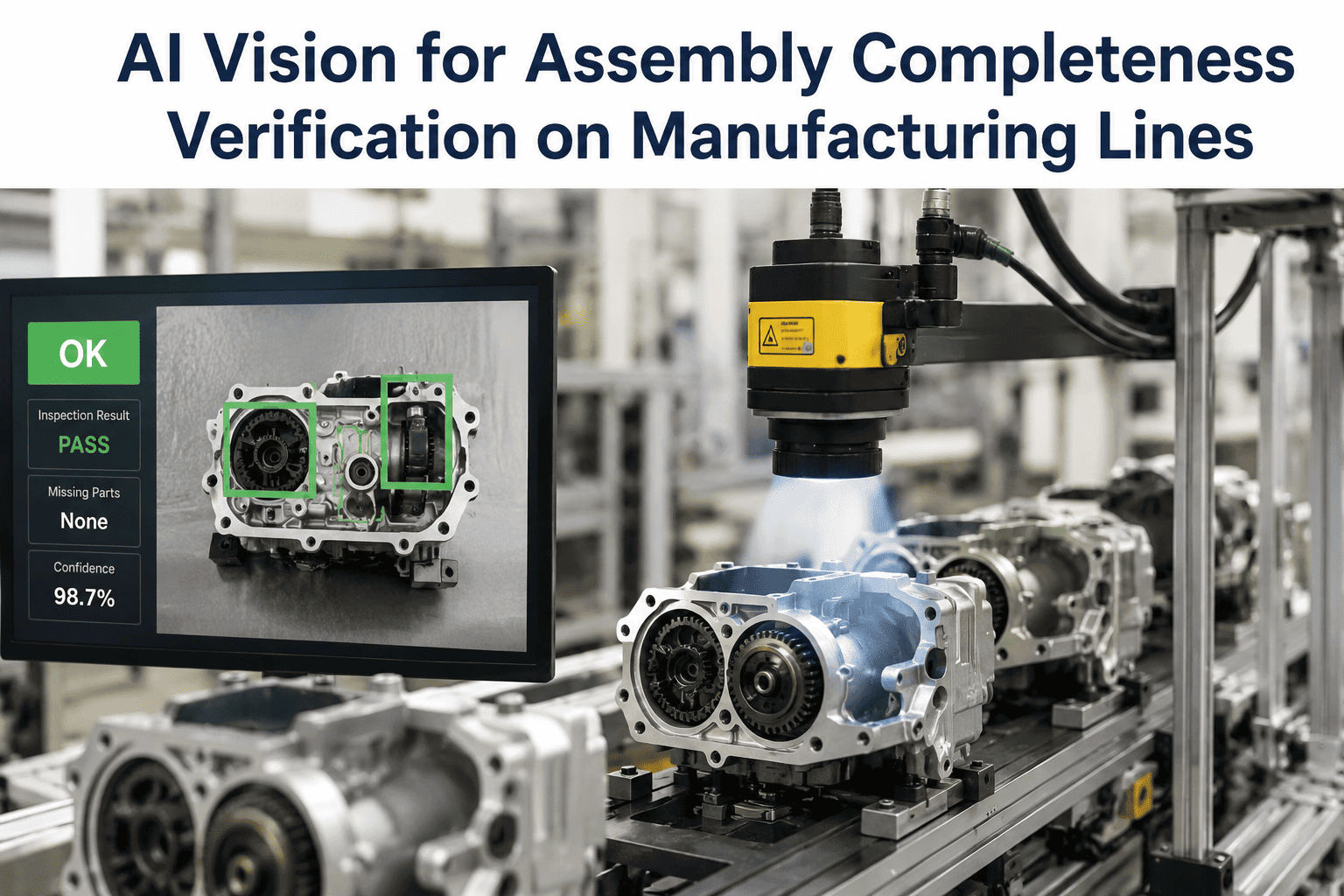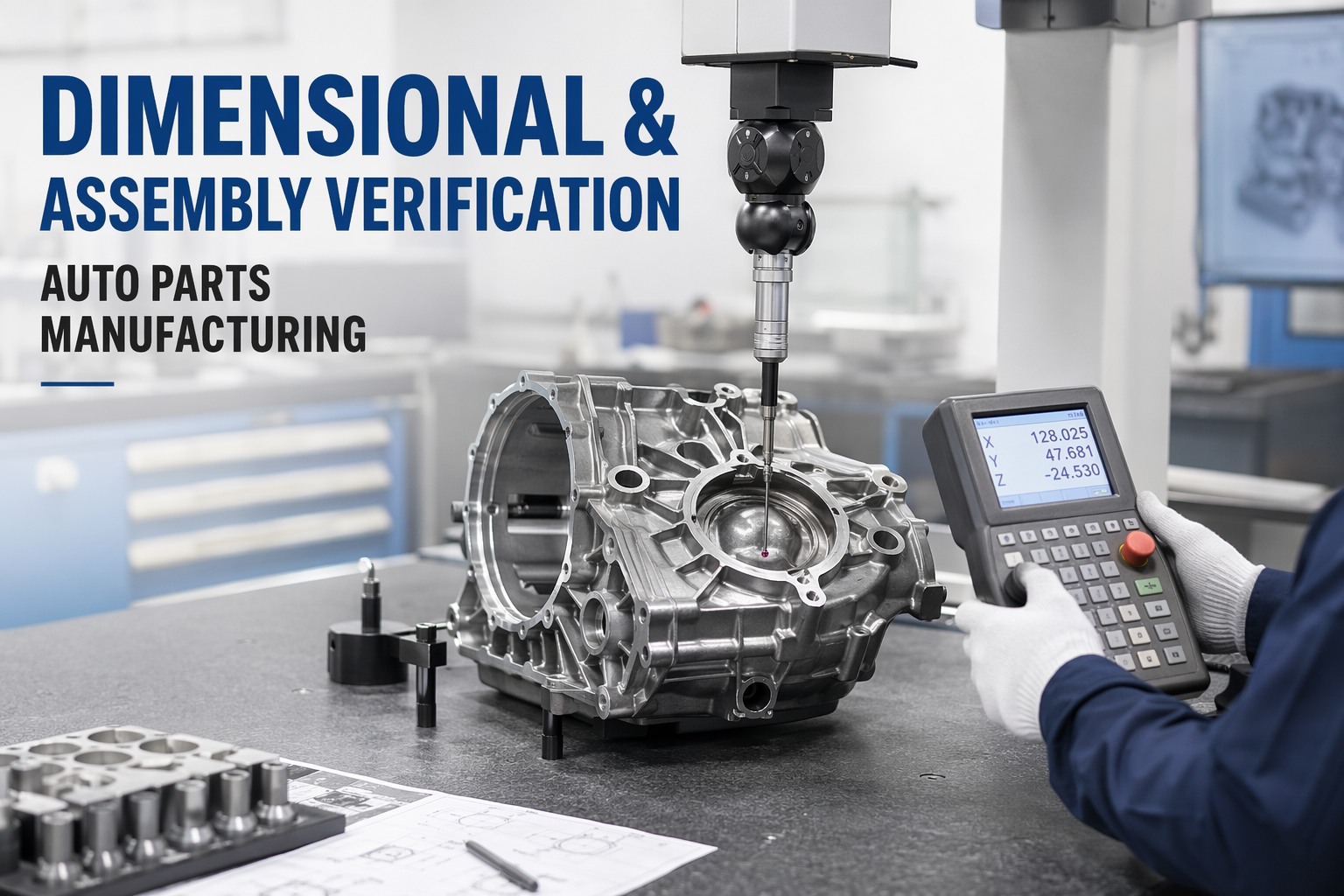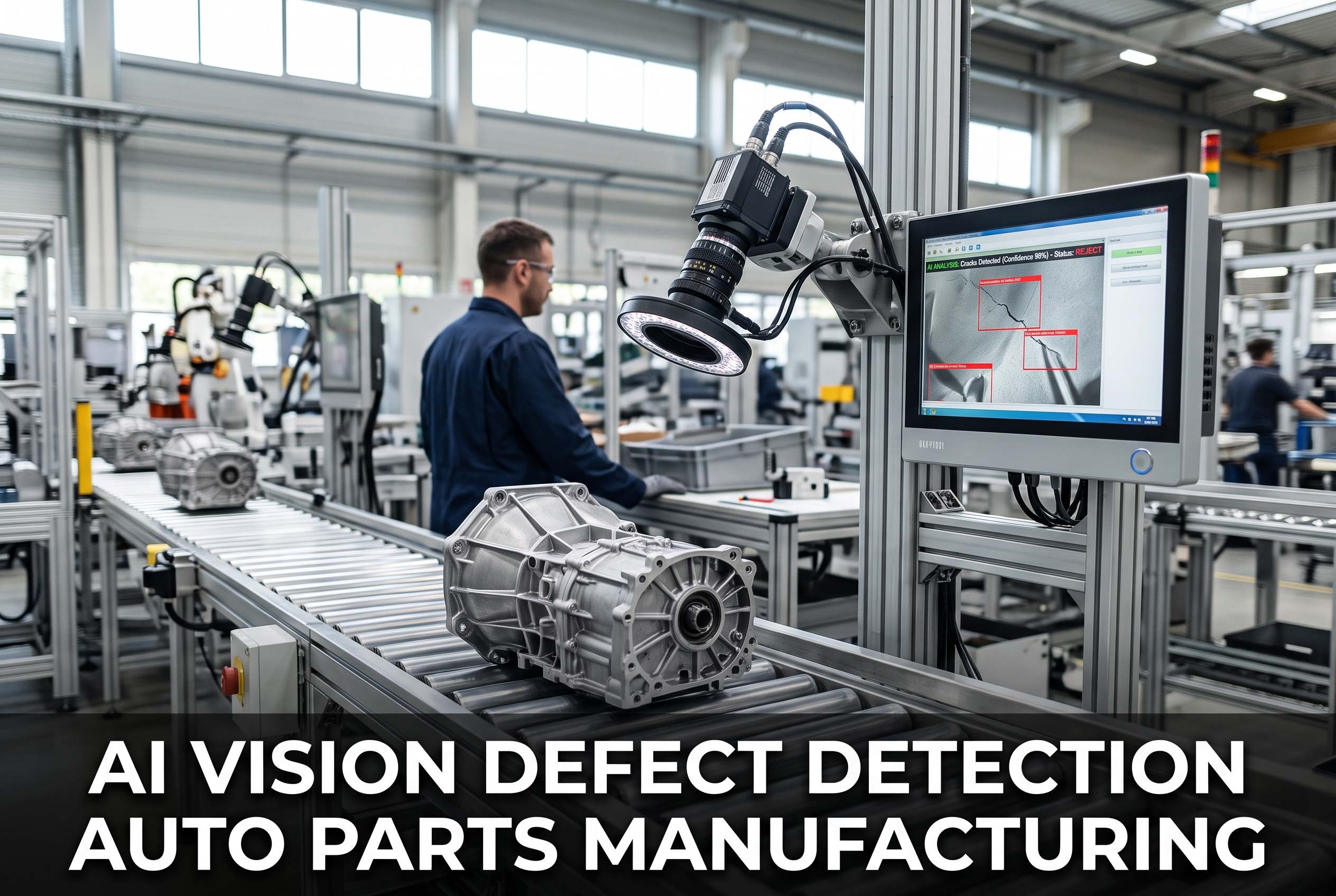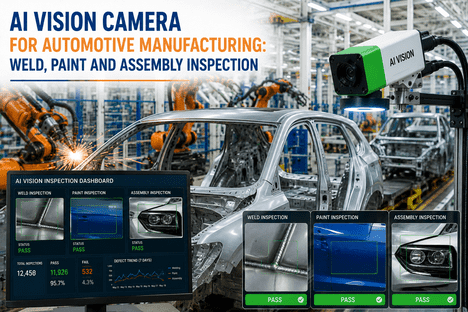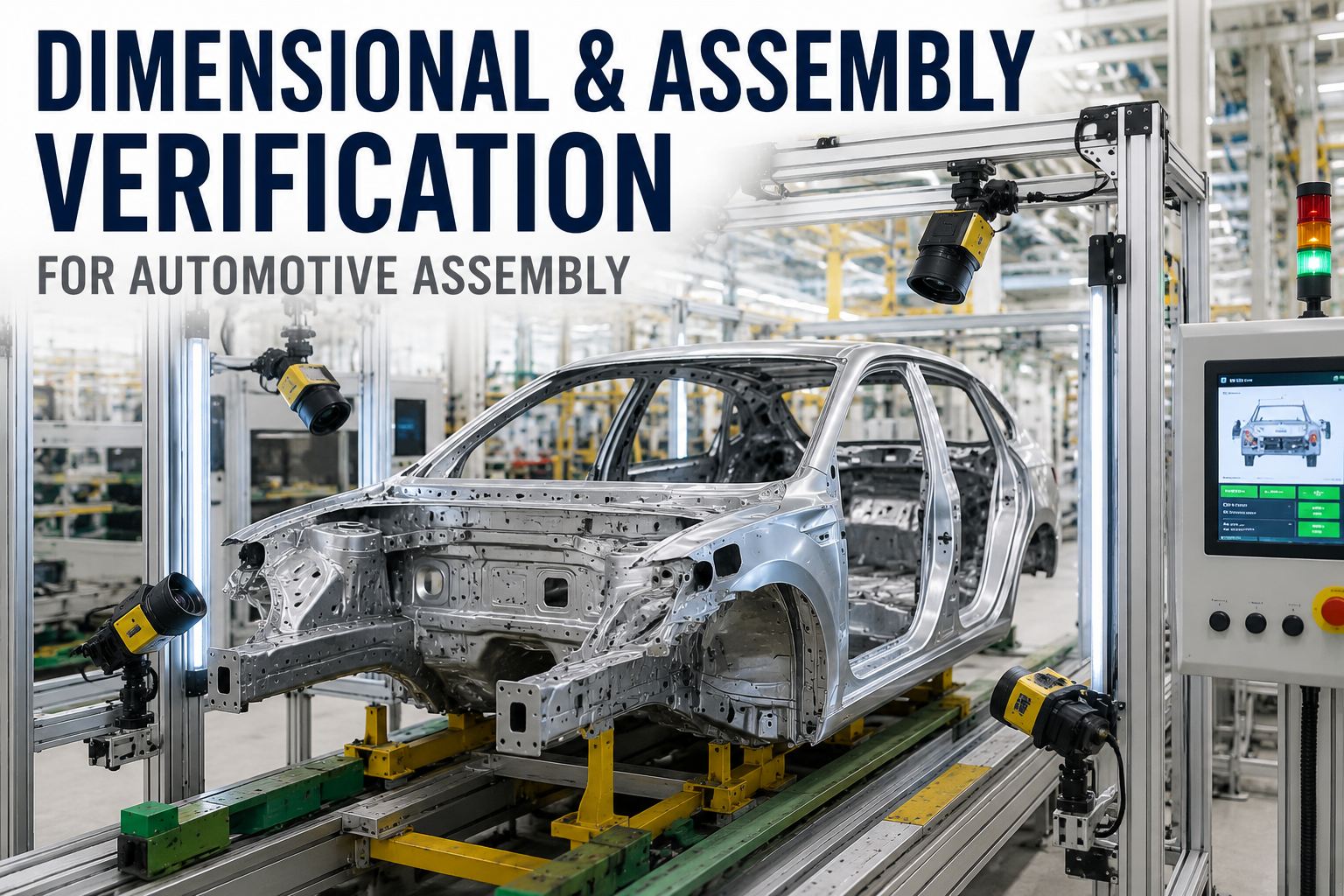
The line lead on your body-in-white conveyor flags a tailgate gap that looks off, but by the time the quality team reaches the station the skid has already moved two zones down. The rework bay fills up by mid-afternoon with parts that should have been caught at the source, and the monthly scrap report shows the same gap-and-flush and missing-fastener categories eating into first-time-through numbers. AI vision for automotive assembly dimensional verification changes that math — it inspects every body, every trim component, every fastener, in motion, on the conveyor you already run, and routes pass, rework, or scrap decisions straight to the PLC before the next station even sees the part. If you are running NAICS 336110 body, paint, or trim lines and still relying on end-of-line audit sampling, the gap between what you catch and what ships has a number on it — and it is larger than your scrap report suggests.
Manual Sampling vs. AI Vision on the Moving Line
The structural difference between a sampled audit and a 100% in-motion inspection — and what each one actually catches before the part reaches the customer.
Periodic Manual Audit
- 1–3 units per shift pulled for CMM or fixture check
- Gap-and-flush measured at 8–12 reference points per body
- Missing fasteners caught visually — when an operator notices
- Defect discovered 4–6 stations downstream of root cause
- Rework routed manually; scrap decision delayed by a shift
- First-time-through drops silently between audit cycles
100% Inline Verification
- Every body inspected at line speed, no line stop for sampling
- Gap-and-flush measured at 50+ points per body per pass
- Fastener presence, torque witness, and seating verified by vision
- Defect flagged at the station of origin, not four zones later
- Pass, rework, or scrap routed automatically via PLC tag write
- First-time-through tracked per VIN, per station, in real time
What AI Vision Catches on a Body and Trim Line
AI vision on an automotive assembly line is not one camera doing one job — it is a set of trained models deployed across body-in-white, paint, and trim stations, each tuned to the defect modes that actually drive your rework hours and customer escapes. The system inspects parts in motion on existing conveyors, skillet lines, and transfer plates without stopping the line or adding cycle time. Here is what each station catches and why it matters to the plant scorecard you review every morning.
Gap & Flush
Door-to-fender, hood-to-cowl, tailgate-to-bumper, liftgate gaps — measured to ±0.2mm at line speed across 50+ points per body.
Missing Fasteners
Bolts not driven, studs not seated, weld nuts missing from stamping, torque witness marks absent — caught before the part leaves the station.
Paint & Surface
Orange peel, runs, sags, dirt inclusions, mottling on metallic finishes, and primer skips — flagged before the body enters the bake oven.
Component Presence
Brackets, clips, harness clips, grommets, weatherstrip — verified seated and oriented before the next station adds layers that hide them.
Weld & Seam
Resistance spot weld count, MIG seam continuity, weld splash, and skipped weld locations on underbody and closure subassemblies.
Trim & Badging
Emblem orientation, decal placement, chrome trim alignment, interior panel fit — verified on every unit, not just audit samples.
Running a body or trim line with recurring gap-and-flush or fastener escapes? Book a dimensional verification assessment with iFactory's automotive vision team to map your top defect modes to camera stations.
Three-Way Routing: Pass, Rework, or Scrap at the PLC Level
Catching a defect is only half the job. The other half — the one most vision systems leave to a human — is routing the part correctly so that rework does not become a bottleneck and scrap does not become an argument. iFactory AI vision writes the verdict directly to the PLC tag at Level 2, and the conveyor, skillet, or transfer plate physically routes the body to the right lane without an operator keystroke. The decision tree below is what runs on every inspected unit.
AI Vision Verdict
Model inference complete · VIN mapped · PLC tag write ready
Pass
- All measured features within tolerance band
- PLC tag set to PASS — conveyor advances to next station
- VIN, station ID, and measurement set logged to MES
- No operator intervention, no line slow-down
Rework
- Defect within reworkable range (gap, fastener, trim)
- PLC tag set to REWORK — diverter routes to rework bay
- Defect type, station, and image written to rework work order
- Operator arrives with correct procedure pre-loaded on screen
Scrap
- Defect beyond rework threshold (weld, structural, paint)
- PLC tag set to SCRAP — routed to quarantine zone
- Root-cause image and measurement set pushed to QMS
- Automatic CAPA trigger if scrap rate exceeds threshold
Want three-way routing wired into your existing PLC without a line stop? Talk to a specialist about iFactory's Level 2 integration approach for your conveyor or skillet line.
Measured Impact on First-Time-Through and Scrap Cost
The reason plant leaders adopt AI vision for dimensional verification is not the technology — it is the line on the P&L that moves when first-time-through goes up and scrap goes down. The numbers below are the benchmarks we see when a body or trim line moves from sampled audit to 100% in-motion inspection with automated routing.
reduction in scrap cost on body and trim lines within the first quarter of full deployment, driven by source-station defect detection
first-time-through improvement on lines where gap-and-flush and missing-fastener defects were the top FTT loss drivers
of automotive warranty claims trace to assembly defects that 100% in-line vision verification can catch before the body leaves the plant
inference latency per station — fast enough to verify every body on a conveyor running 60+ jobs per hour without slowing the line
Run a Fixed-Price 8-Week Pilot on One Line
iFactory deploys on-prem NVIDIA GPU inference, cameras, and PLC integration on a single body or trim line in eight weeks — with a fixed price, a defined defect-mode scope, and an ROI worksheet tied to your current scrap and FTT numbers. You see real verdicts on real bodies before you commit to plant-wide rollout.
The Architecture: On-Prem Inference, MES Identity, Automated RCA
AI vision that lives in the cloud is useless on a body line that runs 24/6 and cannot afford a latency spike or a network drop. iFactory's automotive verification stack runs on-prem on NVIDIA GPU appliances, integrated to your existing PLC/DCS, MES, ERP, and QMS through APIs and tag captures — so every verdict, every image, and every measurement is tied to a VIN, a station, a work order, and a root-cause category without manual data entry.
Edge Inference — On-Prem GPU
NVIDIA GPU appliances mounted in the control room run deep-learning models on every camera frame. No cloud round-trip, no network dependency, no latency variance. Inference completes in under 200ms per station, even on high-resolution images of full body sides.
PLC & DCS Tag Capture
The system reads cycle status, skid ID, and station readiness from the PLC, and writes pass, rework, or scrap verdicts back to Level 2 tags. Conveyors and diverters execute the route — no operator screen interaction required, no barcode scan, no manual override.
MES & ERP Identity Mapping
Every inspected body is mapped to its VIN, build sheet, work order, and bill-of-materials via API to MES and ERP. When a defect is flagged, the system knows exactly which part number, which supplier lot, and which operator station is involved — instantly.
QMS & Automated Root Cause
Defect images, measurement values, and station context flow into the QMS as structured events. When three consecutive bodies show the same gap deviation at the same point, the system raises a CAPA trigger — not after the shift, not after the audit, at the moment the pattern appears.
Need vision inference that stays on your plant floor and talks to your MES? Book an architecture walkthrough with iFactory's integration team to see how the stack maps to your PLC, MES, and ERP landscape.
The 8-Week Single-Line Pilot: What Happens and When
A plant-wide vision rollout is a multi-year capital project. A single-line pilot is eight weeks, fixed-price, and designed to prove the ROI on one conveyor before you commit to more. Here is what happens in each phase — from scoping to live verdicts on real bodies.
Scope & Defect Mapping
Select one line, map the top 5 defect modes from your scrap and FTT data, define measurement points and tolerance bands, and lock the pilot success metrics against your current baseline.
Install & Model Training
Mount cameras, lighting, and GPU appliance. Capture baseline images of good and defective parts, train models on your actual defect catalog, and validate against a held-out set before going live.
PLC Integration & Dry Run
Wire verdicts to PLC tags, test pass, rework, and scrap routing on the live conveyor without affecting production flow. Validate MES identity mapping and QMS event structure with real VINs.
Live & ROI Handover
Run live verdicts on 100% of bodies for two weeks. Deliver the ROI worksheet showing scrap reduction, FTT gain, and rework-hours saved against the pilot baseline — with a plant-wide rollout plan if the numbers hold.
Ready to start an 8-week pilot on one of your lines? Schedule a pilot scoping call and we will bring the ROI worksheet to the first meeting.
Expert Perspective
We were pulling three bodies a shift into the audit fixture and still missing the gap variation that was showing up at the dealer. The first week the vision system went live on the body line, it caught a 1.8mm tailgate gap drift on twelve consecutive units — all from a locator pin that had shifted 2mm in the fixture. That one catch paid for the pilot. The part I did not expect was the routing. When the PLC started sending rework bodies to the right bay automatically, our rework lead stopped spending his first hour of every shift figuring out what was in the bay and why.
— Marco Berti, Body Shop Plant Manager, Tier 1 automotive assembler (NAICS 336110), Midwest US
consecutive units caught with a locator pin shift in week one of a body-line pilot
gap drift that manual sampling missed for two production days before the vision system flagged it
from scoping call to live verdicts on 100% of bodies on a single conveyor line
Inspect Every Body, Every Fastener, Every Gap — In Motion
iFactory AI vision for automotive assembly dimensional verification runs on your existing conveyors and skillet lines, on-prem, integrated to your PLC, MES, ERP, and QMS — with a fixed-price 8-week pilot that proves the ROI on one line before you scale. Stop sampling. Start verifying 100%.
Frequently Asked Questions
How does AI vision for automotive assembly dimensional verification work on an existing conveyor?
Cameras and structured lighting are mounted above or alongside the existing conveyor, skillet line, or transfer plate. As each body or subassembly passes through the inspection zone, the cameras capture images at line speed — no stop, no slow-down. An on-prem NVIDIA GPU appliance runs deep-learning models that measure gap and flush, verify fastener presence, detect paint and surface defects, and confirm component placement. The verdict is written to a PLC tag within 200ms, and the conveyor routes the part to pass, rework, or scrap automatically.
Can the system integrate with our existing PLC, MES, ERP, and QMS?
Yes. iFactory integrates at Level 2 via PLC tag read and write for cycle status, skid ID, and routing verdicts. MES and ERP integration is handled through APIs, so every inspected body is mapped to its VIN, build sheet, work order, and bill-of-materials. Defect events, images, and measurement data flow into the QMS as structured records for root-cause analysis and CAPA triggering. The architecture is designed to retrofit onto lines that are already running — no rip-and-replace of control systems. Talk to a specialist about your specific PLC, MES, and ERP stack.
What defect modes can AI vision catch on a body-in-white or trim line?
The system catches the defect categories that drive the majority of rework hours and warranty claims in automotive assembly: gap-and-flush variation (measured to ±0.2mm at 50+ points per body), missing or improperly seated fasteners, weld count and seam continuity, paint and surface defects (orange peel, runs, sags, dirt inclusions), component presence and orientation (brackets, clips, harnesses, weatherstrip), and trim and badging alignment. Models are trained on your actual defect catalog, not a generic library.
What does the fixed-price 8-week single-line pilot include?
The pilot covers one conveyor or skillet line and includes camera and lighting installation, an on-prem NVIDIA GPU appliance, model training on your top 5 defect modes, PLC integration for three-way pass, rework, and scrap routing, MES identity mapping, and two weeks of live production running with an ROI worksheet delivered at handover. The price is fixed before kickoff, the scope is locked to one line, and the success metrics are tied to your current scrap cost and first-time-through baseline. Book a pilot scope session to map it to your line.
Does the system slow down the line or require stops for inspection?
No. Inference runs in under 200ms per station, which is fast enough to verify every body on a conveyor running 60 or more jobs per hour without stopping or slowing the line. The cameras capture images of parts in motion, and the GPU appliance processes them before the body reaches the next station. If you are running a high-volume body or trim line and want to confirm the cycle-time math for your specific conveyor speed, book a dimensional verification assessment with our automotive team.
What to Take With You
AI vision for automotive assembly dimensional verification is not a future-state concept — it is a retrofit you can run on one line in eight weeks and measure the ROI against your current scrap and FTT numbers before you go further. The plants that adopt it move from sampled audit to 100% in-motion inspection, catch gap-and-flush and missing-fastener defects at the station of origin, route bodies to pass, rework, or scrap through the PLC without an operator keystroke, and tie every verdict to a VIN, a work order, and a root-cause category in the QMS. If your monthly scrap report has the same defect categories in it that it had six months ago, the gap between what you are catching and what you are shipping has a number on it. Book a pilot scope session with iFactory and we will bring the ROI worksheet to the first call.