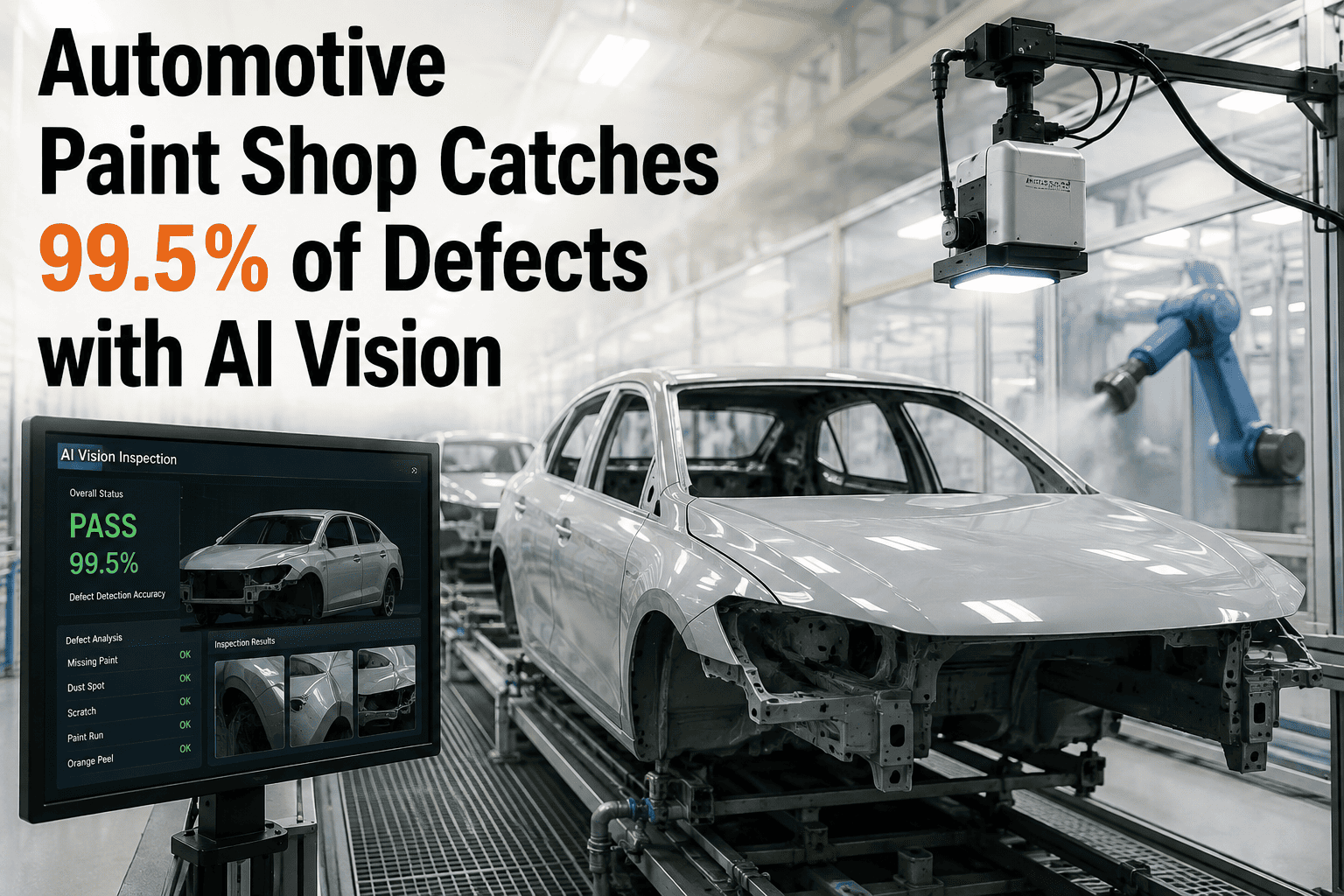
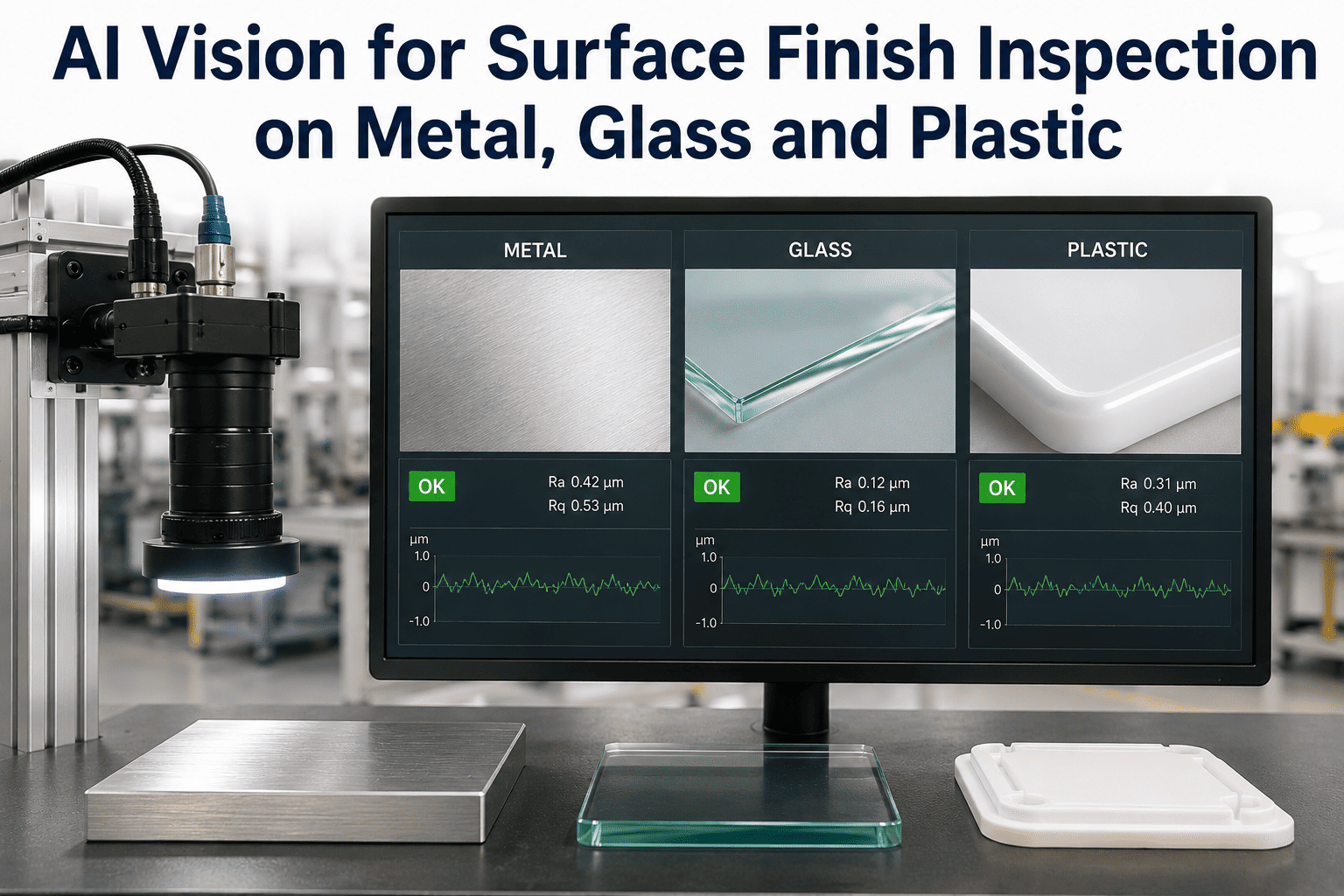
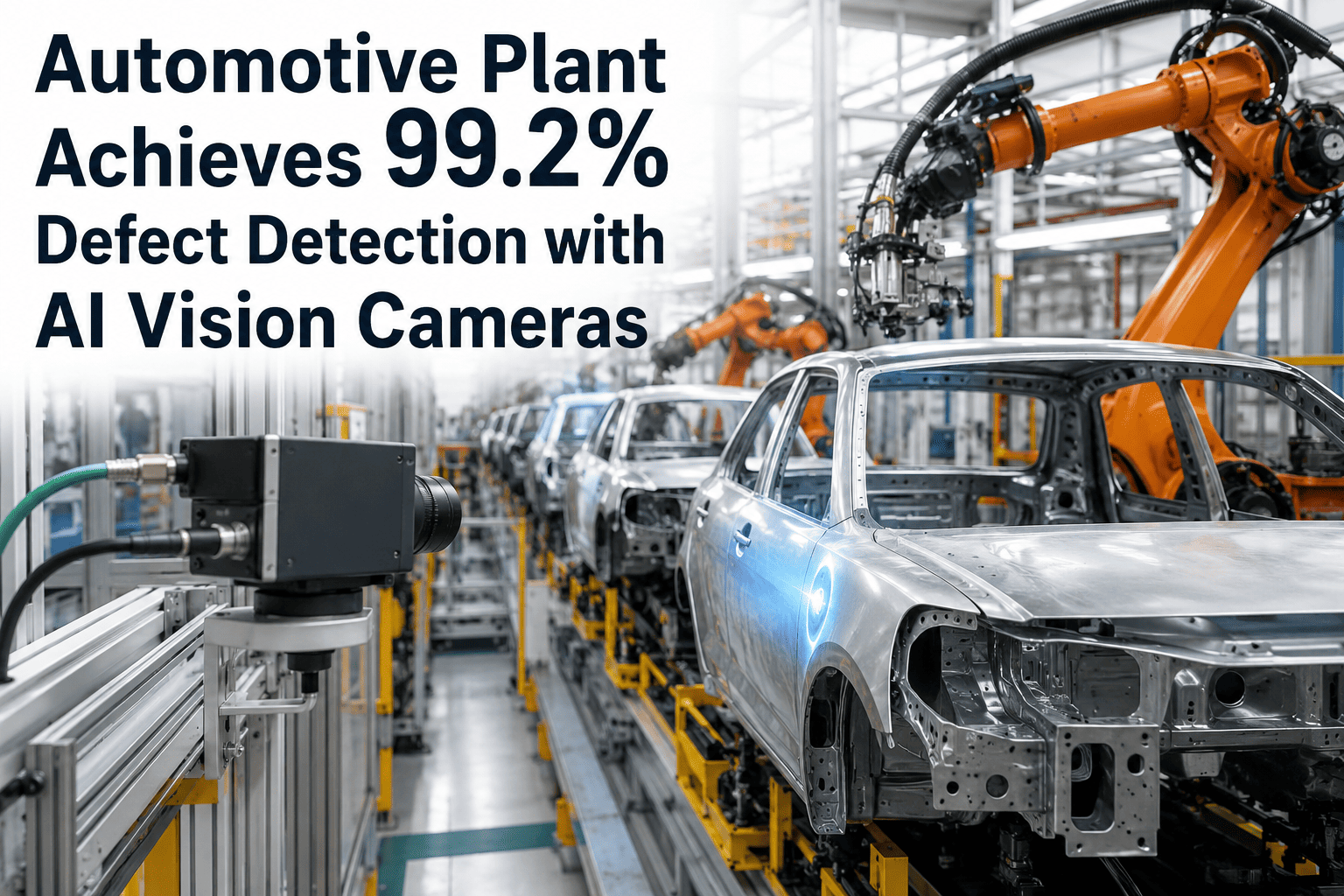
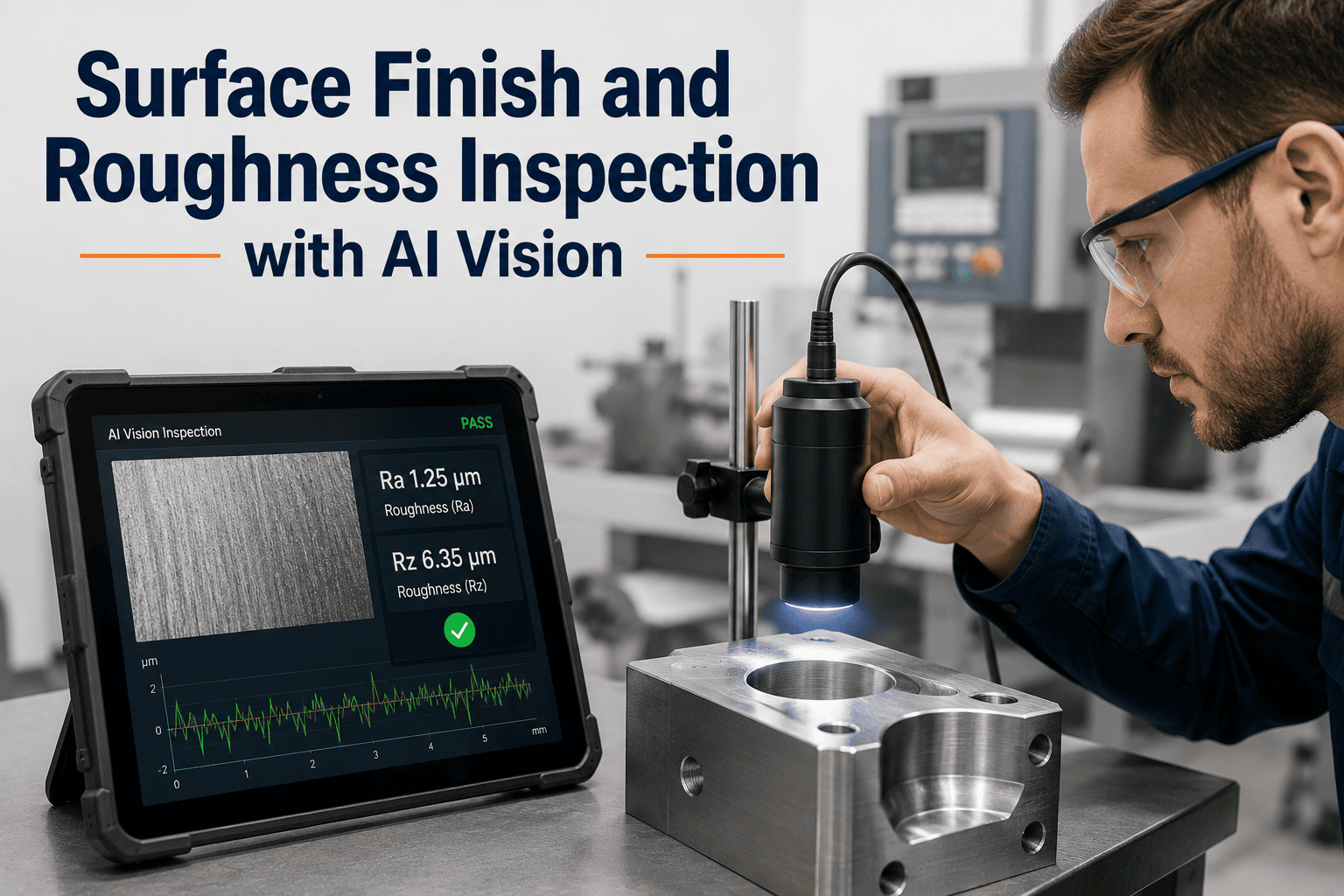
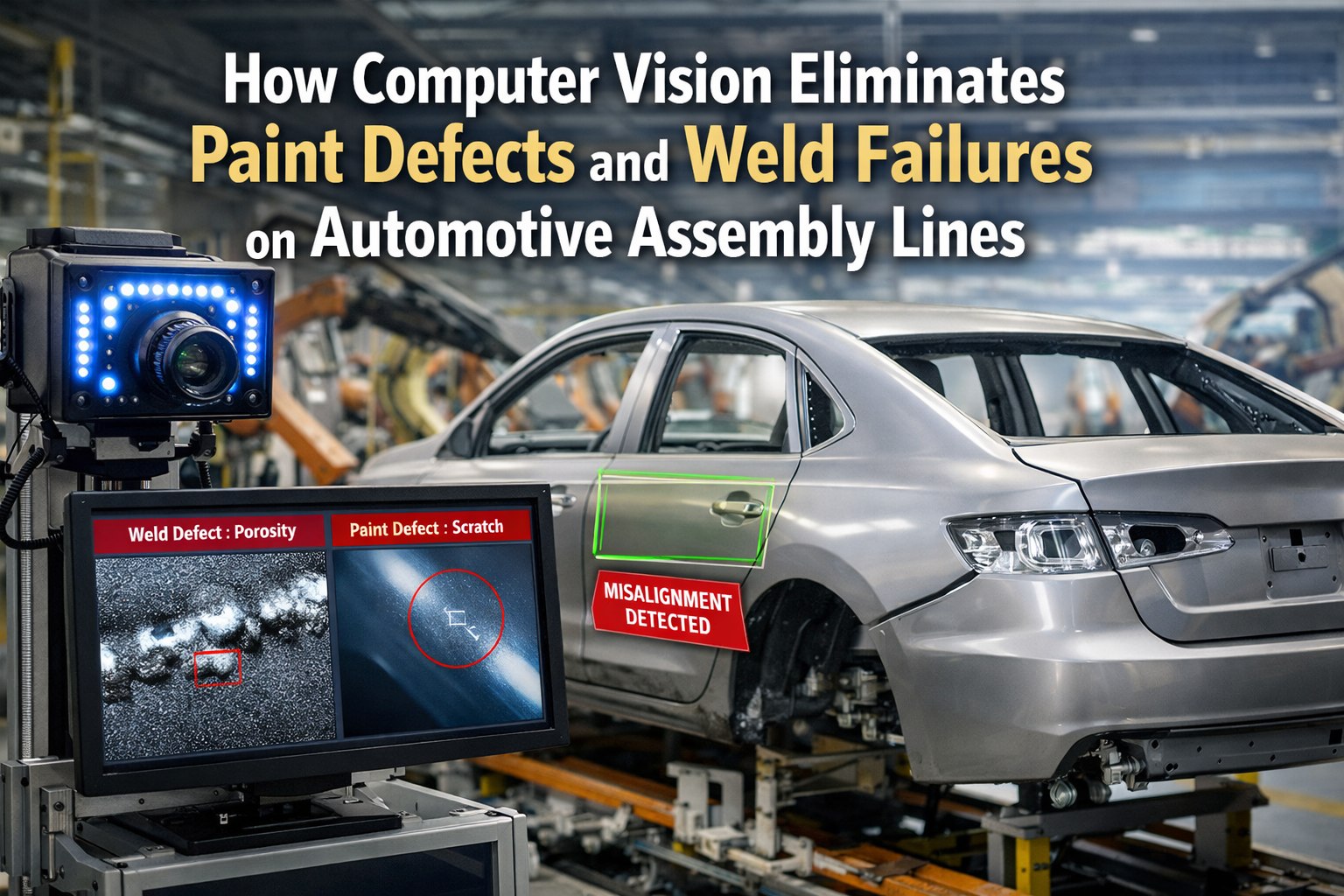
Automotive paint and surface finish quality is one of the most visible — and most costly — quality dimensions in vehicle manufacturing. A single paint defect that escapes the paint shop and reaches the end customer can trigger warranty claims, dealer rework, and lasting brand perception damage that far exceeds the cost of detection at the source. Traditional manual visual inspection of painted surfaces is slow, inconsistent, and highly dependent on inspector fatigue, lighting conditions, and subjective judgment — failing to catch defects like orange peel texture, micro-runs, dirt inclusions, and subtle color mismatch at the throughput rates modern automotive production demands. iFactory's AI vision platform changes this by deploying deep learning-based surface inspection that detects paint and finish defects in real time, directly on the production line, with the consistency and sensitivity that human inspection cannot sustain across a full production shift.
Why Automotive Paint Inspection Demands AI Vision
Paint shop inspection is among the most demanding quality control tasks in automotive manufacturing. Defects vary in type, size, and visibility depending on lighting angle, surface curvature, color, and finish specification — and many of the most costly defects, including shallow orange peel texture and sub-millimeter dirt inclusions, are difficult to detect under standard booth lighting without dedicated raking illumination and trained inspector attention. At production line speeds, manual inspection cannot cover full body panel surfaces with the consistency required to catch these defects before vehicles advance to assembly.
AI vision systems trained on automotive paint defect datasets can evaluate full panel surfaces — including complex curves on doors, hoods, bumpers, and rooflines — at line speed, flagging defects with classification, location, and severity data that routes affected vehicles to appropriate rework stations before they leave the paint shop. The result is a fundamentally different inspection architecture: one where every vehicle surface is evaluated against a consistent standard on every shift, regardless of inspector fatigue, shift changeover, or lighting variation.
Paint Defect Types Detected by iFactory AI Vision
iFactory's vision defect detection platform is trained to identify the full spectrum of automotive paint and surface finish defects that drive rework, customer complaints, and warranty exposure. Each defect class is detected with location coordinates, severity grading, and annotated image evidence that gives quality engineers and rework technicians the context they need to act immediately. Teams exploring how iFactory classifies defects against their specific paint specifications can Book a Demo with our automotive inspection specialists.
Orange Peel Texture Detection
Orange peel — the dimpled, uneven surface texture caused by improper atomization, application distance, or paint viscosity — is one of the most prevalent and disputed paint defects in automotive finishing. iFactory's AI vision system uses structured light analysis and texture gradient modeling to detect orange peel severity across panel surfaces, grading it against OEM and customer acceptance thresholds and flagging panels that fall outside specification before they exit the paint booth. The system differentiates genuine orange peel from acceptable texture variation, reducing both missed defects and false rejections that slow production throughput.
Runs and Sags Detection
Paint runs and sags — caused by excessive film build, low evaporation rate, or incorrect spray angle on vertical surfaces — are visually obvious defects that nonetheless frequently escape detection on curved or complex body geometry where they blend into the surface profile. iFactory's vision platform detects runs and sags on doors, pillars, bumper fascias, and rocker panels by analyzing surface reflectance patterns and paint film geometry, identifying even shallow drip formations that fall below the threshold of consistent manual detection. Each detected run or sag is logged with panel location, severity, and estimated film build deviation to support root cause correction at the spray booth.
Dirt Inclusion and Contamination Detection
Dirt inclusions — airborne particles, booth contamination, substrate debris, and fiber contamination embedded in wet paint — represent one of the most common and most controllable sources of automotive paint rework. iFactory's AI vision system detects dirt inclusions as small as 0.1mm across full panel surfaces, classifying each inclusion by size, type, and location density to distinguish isolated contamination events from systemic booth cleanliness problems. This contamination data feeds directly into quality engineering dashboards that identify whether inclusion patterns correlate with specific spray zones, shift changes, or filter maintenance intervals, enabling corrective action that addresses root cause rather than surface symptom.
Color Mismatch and Batch Variation Detection
Color mismatch between panels — most visible at body panel joints on doors, hoods, fenders, and rear quarters — is a leading driver of customer perception scores and post-delivery complaints in premium and near-premium vehicle segments. iFactory's AI vision platform uses multi-spectral imaging and calibrated colorimetry to measure color consistency across panel boundaries, detecting batch-to-batch variation, metallic flake orientation differences, and clearcoat uniformity deviations that are invisible under standard overhead booth lighting but apparent in natural light and at shallow viewing angles. Color deviation data is logged per vehicle and per paint batch, enabling quality engineers to correlate mismatch events with specific material lots, applicator settings, or environmental conditions.
Paint Blemish, Fisheye, and Crater Detection
Fisheyes, craters, and surface blemishes — caused by silicone contamination, substrate outgassing, or inadequate surface preparation — create circular depressions or raised spots in the paint film that are difficult to detect at line speed due to their small diameter and subtle depth profile. iFactory's deep learning models, trained on thousands of labeled automotive paint defect images, identify these morphological anomalies with high accuracy across diverse paint colors and finishes, including solid, metallic, pearlescent, and matte specifications. Blemish detection sensitivity is configurable against customer acceptance standards, allowing quality teams to set the inspection threshold appropriate to vehicle grade and market destination.
How iFactory AI Vision Deploys in the Automotive Paint Shop
iFactory's AI vision camera system installs at critical inspection points in the paint shop workflow — typically at the exit of each paint application stage (primer, basecoat, clearcoat) and at the final quality gate before the vehicle transfers to the assembly line. Camera arrays are configured to achieve full panel surface coverage using structured lighting optimized for each paint type and finish class, with the AI inference engine processing image data in real time without introducing cycle time delay.
Real-Time Defect Detection and Classification
iFactory's edge AI processing evaluates each vehicle surface in real time as it passes the inspection station, classifying detected defects by type, location on panel, size, and severity against configurable acceptance thresholds. Detection results are available within seconds of the vehicle passing the camera array, enabling immediate routing decisions before the vehicle advances to the next production stage.
Annotated Defect Evidence and Rework Routing
Every detected defect generates an annotated image showing the exact defect location on the panel, with overlaid classification and severity data, that travels with the vehicle to the rework station. Rework technicians receive a precise defect map rather than a general reject flag, dramatically reducing diagnostic time and enabling targeted repair without unnecessary re-inspection of the entire vehicle surface.
Quality Trending and Process Control Feedback
iFactory's quality dashboard aggregates defect detection data across vehicles, shifts, and paint lines to surface statistical trends that reveal systemic process problems before they generate large volumes of rework. Quality engineers can track defect frequency by type, panel location, time of day, paint batch, and spray booth zone — converting inspection data from a vehicle-level quality record into a process control tool that drives continuous paint shop improvement.
Integration with MES and Quality Management Systems
iFactory's platform outputs structured inspection records — vehicle ID, defect classifications, location data, images, and pass/fail status — via REST API to manufacturing execution systems, quality management systems, and CMMS platforms. This integration closes the loop between paint shop inspection data and production scheduling, maintenance planning, and supplier quality management without requiring manual data entry or system duplication.
iFactory's AI vision defect detection models are trained on automotive-specific paint defect datasets covering the full range of OEM finishes — solid, metallic, pearlescent, and matte — across body panel geometries that include compound curves, edges, and recessed areas where traditional machine vision systems lose sensitivity. The platform deploys as edge AI hardware that processes inspection data locally without cloud latency, enabling real-time detection at line speed even in paint shop environments with restricted connectivity. Model accuracy improves continuously as the system accumulates vehicle-specific inspection data, adapting to facility-specific paint formulations, application equipment, and production conditions over time. To see how iFactory's defect detection performs against your paint specifications and defect types, Book a Demo with our automotive vision team.
Business Impact of AI Paint Inspection in Automotive Manufacturing
The financial case for AI-based paint inspection in automotive manufacturing is well-supported by documented outcomes across OEM and Tier 1 supplier paint shop deployments. The measurable improvements below reflect the direct operational and quality impact of replacing manual visual inspection with iFactory's AI vision defect detection platform.
"We were running two inspectors per shift on each of our three paint lines, and we were still shipping vehicles with dirt inclusions and orange peel that customers were catching in delivery inspections. After deploying iFactory's AI vision system, our in-station detection rate went up significantly, our inspectors were redeployed to rework quality roles, and our warranty claims for paint issues dropped within the first year. The system doesn't get tired at 3 AM. It applies the same standard to every vehicle, every shift, every day — and the data it generates has helped us fix the process problems we didn't even know we had."
— Quality Engineering Director, Automotive Body Assembly Plant, 14 Years Paint Shop Experience
CMMS Scheduling Maturity for AI-Driven Paint Inspection Programs
AI vision paint inspection does not operate in isolation — the defect data it generates connects to broader maintenance, quality, and production management systems that determine how quickly corrective actions translate into measurable process improvement. The maturity table below maps the capability evolution from basic manual inspection to a fully integrated AI vision and CMMS environment.
| Maturity Level | Inspection Method | Defect Data Capture | Process Feedback Loop | First-Time Quality Rate |
|---|---|---|---|---|
| Level 1 — Reactive | End-of-line visual only; defects found at delivery | Paper tally sheets, no systematic recording | None — reactive rework only | 60–70% |
| Level 2 — Manual In-Station | Dedicated inspectors at each paint stage | Manual defect coding; basic spreadsheet trending | Weekly quality review; slow process correction | 75–82% |
| Level 3 — Structured QC | Defined inspection points with standardized criteria | Digital defect logging in QMS; basic Pareto analysis | Shift-level trending; weekly CAPA process | 82–88% |
| Level 4 — AI Vision Inspection | iFactory AI vision at all paint stage exit points | 100% vehicle coverage; classified defect records with image evidence | Real-time dashboard; same-shift process correction capability | 92–96% |
| Level 5 — Closed-Loop AI + CMMS | AI vision integrated with MES, CMMS, and predictive process control | Automated defect-to-work-order routing; full traceability | Automated process alerts; predictive maintenance triggers from defect patterns | 97–99% |
Implementation: Deploying iFactory AI Vision in an Automotive Paint Shop
iFactory's AI vision paint inspection deployment follows a structured process that integrates with existing paint shop layouts, quality workflows, and MES environments without requiring production line modification or extended downtime. The deployment roadmap below reflects the proven sequence used in automotive OEM and Tier 1 paint shop implementations.
Paint Defect Specification and Acceptance Criteria Definition
Begin by documenting the defect types, size thresholds, and inspection criteria that define acceptance and rejection for each vehicle grade and market destination. iFactory's implementation team works with quality engineering to map existing acceptance standards — including OEM specifications for orange peel Ra values, dirt inclusion size limits, and color delta-E tolerances — into the AI vision system's detection and classification configuration. Clear acceptance criteria at the outset of deployment ensures that the AI system's outputs align directly with quality standards, not an approximation of them.
Camera Array Installation and Lighting Configuration
iFactory's engineering team designs a camera and lighting layout that achieves full panel surface coverage at the target inspection points — typically the clearcoat oven exit and the final quality gate. Structured lighting configurations are optimized for the facility's paint color range, finish types, and booth geometry to maximize defect detection sensitivity across all surface conditions. Hardware installation is designed to minimize integration time and avoid production line modification wherever possible.
AI Model Training and Calibration
iFactory's deep learning models are pre-trained on automotive paint defect datasets and then fine-tuned against defect samples from the target facility — covering the specific paint colors, finishes, and defect types present in that production environment. A supervised calibration period with quality engineering validation confirms that detection sensitivity and false rejection rates meet operational requirements before the system transitions to live production inspection. Model performance is monitored continuously and refined as defect data accumulates from the facility's own production history.
MES and Quality System Integration
iFactory's API connects the vision inspection platform to the facility's MES, CMMS, and quality management systems, enabling automated work order generation from defect triggers, vehicle-level quality record creation, and real-time dashboard visibility for quality and production management. Integration is configured to align with existing quality workflows and reporting structures, avoiding the need to replace or duplicate existing systems.
Performance Governance and Continuous Improvement
A structured governance cadence using iFactory's quality analytics dashboard tracks detection rate, false rejection rate, defect trending by type and location, and rework cost reduction against pre-deployment baseline. Regular review sessions with iFactory's customer success team support ongoing model refinement, threshold adjustment, and integration expansion as the program matures. For guidance on structuring a paint inspection governance program using iFactory data, Book a Demo with our automotive quality team.