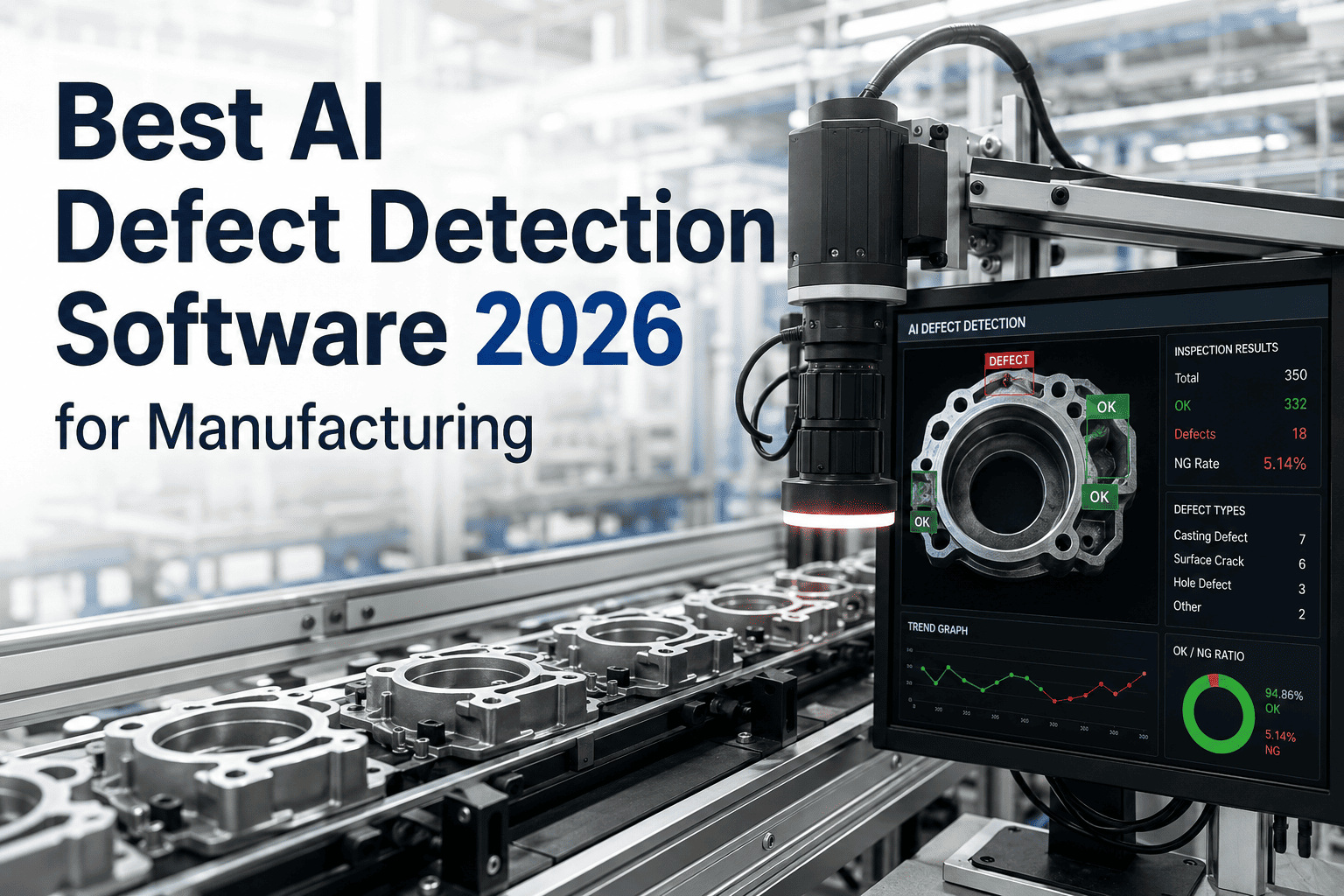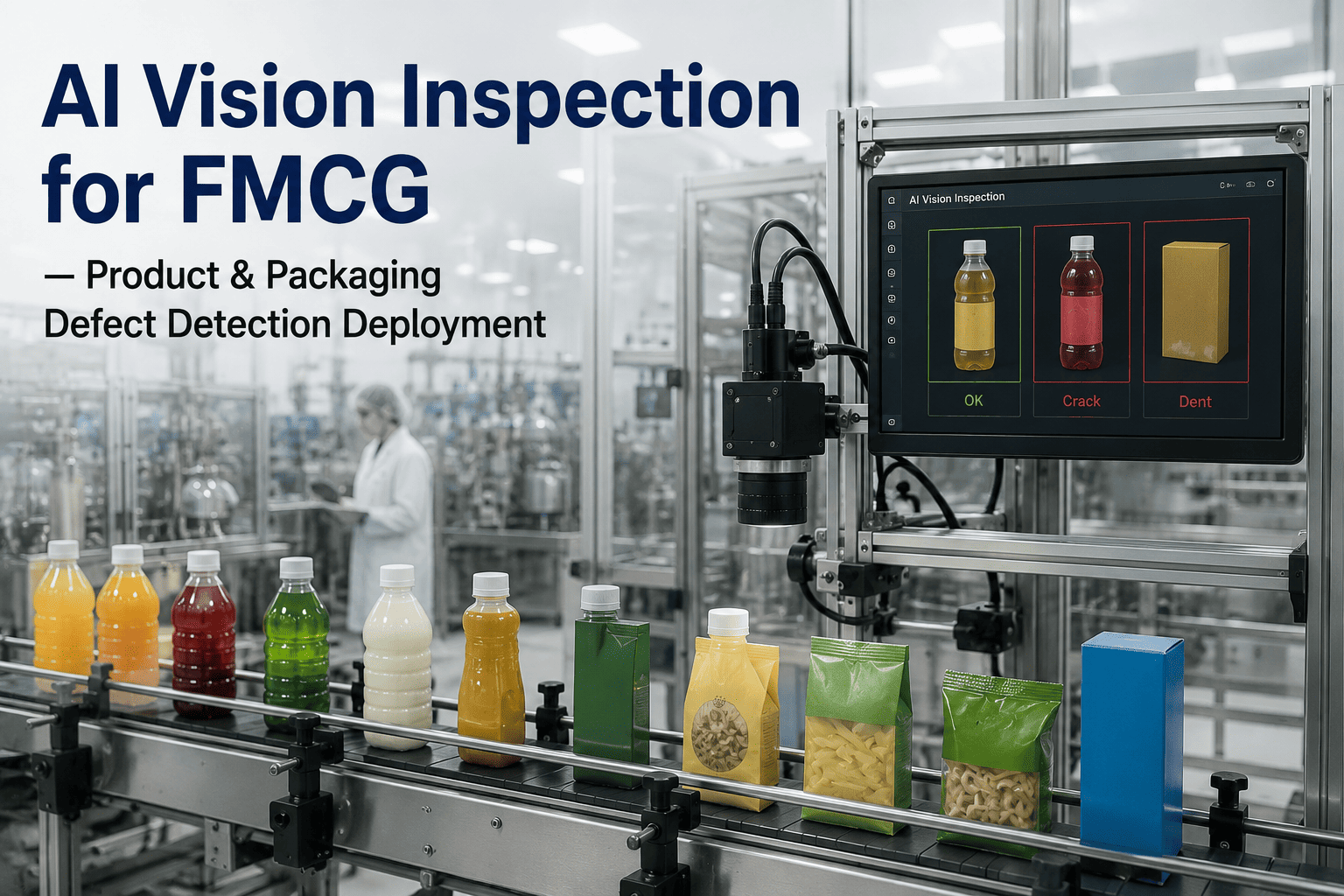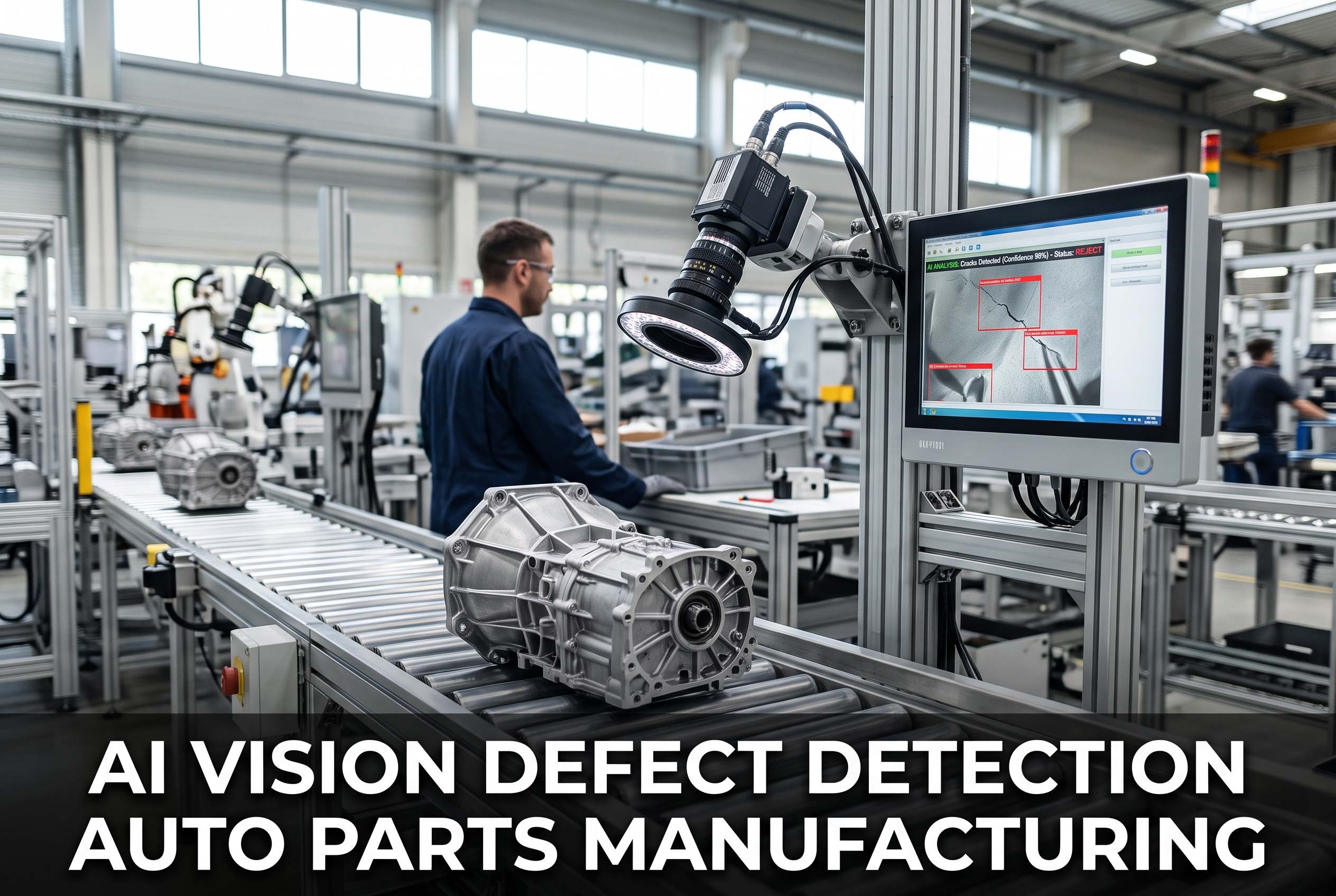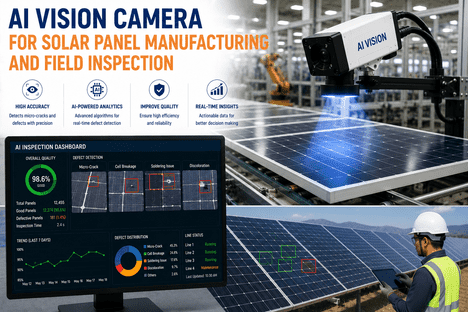
AI vision cameras are redefining quality control, worker safety, and equipment monitoring across manufacturing plants globally. In 2025, the AI vision inspection market reached $32.66 billion, growing at a 22.88% CAGR — driven by manufacturers who can no longer afford the cost of human error, missed defects, and reactive maintenance. By 2026, deploying an AI vision camera is not a competitive advantage; it is the baseline for any plant that intends to operate at modern reliability and compliance standards. iFactory's AI Vision Camera platform runs on existing ONVIF-compatible cameras with NVIDIA edge processing — delivering 99.4% defect detection accuracy without replacing your current infrastructure. Reliability engineers, plant managers, and procurement teams evaluating AI vision deployments are encouraged to Book a Demo with iFactory to understand exactly what visual intelligence delivers on your production floor.
Deploy AI Visual Inspection Across Your Entire Plant — On Cameras You Already Own
iFactory's AI Vision Camera connects to existing ONVIF infrastructure, delivering 99.4% defect detection, real-time PPE compliance, and predictive maintenance alerts with NVIDIA edge processing.
Why AI Vision Cameras Are Now Standard Equipment in Manufacturing
Manufacturing plants face compounding pressure: tighter product tolerances, stricter regulatory safety requirements, aging workforces with shrinking institutional knowledge, and customer expectations for zero-defect delivery. Traditional human inspection cannot scale to meet these demands — inspectors fatigue, miss defects under production speed, and create inconsistent quality records that fail regulatory audits. AI vision cameras solve this by providing continuous, tireless visual analysis at every critical point on the production line. These systems do not replace workers; they eliminate the cognitive tasks that humans perform poorly at scale — spotting micro-defects at high throughput, monitoring PPE across hundreds of workers simultaneously, and detecting early signs of equipment wear before failure occurs. Plants that deploy AI visual inspection report measurable improvements across defect escape rates, safety incident frequency, and unplanned downtime — with payback periods typically under twelve months. Reliability and operations teams evaluating visual AI solutions can Book a Demo with iFactory to assess deployment feasibility on their existing camera infrastructure.
$32.66B Industry
The AI visual inspection market reached $32.66 billion in 2025, growing at 22.88% CAGR — the fastest-expanding segment within industrial automation technology.
99.4% Accuracy Rate
iFactory's AI Vision Camera achieves 99.4% defect detection accuracy — outperforming human inspection by a significant margin under real production-speed conditions.
ONVIF Compatible
Deploys on existing ONVIF-compatible cameras already installed across your facility — eliminating the hardware replacement cost that blocks most AI vision projects.
NVIDIA Edge AI
On-premise NVIDIA edge processing ensures real-time inference with sub-second latency — without sending production imagery to external cloud servers.
What iFactory AI Vision Camera Delivers Across Manufacturing Operations
Manufacturing plants require AI vision capabilities across three distinct operational domains: product quality inspection, worker safety compliance, and equipment health monitoring. iFactory's AI Vision Camera is engineered to serve all three from a unified platform — eliminating the need for separate point solutions that create data silos and increase integration complexity. The following table maps each core capability to its operational impact and CMMS integration path, providing reliability and operations teams with a clear picture of what visual AI delivers in practice.
| Capability | What It Detects | Integration Point | Operational Impact |
|---|---|---|---|
| Defect Detection | Surface cracks, dimensional deviations, assembly errors, contamination, and cosmetic defects at production speed | Triggers automatic work order creation in CMMS for non-conforming units | Reduces defect escape rate and customer return costs |
| PPE Compliance Monitoring | Missing helmets, absent safety glasses, improper glove use, and safety vest non-compliance across plant zones | Real-time supervisor alerts and compliance log entries per shift | Reduces recordable safety incidents and regulatory exposure |
| SOP Step Verification | Skipped procedure steps, incorrect tool use, and sequence deviations during maintenance and assembly tasks | Flags deviations against work order SOP in real time | Eliminates return-to-service failures and rework from procedural errors |
| Equipment Anomaly Detection | Vibration signatures, abnormal thermal patterns, fluid leaks, and mechanical wear indicators before failure | Generates predictive maintenance work orders based on visual trend data | Reduces unplanned downtime and catastrophic equipment failures |
| Production Line Monitoring | Throughput bottlenecks, cycle time deviations, and operator ergonomic risk patterns | Feeds OEE dashboards and production reporting in real time | Improves overall equipment effectiveness and line balance |
How AI Vision Cameras Achieve 99.4% Defect Detection in Manufacturing
Achieving 99.4% defect detection accuracy requires more than installing cameras above a production line. It demands a combination of high-resolution imaging, purpose-trained computer vision models, edge inference speed that matches production throughput, and feedback loops that continuously improve model performance with real production data. iFactory's AI Vision Camera platform combines all four elements. Computer vision models are pre-trained on industrial defect libraries spanning surface cracks, dimensional variances, weld anomalies, assembly errors, and contamination — then fine-tuned on your specific product and defect types during deployment. NVIDIA edge processors run inference locally, ensuring detection latency stays below the inspection window even at high-speed production rates. As the system accumulates production data, model accuracy compounds over time — turning every defect catch into a training signal that tightens detection thresholds. Plants evaluating AI defect detection against their current escape rate and scrap cost can Book a Demo to see iFactory's model performance benchmarks on comparable product types.
Real-Time PPE and Safety Compliance Monitoring Across Your Facility
Safety compliance in manufacturing plants has historically depended on periodic manual audits, supervisor walk-throughs, and self-reporting — all of which provide only intermittent coverage and create no reliable compliance record. iFactory's AI Vision Camera changes this by providing continuous, zone-by-zone PPE monitoring across the entire facility. The system identifies each required PPE item — hard hats, safety glasses, high-visibility vests, steel-toed boots, cut-resistant gloves — and detects non-compliance in real time, alerting supervisors before a safety incident can occur. Compliance records are automatically timestamped and logged, creating an objective audit trail for OSHA, ISO 45001, and insurance reviews. For plants operating in jurisdictions with increasing regulatory scrutiny, this continuous compliance layer reduces both incident risk and the cost of manual safety audits. The system operates without facial recognition, preserving worker privacy while maintaining full zone-level compliance tracking.
Visual AI for Equipment Health Monitoring and Predictive Maintenance
Unplanned equipment failures in manufacturing plants carry costs far beyond repair — they disrupt production schedules, trigger expedited shipping charges, damage customer relationships, and create secondary safety risks when failures occur under load. AI vision cameras address this by providing continuous visual monitoring of critical equipment, detecting early-stage anomalies that human inspection would miss or catch too late. iFactory's platform monitors for abnormal vibration signatures visible in rotating components, thermal anomalies suggesting bearing or electrical faults, fluid accumulation indicating seal failures, and surface wear patterns on tooling and conveyor systems. When the system detects an anomaly trending toward failure, it automatically generates a predictive maintenance work order in the connected CMMS — with the visual evidence, severity classification, and recommended action attached. This closes the loop between visual detection and maintenance execution, ensuring that anomalies identified by the camera translate into scheduled maintenance actions before equipment fails. Reliability engineers building predictive maintenance programs can evaluate how iFactory's visual detection layer integrates with their existing CMMS and reliability frameworks.
Deploying AI Vision Cameras in Manufacturing Plants: What to Expect
Manufacturing plants considering AI vision deployment frequently cite three concerns: integration complexity with existing camera infrastructure, data security when production imagery is involved, and the model training time required before the system delivers reliable results. iFactory's deployment approach addresses each directly. The platform connects to any ONVIF-compatible IP camera already installed across your facility, eliminating hardware replacement as a deployment cost. All inference runs on NVIDIA edge processors located within your network perimeter — production imagery never leaves your facility and is never transmitted to external cloud servers. Model training leverages iFactory's pre-built industrial defect library to shorten the initial calibration period, with site-specific fine-tuning completed using a sample of your actual production output. Most manufacturing plants reach production-grade detection accuracy within the first deployment phase, with model performance continuing to improve as real production data accumulates.
AI Vision Camera for Manufacturing — Frequently Asked Questions
Can iFactory's AI Vision Camera work with our existing cameras?
Yes — iFactory's platform is compatible with any ONVIF-standard IP camera already installed in your facility. There is no requirement to replace existing hardware, which significantly reduces deployment cost and timeline.
How accurate is AI-based defect detection compared to human inspection?
iFactory's AI Vision Camera achieves 99.4% defect detection accuracy under real production-speed conditions — substantially outperforming human inspection, which degrades significantly with fatigue and high-throughput environments.
Does the system send our production imagery to the cloud?
No — all inference runs on NVIDIA edge processors located within your facility's network. Production imagery is processed locally, and no data is transmitted to external servers, ensuring full data sovereignty and security compliance.
How does AI vision camera integrate with our CMMS or EAM system?
iFactory's AI Vision Camera connects directly to its EAM platform, automatically generating work orders when defects, safety violations, or equipment anomalies are detected — creating a closed loop between visual detection and maintenance execution.
What types of defects can AI vision cameras detect in manufacturing?
The system detects surface cracks, dimensional deviations, weld anomalies, assembly errors, contamination, cosmetic defects, missing components, and incorrect part placement — across a wide range of manufacturing processes and materials.
Does the PPE monitoring system use facial recognition?
No — iFactory's PPE compliance monitoring operates at the zone and equipment level without facial recognition. Workers are not individually identified, preserving privacy while maintaining full compliance tracking and audit records.
Deploy AI Visual Intelligence Across Your Manufacturing Plant — Starting With Cameras You Already Have
iFactory's AI Vision Camera connects to existing ONVIF infrastructure, delivers 99.4% defect detection accuracy, and integrates directly with your CMMS to close the loop between visual detection and maintenance execution.