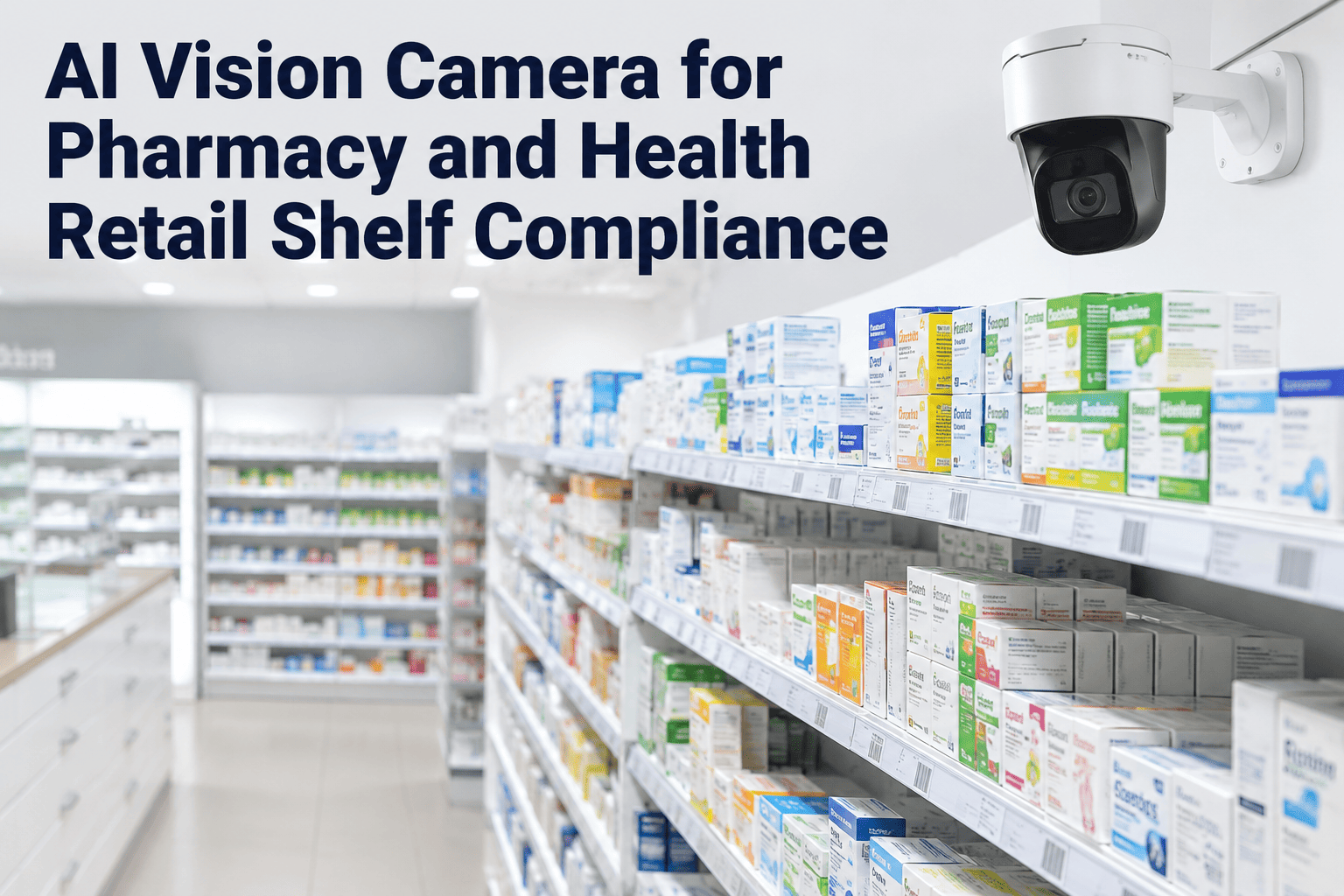
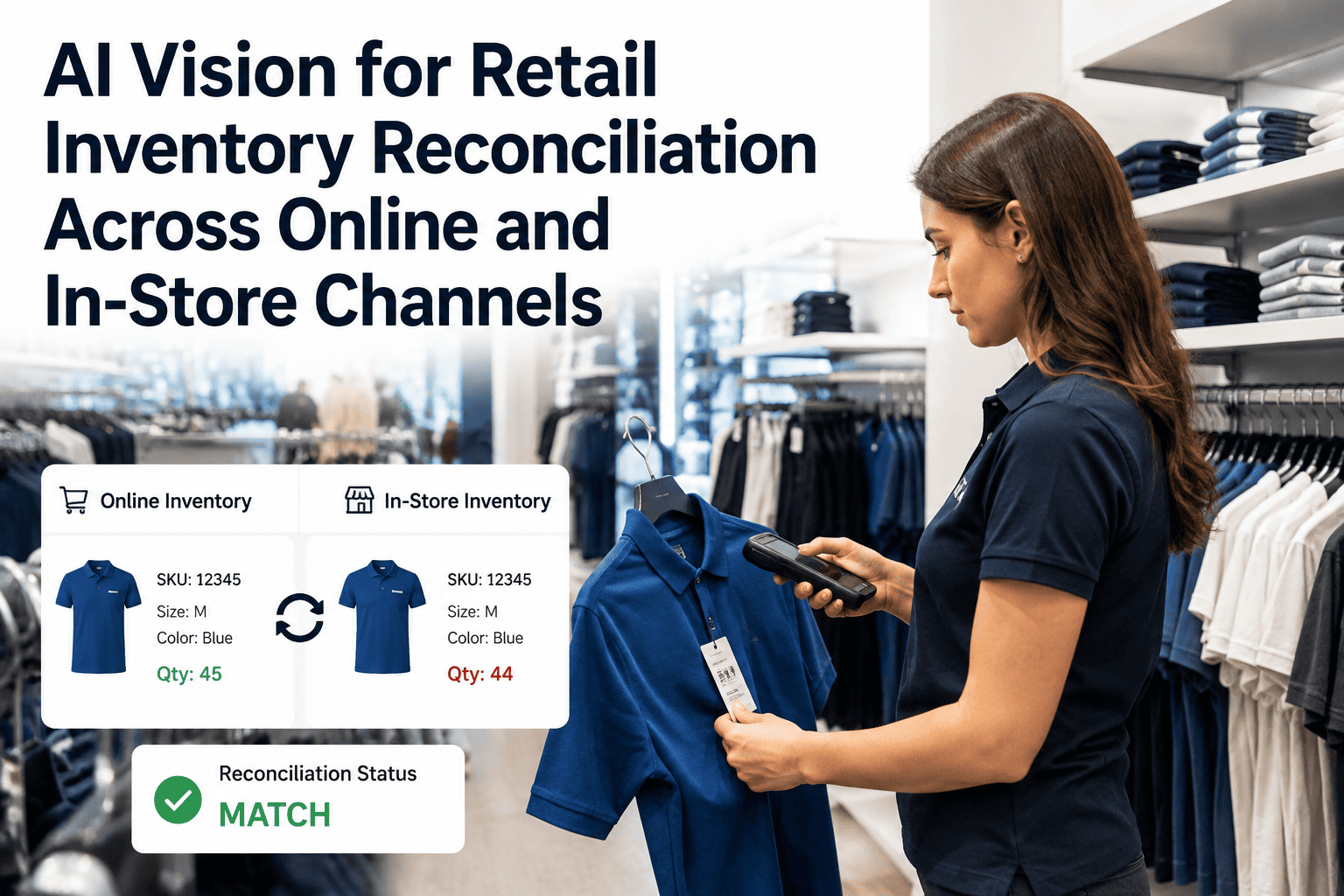
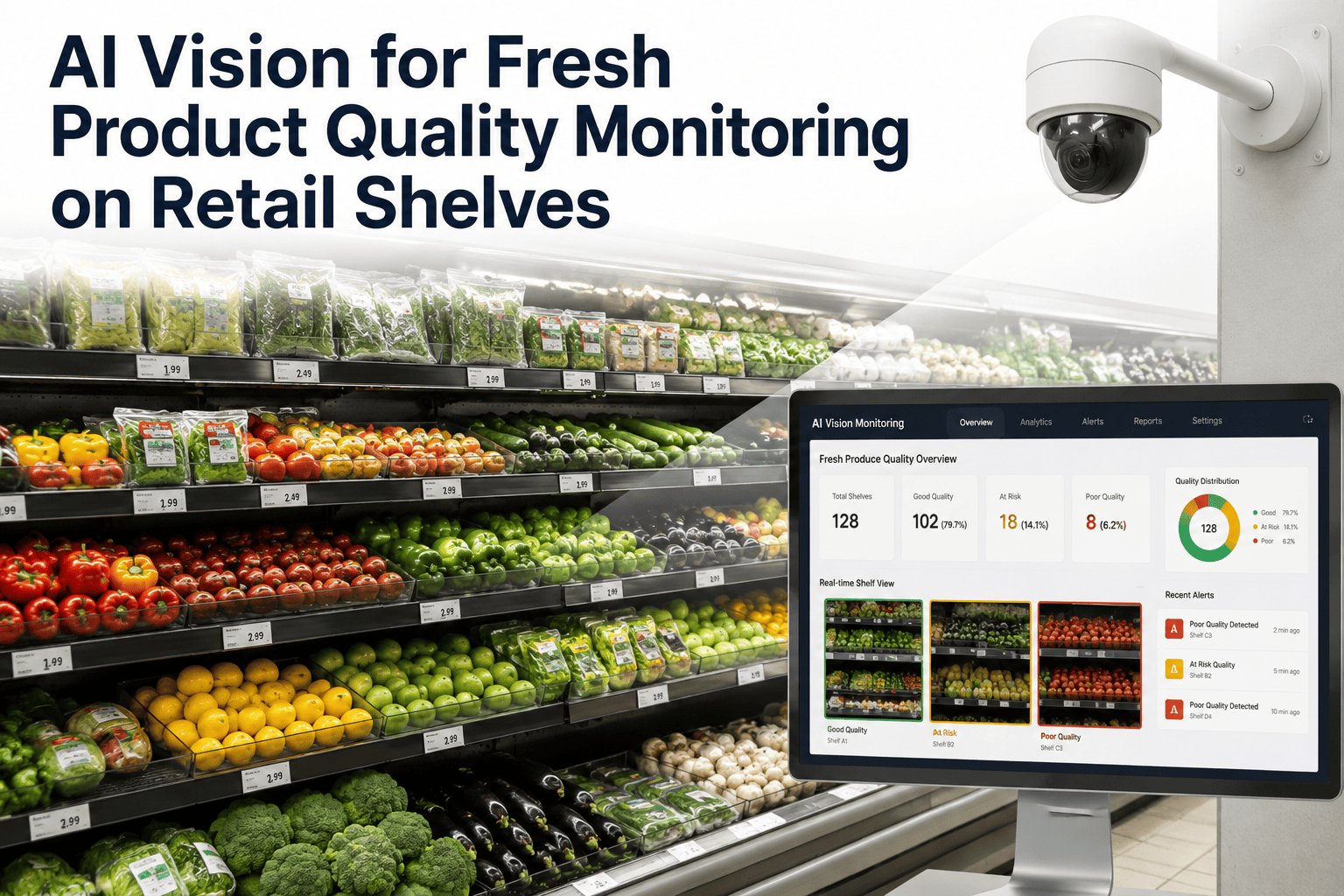
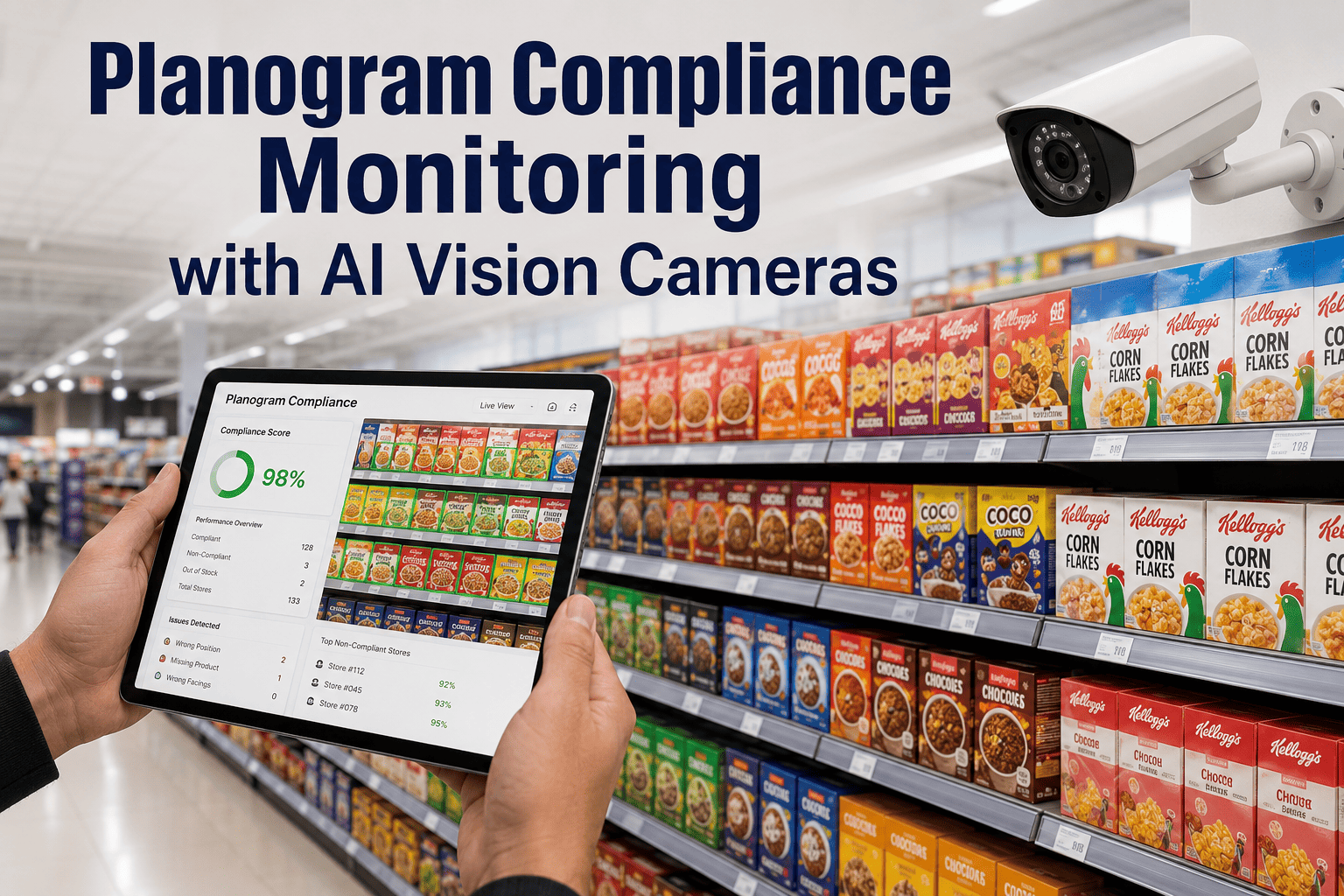
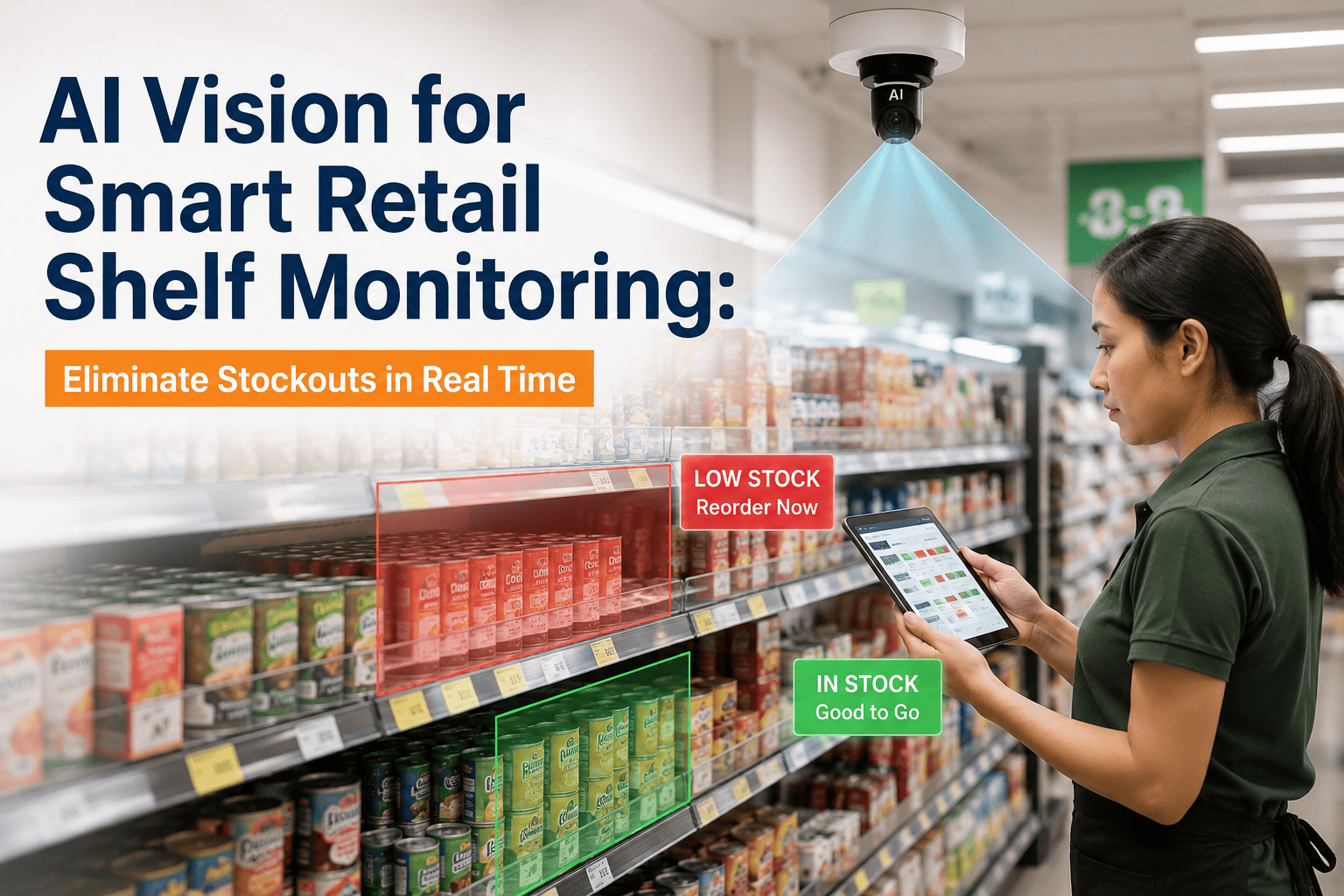
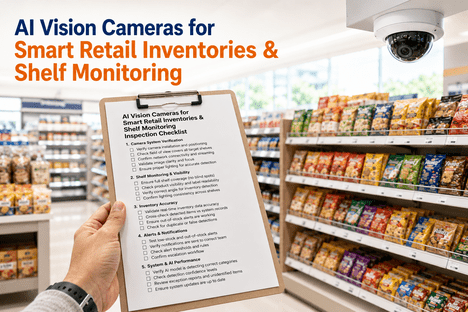
Walk into any pharmacy or health retail store during a busy afternoon and the shelves you see are almost never the shelves the planogram diagram promised. A cough syrup facing has been pushed sideways by a hurried shopper, three SKUs of the flagship pain reliever have quietly gone out-of-stock during a lunch rush, an expired batch of allergy tablets is sitting one row behind the fresh stock, and an age-restricted product has drifted onto the wrong shelf during an overnight reset. Store associates cannot watch every fixture continuously — they are dispensing, counseling patients, and running the counter. AI vision cameras from iFactory watch the shelf instead, translating every image into shelf availability, planogram, expiration visibility, and regulated-product placement data — all in near real time.
Smart Retail · Pharmacy & Health
AI Vision Cameras for Pharmacy & Health Retail Shelf Compliance
iFactory turns your existing ceiling and shelf-edge cameras into a 24×7 shelf auditor — reading medication availability, planogram adherence, expiration date visibility, and age-restricted placement across every aisle without adding a single manual walk.
4.1%
Average retail OOS rate — often 8–10% for high-velocity OTC categories at peak hours
57%
Brands with any structured way to measure planogram compliance across their store network
15–20%
Typical uplift in shelf compliance reported after AI image recognition rollout in OTC retail
Continuous
Frequency of AI shelf audit vs a manual walk that happens once or twice per shift at best
Why Manual Shelf Checks Fall Short in a Modern Pharmacy
A pharmacy shelf is not like a grocery shelf. It carries controlled substances, age-restricted OTC products, dated medications, and category adjacencies dictated by regulation rather than merchandising instinct. And yet the audit method in most stores has not changed in twenty years — a paper checklist, a phone camera, and whichever associate can be pulled away from the counter for fifteen minutes. That gap between what the shelf actually looks like at 3:14 PM on a Wednesday and what corporate believes it looks like is where lost sales, compliance findings, and expired-stock recalls quietly accumulate.
01
Point-in-time only
A manual audit captures the shelf as it looked during the audit. Two hours later a lunch rush empties the cold and flu section and no one knows until the next scheduled walk-through.
02
Inconsistent between reviewers
Two associates auditing the same shelf will grade planogram compliance differently. That subjectivity makes it impossible to compare stores meaningfully across a chain.
03
Expiration checks get skipped
Rotating stock and pulling near-expiry SKUs is time-consuming. On a busy day it is the first task that slips, leaving dated product visible to customers and to inspectors.
04
Age-restricted drift
Cough medicine with pseudoephedrine, nicotine replacement, and other regulated OTC items can drift onto the wrong shelf during resets — and stay there until a compliance visit surfaces it.
05
No evidence trail
When a regulator asks "how do you know your shelf was compliant on the 14th of last month?" a paper checklist is not evidence. It is an assertion without a photograph behind it.
06
Labor cost keeps climbing
Every extra audit walk pulls an associate away from patient counseling or dispensing. Adding audit frequency to fix visibility gaps just moves the cost problem sideways.
Four Things the AI Camera Watches on Every Aisle
An iFactory AI vision deployment does not add one function to your shelf — it adds four, running continuously against the same image stream. Each function targets a distinct failure mode that manual audit programs consistently miss, and each one generates its own alert path, evidence archive, and compliance record.
FUNCTION 1
Medication Shelf Availability
Detects out-of-stock, low-stock, and phantom-inventory situations shelf by shelf. Every empty facing on your top-velocity OTC and health SKUs generates a restock ticket before a customer walks away from an empty spot.
SKU-level presence and count per facing
Low-stock threshold alerts before the shelf goes empty
Phantom OOS detection where system inventory disagrees with the shelf
FUNCTION 2
Planogram Adherence
Compares what the camera sees to the current planogram for that fixture. Misplaced SKUs, wrong facings, missing shelf strips, and unauthorized adjacencies are flagged as they happen, not weeks later during a regional audit.
Facing count and orientation vs planogram spec
SKU-in-wrong-slot detection with photo evidence
Compliance score per fixture, per store, per region
FUNCTION 3
Expiration Date Visibility
Reads visible expiration dates on packaging and flags any SKU where the front-facing product is within a defined risk window. Turns date-code rotation from a quarterly panic into a continuously managed workflow.
Front-facing date-code OCR on supported package types
Configurable warning window per category
Rotation and pull-list generation for near-expiry stock
FUNCTION 4
Age-Restricted & Regulated Placement
Confirms that regulated OTC categories — cold medicines with pseudoephedrine, nicotine replacement, family planning, and similar — remain on the fixtures and adjacencies your compliance policy actually requires.
Regulated SKU placement watch against store policy
Behind-counter vs open-shelf verification
Time-stamped evidence archive for regulator requests
How an Image Becomes an Action — The Five-Stage Pipeline
Behind every shelf alert that lands on an associate's handheld is a repeatable pipeline that runs on every camera in the store. Understanding the pipeline matters because it explains why AI shelf compliance is not just "surveillance with better software" — it is a purpose-built workflow that ends in a store-floor action, not a dashboard nobody opens.
01
Capture
Ceiling and shelf-edge cameras take continuous or scheduled frames of every monitored fixture across the store floor.
02
Detect
The vision model identifies each SKU on the shelf, its facing count, orientation, and any empty gaps between products.
03
Compare
Detections are checked against the active planogram, the SKU master, and the regulated-product policy for that store.
04
Alert
Any exception generates a categorized alert — restock, misplacement, near-expiry, or regulated drift — routed to the right role.
05
Evidence
The image, timestamp, fixture ID, and outcome are archived so that compliance history can be reconstructed on demand.
See Your Own Shelf Through the AI's Eyes
iFactory can plug into your existing camera infrastructure and demo live shelf detection on your fixtures, your planogram, and your regulated SKU list — no rip-and-replace, no additional hardware order to start.
Compliance Failure Modes and How Vision AI Catches Them
Every compliance program in pharmacy retail has a list of failure modes it tries to prevent — and a list of tools it uses to prevent them. The table below maps common failure modes to the way manual audit programs handle them today, and to the way an AI vision layer changes that handling. Scroll horizontally on mobile to see the full comparison.
Scroll to compare approaches
Which Pharmacy Formats See the Fastest Return
AI shelf compliance is not equally impactful across every pharmacy format. Formats with more SKUs, more shelf density, and more regulated categories see faster payback — because each incremental exception the camera catches is worth more than in a lightly stocked store. The four formats below tend to see the strongest early results after deployment.
Deployment — From First Camera to Chain-Wide Rollout
An iFactory shelf compliance rollout is designed to prove value in one store before scaling. Nothing about the pilot phase requires a large hardware commitment, and every phase produces measurable outputs the retail operations team can evaluate before the next investment decision.
Phase 1
Discovery & Pilot Store Setup
Weeks 1–3
iFactory assesses your existing camera infrastructure, imports your planogram library and SKU master, and identifies a single pilot store and category set. The vision model is calibrated against your actual fixtures and lighting conditions before any store-facing workflow goes live.
Phase 2
Pilot Go-Live & Measurement
Weeks 4–8
Live shelf detection is turned on for pilot categories with alerts routed to the pilot store team. Compliance scores, restock response times, and near-expiry catches are measured against pre-deployment baselines to quantify the pilot outcome.
Phase 3
Store-Wide Expansion
Weeks 9–14
Category coverage expands to the full pilot store, additional camera positions are added where blind spots were identified, and integrations to inventory, planogram, and workforce systems move from pilot to production configuration.
Phase 4
Chain-Wide Rollout & Governance
Month 4 onward
Deployment cascades across the store network in waves, with cross-store compliance benchmarking, regional dashboards, and a shared model that continues to improve as it sees more fixtures, more SKUs, and more lighting conditions.
What Store Operations Teams Notice First
The measurable outcomes — compliance uplift, recovered OOS sales, reduced expired stock write-off — take a quarter or two to materialize. But the operational feel of the store changes much sooner. Below is what pilot teams commonly report inside the first month of live deployment.
Before AI Shelf Vision
- Restocks happen when a customer complains or an associate happens to walk past an empty facing
- Planogram compliance is a quarterly grade with no path to daily improvement
- Expired stock is discovered during periodic sweeps that get skipped on busy days
- Regulated OTC drift is caught by compliance visits, weeks after it happens
- Cross-store performance comparison is subjective and hard to defend
- Audit evidence relies on associate photos and paper checklists
After iFactory AI Shelf Vision
- Restock tickets fire within minutes of a facing going empty, routed to the closest associate
- Planogram compliance is scored fixture by fixture and trended daily against the target
- Near-expiry SKUs surface continuously with a rotation list ready before the sweep
- Regulated placement drift is flagged in near real time with a photo attached to the alert
- Every store scored on the same model against the same planograms — objectively comparable
- Every compliance event has an image, a timestamp, and a fixture ID in the audit archive
Frequently Asked Questions
Do we need to replace our existing store cameras to deploy iFactory shelf vision?
In most cases no. iFactory's shelf compliance layer is designed to work with your existing ceiling cameras and shelf-edge cameras wherever their coverage, resolution, and angle are adequate for reliable SKU-level detection. During the discovery phase we assess your current camera map against the fixtures you want to monitor and identify only the specific positions where a supplemental camera would meaningfully improve detection accuracy. The goal is to reuse what you already have and add hardware surgically, not to force a store-wide rip-and-replace before the first alert can fire. You can
talk to our team about a camera assessment for your format.
How does the AI handle new SKUs, packaging changes, and seasonal planogram resets?
New SKU introductions and packaging refreshes are handled by adding reference images to the SKU master, which the detection model incorporates on its next training cycle. Seasonal and promotional planogram resets — for example cough-and-cold cluster changes ahead of flu season or allergy category expansion in spring — are updated in the planogram library and the AI immediately begins scoring against the new spec. No retraining downtime is required for typical seasonal transitions, and the compliance score picks up the new planogram automatically on go-live day for that reset.
Can the system read expiration dates on every product on the shelf?
Front-facing expiration date OCR works reliably on packaging types where the date is printed in a legible location and font on the visible surface of the product. Coverage is strongest on cartoned OTC medications, bottles with front-panel date printing, and blister-pack outer boxes. Some packaging — small tubes, wrap-around labels, and heavily reflective foil — is harder to read from a shelf-mounted camera angle. The iFactory team calibrates expected coverage during the pilot phase against your actual SKU mix, so you know before rollout which categories are best served by the OCR layer and which are better handled through the availability and planogram layers alone.
How is customer privacy handled — the cameras are pointed at shelves, but people walk through the frame?
Shelf compliance detection is designed to work on the shelf itself, not on the people in front of it. Cameras are positioned and configured to focus on fixtures, and where individuals are incidentally captured, the system's compliance output records SKU-level and fixture-level information rather than identifiable customer data. iFactory deployments are configured to align with your existing store privacy policy, regional data protection requirements, and the privacy signage you already display in-store. Detailed configuration options and data retention controls are reviewed with your compliance and legal teams during the pilot design phase, before any live detection is turned on.
What integrations are supported with our inventory, workforce, and planogram systems?
iFactory's shelf compliance platform supports standard integrations with retail inventory management, workforce task-routing, and planogram management systems through documented APIs and event feeds. Restock alerts can flow into your existing task management app so associates receive them on the same handhelds they already use. Planogram updates can be pulled directly from your planogram library so the AI is always scoring against the current version. Compliance scores can be pushed into your business intelligence stack for cross-store reporting. To scope integrations against your specific systems and rollout timing,
book a demo and we will walk you through the technical integration path in detail.
Turn Every Shelf Camera Into a Compliance Auditor
Stop grading your shelves on a snapshot taken once per shift. iFactory brings continuous, objective, evidence-backed shelf compliance to every pharmacy and health retail aisle — using the camera infrastructure and the planograms you already have.