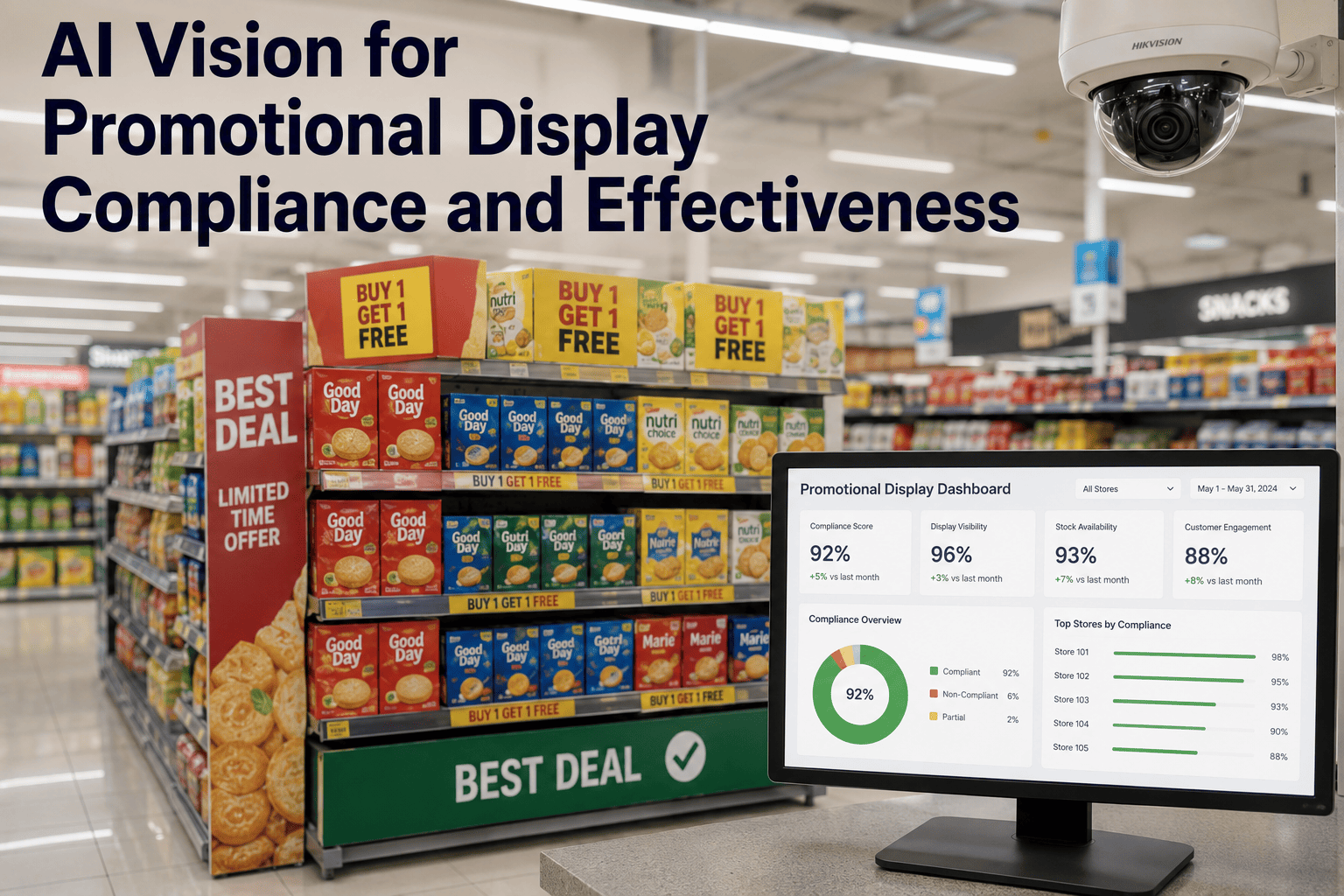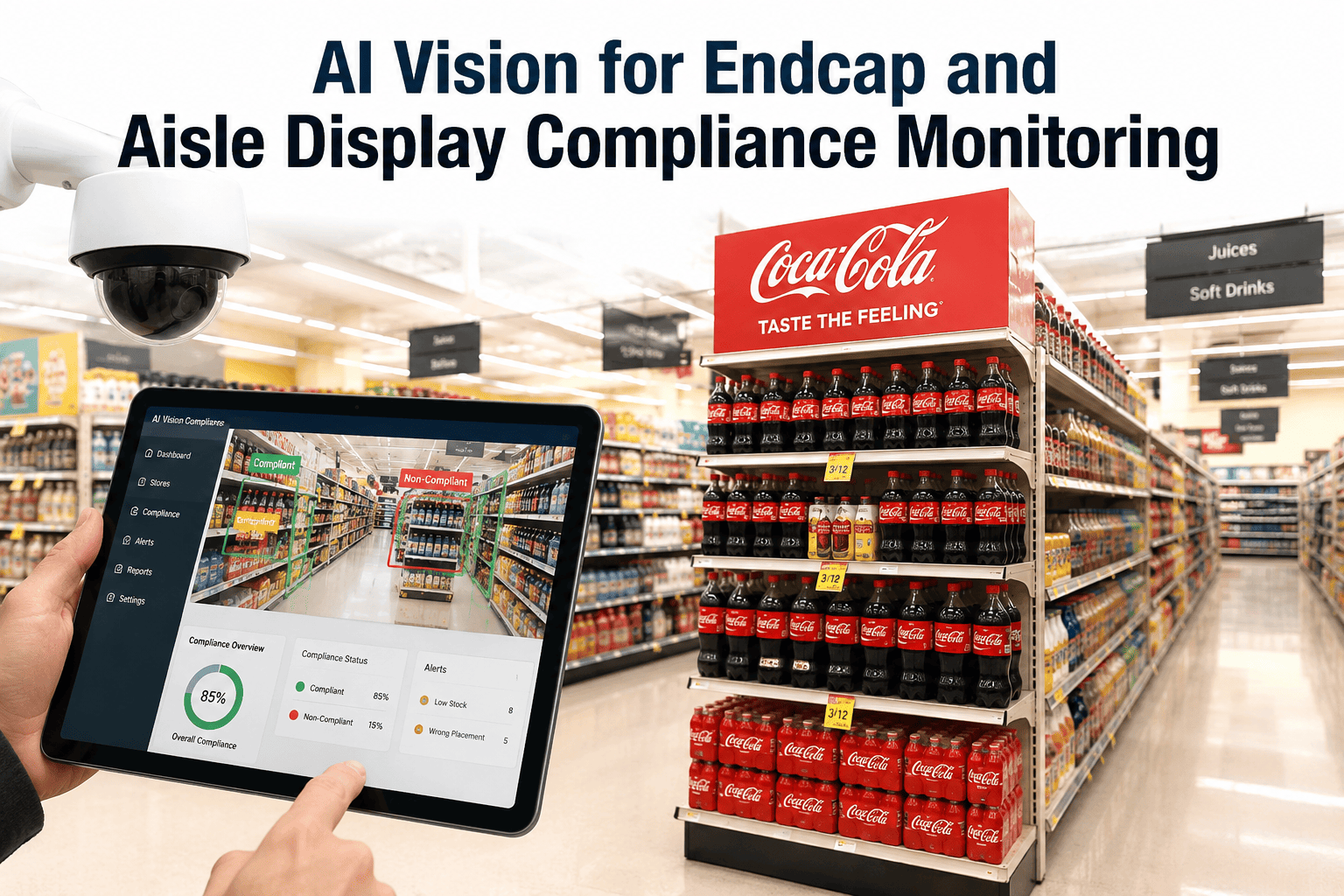
A brand can spend months negotiating an endcap placement and thousands of dollars building the display materials for it, only to have that display go up late, get built in the wrong position, or lose its promotional signage within the first week — and never find out until the promotion is already over. AI vision cameras positioned across store aisles now check every endcap and feature display against its approved planogram continuously, catching missing signage, wrong product mix, or an incomplete build within hours instead of waiting for the next scheduled audit. Brands and retail teams comparing manual audit cycles against continuous monitoring can see the platform behind this shift by visiting iFactory's scheduling page directly.
Why Display Compliance Keeps Falling Below 50%
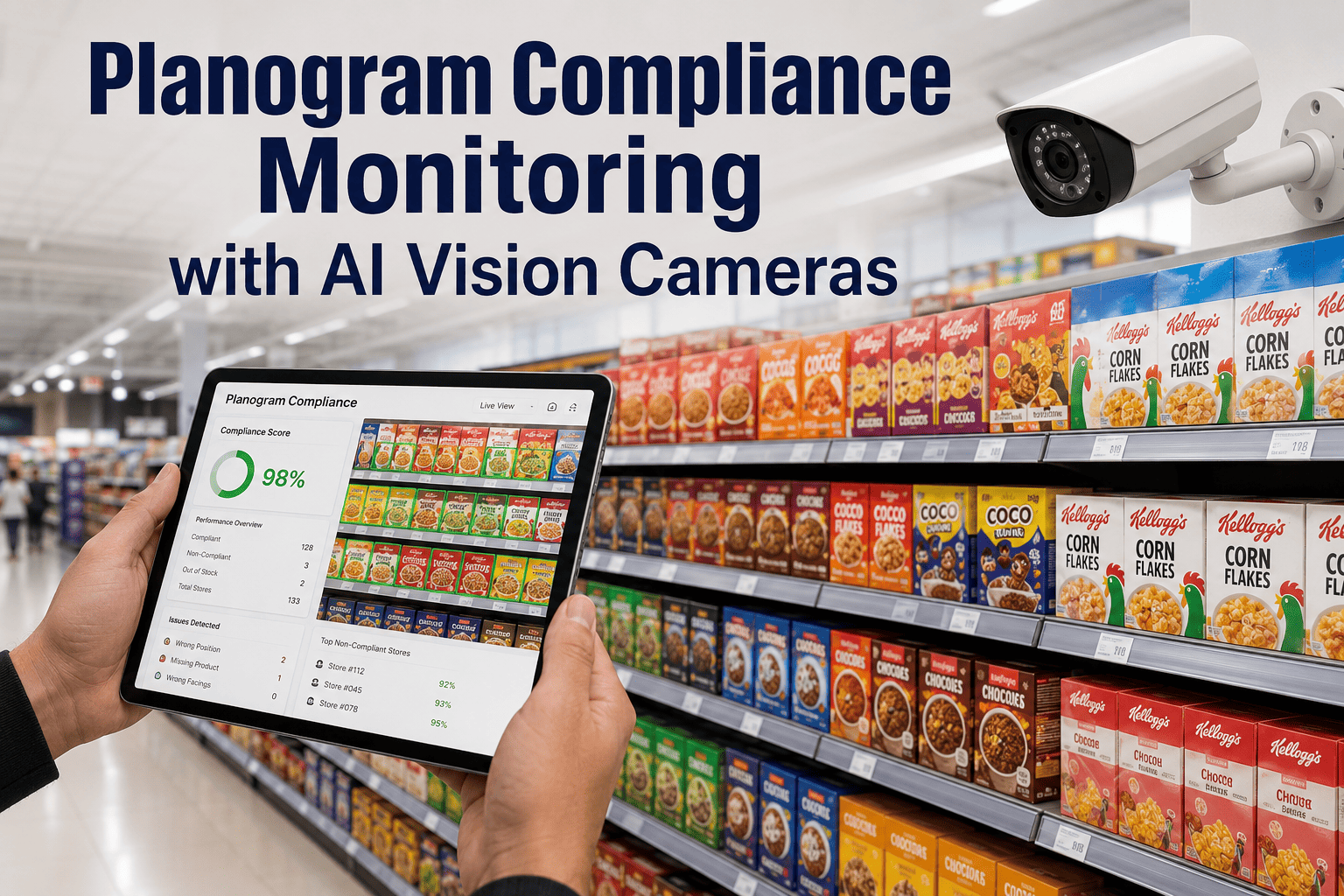
Endcaps and aisle displays are supposed to be the highest-visibility, highest-conversion real estate in the store, which is exactly why brands compete for and pay trade dollars to secure them. Yet planogram compliance for these features typically sits below half of what was approved at the top grocers, largely because verification still depends on a field rep's occasional visit or a store manager's memory of what the reset was supposed to look like weeks ago. A display that goes up wrong, loses its header card, or gets partially dismantled by restocking staff can sit that way for the rest of the promotional window with nobody the wiser until the trade spend report comes back showing a sales lift that never happened.
What the Camera Checks on Every Pass
A single photo of a display is only useful if it is scored against something specific, so the system runs several independent checks against the same image rather than a single pass or fail judgment.
Facing Count
Verifies the number of visible product facings against the planogram-specified count for each SKU on the display.
Product Position
Confirms each SKU sits in its designated shelf or bin position rather than drifting into a neighboring product's space.
Signage Presence
Flags missing header cards, shelf talkers, or price boards that promotional funding paid for but the display no longer shows.
Build Completeness
Detects a partially assembled or degraded display structure, distinguishing an intact feature from one that has been picked apart by restocking or shoppers.
Manual Audits Versus Continuous Monitoring
The gap between a scheduled field audit and always-on camera verification is not just about accuracy — it is about how long a compliance failure is allowed to sit unnoticed before someone corrects it.
A field rep visits on a fixed cycle — often once per quarter or per promotional period — meaning a display error discovered on day one of a six-week promotion can go uncorrected for the entire remaining run.
Cameras re-check every monitored display multiple times per day, so a missing header card or misplaced facing surfaces as an alert within hours rather than at the next scheduled visit.
Who Is Accountable for What
Continuous, timestamped evidence changes the compliance conversation between brand and retailer from anecdote to record, which is often the harder half of the problem to solve.
| Responsibility | Typically Owned By | What Evidence Resolves |
|---|---|---|
| Initial display build | Store or reset crew | Whether the display was assembled to spec on install day |
| Ongoing shelf integrity | Store operations | Whether facings and position held through the promo window |
| Signage and materials supply | Brand or trade marketing team | Whether promotional materials shipped and arrived complete |
| Trade spend reconciliation | Brand finance and retailer jointly | Whether paid-for placement was actually delivered as contracted |
Why CPG Brands Are Moving Fast on Shelf Visibility
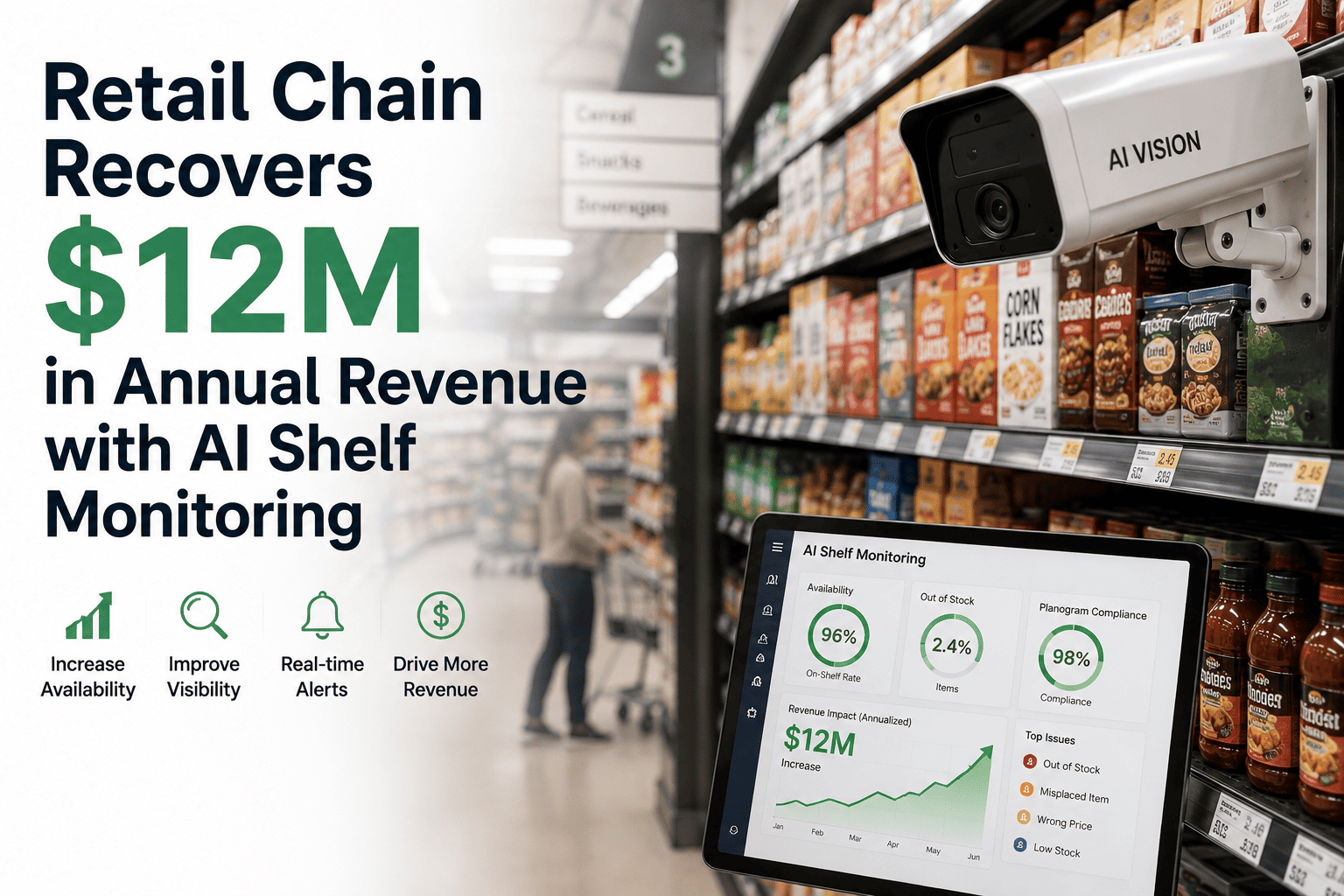
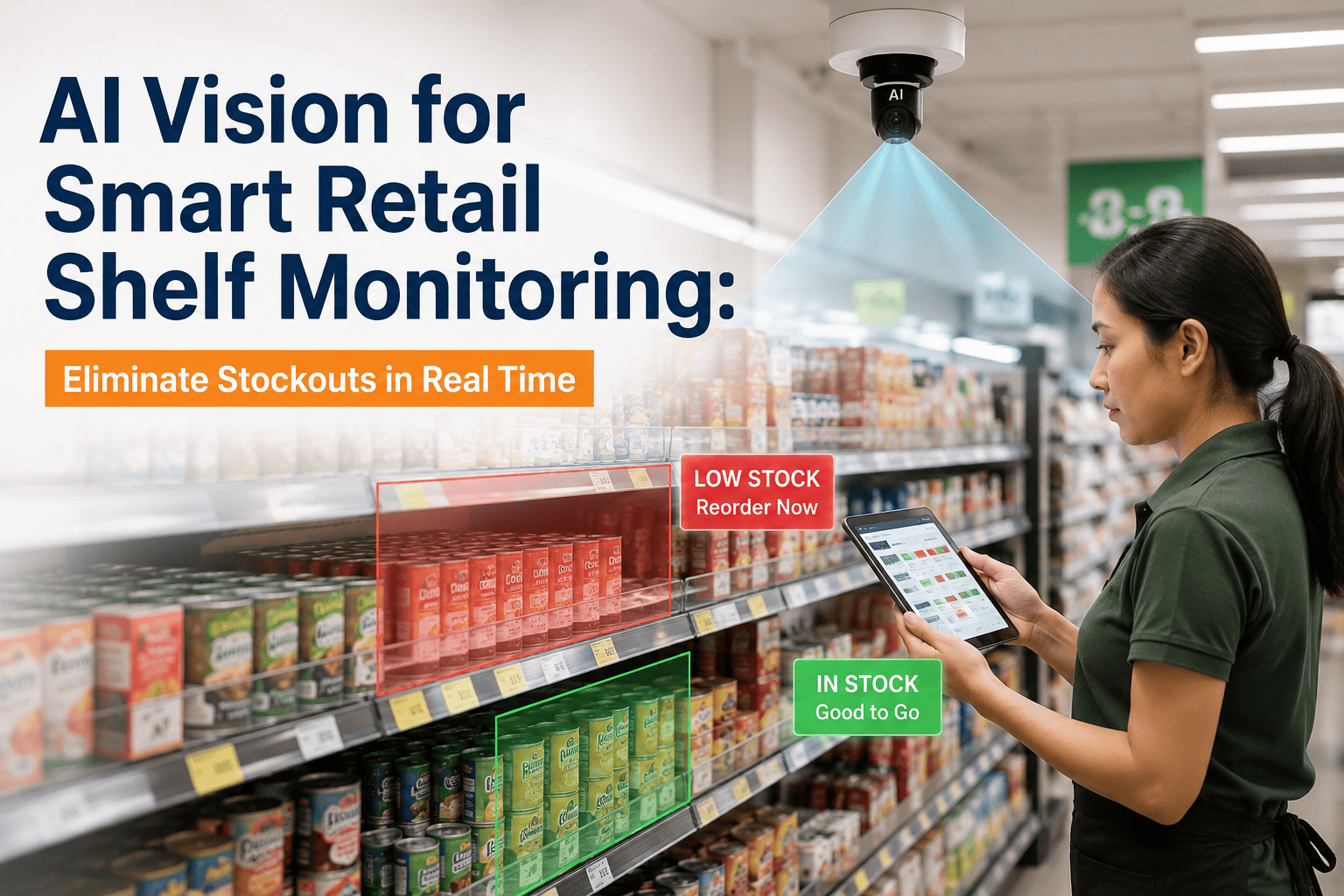
Adoption of AI-driven retail execution tools has accelerated sharply across the CPG sector, and the pressure is not really about technology for its own sake — it is about the size of the number sitting on the table every time a display goes up wrong. Empty shelves and non-compliant displays together cost US retailers tens of billions in missed sales annually, and every brand negotiating trade spend has a direct financial interest in knowing whether what they paid for actually reached the shelf as agreed.
Share of CPG leaders who had adopted AI in at least one business function as of the most recent industry survey, up sharply from the year before
Estimated missed sales tied to empty shelves across US retailers in a single recent year
Accuracy achieved by AI-based compliance scoring when benchmarked directly against traditional manual audits
What Changes for Store Operations Once Monitoring Goes Live
The benefit of continuous display monitoring is not limited to the brand side of the relationship — store teams gain a clearer, faster path to resolving issues that used to sit unnoticed for weeks.
Store associates receive a specific, actionable task — rebuild this endcap, restore this header card — instead of a general instruction to "check the promotional displays" during a shift.
Disputes over whether a reset was completed on schedule are resolved with a timestamped image rather than relying on memory or a paper checklist filled out at the end of a busy shift.
Store managers get a rolling compliance score across all monitored displays instead of a single audit snapshot taken once per quarter.
Frequently Asked Questions
How does the system know what a display is supposed to look like in the first place?
The approved planogram, item master, and promotional calendar are loaded as the reference source of truth for each display, so every camera pass compares the live shelf against that specific approved layout rather than a generic template. New resets or promotional changes are updated in the reference file, and detection follows automatically from the next scheduled camera pass.
Can this distinguish a store-approved local variation from an actual compliance failure?
Yes — the system supports store-specific templates and business rules, so a legitimate local adaptation is recognized rather than flagged as a violation every single time. Cases genuinely uncertain are routed for human review with a confidence label rather than being silently misclassified either way.
Does this replace the need for field representatives entirely?
Continuous monitoring replaces the need for a rep to visit purely to confirm a display looks right, freeing field time for relationship work, negotiation, and resolving the issues the cameras actually surface. Reach out to ifactory Support to discuss how monitoring coverage complements an existing field team's coverage plan.
How is this evidence used when a brand and retailer disagree about a trade spend claim?
Timestamped image evidence tied to the specific display and promotional window gives both sides an objective record instead of relying on a field note or store manager's recollection weeks after the fact. This is often the single biggest source of friction removed once a program moves to continuous monitoring, which is worth walking through in a platform demo.
How many displays or aisles can be monitored at once across a large store estate?
Coverage scales by adding camera positions and reference planograms per store rather than requiring a fundamentally different architecture for a larger footprint, so a chain-wide rollout is a matter of onboarding pace rather than a technical ceiling. Multi-location deployments typically stagger onboarding by region or format to keep calibration quality consistent as coverage expands.