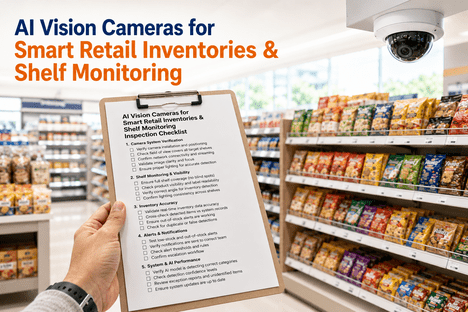
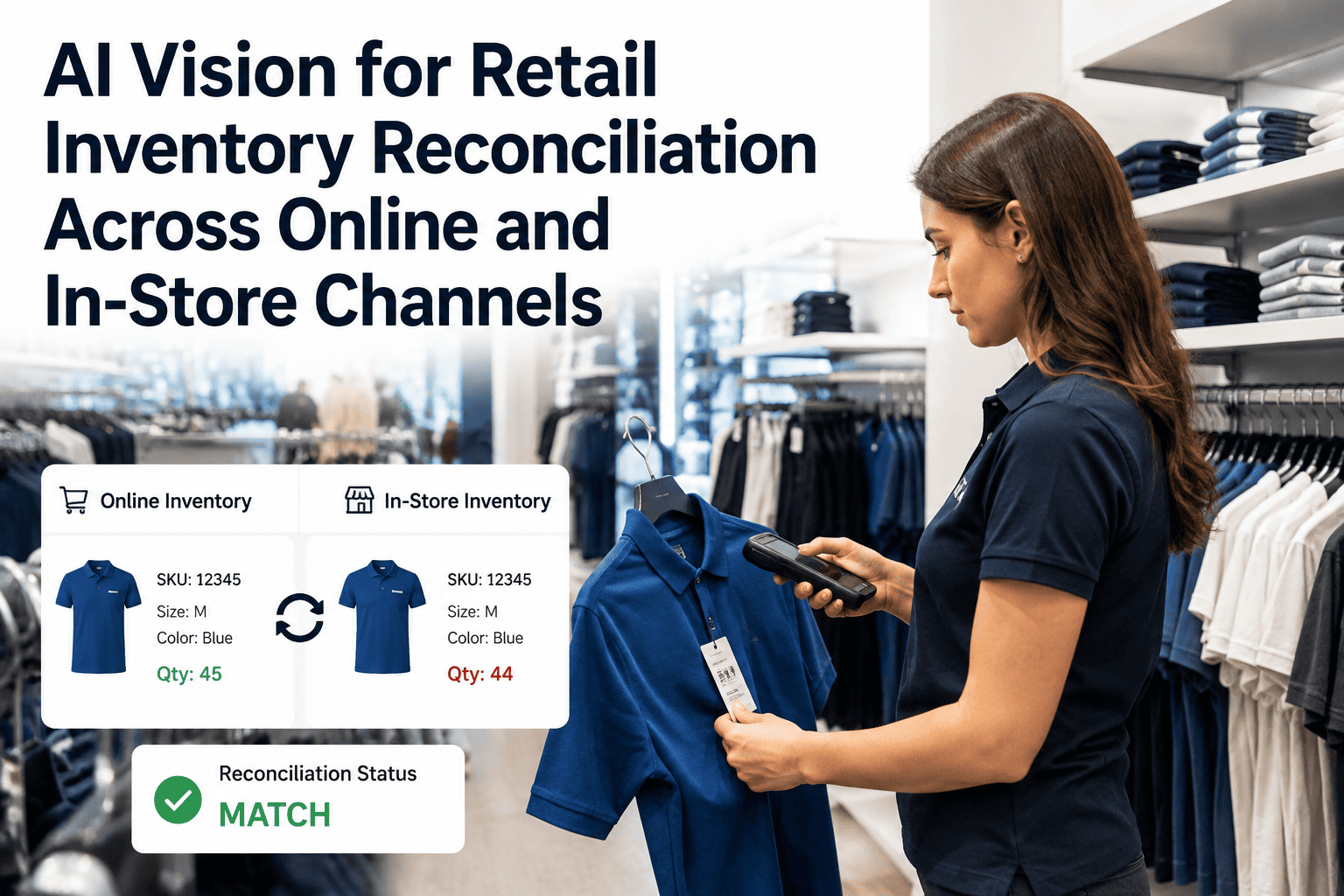
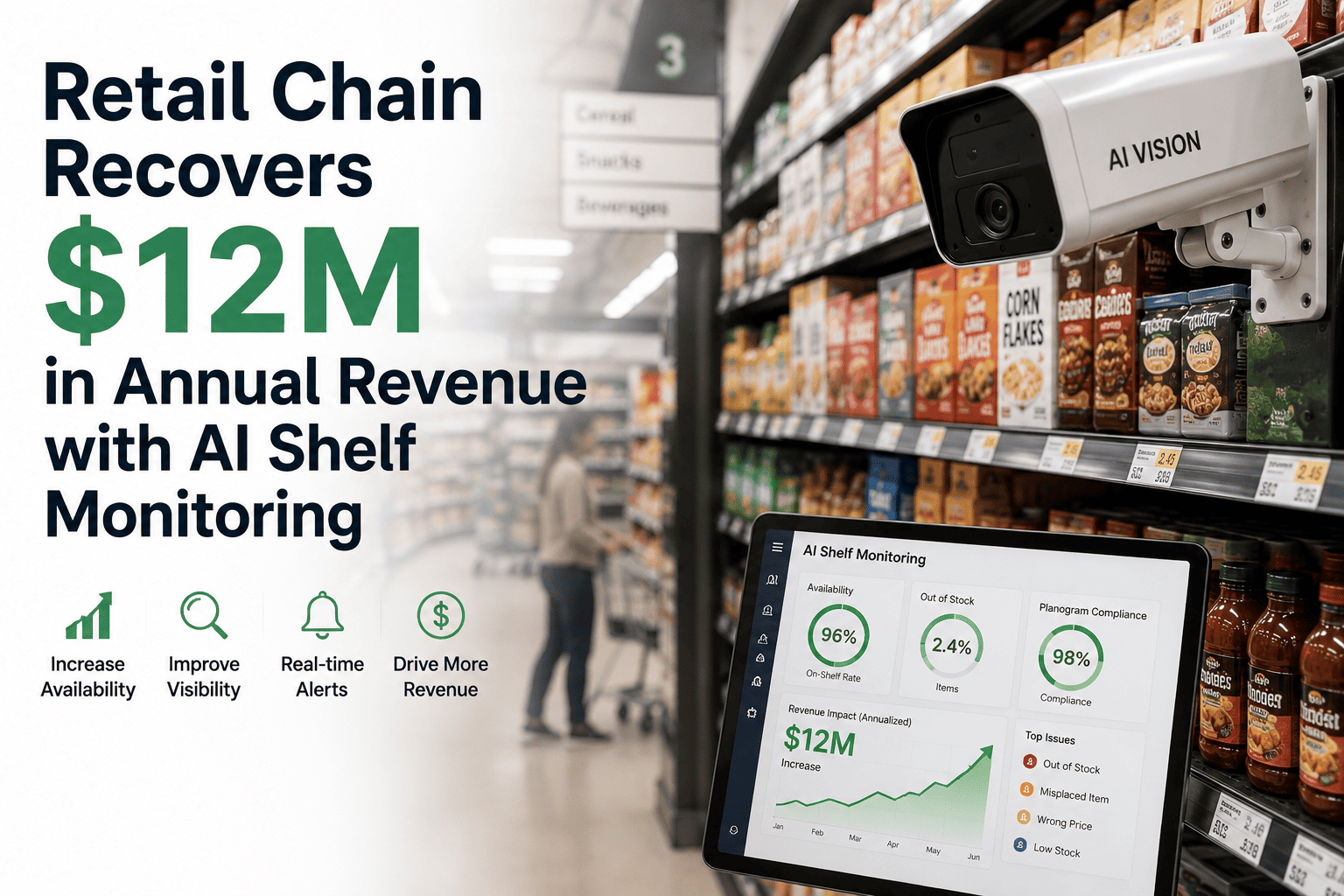
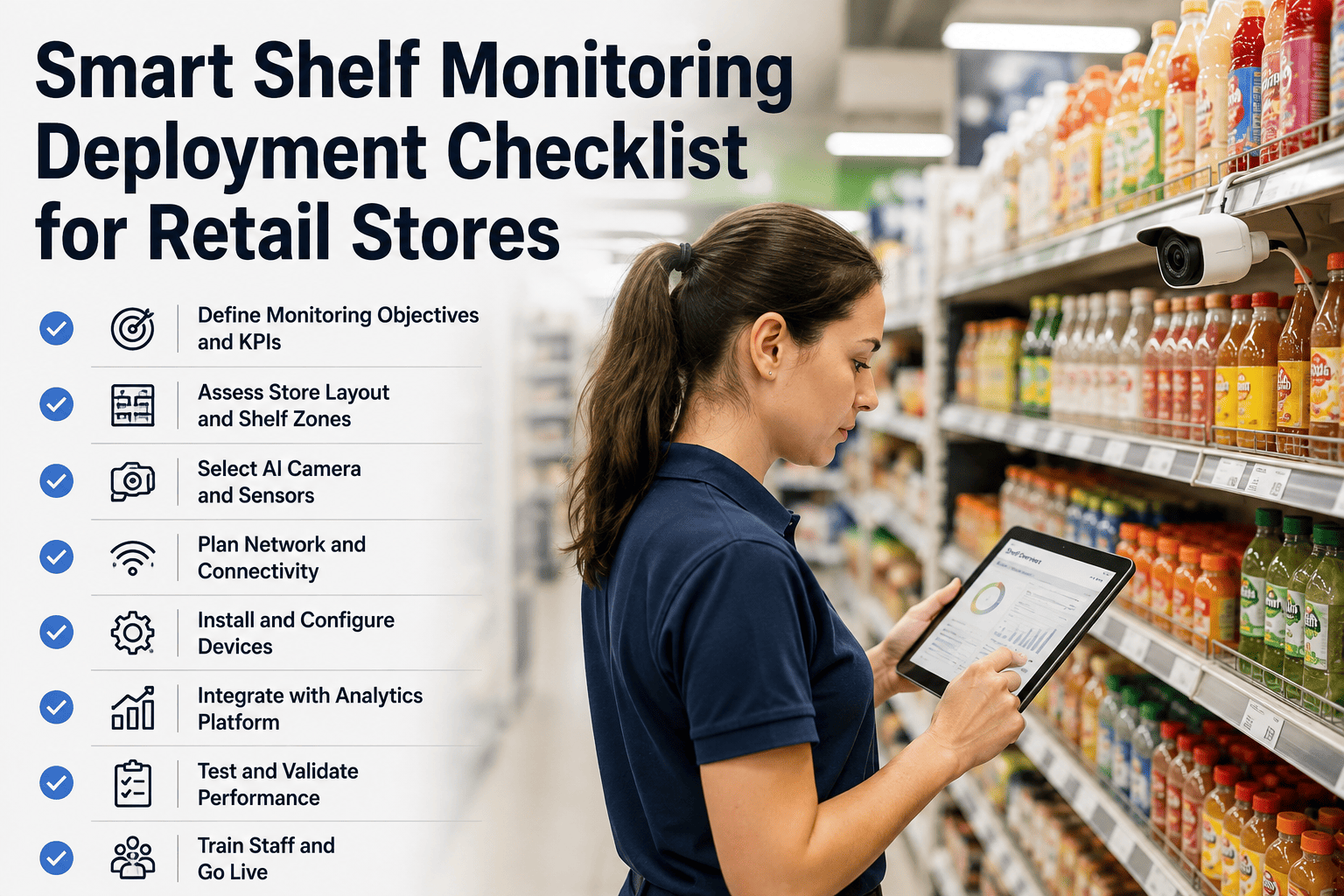
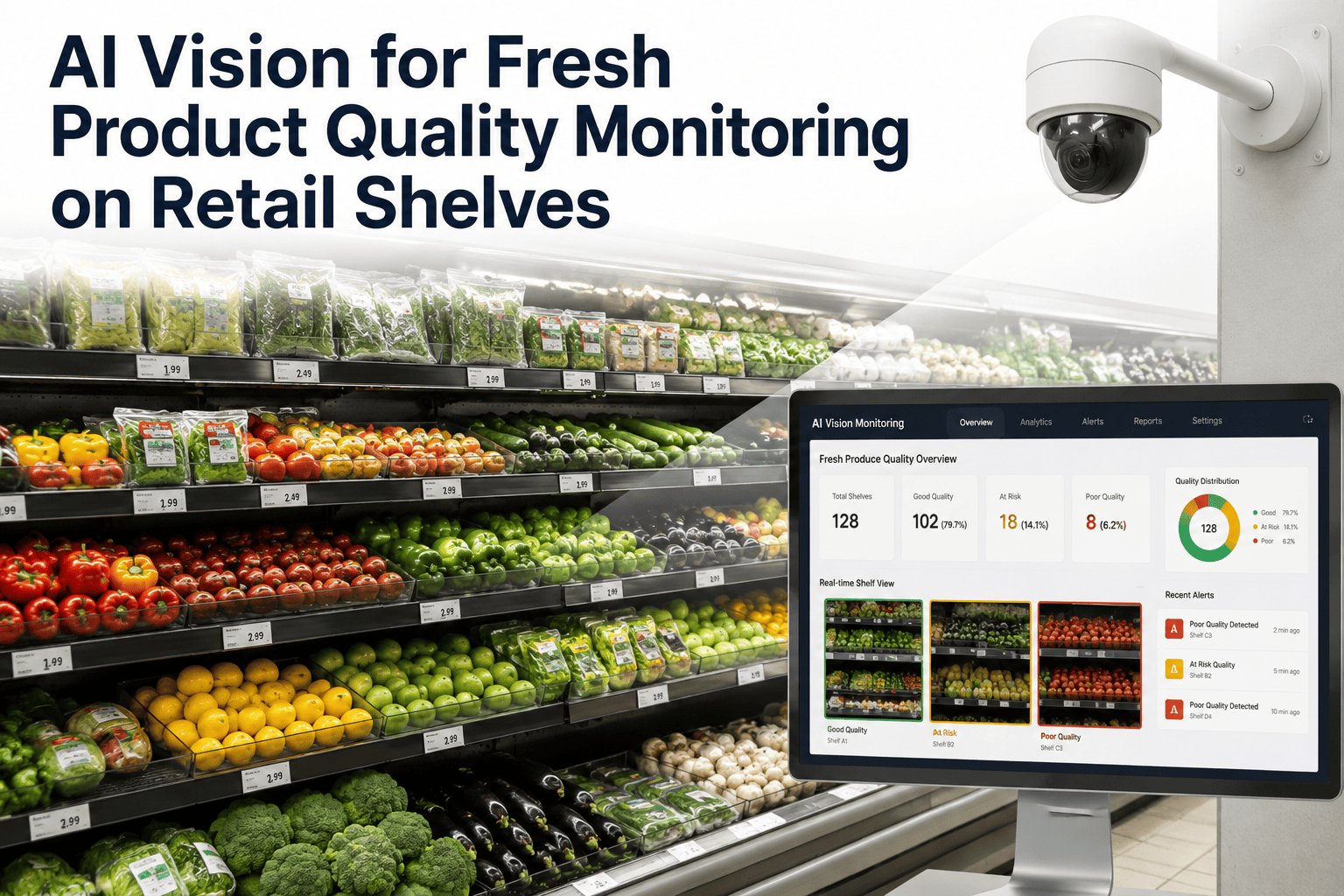
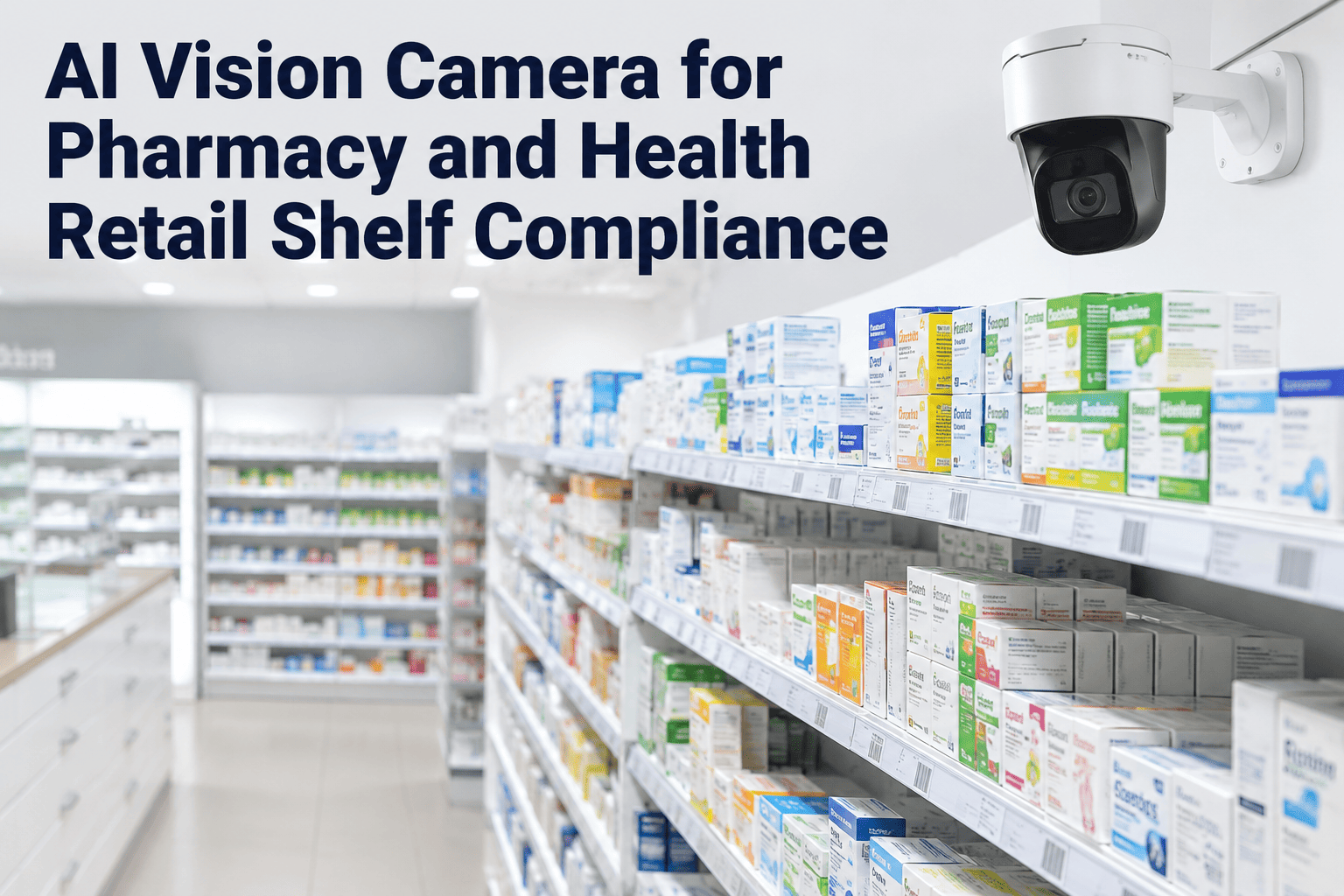
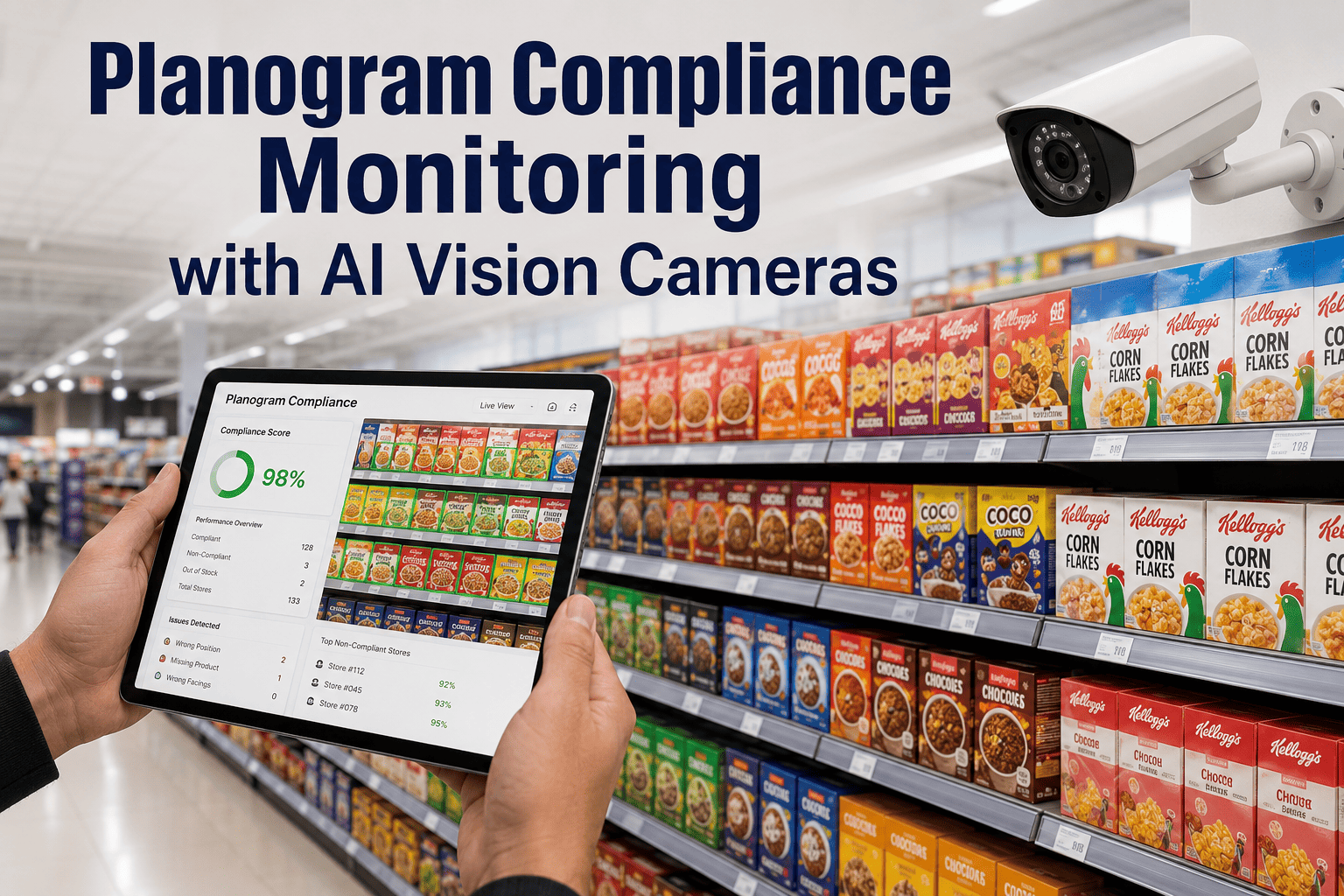
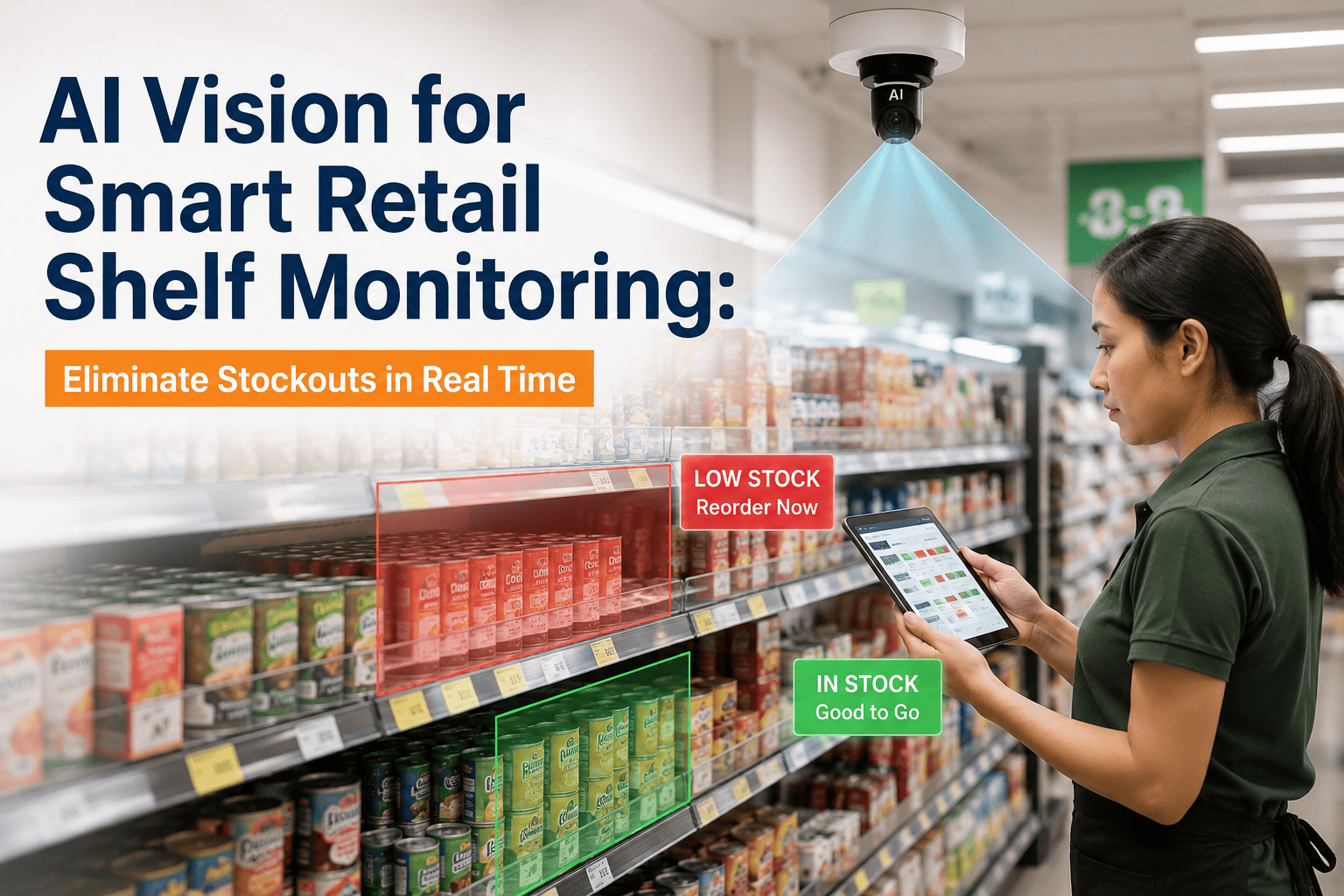
Retail environments face a persistent challenge: the growing gap between what inventory management systems report and what customers actually encounter at the shelf. Misplaced SKUs, empty facings, planogram violations, and slow manual stock checks silently erode sales conversion, basket size, and customer loyalty across every store. ifactory's AI Vision Camera platform closes this gap by placing intelligent computer vision directly at the shelf edge — delivering continuous automated shelf monitoring, real-time out-of-stock detection, and planogram compliance validation without interrupting store operations. Built for high-velocity retail environments ranging from large-format grocery to specialty apparel and consumer electronics, the platform provides category managers, loss prevention teams, and store operations leaders with a real-time visual intelligence layer that turns every shelf into a continuously monitored, analytically rich asset.
AI VISION CAMERAS · SMART RETAIL INVENTORY & SHELF MONITORING
Are Your Store Shelves Losing You Revenue Right Now?
Deploy ifactory's AI Vision Camera platform for real-time shelf monitoring, automated planogram compliance, and out-of-stock detection across every aisle and every location. Built specifically for retail environments where shelf execution is the final mile between supply chain and sale.
95%+
Planogram Compliance Achieved
−65%
Reduction in Out-of-Stock Events
<3 Min
Real-Time OOS Detection
30 Days
To Full Store Deployment
01 / The Retail Visibility Gap
The Hidden Revenue Cost of Unmonitored Shelves in Modern Retail
Industry ContextBrick-and-mortar retail remains the dominant channel for consumer goods, yet out-of-stock rates industry-wide persist at 8–10% for fast-moving consumer goods. Every shelf gap represents a direct lost sale, a customer directed to a competitor, and a failure of the entire supply chain investment made to deliver that product to the shelf.
The Manual Audit BottleneckTraditional shelf audits — conducted by store associates or third-party field teams — provide point-in-time snapshots, not continuous visibility. A manual walkthrough covers a fraction of SKUs per hour, misses transient out-of-stocks between visits, and introduces human error into planogram compliance data. For a 40,000 sq ft grocery store with 25,000+ active SKUs, full manual coverage is operationally impossible.
Planogram Compliance GapConsumer packaged goods manufacturers pay significant trade spend to guarantee shelf placement, facings, and adjacency per planogram specification. Studies consistently show planogram compliance in stores without automated monitoring averages 60–72% — meaning roughly one-third of all shelf positions fail to match the contracted layout at any given time, eroding vendor ROI on co-op investment.
Phantom Inventory ProblemInventory systems often show stock as "available" when product is misplaced on the wrong shelf, damaged and unsellable, or not yet returned from the stockroom. This phantom inventory prevents automatic replenishment triggers from firing while the shelf remains visually empty — a gap that only real-time visual verification can close reliably.
Loss Prevention Blind SpotsTraditional security cameras monitor traffic and behavior but cannot identify which specific SKU is missing from which shelf position. AI vision systems operating at the product level provide a continuous, SKU-specific visual record that enables genuine visual-to-transactional inventory reconciliation, surfacing shrinkage patterns that POS-only analytics consistently miss.
02 / The Challenge
Four Critical Shelf Execution Failures Eroding Retail Revenue Every Day
In the retail environment, the shelf is where supply chain investments, category management decisions, and marketing spend all converge into a single moment of consumer decision-making. Yet it remains the least instrumented touchpoint in the entire retail value chain. The failure modes are well-documented — out-of-stocks, phantom inventory, planogram non-compliance, slow replenishment response — and what has been missing is a scalable, cost-effective technology capable of monitoring every SKU at every facing, in real time, across every store location simultaneously.
8–10%
Industry out-of-stock rate for FMCG
Out-of-stock events remain the single largest driver of avoidable retail revenue loss. Research shows that 30% of customers experiencing a stock-out leave without purchasing a substitute, driving direct conversion loss and increasing the probability of a permanent switch to a competing retailer or channel.
~65%
Avg. planogram compliance without automation
Without continuous automated monitoring, average retail stores maintain planogram compliance for roughly two-thirds of shelf positions. This translates into lost trade spend effectiveness, reduced vendor satisfaction, and a shelf presentation that fails to deliver the consumer experience the category was designed to create.
4–8 hrs
Average replenishment response lag
In stores relying on manual checks or POS-trigger replenishment, the time from a shelf going empty to a replenishment action being initiated averages four to eight hours. During peak traffic windows — weekend mornings, holiday rush periods — this lag compounds directly into measurable revenue lost per empty facing per hour.
$1.75T
Annual global revenue lost to shelf execution failures
The IHL Group estimates annual global retail revenue lost to out-of-stocks and overstocks at $1.75 trillion. A significant and preventable portion is attributable to shelf execution failures that real-time AI visual monitoring can detect and trigger correction workflows for within minutes of occurrence.
"Shelf execution is the last mile of retail. You can have a flawless supply chain, a precisely engineered planogram, and a fully funded promotional strategy — and still lose the sale because the product is missing, misplaced, or not visually present when the customer is standing in front of it."
03 / The Solution
ifactory AI Vision Cameras: Continuous Shelf Intelligence for Retail Operations
ifactory's AI Vision Camera platform integrates high-resolution edge AI cameras with a cloud-native analytics engine to deliver real-time SKU-level shelf visibility, automated planogram compliance scoring, and intelligent replenishment alerts — all through a unified dashboard accessible to store managers, category teams, and loss prevention at every level of the retail organization. The platform is designed for the operational realities of retail: cameras that perform under ambient lighting conditions, SKU recognition models trained on the retailer's own product catalog, and alert workflows integrated into the task management systems store teams already use. To see how ifactory configures shelf monitoring for your specific retail environment, Book a Demo with the ifactory retail analytics team.
DETECT
Real-time out-of-stock and low-stock detection — edge AI cameras continuously analyze shelf facings and identify empty or critically low-stock positions within seconds. Automated alerts push to store associates' mobile devices with precise shelf location and SKU identification, enabling replenishment responses measured in minutes rather than hours and protecting revenue during peak traffic periods.
VALIDATE
Automated planogram compliance monitoring — the platform's SKU recognition engine compares live shelf imagery against the current planogram specification, scoring each section for product placement accuracy, facing count, and adjacency compliance in real time. Category managers receive a continuous compliance score and deviation log rather than a periodic manual audit report, enabling proactive correction before vendor audits.
RECONCILE
Visual inventory reconciliation and shrinkage analytics — by maintaining a continuous SKU-level visual record, ifactory enables loss prevention teams to cross-reference visual stock levels against POS and WMS transaction data, identifying discrepancies that indicate theft, administrative error, or phantom inventory. The audit trail is digital, time-stamped, and SKU-specific — exceeding the capability of traditional loss prevention camera systems.
OPTIMIZE
Shelf space productivity and category analytics — ifactory aggregates shelf monitoring data to provide category managers with a granular view of which shelf positions, facings, and adjacencies drive the strongest product interaction and replenishment frequency. This feeds directly into data-driven planogram optimization and range review decisions grounded in actual observed in-store behavior rather than modeled projections.
04 / Deployment
From Camera Installation to Continuous Shelf Monitoring in 30 Days
Days 1–7
Store Mapping and Camera Architecture Design
Full store layout assessment and shelf topology mapping to define coverage zones and camera placement architecture. Network infrastructure reviewed for edge AI processing requirements. Priority shelf areas — top-20% SKUs by revenue, promotional end caps, high-shrink zones — identified for Phase 1 coverage.
Days 8–18
Camera Installation and SKU Model Training
Edge AI cameras installed across target shelf zones with zero disruption to store trading hours. ifactory's vision models loaded with the retailer's SKU image library — including all packaging variants and label revisions. Planogram data imported from the category management system and mapped to camera coverage zones for automated compliance scoring.
Days 19–26
Live Monitoring Activation and Alert Configuration
Platform transitions to live monitoring mode with replenishment alert thresholds configured by category and day-part. Store management, category teams, and loss prevention onboarded to the mobile dashboard. Initial planogram compliance baseline established and shared with the category management team for reference scoring.
Days 27–30
System Integration and Full Deployment Handoff
ifactory platform integrated with the retailer's existing WMS, ERP, and store task management systems for automated replenishment workflow triggers. First full-store planogram compliance report delivered to the category team. Platform fully commissioned with 24/7 autonomous shelf monitoring active across all configured zones.
See How ifactory AI Vision Works in Your Store Environment
Get a live walkthrough of real-time shelf monitoring, planogram compliance automation, and precision out-of-stock detection built for your retail category and store format.
05 / Results
Measurable Shelf Performance, Inventory Accuracy, and Revenue Protection Outcomes
Retailers deploying ifactory's AI Vision Camera platform achieve measurable improvements across their most critical shelf execution metrics within the first quarter of operation. Out-of-stock event frequency drops by 60–70% as replenishment response times compress from hours to minutes. Planogram compliance reaches 95%+, protecting trade spend investment and ensuring shelf presentation reflects category intent. Inventory accuracy improves as visual data surfaces phantom stock and shrinkage patterns that transactional systems miss entirely. To understand what ifactory's AI Vision platform would deliver specifically for your store format, Book a Demo with the retail analytics team.
| Performance Metric |
Without AI Vision |
With ifactory AI Vision |
Net Improvement |
| Out-of-stock detection response time |
4–8 hours (manual) |
Under 3 minutes (automated) |
Real-time OOS detection |
| Planogram compliance rate |
~65% average |
95%+ continuous |
+30 percentage points |
| Out-of-stock event frequency |
8–10% baseline rate |
3–4% achieved rate |
−65% reduction |
| Shelf audit labor hours per week |
High — manual full-store rounds |
Minimal — exception-based only |
Automated continuous coverage |
| Phantom inventory identification |
Not detectable (transactional only) |
Visual-to-transactional reconciliation |
SKU-level accuracy |
| Trade spend compliance verification |
Periodic manual audit |
Continuous automated scoring |
Always-on compliance trail |
| Replenishment task precision |
Generalized zone-level alerts |
SKU-specific, shelf-position specific |
Precision replenishment |
| Deployment timeline to full coverage |
N/A |
30 days to full store |
Monitoring live in 30 days |
95%+
Planogram Compliance
<3 Min
OOS Detection Time
See Your Store's Shelf Intelligence Potential
Connect with ifactory's retail analytics team to model the revenue impact of real-time shelf monitoring across your store network. Assessments are tailored to your category mix, store format, and current OOS baseline.
06 / Key Capabilities
What ifactory AI Vision Cameras Deliver for Retail Shelf Operations
01
Edge AI processing for zero-latency shelf alerts. ifactory's cameras perform SKU recognition and shelf analysis directly on the camera hardware — eliminating cloud round-trip latency and ensuring sub-second detection of out-of-stock and planogram deviation events. Replenishment alerts reach store associates within seconds of a shelf gap opening, even in stores with limited or variable network connectivity.
02
SKU-level recognition trained on the retailer's own product catalog. The platform's vision models are trained on the specific product catalog of each retail deployment — including packaging variants, label revisions, and regional SKU differences. This granularity enables accurate facing count verification, planogram position validation, and price label compliance checking at the individual product unit level across tens of thousands of active SKUs.
03
Planogram compliance scoring with deviation type classification. When a planogram deviation is detected, ifactory classifies the violation — wrong product, incorrect facing count, wrong shelf position, or missing promotional label — enabling store teams and category managers to prioritize correction by violation type and commercial impact. This structured data also feeds vendor compliance reporting, providing objective photographic evidence for trade spend accountability conversations.
04
Multi-location retail network management from a single dashboard. For retail chains operating multiple locations, ifactory aggregates shelf performance data across the entire store network into a centralized operations view. Regional and category managers monitor compliance scores, out-of-stock frequencies, and replenishment response times by store, region, or category — enabling performance benchmarking and resource allocation decisions grounded in live shelf data rather than periodic field audit reports.
"The first time our team received an out-of-stock alert on our top-selling SKU during Saturday morning peak and had product back on the shelf within four minutes, the commercial case for AI vision monitoring was self-evident. Under our previous model, that gap would have persisted through the entire peak traffic window."
07 / FAQ
Frequently Asked Questions
How does ifactory AI Vision detect out-of-stock events in real time?
ifactory's edge AI cameras continuously analyze shelf facings at high frequency. When the vision model detects a shelf position transitioning to empty or critically low stock, it generates an automated alert within seconds — including the exact shelf location, the affected SKU, and the last confirmed stock state. This enables store associates to act on precise, actionable replenishment information immediately rather than waiting for a manual walkthrough.
Can the platform monitor planogram compliance across our entire SKU range?
Yes. The platform's vision engine is trained on the retailer's complete product catalog including all packaging and label variants. Planogram specifications are imported from the category management system, and the AI compares live shelf imagery against these specifications continuously — generating a per-section compliance score updated in real time across every monitored shelf zone.
How long does deployment take for a full store?
Full store deployment — camera installation, SKU model training, planogram data import, and live monitoring activation — is completed within 30 days. High-priority shelf zones representing the top-20% of SKUs by revenue are typically live and monitored within the first two weeks of the project, providing immediate protection for the most commercially critical shelf positions.
Does ifactory integrate with existing WMS, ERP, and store task management systems?
Yes. ifactory connects with existing retail technology infrastructure via standard API integrations. The platform pushes replenishment alerts and planogram deviation notifications directly into store task management systems, and exchanges inventory data with WMS and ERP platforms — ensuring AI shelf intelligence flows directly into the operational workflows store teams already rely on.
Can AI Vision support loss prevention alongside shelf monitoring?
Yes. By maintaining a continuous visual inventory record at the SKU level and cross-referencing it with POS transaction data, ifactory's platform helps loss prevention teams identify visual-to-transactional discrepancies that may indicate theft, miscanning, or inventory administration errors. Time-stamped visual evidence supports investigation workflows at a level of product specificity that conventional security cameras cannot provide.
Is the platform suitable for multi-site retail chains?
Yes. ifactory provides a centralized network dashboard that aggregates shelf compliance scores, out-of-stock frequencies, and replenishment response times across all store locations. This enables regional managers to benchmark store performance, identify systemic shelf execution issues, and allocate operational support resources based on live data rather than periodic field audit snapshots.
95% Planogram Compliance. Real-Time OOS Detection. AI Vision Live in 30 Days.
See how ifactory's AI Vision Camera platform delivers continuous shelf monitoring, automated planogram compliance scoring, and precision replenishment intelligence for your retail operation — built for grocery, specialty, apparel, and consumer electronics environments.